Trains on my layout, that show-up with loaded open cars (flatcars, gondolas, and hoppers) usually aren’t arriving from a modelled source, but simply show-up on various staging tracks, then pass through a few on-line towns, and continue off to somewhere else…
Here are some areas that offer or accept rolling stock that carries “stuff” that comes from “somewhere” and ends-up “elsewhere”.
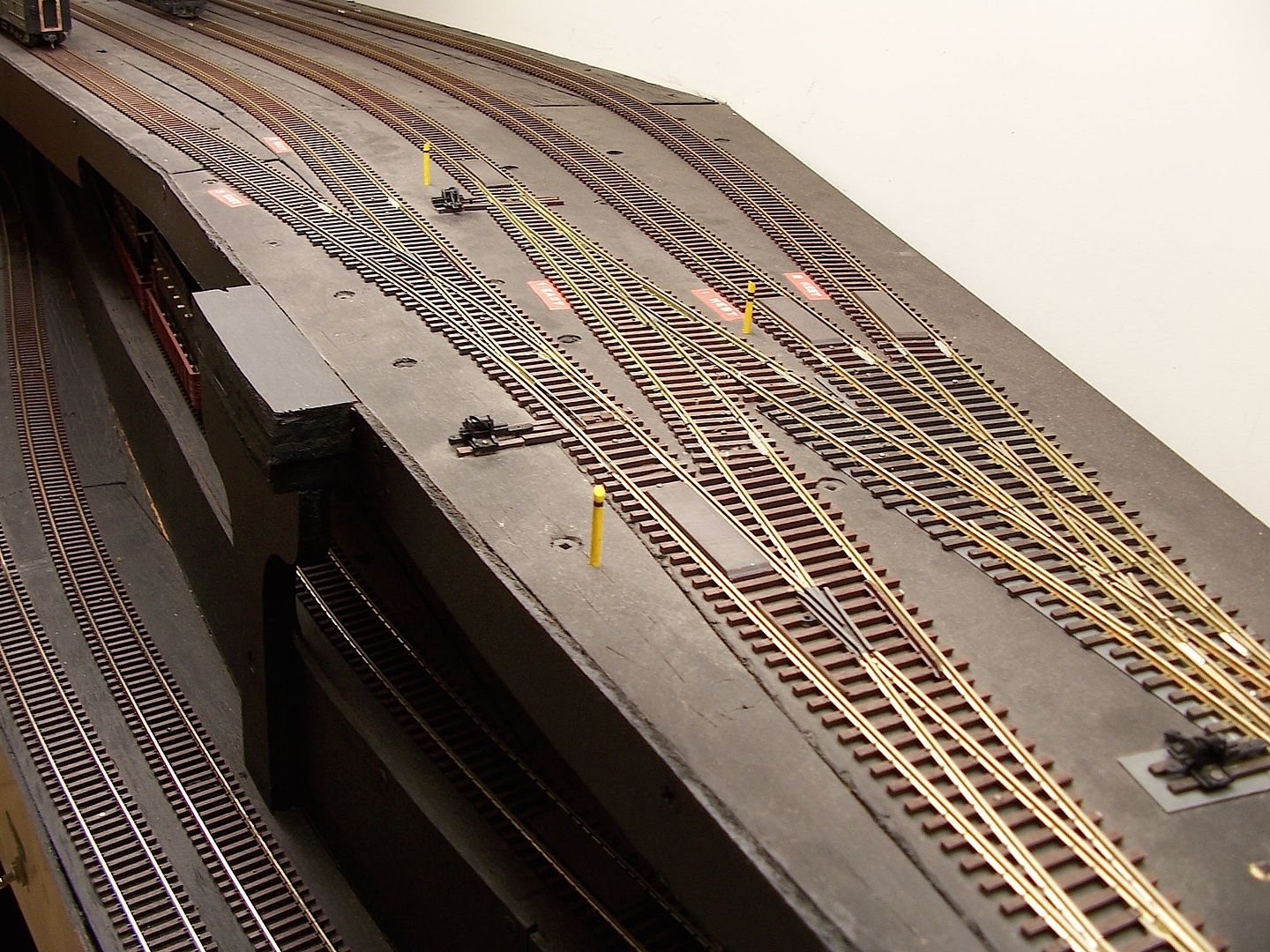
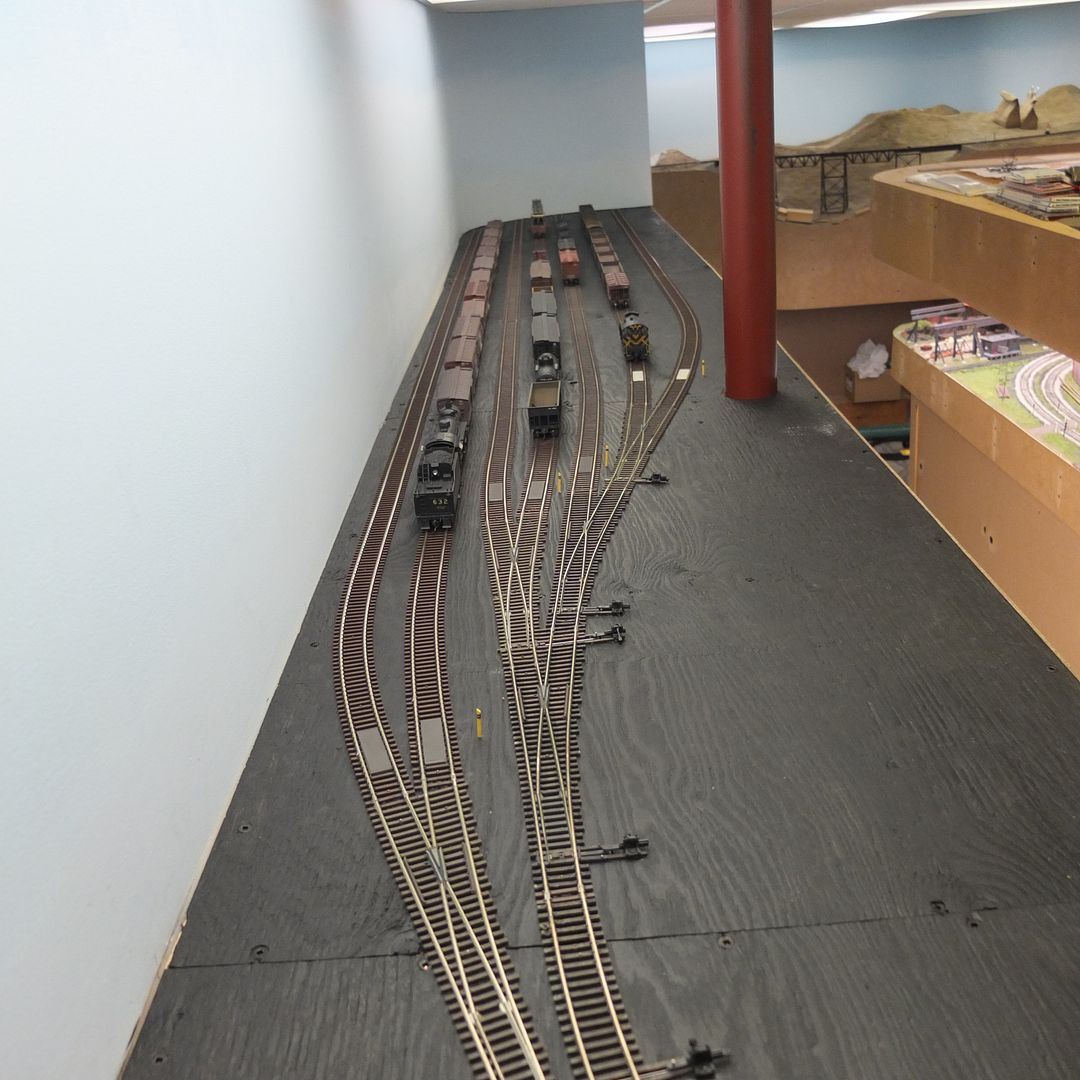
This is the main-level staging yard…
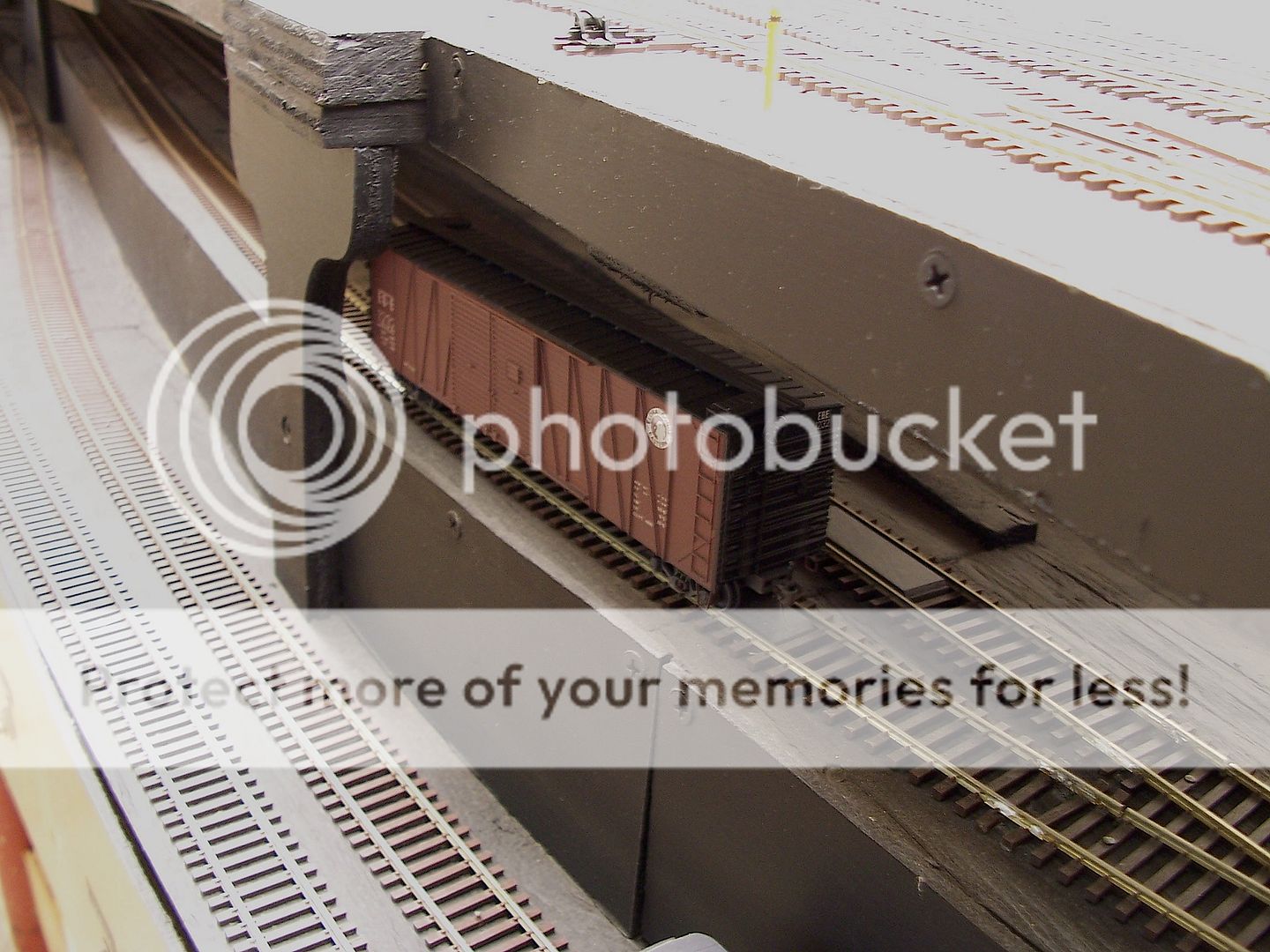
…with a few additional tracks below…
…and a view from a different angle…
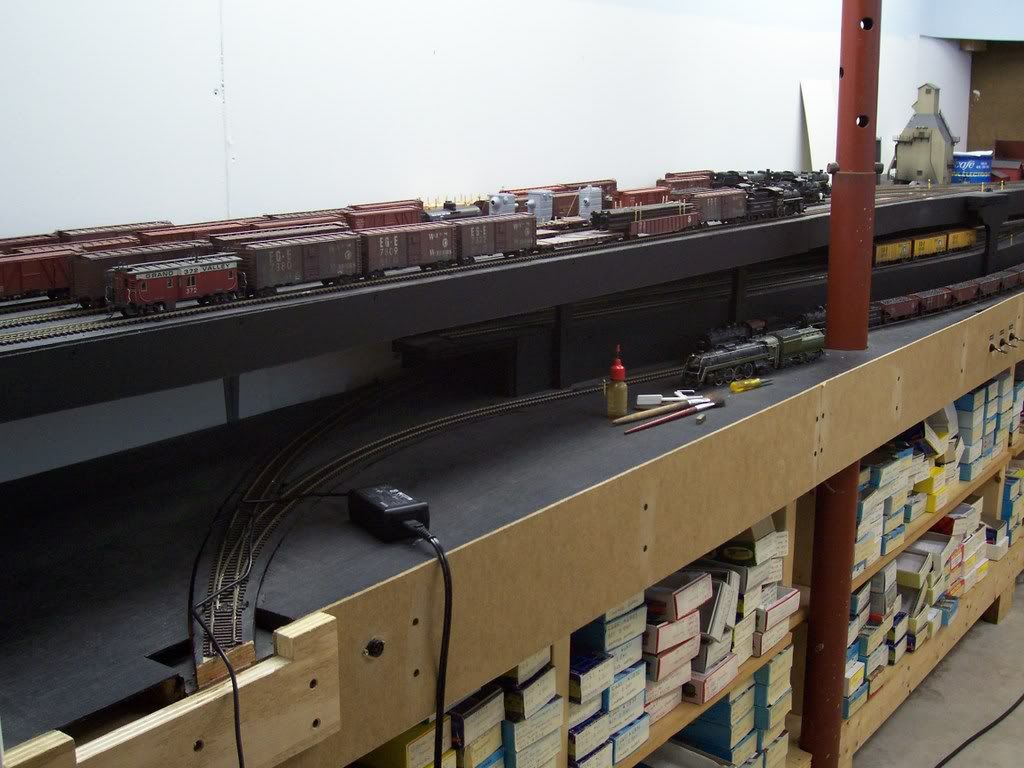
…and a view of some staging tracks on the partial upper level…
…these two tracks, also on the partial upper level…
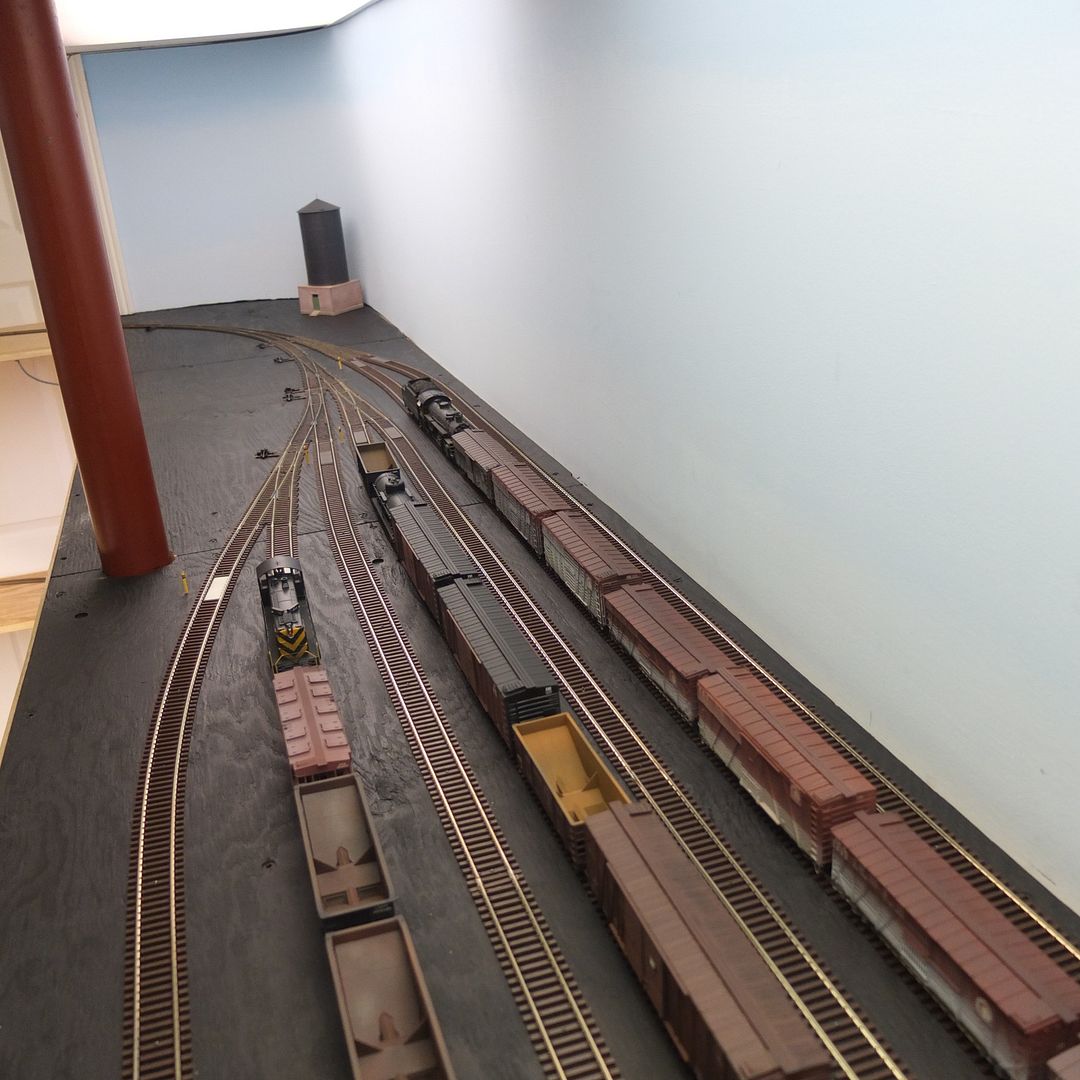
…go through the wall, and into my workshop…
…counting some of the track that will be hidden by scenery, there’ll be room to store two trains about eleven feet long.
“Someplace” need not be modeled. On my layout, I have a loads-in/emptys-out track for coal gons and hoppers going to-and-from the mine and coal dock…
…and to your question, there is another loads-in/emptys-out track for general freight cars where the pick-up track is the other end of the drop-off track. The “geographic location” of these pick-up and drop-off points varies with each car as appropriate for the car type and is specified on the car card.
On the layout, both sets are double tracks, but a single track works too, its just not as convenient.
I have a similar “realism” quandary on my layout; most of my industries are related to produce packing and canning in California’s central valley, which means a whole lot of my rolling stock is ice-cooled refrigerator cars. Unfortunately, there weren’t any icing stations in the locations that I actually model, which means that, theoretically, it’s unrealistic for me to deliver warm reefers to my packing houses–East Coast produce shippers would be most displeased to open a car filled with fresh peaches from the Sacramento Valley that had traveled cross-country at late summer temperatures!
You could have the local ice company bring one of its trucks to a road accessable siding to re-ice the reefers - Walthers offered a resin kit for such a vehicle.
I have a variation of loads in/empties out. My schematic is loop-to-loop but I have tracks that bypass the loops. Coal trains are staged on those bypass tracks, loads in one direction and empties in the other. The coal trains run as extras so I can run as many or as few as I choose in an operating session. A few loaded cars are used to service my coaling towers and are set out at the proper place. I have lift out loads in these cars and they return to staging with the empties train. I then fiddle them back into the loaded train in staging and replace the loads.
Worth considering although there would also need to be a way to get 300 pound ice blocks up to the roof of the reefer without having it melt in a Sacramento 100+ degree summer day; in the interim, transferring them to & from an interchange is simple enough, and really I don’t bother with that complex level of operation as I mostly use a “switch list” operating scheme that doesn’t bother worrying about where a car was before the operating session or where it’s going next, just a randomly drawn list of cars needed at various industries that are selected from the available cars on the layout when the session begins. My quandary regarding icing is strictly theoretical in nature, although I still may break down and model an icing facility that wasn’t quite on my main line but I have sentimental memories of exploring in the early 2000s with some friends that has since burned down and been demolished (not by us–by a developer who wanted to rehab it but whose construction lighting rig started a fire!)
Why is that a quandry? If there were packing houses in the real area, but there weren’t any ice houses in the real area, then that’s realistic. Do what the real railroads did, ice the cars someplace else. You are shipping cars hundreds of miles without having to re-ice, certainly if the cars are iced at a location 20 miles away at an off layout location then they will make it to packing house OK. Not every packing house had an ice dock nearby, cars could be iced at a more central location and then taken to the packing houses.
If you have a realism quandry, then use the realism solution.
I worked in an ice house in the summer of 1970. We no longer had ice cooled reefers but we did still deliver both block and bagged ice to businesses in the area. We didn’t get many 100+ degree days in Columbus, Oh but 90+ are very common. Even on the hottest days the ice blocks didn’t melt that fast. We loaded them both in covered vans and uncovered delivery trucks. As long as they were stacked against each other, there was very little melting.
For smaller customers, we would score the ice blocks and use ice picks to chop them up into 50 lbs. blocks. I can’t remember for sure but we might have also chopped them up into 25 lbs. blocks.
Were 300 lbs. blocks dropped into the ice hatches or were the blocks chopped up when loading the ice bunkers?
Title- San Bernardino, California. Precooling Atchison, Topeka and Santa Fe Railroad refrigerator cars at the ice plant. Precooling lasts from four to eight hours depending upon the shippers request. Air at twenty degrees Farenheit is blown in one end and out the other. This action is reversed every fifteen minutes. 1000 cubic feet of air goes through the car per minute
Depending on what the shipper specified some loads would be “top-iced” with crushed ice over the lading. Also, some commodities that required colder temperatures, meat I presume, would have salt added to make brine to lower the temperature even more.
I’ve seen trains pull into Collinwood yard on the NYC in Cleveland. The ice house and platforms were long gone but a few ice reefers were still operating. I
.JPG)
.JPG)


