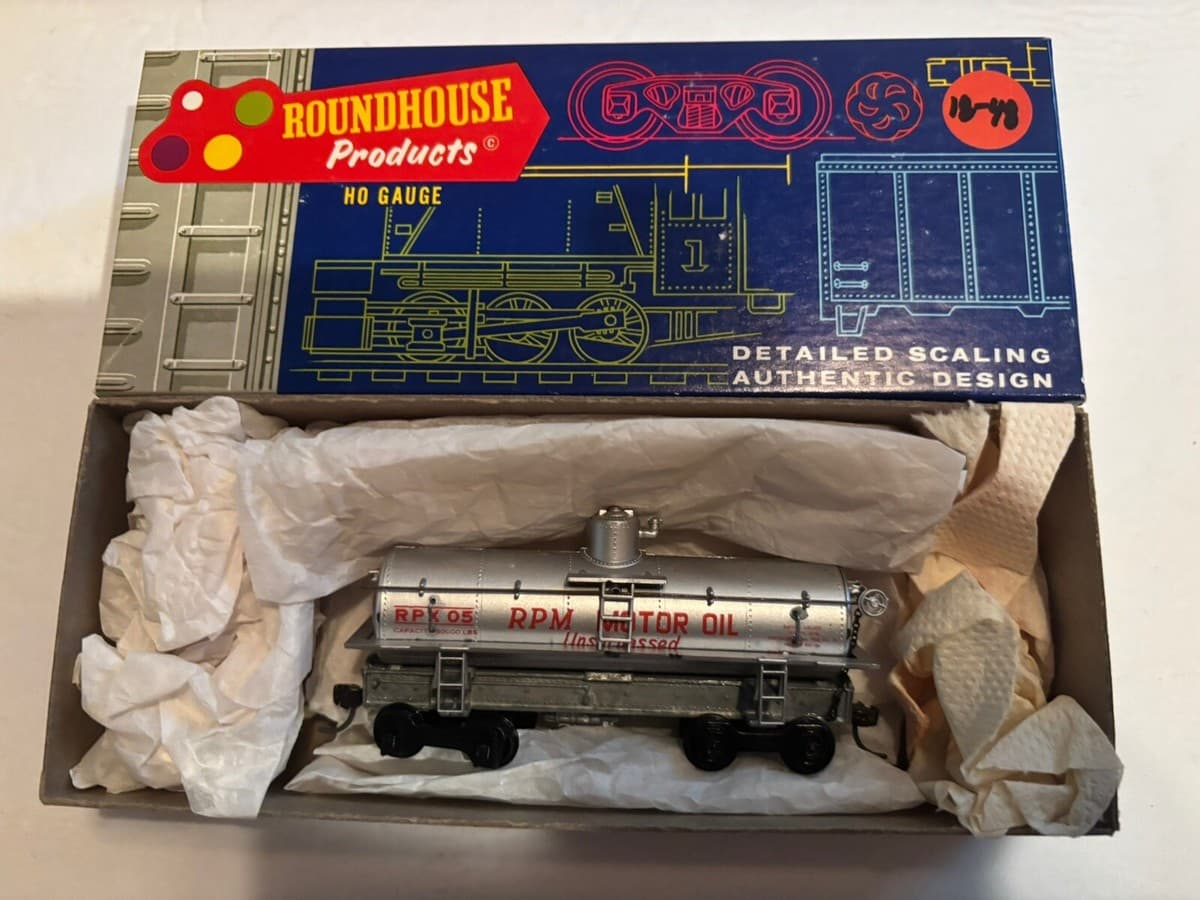
Gidday Tom, once again you raise interesting questions worthy in this case of quite a number of cups of coffee!
I’m afraid though that my answers may lead to more questions!
Perusing the large John W. Barringer National Railroad Libraries Photo Collection on Flickr I thought I was on a winner until I saw the date. The reporting mark OCGX is correct for the date.
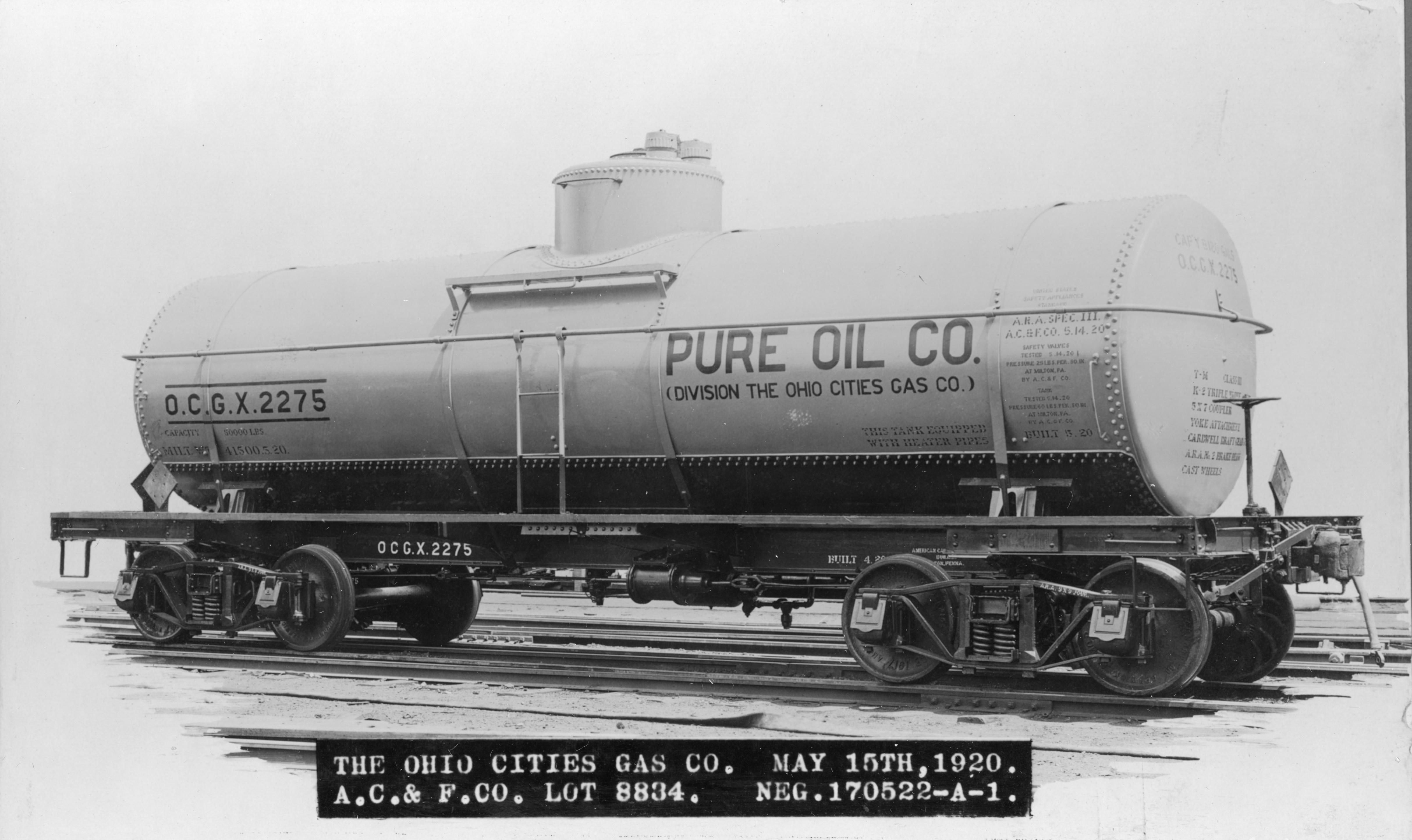 8834 001 by John W. Barriger III National Railroad Library, on Flickr
Then, much later on I came across the following photo in a Facebook post by Mr. Greg Eyler, the photos source, a booklet “Illustrated Story of Ohio River’s Greatest Flood Cincinnati District - January 1937.” The reporting mark PX is allocated to the Products Tank Line (Union Tank Car Co) 7/1930-7/1935, then the Union Tank Car Co, 7/1937-4-1970.
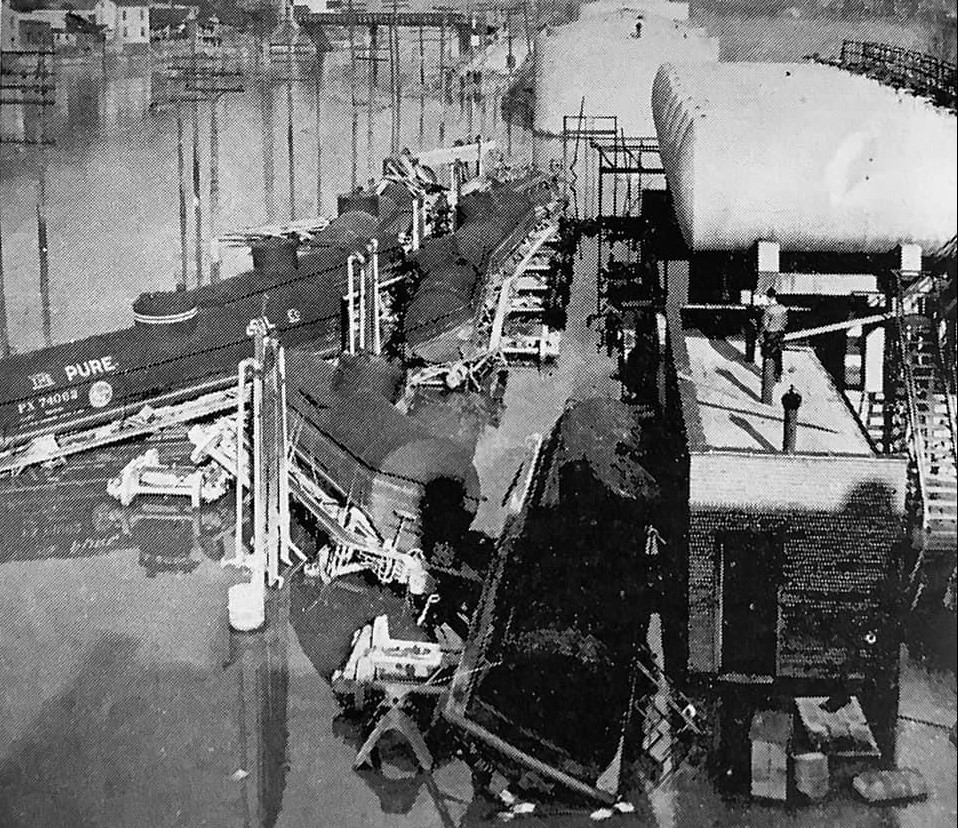 Pure Oil tank car. by Bear, on Flickr
My photograph evidence for the Cities Services car came from the Tangent Scale Models site, the CSOX reporting mark was held by various guises of Cities Oil from 1930 -2020.
The prototype photo for the Ohio Oil (Marathon) car also came from the Tangent Scale Models site. However, I believe that the car is problematic for your modelled time line as the TROX reporting mark, was allocated to the Transcontinental Oil Co, 8/1920 to 7/1930. A pity because that is such a colourful tank car.
Looking at the photos you posted in your first thread on this topic, and other similar ones, Tom, I’d suggest that there is no hard or fast rule. I would presume that those that did, and this I suspect would not always be the case, had roadside viewing which was used for advertising purposes. As you will have already noted, the pumps were definitely “branded.”
Looking at that Ohio River Flood photo, there are also “plain black” tank cars, a thing I noticed in other period photos. In fact, I’d be bold enough to suggest that for the transportation of petroleum fuel products, that the “unheralded” (leased) cars are in the majority!
“Muddying the waters,” I do wonder that by the 1940s, if the majority of the refined petroleum products was delivered to New York State bulk fuel tank farms by sea, then transhipped to those smaller fuel distributors, serviced by the New York Central Railroad, in leased tank cars??
Probably only 1½ cents worth,
Cheers the Bear.