If you’re planning on using them in an airbrush, no, your best bet is to get fresh paint for that. Using a standard brush application, if you can get them to mix without lumps, they should be OK.
Stir them up good. If you can get the pigment evenly dispersed into the body of the paint they are probably OK. Add thinner (diosol) to any that seem too thick. I drop a small nut or stone into my paint bottles so that I can just shake them like a rattle can to mix them.
I would not decant off the old clear liquid that rises to the top of an old bottle of paint. Floquil is a lacquer. A clear plastic is mixed with lacquer thinner to make it liquid and brushable. Lacquer dries by solvent evaporation, when the thinner evaporates the clear plastic hardens into a paint film. If you decant off the clear liquid on the top, you are removing the plastic as well as the solvent. The pure Diosol is all thinner, no plastic, and it just evaporates, it doesn’t harden into a paint film.
Test each bottle of paint on scrap before applying it to anything you care about. The magical chamistry that makes paint harden may stop being magical after that much time. It may be that the paint never does dry and remains sticky forever. In which case, pitch that bottle. But if the pant dries properly it ought to be OK. I don’t airbrush myself, but the guys that do say that the secret is to ALWAYS filter the paint thru a nylon stocking before pouring it into the airbrush. They do this even for brand new paint.
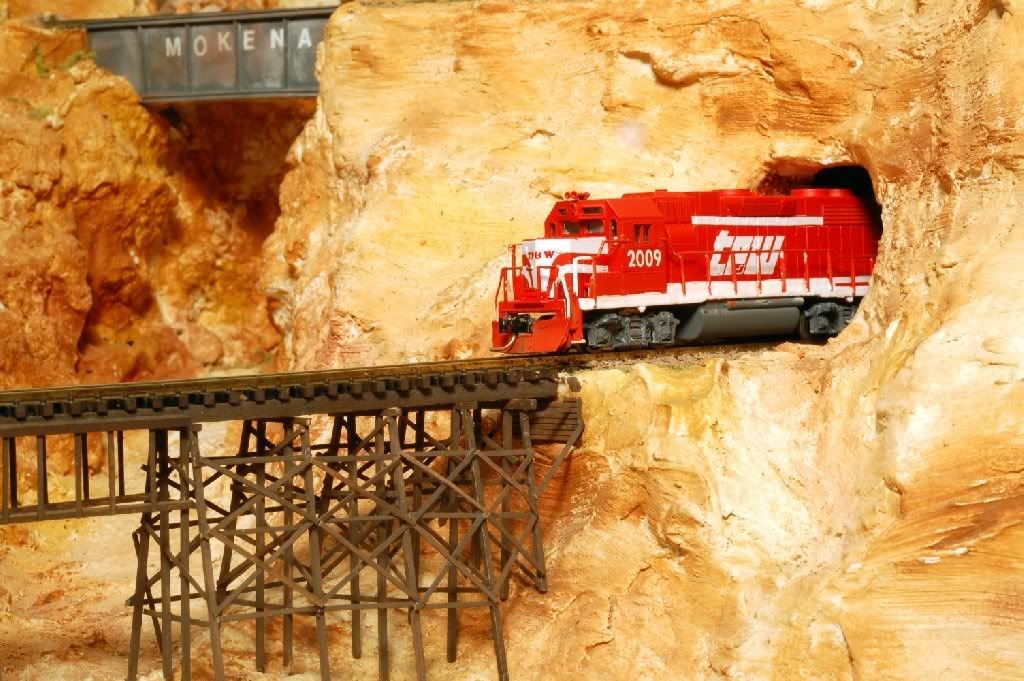
A few years back i painted , using floquil , a TP&W gp38. i had also bought an old square bottle of the same color because the color had been discontinued. a few months bach i decided to paint an RS-3 using that paint like yours the paint had seperated , so i used a 10cc nail , with the head in the jar , to stir the paint , then followed by a whole buch of shacking , back to stirring etc. the paint seemed mixed , but it just would not spray good , even the square jar witch had never been opened. after trying different mixes , i jusy decided it was not going to work in the air brush. so i just got rid of all the floquil stuff diasol and all BUT i have to tell you i am now much happier using pollyscale that i ever was using the floquil its cleaner , sprayes ex and is just much more pleasnt to work with
Just went through all my old paint, ages unknown. Floquil if it’s “skinned over” it’s done. If there’s clear liquid on top and pigment/solid at the bottom stir it with something before you shake it. Use a strainer or pour carefully if airbrushing. For it to dry properly and not rub off all the original chemical components have to be there.
The new thinner works with the old paint. Dio-sol only works with the old paint and never mix old and new paint together. It’s noy the 90 cents you’ll miss it’s the $3-$4 for the new bottle!!!
A word of advice, Gary - just get rid of those old bottles of paint.
Odds are that no matter how much mixing you attempt to do, a certain amount of the granular pigment will not go fully back into suspension. Using really old Floquil paint in this condition, in any way, will also generally result in a granular surface on the item painted. And never, ever, try to put such a paint through an airbush. The probability is likewise very high that shaker-mixing such old paint will result in any tiny flects of dried paint on the inside of the bottle’s cap, or lip of the bottle, breaking free and going into the paint as minute chips. All in all, it’s a bad situation.
Lets clarify something…Floquil is oil based and should be thinned with lacquer thinner or Dio-Sol. Polly S and Polly Scale are acrylic water based and should be thinned with the polly Scale thinner or water. [:)] (straining is a good idea)
You don’t say so, but I presume you’re talking about Floquil lacquers. Stirring it and breaking up the sediment and adding solvent (Dio-sol) won’t help. I’ve tried that in the past, and all you do is end up with lumpy paint that won’t cover. However, being cheap myself, I was interested to see this covered in an old MR, but the only way to do it is if you have an ultrasonic cleaner. I didn’t, so I had to buy fresh bottles.
If I remember correctly. the paint separates into three layers: the congealed paint, a layer of something like oil, and the solvent. The article said to stir up the sediment to reduce it to the smallest particles possible, then place it in the empty ultrasonic tank and fill the tank with water until it reaches the level of the surface of the paint inside the bottle(s). Turn on the cleaner and let it “cook.” I don’t recall how long it should take, particularly since I never owned an ultrasonic cleaner.