I decided to make some details for current project out of balsa wood, instead of styrene; objects such as tool cabinets and such that can easily be cut to proper size and shape from stock balsa. Is there anything that I could use which would “seal” the wood surfaces such that I could then spray a smooth and even paint coating?
I tried an experiment sanding first with very fine grit, then spraying with plain gray primer, but the wood texture was still apparent.
Shellac. On new wood you want a transparent sealer/primer. The transparent primer soaks into the grain, both hardware and softwood and seals them against soaking up a paint top coat. If you seal with paint (anything with color to it) it soaks into the softwood in between grain wood more than it does into the hardwood grain and thus the grain shows thru the paint job. Use something transparent for a first coat. Shellac is best, but it is getting hard to find. Shellac dries in minutes, reducing the time dust has to settle on the finish. If you cannot find shellac, varnish, well thinned, will work, but varnish takes hours to dry tack free. Sand after the primer is good and dry. 220 grit.
Shellac has a shelf life of a couple of years. The makers put a date of manufacture on the cans. I’d be wary of buying a can more than a couple of years old. If too old, shellac won’t harden. It stays sticky for ever.
By the way, I would not use balsa for anything except flying model aircraft where the lightness helps the model to fly. It is too soft, touching it leaves marks, and the surface is sort of greasy and does not take paint well. Go for basswood or clear white pine, they are easy to find, hard enough to handle without leaving marks, soft enough to work easily, and take paint well.
If you’re not concerned about having the timber grain showing, you could use artists texture paste, spread on evenly with something smooth like an old blade or a piece of styrene. It’ll fill any indentations, it can be sanded and painted. You can even mix acrylics into it and do the job in one hit. Mike
You can buy acrylic wood sealant at art supply or craft stores. Apply one coat, allow to dry, sand smooth. Repeat. If necessary, apply a third coat and sand with 400-600 grit sandpaper. I do this with all my wood models (I even put two coats on the inside, although I don’t bother to sand where it won’t show.
Without wishing to create a controversy, I wouldn’t entirely rule out balsa wood for railroad modelling, although I agree that it was not ideal for the OP’s particular project because of the grain.
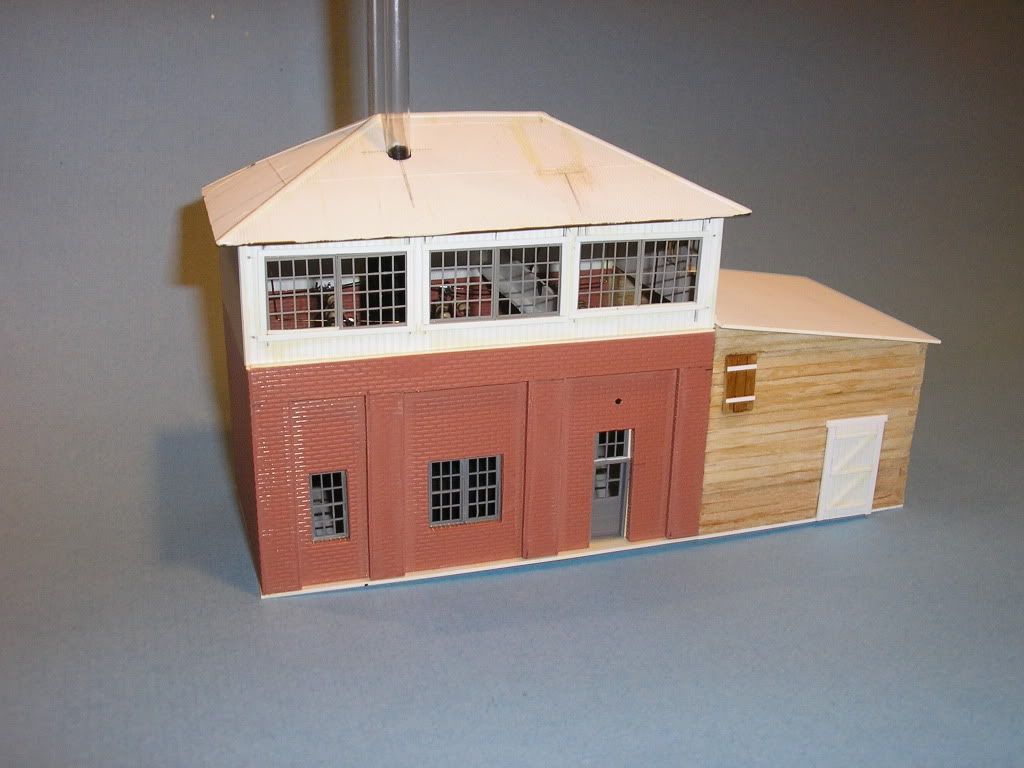
I used 1/8" square balsa to create the coal bin attached to this steam power plant:
For this project the grain was desirable even though it is a bit oversize for HO scale. I wanted to suggest a ‘rough cut’ look. I used CA so assembly went quite quickly. It will be painted so any issues caused by the CA preventing stain from being absorbed evenly are irrelevent.
I have used the same material for dock timbers and legs, and I will use it to construct a couple of retaining walls. It also works nicely for structure interior details like posts and beams.
I agree that it is fragile. Cutting it nicely requires a very sharp blade or a razor saw if the end cut will be visible.
The nice thing about my particular supply of balsa was that it was really cheap. I got about 70 - 3 ft. pieces for less than $20.00 including shipping. Lifetime supply![(-D]
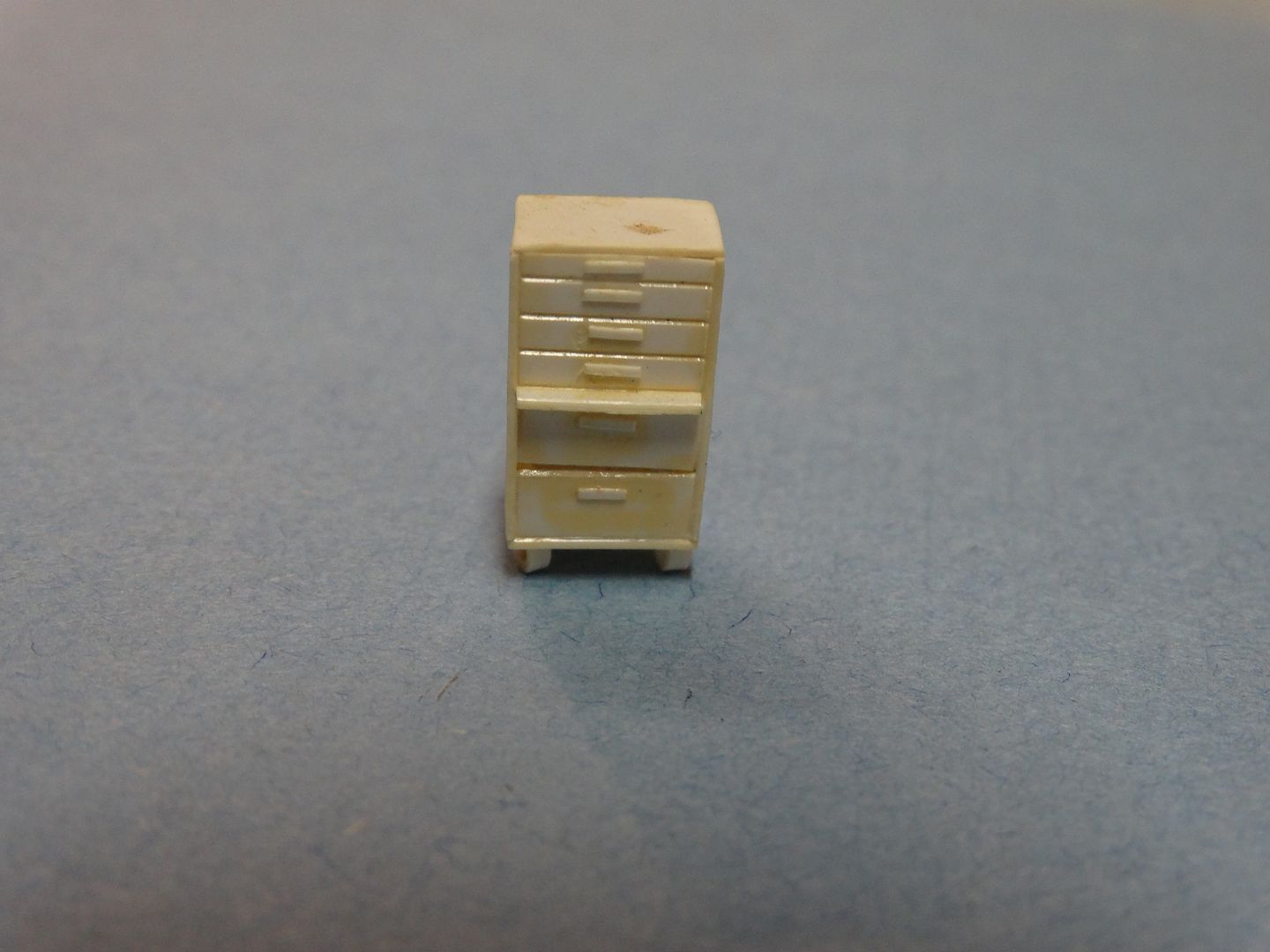
For the OP’s project I would have suggested styrene sheets and strips. Instead of buying plain styrene sheet for projects that require straight cuts I buy scribed sheets. I usually have .010", .020" and .040" thick sheets on hand with the scribing spaced at various widths i.e. .040", .060", .080" and .100". I simply use the scribed lines to allow me to make easy parallel cuts. The scribed side can go to the inside of the model where it will not be seen or can be used on the outside to simulate drawers as in this HO scale example:
I use short lengths of styrene strip to simulate handles on drawers etc. Using the scri
Try Aero Gloss sanding sealer. It is used in model planes to seal balsa before painting. Also try Thompson’s water seal, the water based type, for easier clean-up.