Bridge rectifiers have 4 terminals or leads, two AC & two DC. There is no “inner post”.
Which application are you referring to?
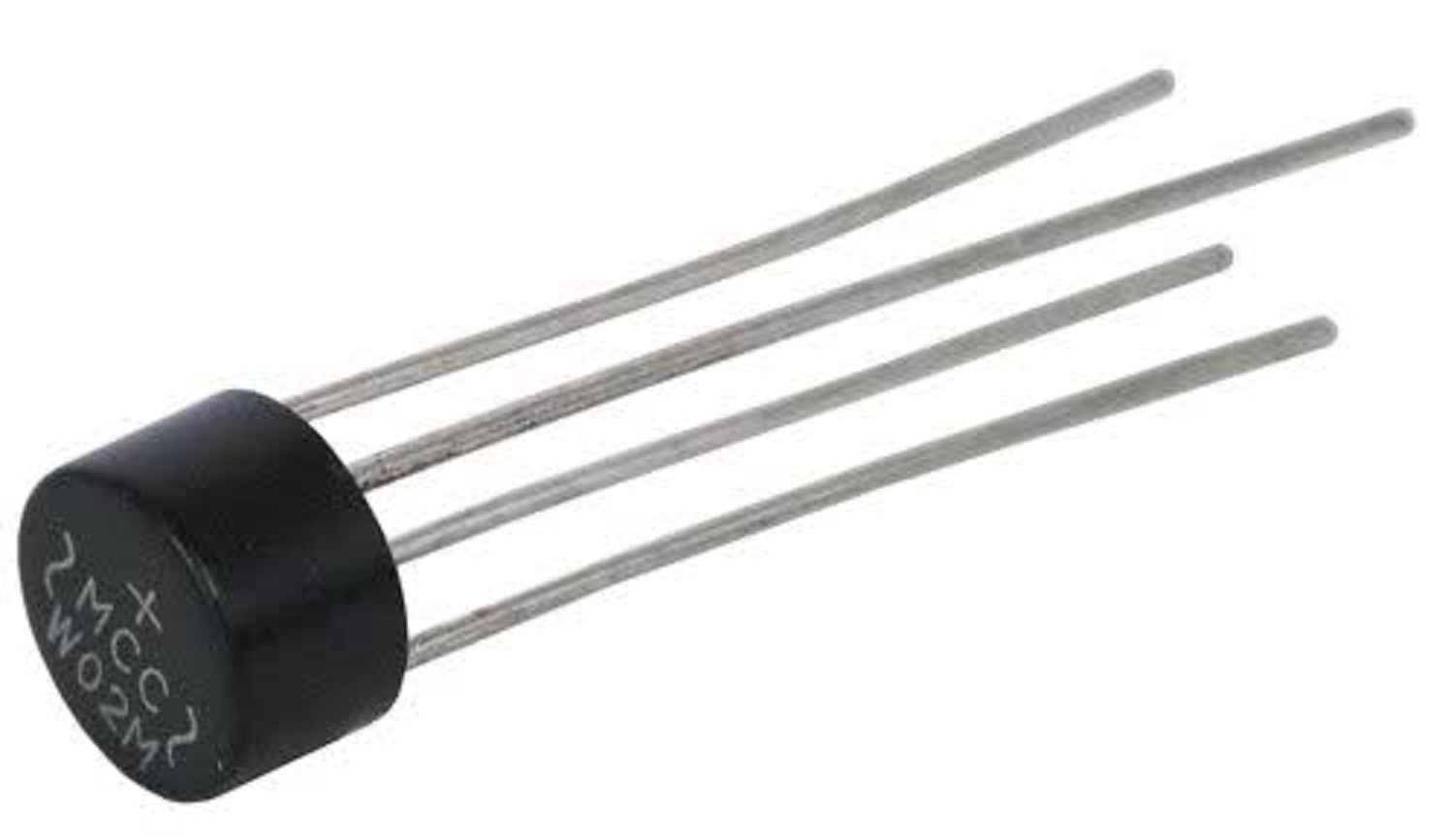
If it is about the passenger car lights, small 1-1.5 amp rectifiers like this would be more than adequate(two per car):
Bridge rectifiers have 4 terminals or leads, two AC & two DC. There is no “inner post”.
Which application are you referring to?
If it is about the passenger car lights, small 1-1.5 amp rectifiers like this would be more than adequate(two per car):
That rectifier, a 4 amp, may be good for a single motor unit, but I use 6 amp 50 volt bridge rectifiers for dual motor apps. To wire the rectifeir to your motor, the AC side is the two squiggly looking lines and the DC to the motor is the plus and minus signs. If it runs in the wrong direction at first, simply swap wires from the plus and minus side.
The rectifier pictured is rated at 1.5 (not 4) amperes and 200 volts: http://www.rectron.com/data_sheets/w005m-w10m.pdf That is not enough of a current rating to be reliable for powering a locomotive. It is plenty for lamps, however. You should use something more like this for a locomotive: http://www.radioshack.com/product/index.jsp?productId=12678416&filterName=Type&filterValue=Rectifiers
This is a simplified bridge rectifier diode. A x4 IN4001 diode connected together in one. It has the same rating like the x4 diode and also can be use the motors. You don’t have to worry about it just follow the proper polarities. this symbol ~ is for AC connection and the +,- is for the DC output connection.
I repeat, use a higher current rating for a locomotive motor.