Hey all. I’m thinking of building a winter theme portable module and thinking about how to cover the layout in snow. I’ve tried various combinations involving white paint, white grout, and climber’s chalk, but results have been unsatisfactory.
So then I was looking at products like WS snow, Buffalo extra fine snow flurries, and extra fine white craft glitter. I was thinking I’d try coating the layout surface in flat white paint and then sprinkling these products on top so that they stick to the wet paint, then shake off excess, like how one applies ground foam.
But before I go buying multiple bags of microplastics that may just end up in the landfill, does anyone have experience to share about making good looking permanent snow? I mention “permanent” because stuff in the pantry like flour or cornstarch might make great looking snow but do such things eventually get eaten by bugs/microorganisms?
Way back in the 1970’s I used white laundry detergent as snow on my layout. It wasn’t a great idea - didn’t react really well with stuff, especially the metal rails. It looked really cool though.
I first tried layers of cotton wool, but as it was a City scene it was unsuccessful.
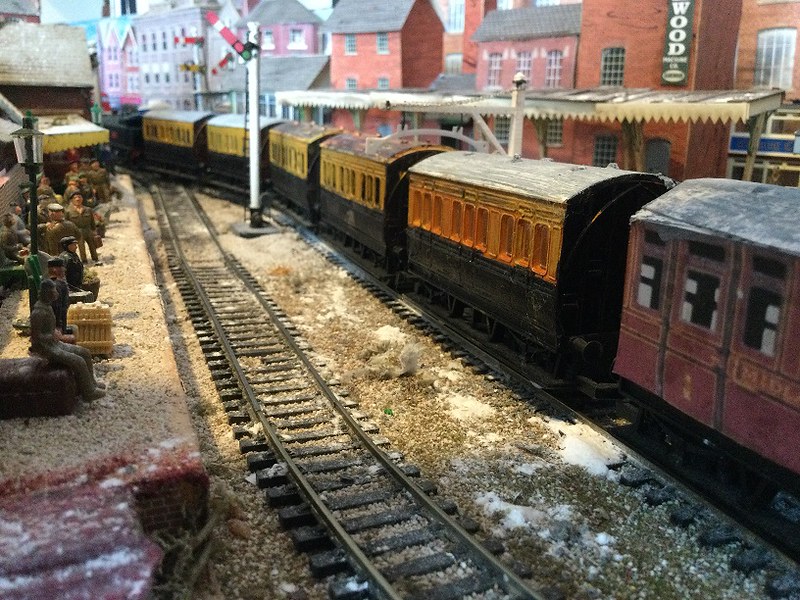
I went next for a ‘light dusting’ using talcum powder. That was over a year ago. That is where I am now. (Hopefully) giving a Wintry feel to Leeds Sovereign Street Station.
Bill Alexander (the TV painter before the bearded puff-ball hair guy) used to say “you’ve got to have dark to show light”. I think white snow on white paint wouldn’t look great. I do ‘regular’ scenery - black or brown paint with yellow & green grass, then add snow over it.
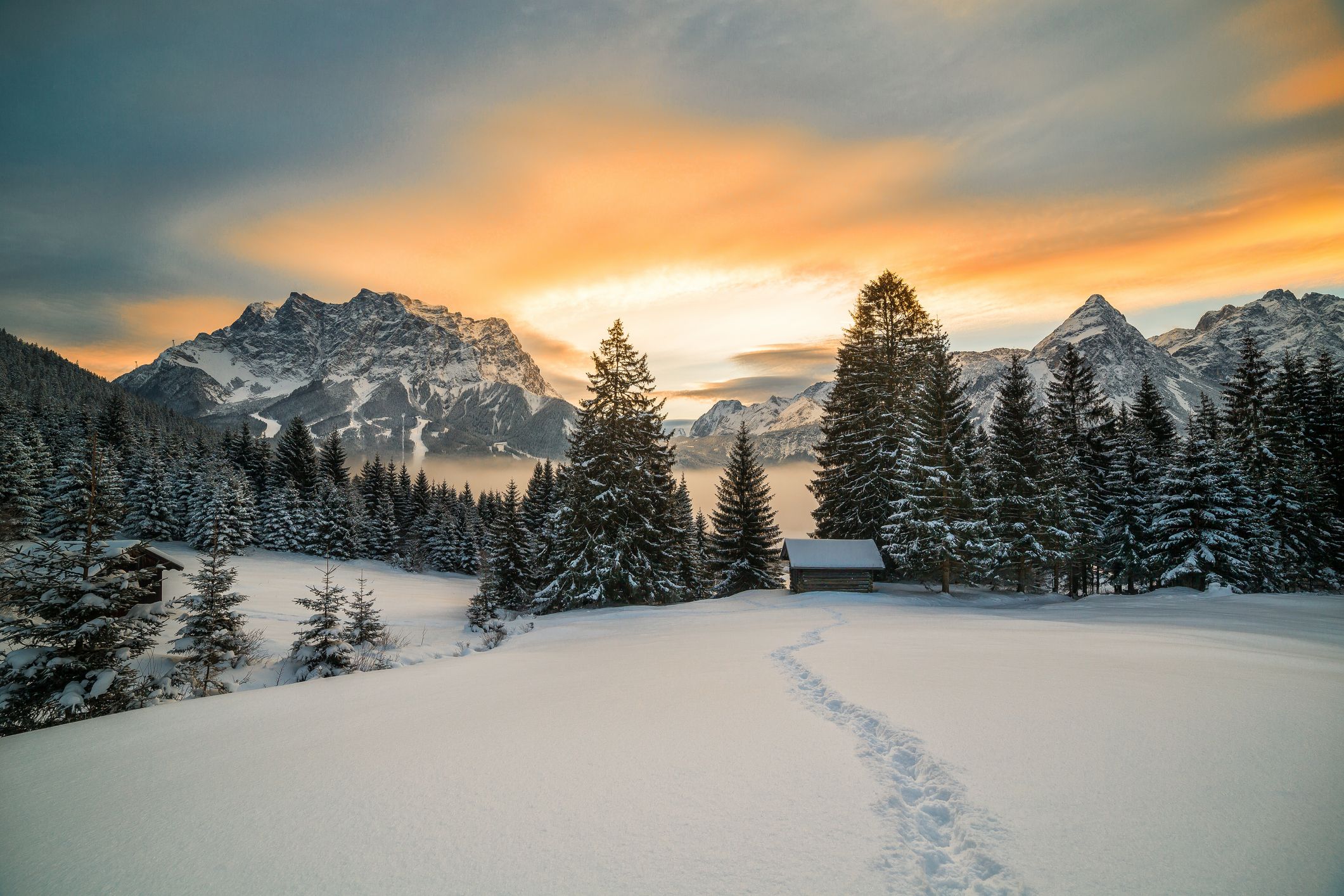
A good point. I am going for full snow coverage; no grass or whatever visible through the snow. Hence my inclination to use white paint; the paint isn’t supposed to look like snow itself, it’s just providing a uniform underneath colour and providing a glue for the real snow to stick to. Deep snow is very bright white. The goal is a snow that looks something like this:
I remember reading years ago about a fellow using white marble dust. Permanent and sparkly. I don’t recall a photo so can’t comment on how effective it was.
Plain WS ‘Snow’, which I have used now on three layouts.
You can just keeping pouring and layering it until it suits your expectations. Later, if you wish to remove it, simply vaccum it up. I would do that using a clean hand-held vacuum ‘dust buster’, and collect the material to re-use it later. You can always cover up any ‘grit’ with another fine layer of unused stuff.
For at least ten years I have been planning a little 4x8 Christmas layout. Nothing fancy. Just an oval of track and one or two sidings and maybe a spur for interest. A two sided backdrop would divide the layout in two with a New England town on one side and a rural setting on the other. Because progression on my big layout has been so slow, I’ve just never gotten around to it but maybe, someday. I want it to have lots of snow so I will be paying close attention to this thread.
Thanks for all the opinions guys. That WS snow looks really good. My calculations indicate that a shaker bottle ought to give me over 1mm coverage on the entire module, which may be enough to give the impression of very deep snow, I’ll see how it looks on a small patch
I don’t have a “snowfield” as such but I have areas of snow melt which I made with white wrapping foam from some furniture stuff we bought. It could probably be used over your scene glued down in sheets. My snow melt areas are in patches and look as I remember seeing it after two summers in New Zealand. The reflective aspect of the material looks like glistening snow I remember from Canada.
I’m afraid that my opinion would be that no matter what you end up using the end result would be that it would look good initially, but after being moved around and jostled a couple of times maybe not so much.
Real snow undisturbed and that has gone through a few sunny days should look like it has a hard and smooth surface with quite a bit of sparkle.
Most scenic snow is too soft and fluffy to reproduce the real effect of a semi permanently snow covered scene but looks more authentic to viewers unfamiliar with the real thing.
I have not tried to create the effect but definitely a smooth surface painted with flat bright white ceiling paint would look more like the real thing than snowflakes in a can. To reproduce the realistic glittering would possibly involve very small flakes of silvery glitter which I am led to believe is available at makeup counters. Very very small amounts could be sprinkled onto the paint and secured with some sort of matt medium. It’s hard to describe but undisturbed snow twinkles a bit like tiny stars are embedded in the surface.
More important and much harder to do will be the disturbed and dirtied snow along the track and between the rails as well as anywhere vehicles or people have been.
For my money I’d model a late Spring or early winter scene where the snow has already melted away from the tracks and ballast as well as off all the roads. That should be much easier. Freshly fallen snow still sparkles in the sunlight but less so than snow several days old. The sparkle effect is developed sooner in early and late season.
Somewhere back in the 2000’s. There was a series of articles in MR on making snow scenes And ice and melted snow. The cover pic was DRGW sd40-2t at moffet tunnel. If I remember right. It is also on of Allen Keller videos he did of the same layout. Also Kathy millet has snow modeling vids
Good suggestion thank you. I have looked at glitter in craft stores but even the “extra fine” grade appear bigger than I think would be optimal. I never would’ve thought about the glitter used in makeup.
While in the craft store I looked at the Buffalo snow brand and I think it’s no good for our purposes. It appears to be tiny plastic hairs. I’m sure it’s fine for most general purpose Christmas crafts but I don’t want my snow field to look hairy.
For those with experience with WS snow, how big are the particles? Say compared to ultra fine particles like cornstarch/flour/icing sugar vs big particles like fine ballast?
Kevin, that is very convincing. Dave Frary, in his book, gives a recipe to make snow goop. He also indicates the mix for paint (white, blue and some black, IIRC). I can dig it up if there is interest on these.
For sure, as a Canadian, I can say that snow can take many appearances in real life. But folks usually prefer the “fluffy” look.
That is the great feature of the Citadel Modeling snow product, how it naturally makes those “fluffy” looking clumps. That is why I chose it for the Winter scenes I made. They look like a Winter Fantasy with very little effort.
I only used a little bit to build up the foreground snow. The “snow” on the other side of the fence and tracks is just white felt.
Thank you for the kind words.
- - - - - - - - - -
If you want to model a Currier & Ives version of snow, pretty much any “snow” product will make the wonderful winterland effect that you need.
If, on the other hand, you really want to model the evils of Winter, the products used by Wargamers and Military Modelers will provide you with everything you need.
As always, I prefer Vallejo, but Secret Weapon Scenics, Turbo Dork, and AK-Interective all make Winter Systems as well.
Vallejo’s system for modeling snow includes rough white paste, ground white pumice, transparent water, transparent white, foamy water, icy water, and other effects.
AK-Interactive, as always, has great videos on their site for modeling these awful conditions.
As is the case for many modelling situations making things look real depends on the observer’s experience.
Where complete covering of snow is a common occurrence reality doesn’t look anything like models of snowy scenes that I’ve seen. Only places with relatively warm winters get any of that fairy tale fluffy looking snow, and no, it doesn’t fall in nice scenic clumps. Proper naturally falling snow forms a smooth surfaced blanket with no lumping. But modelling that in 1/87 would be virtually featureless.
Decide on the look you want and choose the material that gets you that look.
If you want it to look real in 1/87 scale use flat white paint on smooth plaster. You want a slightly blue bright white, not a yellow or cream tinged white. Daylight fluorescent light is a good indicator of the colour of a blanket of snow a few days old. For snow that is supposed to have been around a while, a real winter setting (as in the mountain photo a scene which I’ve been in many times though very rarely anywhere near any cabins!), you’ll need some form of sparkle, sparingly applied. Around the track areas you’ll need to dirty the snow with carbon effects. Diesels and steam locomotives produce a lot of black and grey particulate that settles on the pristine snow in the vicinity of the tracks. No sparkle effect will be needed there.
Dont forget you’ll also need blue grey shadowing wherever the snow is not in the daylight. Drifts are particulary tricky to illustrate. The footprints in the photo show that. My trips were all on skis, boots and snowshoes are way too slow. Plus most of my trips went above tree line where the true colours of snow are most clearly evident. You’d be amazed at the variety of appearance of real snow depending on age, depth and intervening weather. Dig an avalanche risk analysis pit sometime to get a picture of how this happens. It’s an eye opener. Plus when viewing a snowy model you won’t be wearing glacier