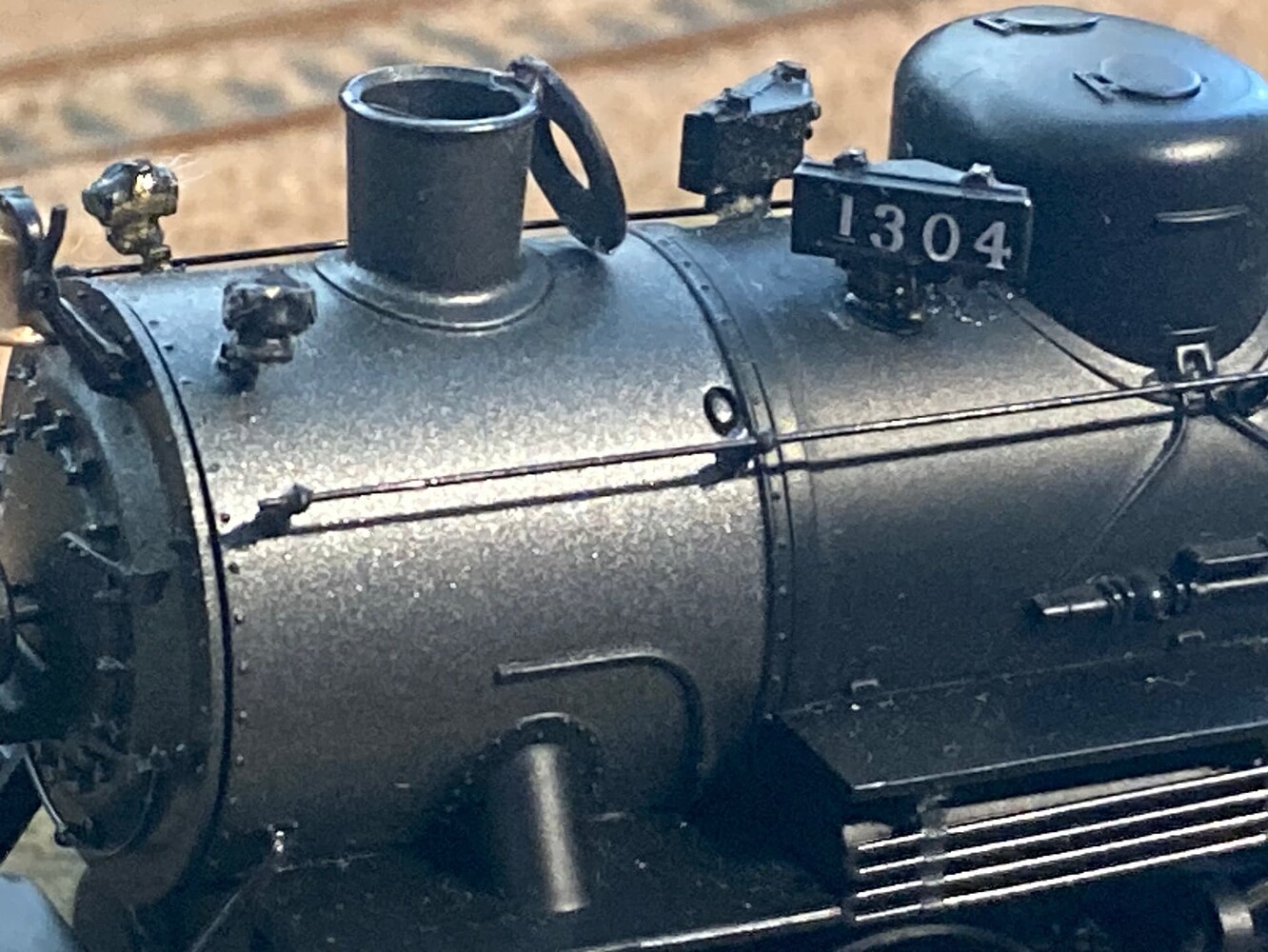
Steam locomotive projects for the branch

Steam locomotive projects for the branch.

The customizing and superdetailing of steam locomotive models seems to have largely faded, just like the real engines did, as younger modelers become further and further removed from the steam era. 60 years ago when I first started model railroading, such detailed work was largely executed on brass engines, all done by removing and replacing extremely minute, detailed parts with micro soldering.

There’s a fair amount of customizing and superdetailing of locomotives today, but of course in today’s world it focuses on diesels. Plus, the model locomotive world has almost entirely shifted to plastic models, which means an entirely different mindset for just about everything. Even though I’m going to focus exclusively on steam locomotives in this thread, I hope that someone that does similar work on diesels will start up a seperate diesel discussion since that work is certainly just as worthy of examination. Or even electric locomotives, let’s not forget those.

I have a few engines that I have modified that more closely resemble prototypes that I am interested in. I have to say that at my advanced age I really don’t feel like microdetailing things at the rivet counter level. Instead, I modify notably visible details to make the engine appear as if it belonged with the actual prototype engines. In my case, it is details characteristic of locomotive practice on my favorite railroad, the Missouri Pacific. And, in full disclosure, I do very little of this work myself because of limited vision and deteriorating dexterity. I am more of an idea man who pays a guy to do this work for me. I do spend money, but I end up with beautiful models that endlessly please me and I don’t feel bad about doing it at all.

It’ll take me a little while to begin to assemble these stories which will appear separately since they are all relatively involved. But hopefully I might give someone some ideas that they may find enjoyment in doing themselves on their own engines.
2 Likes

I’d mention

As an example of spectacular work in ‘modern materials’.

1 Like

That was a great build. But for right now, I’m going to be focusing on stuff on my own layout.

I’d really like to have an operating HO model of that 4-8-0. But as far as I know, there’s only one in existence, a major kitbash by the late great Joe Collias.

I’m getting my first installment ready for tonight or tomorrow.

I am humbled by that; thank you!

1 Like

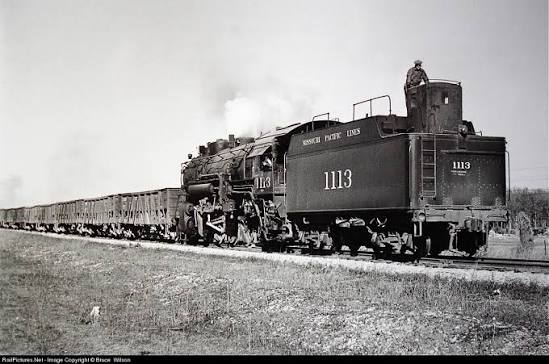
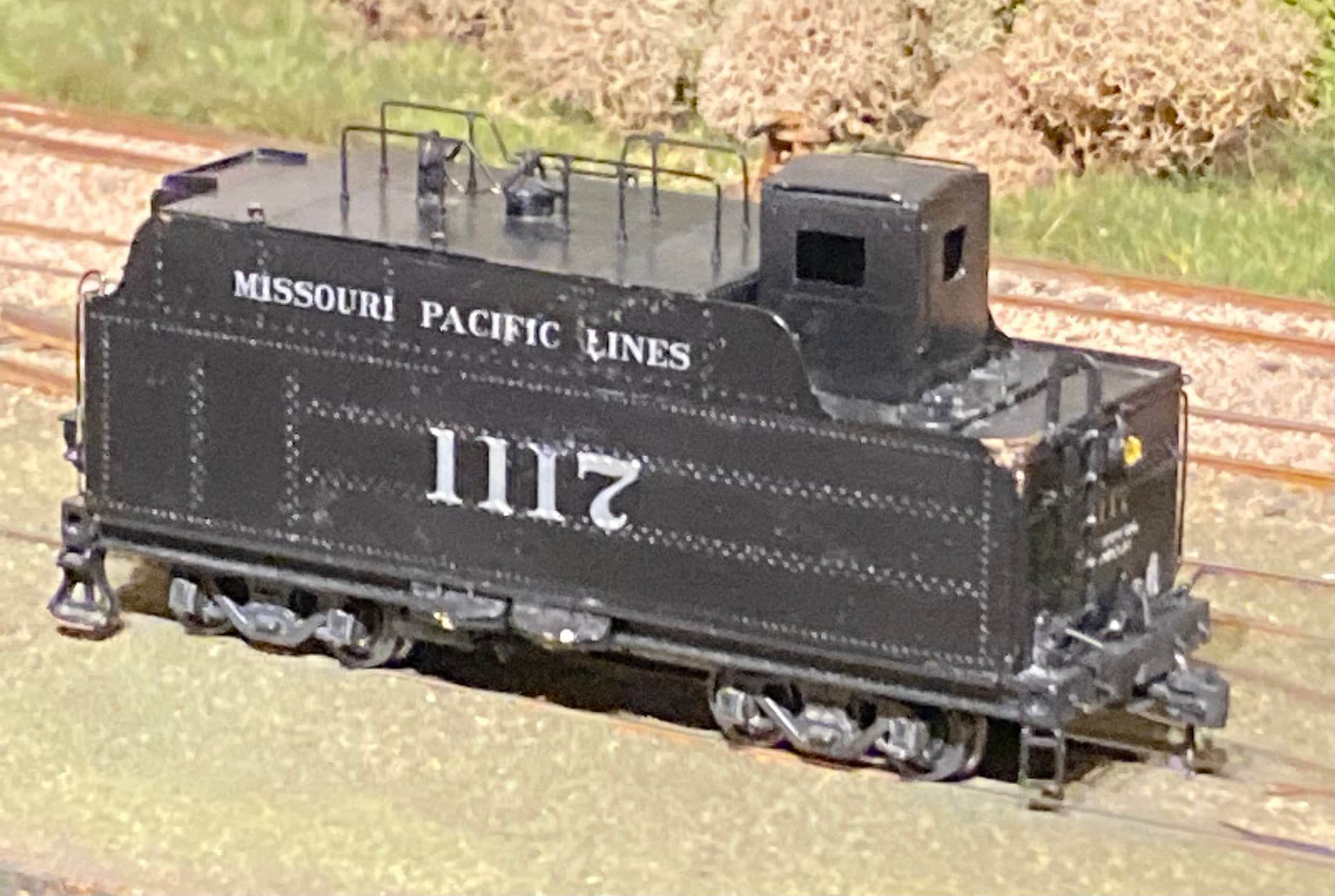
I’ll begin this narrative with this latest one which is still in progress, modification of a Broadway Limited heavy Mike to a Missouri Pacific/I-GN 1110 class engine by virtue of swapping the BLI tender fora completely prototypical brass tender, plus addition to various MP specific details to the engine

It all started when I spotted a bunch of Missouri Pacific things up on eBay all by the same seller. I immediately bought an NOT&M brass caboose out of the lot and thought I might go for the other two cars that were there, but my friend at Soundtraxx pointed out a brass Missouri Pacific that he thought I should buy.

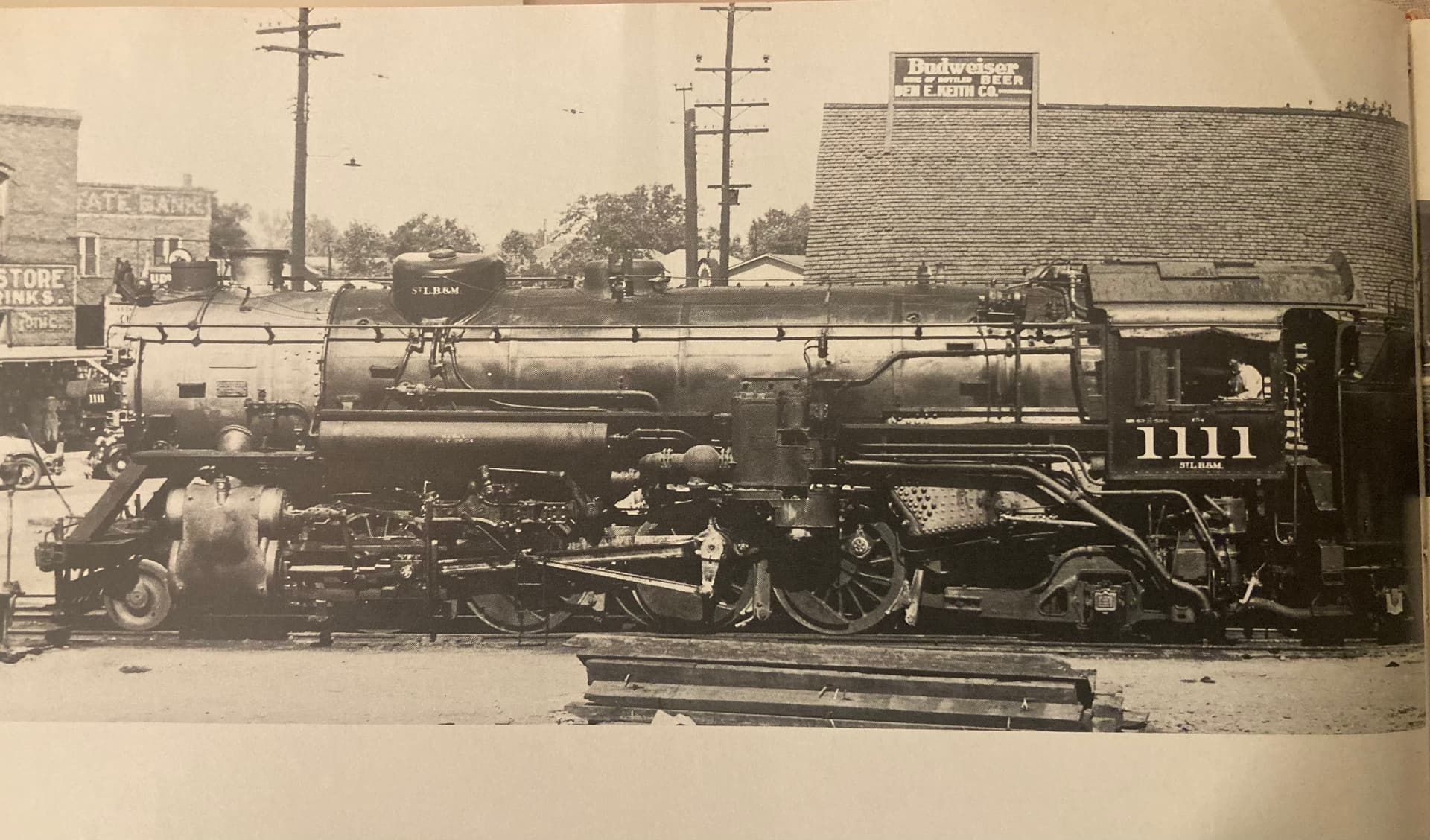
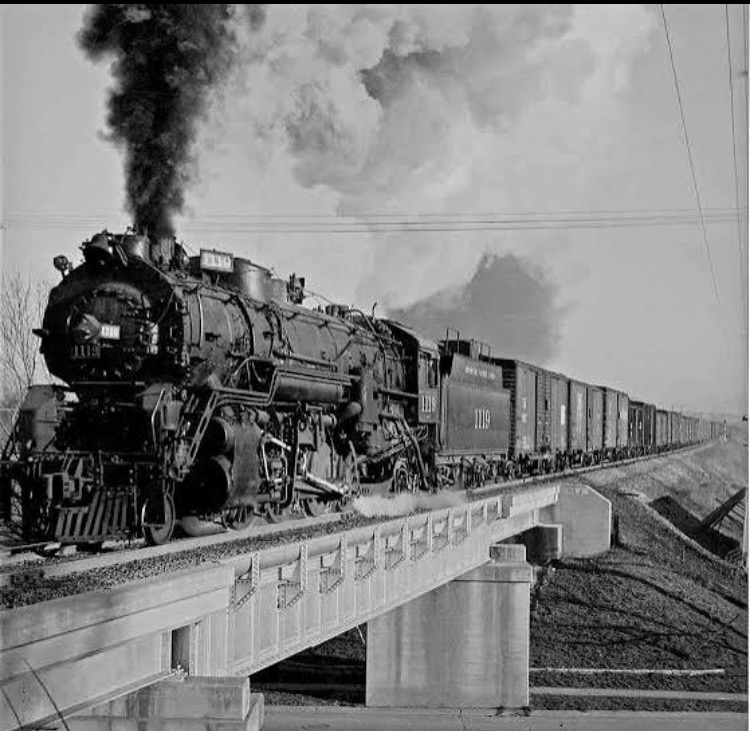
I wasn’t sure which engine this tender had been associated with so I started looking for photos of MP 1100 class Mikados which were actually 10 locomotives on the International-Great Northern in Texas. And sure enough, some photos appeared.

The brass tender had various small damages, and I began to think that it probably had been in a fall with its original locomotive, which most likely had been destroyed, leaving the tender behind usable with repairs.

I could’ve gotten a brass model of this engine with the tender, but I thought, with the tender, I could get a reasonably close locomotive for a budget price, important to me with the budget that I have to live with in retirement.

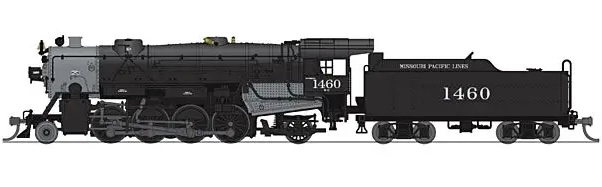
So this meant that I should get a Broadway Limited heavy Mikado to pull this tender. The prototype engines were a design based on the heavy USRA Mikado , but did deviate. Here is the Broadway Limited engine:

The most outright noticeable difference is that the steam dome on the BLI locomotive is much further towards the cab than the forward placed steam dome on the I-GN engine. I quickly reassured myself that this was minor enough to be acceptable to me, and I accordingly ordered a well priced engine off of eBay.

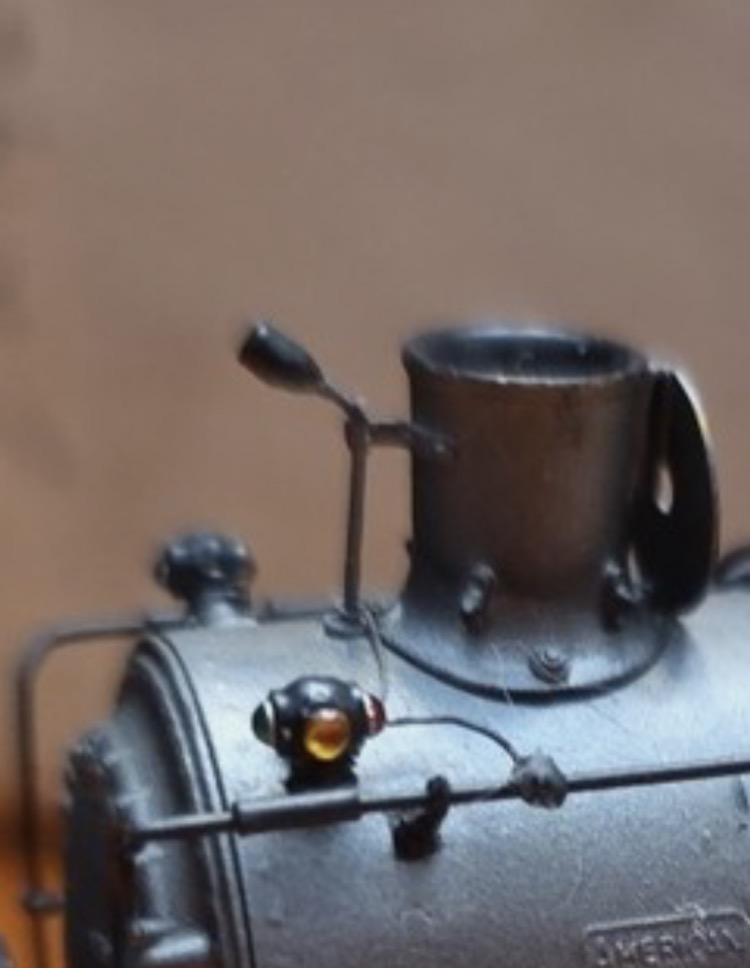
My tech friend has the engine and the tender now to get them working and finished properly. Here’s a couple of details I’d like to add to that engine while it’s being processed, a smoke monitor light at the stack, hinged stack cover, and locomotive number boards.


I’d like to try to save the tender paint job, but it’s probably too beat up. There’s also some missing steps and such that my friend will replace for me.

I can’t wait for this engine. I have several MP MacArthurs but this will by far be the closest and most prototypical one of all.

I just noticed after posting that the trailing truck on the BLI locomotive is the built-up USRA type while the prototype MP engine has the later cast Delta truck. That’s probably going to be something I just live with.

2 Likes

Great project!

Per Collias, these engines were cognate with the Mop’s own 1400-1500 series.

You should be able to find a Delta trailing truck, and, if you do, you might have your guy attempt a unique attribute of the oil-burners of this class*: for a portion of their lives, their cross-compound air pumps were mounted horizontally underneath their cabs. An interesting conversation starter. Also, that feedwater heater equipment on the fireman’s side is very easily seen and might be worth duplicating if you can find one (I had a devil of a time finding a casting when I converted my IG-N 1121-class Berk).

A couple were converted to burn lognite.

I knew about the cross compound air pumps under the cab. It’s just more work than I want to do. Same with the feedwater heater.

The Delta trailing truck, maybe.