I recently read the thread on moving boxes but that discussion focused on locos and rolling stock. After several moves I think I have a system that works for me. Unfortunately, I have not found a successful way to move structures. Short of buying plactic tubs for each building or bridge (not likely as it would be too expensive) not found a effective way to do this. I need to find a way soon as my spouse will be entering a career that will involve a lot of job changes and potential moves. Any other model railroaders have solved this problem?
borrowed some of the wifes fiber fill(stuff crafters use to stuff hand made critters) on last move, other than that i used shredded packing peanuts.
Thanks , ironically my first move was out of the family homestead after my mom passed. She was a quilter and had bags of the cotton batting. You are right packing peanuts are not a good choice-static cling. Also tried air popped popcorn- attracts critters. Bubble wrap, to loose not effective, too tight breaks the models. Was thinking wax paper lightly wrapped and will try batting as the dunage.
It depends somewhat on whether you’re moving yourself or hiring movers. For self-moving, I’d suggest cardboard boxes from the supermarket: banana boxes or those for other produce are good, as most have full lift-off lids, which help to strengthen the box. The former will need an additional bottom and top (fitted inside and secured with a hot glue gun), since the stock box has large openings in the top and the box itself. Use other cut-up boxes from the supermarket for that.
A fairly large structure could go in a box by itself, with minimal packing required: the trick is to isolate it from the box’s sides and top and bottom by supporting it tightly at only the corners using more corrugated cardboard (cut from other free boxes) to create crumple zones to absorb outside forces. These are simple hollow “L” shapes which match the corners of the box on their exterior surface and those of the structure on their interior.
Smaller structures could go in the same type of boxes, but divided, somewhat like an egg carton, into compartments using more free cardboard. Here, the batting would probably be effective packing material, since the dividers would strengthen the box walls and the top and bottom.
I’ve shipped lots of model railroad stuff in this manner and also framed artwork (with glass over the pictures) with no damage ever and no warnings of “FRAGILE” on the box either.
I’ve never used commercial movers, so can’t offer much advice for that scenario.
I have some structures for which I won’t likely find boxes large enough, and will probably need to build my own. This one is over 6’ long:
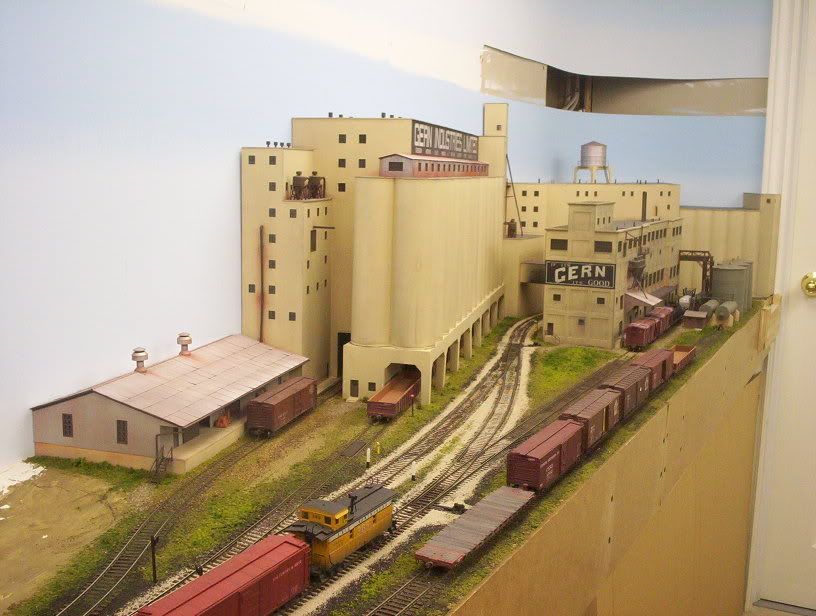
Wayne
We recently moved about 700 miles and I packed the structures in regular cardboard moving boxes with foam packing peanuts. No problems.
Edit: Since I keep all locos and rolling stock in their original boxes, designed to be shipped from China and handled by people who may not care that much, I simply put the items back in their boxes and stacked the boxes into clear plastice storage tubs. Again, the movers moved the tubs from house to truck to house with no problems.
18 years ago we moved fom Ohio to weserm Colorado, two Ryder trucks packed to the roof! Many of my rolling stock was still in kit form. For those I used boxes reams of paper are sold in. My built structures were packed in packing p-nuts. Since you mention static concerns, you can buy p-nuts that are anti-static, used to ship electronics. Find a local industrial box supplier (like U-line) for the best prices. We have a local supplier. I pay around $60 for a bag of 10 to 12 cubic feet of p-nuts ( about 6 feet tall). For the buildings, I used “bankers” boxes, about twice the size of the paper boxes, available at most office supply stores. We had professional movers load the trucks, but moved ourselves. You will find that most plastic strutures if properly built will take a lot of punishment. Wood craftsman type building are a lot more fragile. After a 2 /12 day 1500 mile move, I don’t remember anything that was damaged.
When I moved back to the US after working overseas, I packed my buildings by first wrapping them in plastic wastebasket bags. This was to save any parts that might have broken off. Then layers of styro peanuts in cardboard packing boxes. I did the same for all my vehicles - lots of small parts like mirrors to fall off. My household goods came across the Atlantic on a container ship in a 20’ shipping container in December, then by moving van from Baltimore port to Maine with no damage.
The thing with moving companies is, it you seal the box, it is “packed by owner” and not insured. If the mover inspects and seals the box, it is insured. Verify with the mover to be sure.
Thanks Wayne, will try the cardboard as baffling. For now I will try we are settled into our new place and I am repairing the damage from the clowns we hired to help us move the last time. At this point I have to weed through the collection. My spouse aka the Secretary of the interior has granted the use of one room for my various activities. That 11 x11 space has to fit my new layout, workbench and my desk plus all of my train stuff. The new BR&P v 2.0 will be a switching layout. I can reuse a few of the buildings. Also I need to keep the structures in am going to submit for my structures cert. For the MMR (NMRA) . The rest I will just sell off at the shows along with the rest of the surplus equipment. The goal is to have everything I keep be stored in plastic tubs under the new layout.
Wayne, great job on the grain elevator. Would love to know how you built it as the new BR&P 2.0 will focus on the grain and steel industries in Buffalo. Your structures looks a lot like the Electric Elevator in the Buffalo river near the inner harbor. Hopefully MR will consider doing an article on it soon. Excellent job and thanks for the suggestion.
Yes. I wasn’t all that concerned about the boxes with the structures in them, since any damage would likley be of the nature that required simple regluing.
But the clear tubs with the sound locos were another concern. The movers inspected the tubs then wrapped them in packing tape to keep the lids on securely. That process made them liable for any damages, so I felt a bit more comfortable that they would apply some care.
Thanks for the bag suggestion. Most of the moves in the past have been local moves less than 50 miles each time. My spouse is finishing up a degree in communications and wants to work in radio. I suspect based on that line of work there may be a few long distance moves in our future. Anything I build including the layout will have to withstand these moves. I usually keep locos and rolling stock in their original boxes whenever possible. I’ll add plactic shopping bags or paper towels to cushion the cars. Locos are wrapped in bubble wrap if the original packing is not adequate for the job.