I am in need of some advice for my styrene road project.
First - what is the recommended thickness of the styrene sheet to produce roads on HO scale?
I just ordered online from Walthers a 12" x 24" x .060 sheet to start my building but can change my order if needed. Is the .060 too thick or too thin or just right?
Second - I am open for all suggestions and tips for initial construction plan since this will make my first attempt at making roads. My initial thoughts for creating the roads would be to first cut to size (guessing about 6" for a two way street on HO scale). Then making cracks on roads bed , painting road color, painting the lines, oil markings, tire marks, additional weathering to finish. Oh yeah, almost forgot, adding a crown on the middle by placing a thin piece of styrene tube under the roads’ center.
So, am I missing something or does anyone have a better suggestion?
I used .030" styrene for HO scale. I made it 3.25" wide for 2 lanes,painted it with flat gull gray for the concrete effect, cut irregular lines in it for cracks, the filled the cracks with flat black paint as to show tar oozing effect, used charcoal pencil down the middle of each lane, then smeared it to show the a sort of use/weathering and pin striped the outer edge with white and double yellows in the middle. And added some flat black between my 6" joints randomly along with some flat brown. And a couple of skid marks here and there.
If you want significant amounts of styrene sheet, then buying it from a hobby supplier is going to cost you a bundle. I ordered mine from www.usplastic.com, the Rubbermaid people. If there is a plastics distributer or maybe a signmaker in your town, you might check with them instead.
Another source is your Local Hardware Store or Wal-Mart. Look for those “For Sale” or “Beware of the Dog” signs. They’re just styrene sheet, and they’re a lot cheaper than hobby supplies.
I personally use a hardware store product called Durhams Water Putty for my roads. It’s a powder that mixes up to a pourable and spreadable material. It dries hard and durable, and takes paints and stains well. I work the surface with a wet 1-inch foam brush while it hardens, to get it smooth and remove any bubbles. Others use drywall compound. There are lots of ways to make roadways, so give some of them a try and find the one you like best.
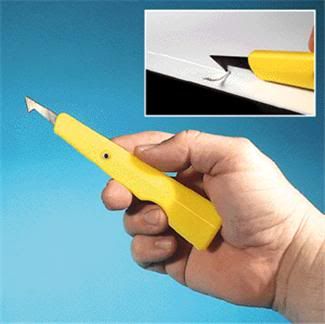
Scribe a line with the back of a hobby knife, then snap along the line. It will leave a small kerf along the cut line, that can be easily filed or sanded off.
.060 plastic will be hard to bend to get the crown. .030 or .040 will curve more easily. Buy an Evergreen sheet each of 30/40 and 60 plastic and test it to see which fits your needs. Then go to a plastics distributor and get 4x4, 4x6 or 4x8 sheet for the price of a couple 6"x12" hobby shop pieces.
I use .060" styrene simply because I have it on hand. You could go a little thicker/thinner and still be fine. Awhile back I posted a tutorial on doing roads on my website: http://www.lancemindheim.com/roads.htm. Maybe there is a tip or two in there that helps.
I am currently using a piece of foam board (about the thickness of cork roadbed) for my main highway. Sculptamold will form the roadside slope. I have also seen Sculptamold used to form the road and joint compound used on top to form a smooth surface, similar to Mr B’s suggestion.
For dirt roads, I have seen just paint, sprinkled with very fine, real dirt. Others use joint compound so they can put ruts and other features in.
As was said, there are many ways to make a road. Try a few and see what you like.
I used .030 that I get free from sign shops. They always are tossing away large scrap pieces.
I cut separate strips for sidewalks and glue on top of the road after scribing in expansion joints and curb lines. This road is not quite finished. I painted the styrene with acrylic tube paints and weather with chalk. I still need to add the center line and other details.
Thanks to all for sharing your ideas & knowledge, its appreciated.
Great suggestions and I look forward to giving them all a try. I really like the plastic signs from hardware stores one; I did not think that those “Beware of Dogs” signs were made of styrene but come to think of it, they sure as heck are. Oh well, thats why I posted my questions and concerns here, I always get great feedback and good source of information.
Thanks again everyone for sharing the knowledge & Happy Holidays to all!!!
Actually, not all the “For Sale” signs are made of styrene, many are made of PVC. Plastic cements don’t work on them, CA is also iffy. Contact cement works mostly. Don’t inhale PVC dust, it’s a carcinogen. It’s easy to tell, just apply some plastic cement, if it just evaporates without disolving a little of the suface then it’s PVC. PVC is quite flexible and styrene is relatively stiff.
A review of a manufacturer’s MSDS for PVC indicates that PVC dust is no more than a nuisance. A Wikipedia article indicates hazard from fumes released by combustion and apparently from outgassing (no mention of dust). If dust were a carcinogen, then there would be many plumbers with cancer.