Are these the same as 3m lock connectors? What major chain store carries them? Ineed them for a 12 guage bus wires, and I am using Kato H.O. track frrders. Are they 22 guage? How close shoud these feeders be placed on the track? Thanks for your help anf information.
3M Scotchlock connectors are not cheap,they have cheap imitations on the market. I found the best place to buy them at a somewhat reasonable price is at an electrical supply house.
I use two different sizes of Scotchlock connectors on the CCRY:
One is a 12-10 AWG / 18-14 AWG (part # is 567), that I use for tapping the
DCC buss for the rail power feeders. My buss is # 12 stranded copper and my feeders are mostly # 18, although I do have some smaller.
The other is a 14-18 AWG / 14/18 AWG (part # 560) that I use for either
tapping off a lighter, sub buss, or even splicing together the feeders for
either track power or DC accessory power.
I would think that even a smaller size would be available, but don’t know that for a fact. On the other hand if you double over (possibly even more than once) your lighter feeders before inserting them into the suitcase…it will work just fine.
Regarding how often a feeder is needed: My rule of thumb is to have a feeder placed at every connecting rail (that would be six rail joiners with feeders soldered to them) of a turnout and on every other section of flextrack.
Radio Shack has them. Don’t know the p/n off hand.
Mike in Tulsa
BNSF Cherokee Sub
Ah, the infamous suitcase connector (also known as an insulation displacement connector, or IDC) again!
You’ll find people here who swear by them, and others who swear at them.
I guess I’m in the latter category. No way will I use those things on my layout - they’re too prone to developing conductivity problems. The blade also bites into the through wire, causing a high point-stress and fatigue multiplier, resulting finally in a broken wire. There can also be galvanic corrosion problems between the blade and the wires.
IDCs may be convenient; they are not reliable.
Others here will say just the opposite. [^]
You can get these at any auto parts store, in bulk!
They come in 3 sizes & are colour coded.
Yellow - 10 - 12 AWG
Blue - 14 - 16 AWG
Red - 18 -22 AWG
Gordon
You will find the IDC’s at good prices by the box in electric supply houses if you shop around a bit, or mail order. Like most stuff the prices vary widely, but the 3M ones work about the best.
I use them on my layout for the feed bus but do agree with Mark on mobile applications and won’t use them for automotive applications as they can cause the wire to fracture when bounced down the road, and corrosion from road spray is an issue. J.R.
I get mine at Home Depot about six bucks for around 30 pieces. I have had these on my layout for about 14 months now and so far no problems. They certainly make connecting feeders and busses more convienient. I use the 14-16 g size (the blue ones). The ones I get at Home Depot are designed for heavy wire in both sides so I just double up (fold over) my 20 g feeder and slip it in and when it crimps it gives a good solid connection. I guess time will tell if these are worth the convienience. They are easy to remove all though they do leave a bite mark in the wire. I drop feeders about every 2-3 feet. I like to over build so if I did get a bad connection at some point I probably would never know it with all the extra feeders.
Terry][8D]
The 3M ‘Suitcase’ connectors have superior conductivity. They are used in the automotive ‘aftermarket’ industry for adding connections. I cannot think of a more corrosive/vibration intensive enviroment than a car going though the seasons! Buy good ones. The clones that I have seen at Home Depot or Radio Shack really are not good. And if they have the 3M IDC’s, they are very high priced. I got mine via mail order theough Mouser. 12-20 cents each is a average price in ‘bulk’. Also, there are several variaties. I use the # 517-905 connector. This allows you to connect a #18-22 track feeder to a bus wire that is anywhere from #14-18 gauge wire. The current price is 18 cents each in bags of 100($18.00/bag).
You want to get the correct type for the wire you are using. The incorrect size my cut deep inthe actual metal wire, or not cut deep enough for a good connection. Here is the web URL:
Jim Bernier
I’ve had them corrode in an automotive environment. They are commonly used in aftermarket radio installs and for trailer wiring harnesses. I’ve seen them melt due to heat build up caused by resistance cause by corrosion. This was on my truck a year after a “professional” trailer hitch installation. I fixed the problem by splicing and soldering.
Best advice, stay away from the suitcase connector.
The automotive industry views these connectors as amateur hour. No reputable shop or Professional Technician will touch them. Some of the guys call them “comeback locks” instead of scotch locks. The only aftermarket installers who use these are the “quickie” alarm, remote starter, trailer hitch and radio installers. These shops employ inexperienced, entry-level installers whose main goal in life is to get the job out the door, fast. It takes a while but then the vehicle ends up back at the dealer or quality independent electrical shop for the proper repair. Then the consumer pays twice. Any shop that uses these is a good one to avoid.
Even when used in under dash applications, which are high and dry, low vibration, low current circuits they fail. They do not fracture or corrode. They simply stop conducting current. A close inspection may show arching due to the excessive resistance that developed. Underhood and underbody is an even bigger joke to due to water intrusion and vibration.
One of the many problems with them is the tiny contact area compared to other means of connections. This results in a voltage drop across the connector, which increases over time. Lets compare contact areas: 0.040 for the IDCs vs. 0.125 - 0.500 for other methods like soldering, wire nuts and crimps. Soldering and wire nuts are direct wire-to-wire contact. Crimping makes a much tighter and larger connection than IDCs.
One analogy often used to explain the flow of electricity is water. Imagine if someone takes a 1/2 hose and pinches it down to 1/16 or so. You will see a definite drop in volume of water due to the restriction. The same thing happens in electrical circuits when you have poor connections. This is the effect that IDCs have on a circuit over time. Unless you have a DMM and measure voltage drop, you will not know this.
There is one good thing about them. They can be excellent diagnostic aids. When you end up having a problem, you can be 99% sure the open is at the conne
If the temptation to use suitcase connectors strikes, grab a big club and beat it to death immediately!
There are three ways to connect wires that work, last and do not come back to haunt the installer: Solder, screw terminals (with appropriate stake-on connectors if using stranded wire) and wire nuts. Anything else is a problem waiting to happen.
Chuck.
Mark:
Do you come by this information from personal experience or from listening to others who likewise don’t like suitcase connectors?
I ask because I have used them extensively on my Siskiyou Line and I have not had a single failure in 10 years of use. Not one failure - none - nada.
If they are all that bad, they should have gone off the market long ago along with all the other failed inventions.
My neighbor works for the phone company and they use the waterproof gell version of the IDCs all the time to do phone line repairs. He says the suitcase version we all know and love is a similar concept only without the waterproof gell added.
I think what it really comes down to is personal preference, rather than a long line of failed wiring that used these connectors. [swg]
The IDC connectors will work for a while but in an environment where moisture and humidity is high (basements – garages) they begin to cause problems.
We used them on our club Lionel display (located in an old basement) and had the trackwork up for almost 10 years. We had use #12 stranded buss wires and #12 drop wires. The track we used was Gargraves and most of the #12 drop wires were soldered to the rails. The IDC connectors were used to connect the drops to the buss wires. We had the proper Scotckloc connector for #12 wire and they worked well for 5 years.
We then began to notice that the trains would slow down on certain sections of track and were not sure why. An inspection of the wiring showed nothing wrong and in the process of checking the wiring the problems seemed to go away. While this was OK it did not really explain why the problems even showed up.
Then a different section of track began giving problems. We had the layout set up blocks using industrial toggle switches and it was designed to be able to have 2 different transformers available to run any given section of track. So the transformers were not the problem as either one would not make the track run any better. It got so bad at the last we had to have the bad sections set on the other transformer set to a higher voltage just to keep the trains moving at the same speed section to section.
Then on the forums someone stated that the potential problems existed where the metal blades came in contact with the wire and very minute amounts of corrosion would form on the IDCs. This then explained why when we did our wiring inspections we seemed to correct the power loss but had not actually done anything except moving the wires around. By moving the wires we must have made good contact again by somehow breaking through the corrosion. I really could not see any of this in any of the connectors but then it probably was that very small amount.
We subsequently rebuilt the Lion
cmr:
Good, some real-life experience!
I’m at 10 years on the layout so it sounds like I may need to watch for failures to perhaps start. And it sounds like the suitcase connectors make a connection that has a useful life of about a decade. I wonder if 3M has any such data …
Guys, I use these and they work great:
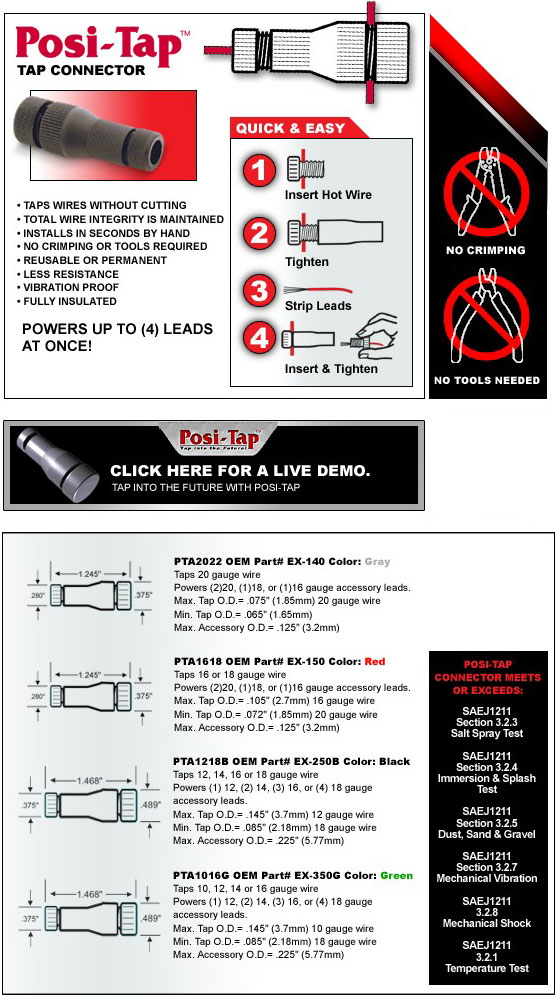
I have recommended these on this forum in several threads. Try 'em, you’ll like 'em.
Here’s the link so you can see it better than the image above:
Joe
I think the real problem here is the humidity. Any open joint (as in 2 wires twister together) will work for a while! But after a while the copper will oxidize and the joint WILL become a high resistance connection.
You may not have a problem if the room is kept to a low humidity value! But in our application we did not want to run a dehumidifier all of the time when no one was at the club. So our problems began to show up.
Just some additional thoughts!
BOB H – Clarion, PA
Why not cover up the open joints with a bit of die-electric grease?
This should take care of the moisture problem shouldn’t it?
It’s used regualrly in automotive situations, again a high humidity area.
GORDON
Do what you want BUT when things start to act strange and you can’t seem to figure out what is wrong, don’t start complaining
Just think about the junk IDC connectors.
You were warned!
We at the Club believed the hype (BS) and we lived to regret it BIG time!
And I know we all believe every word a car salesman tells us don’t we!!!
BOB H – Clarion, PA
You know, I’m tired of trying to warm people not to use them. I’m done trying. Let the people who say they are great just go ahead and help the users a few months later when the layout starts acting up. They must own 3M stock they way they carry on telling us, who know that they are not good, that WE are just too stupid to use the superior product of 3m properly. I’m done trying.
Scotch locks, by all means use them! Fred