Back in the 1960’s, William D. Middleton wrote an excellent book on the Chicago, South Shore & South Bend (the “South Shore”) entitled The South Shore, The Last Interurban.
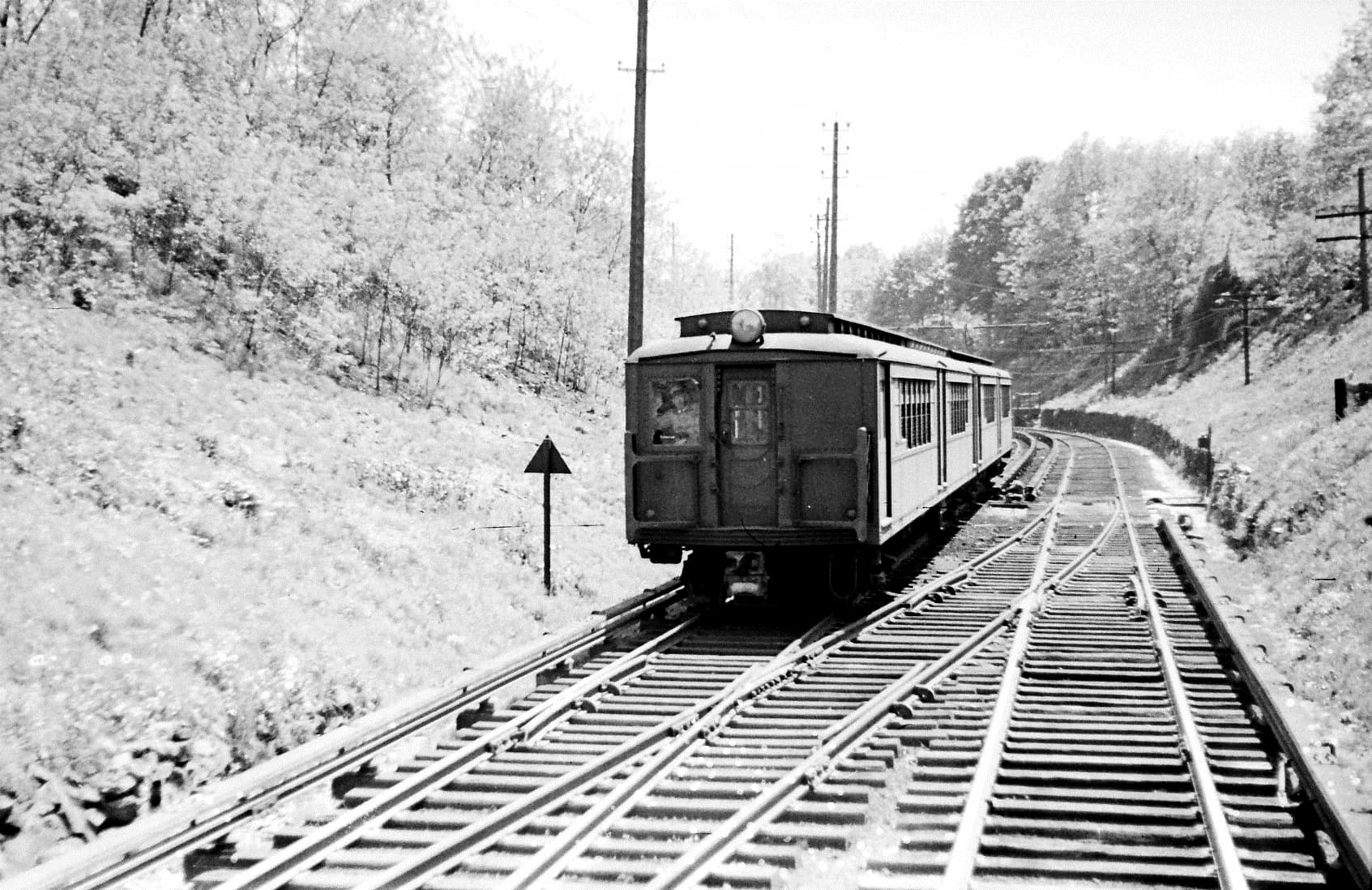
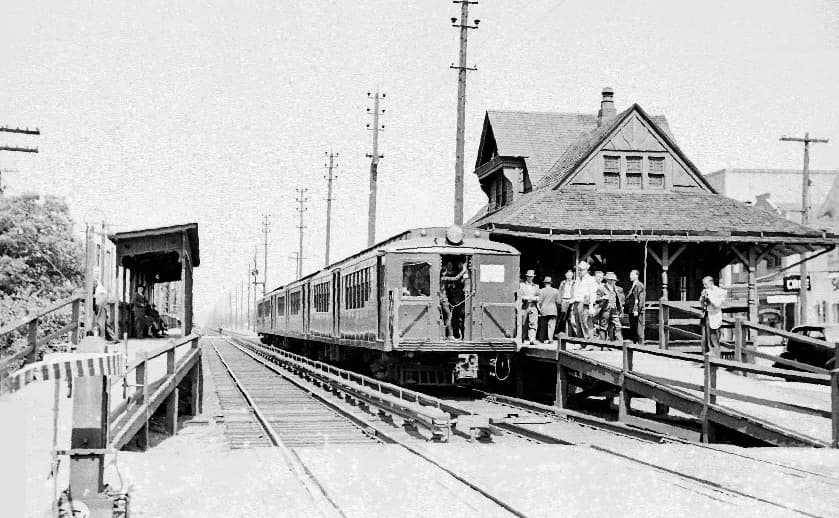
While it might not quite be the last, nor was it a “true” interurban, I have always felt that the LIRR’s electrified zone was very much “interurbanesque”. The technologies used on the LIRR were almost identical to interurban technology. Some of the older MP54s even resembled interurbans.
Only the ever present third rail prevented in-street running. Most true interurbans had at least some in-street operation.
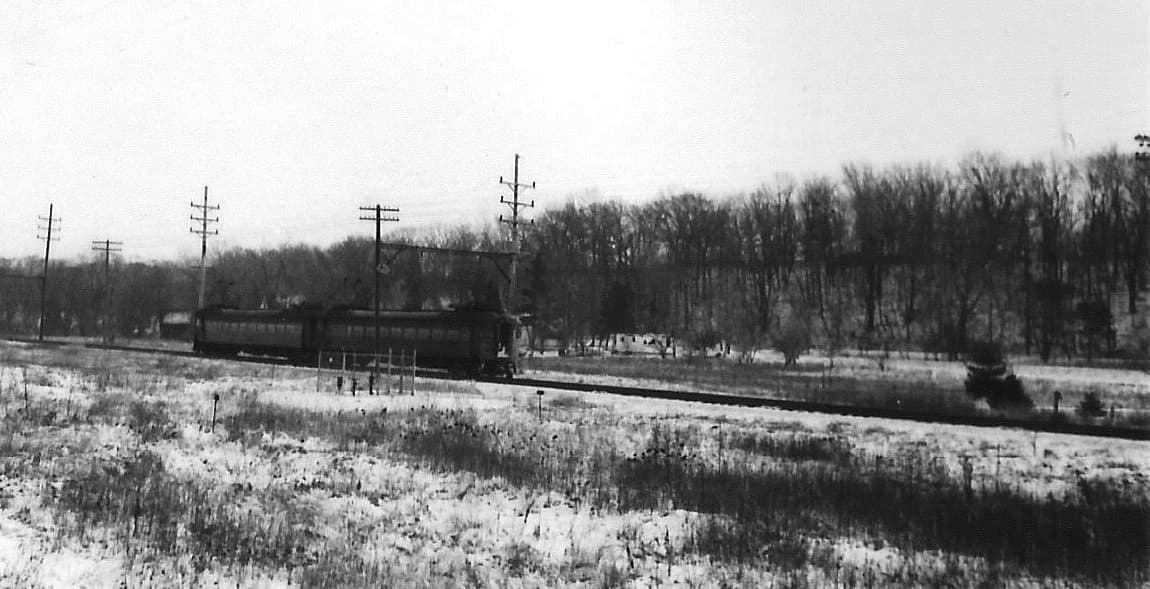
However, the Chicago, Aurora & Elgin (The CA&E) was an interurban that was mostly third rail. In fact, I think that as the CA&E neared its end, most, if not all, of the trolley, in-street lines had been abandoned making in pretty much all third rail – just like the LIRR.
I have also seen older pictures of the CA&E which reminded me of my childhood on Long Island.
There were also a few other lines considered interurban that employed third rail. The P & W in the Philadelphia area was another such line. I don’t believe that had any in-street running at any time.
The West Hempstead branch had a short stretch of typical Midwestern style side-of-the road running just west of the WH station. With mostly two car MP54 trains running through there, it might not have been a real, true blue interurban but it was darn close.
Lived in Manhattan 1932 (born) - 1949 (off to MIT, Army, MIT and Boston area again, then 1967-1970 Chicago area, back to NYC 1970 and to Jerusalem 1996.
More than any LIRR line, with all electric lines double-track and mostly grade separated plus long trains, the existing Staten-Island Rapid Transit line and the Summit - Gladstone branch of ex-Lackawanna New Jersey Transit seemed far more like interurban line to me. And I did ride many North American interurbans, the three Insull Chicago-based lines, Laural Line(L&WV). Liberty Bell & Easton Limited (LVT), CN Quebec - St. Joaquin, Charles Cjiy Western, Ceder Rapids & Iowa City. Baltimore & Annapolis. and several in Europe.
Another ‘interurban’ was the PRR to Swarthmore and West Chester, which had some pronounced similarities to the Gladstone branch.
The PJ&B Dinky had the appearance, if not exactly the functionality, for much of its run, particularly after the second track and the big yards at the Princeton end were removed.
My impression of the SIRT was of the expensively grade-separated portion, which no one would mistake for an interurban. I suspect the section east and north of St. George would have become far less bucolic if the Narrows tunnel had been built, and the Depression had not intervened…
Defintely the PRR to West Chester. I’d forgotten about the post-B&O. NYCTA modernization of the remaining SIRT line. But south of Grant City, I believe there still are grade-crossings, and at-grade running even now. Am I correct?
The significant ‘modernization’ of the SIRT came in the 1920s, with a massive capital improvement billed partly as ‘grade-crossing elimination’, but that was plainly (to me) justified as capacity for the ‘bridge route’ from Hunter Tower across the Arthur Kill and thence via the Narrows to the liner piers adjacent to Bay Ridge… and to the original terminus of the New York Connecting Railroad. It would have been interesting to see traffic from not just LV but the Bound Brook Route use this route to the New York area and New England without the limitations of the North River tunnels…
I do not know what the NYCTA did to improve the SIRT ‘plant’ aside from providing much more modern… but strictly electrified… cars. I’d expect the track was in relatively poor shape, but the grading and improvements would have reasonably held up. However, I had thought most of the ‘non-commuter’ trackage had been extensively pruned even by that time.
Is the surface station building in use? The 1920s gradecelimination was, if I remember correctly from just south of Clifton to St. Geurge. South of there, at grade swith gfrade-dcrossings, until NYCTA years.
There is no ‘surface station’; there are parallel roads (possibly constructed at the time the ‘cut’ was put in) immediately adhacent on both sides, with ‘every other’ cross-street terminated to reduce the number of overbridges. The station is now in a ‘bridge’ structure that spans the tracks, like many other subway stations elsewhere in New York – this is a highly reasonable arrangement in a number of respects.
I was not familiar with SIRT before NYCTA firsthand; I do think there were some crossings ‘at grade’ both south and north of the stretch that was so expensively ‘done’ in the '20s. I do not know if there were issues with gaps in the third rail, vehicular safety in accidents, etc.
I do remember from my youth a terrible accident on PATH sometime in the late Sixties, where the train hit an oil or fuel truck which exploded. There was a terrifying (to a child) newspaper picture of the front of the train with the windows broken and flames still dancing in the interior behind them. I had assumed PATH had been largely grade-crossing-free by that time…
Maybe it did in the Sixties. It is now fully (and expensively-looking) grade-separated all the way to Tottenville. Some of the stations are intricate from the air.
If you look up Grant City NYCTA on Google Earth you can follow the route.