When I was an ATM in B&O’s Baltimore Terminal at Bayview Yard we would generally get a carload of hogs each day on the train Baltimorean destined the SK meat packing facility in the Highlandtown section of Baltimore. A yard crew would switch the car out of the train’s Bayview set off, take it past a water stand on the West Wye track and water the hogs down and then deliver the car to the packing house and pulling the car from the previous day’s delivery.
B&O’s Mt.Clare yard in Baltimore was at one time the designated Feed-Water-Rest location for stock destined Philadelphia & New York and on the West side of the yard tracks there were the various stock pens from days gone by. When CSX reconfigured the yard in consert with the construction of I-95 through the area, the pens were removed.
Getting back to passengers most of the crosstown sleeper moves happened in daylight hours, at least most of the year. I suspect that many if not most of the passengers using these services went downtown to shop and/or eat, hopefully arriving at the correct departure station.
As I recall - the Long Distance trains of most Chicago carriers scheduled their trains to Depart Chicago in the mid to late Afternoon and to arrive Chicago in the early to mid Morning. Of course the carriers did not have routes through Chicago.
You schedule trains for when people desire the transportation.
At least in the first couple of (mostly heavyweight) years, the average transfer time for a sleeper was somewhere between 4 and 5 hours. Speed champion was the C&NW, receiving from NYC in 3:35, and delivering to B&O in 3:25 in 1948.
Getting back to the original topic, Union had one long track with a platform (19 on the north side connected to 28 on the south side.) There were also two “bypass tracks” used for mail (the Post Office was on the south side) and freight and express transfer runs. The long platform access was rarely used for passengers until UP/MILW’s combined “City” trains got too long for the shorter north side platforms. The bypass tracks lost a lot of importance as freight houses closed and mail traffic dwindled. At least one remains today for access to the Amtrak coach yard for north side trains.
Only Union had bypass tracks, as it was really two stub terminals back-to-back. IC’s Central was laid out so trains pulled through the station before backing around the platform tracks, but the north end-of-track was only a short way from the last switch.
At least one of Union’s bypass tracks remains, allowing Amtrak to service north side trains in the south side coach yard.
Grand Central Terminal, which was essentially a stub ended terminal, had a couple(?) of loop tracks, as I recall were platform tracks on the west side which continued in a loop around the end and came along the east side, and may or might not have had platforms on that side. I once boarded a commuter train on a west side platform, and it continued around the loop to the east side and out to the mainline. It was probably necessary to use the loop since the train was a couple of EMUs pulling a RDC. The RDC continued past the end of 3rd rail, which at that time in the 1960s was at North White Plains.
Rich, Gmpulman,
Is it the loop going under the upper boarding tracks and therefore turning around the lower boarding tracks? If it is the case, I guess the second loop track with a sharp curving is part of the loop servicing the lower stations boarding tracks.
Any ideas about their exit under Tunnel Avenue (street number)?
Which Trains Limited were using the loops and the location of their coach yard (cleaning…) ? Maybe too many questions at once, I am sorry. Philippe
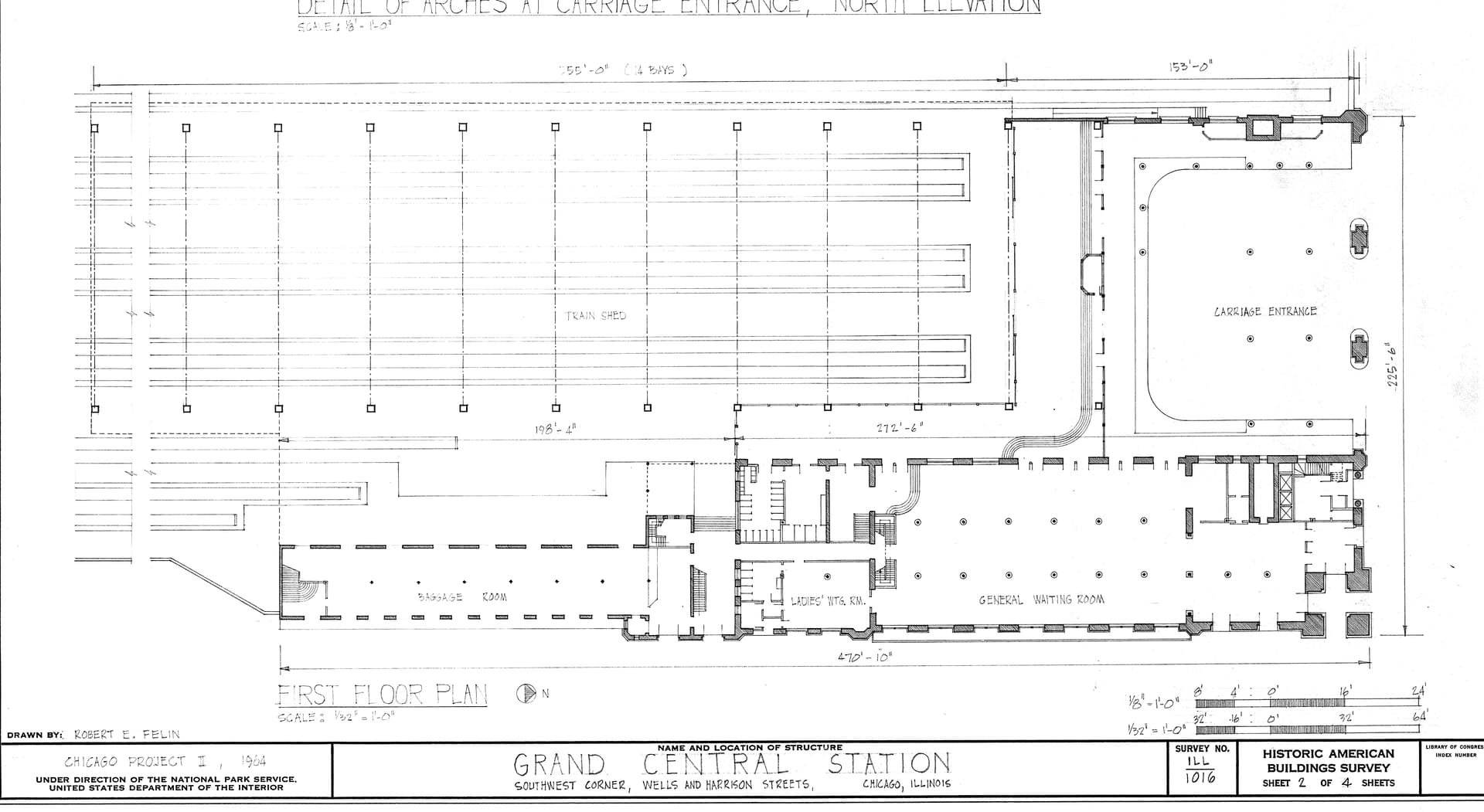
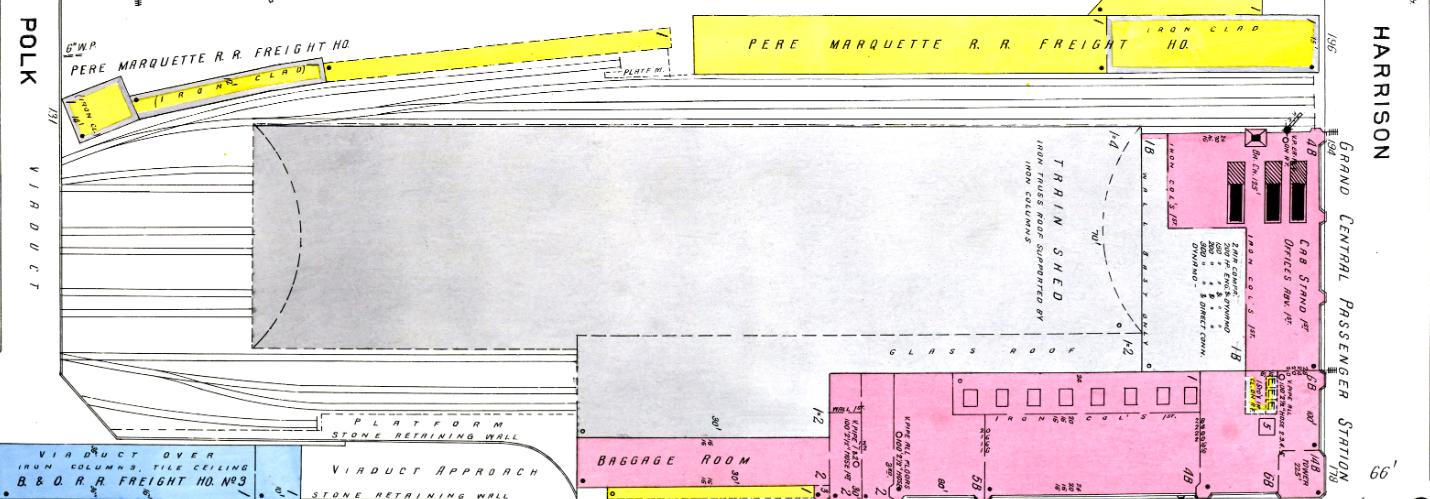
I can’t speak to New York Grand Central Station since I am only familiar with Chicago Grand Central Station which was a stub-end station with no pass through tracks or roundaround track.
This was an early drawing of Chicago’s Grand Central Station track plan, and not much changed in the years that followed until the entire complex, station, shed and tracks, were demolished in 1971.
Regarding the New York Grand Central Terminal; I think the loop tracks , which were on the lower suburban level were mainly used for such. Most of the commuter trains were EMU (electric multiple units) but there were some commuter trains that used electric locos and dual mode. The upper level was mostly meant for the long distance trains which pulled into the stub tracks, and switchers moved their trains back and forth to the Mott Haven Yard several miles back on the main line. The 4 tracks between GCT and Mott Haven (which was also the junction of the Hudson and Harlem Divisions) was a busy line and included a draw bridge. I believe the line exited the GCT/Park Avenue Tunnel at 96th Street. Long Distance trains no longer use GCT (Amtrak uses Penn Station) and Mott Haven Yard is no more, whereas the commuter trains use a facility at Highpoint a little further up the Hudson Division.