How are they supposed to see this signal? It
is blocked by the bridge.
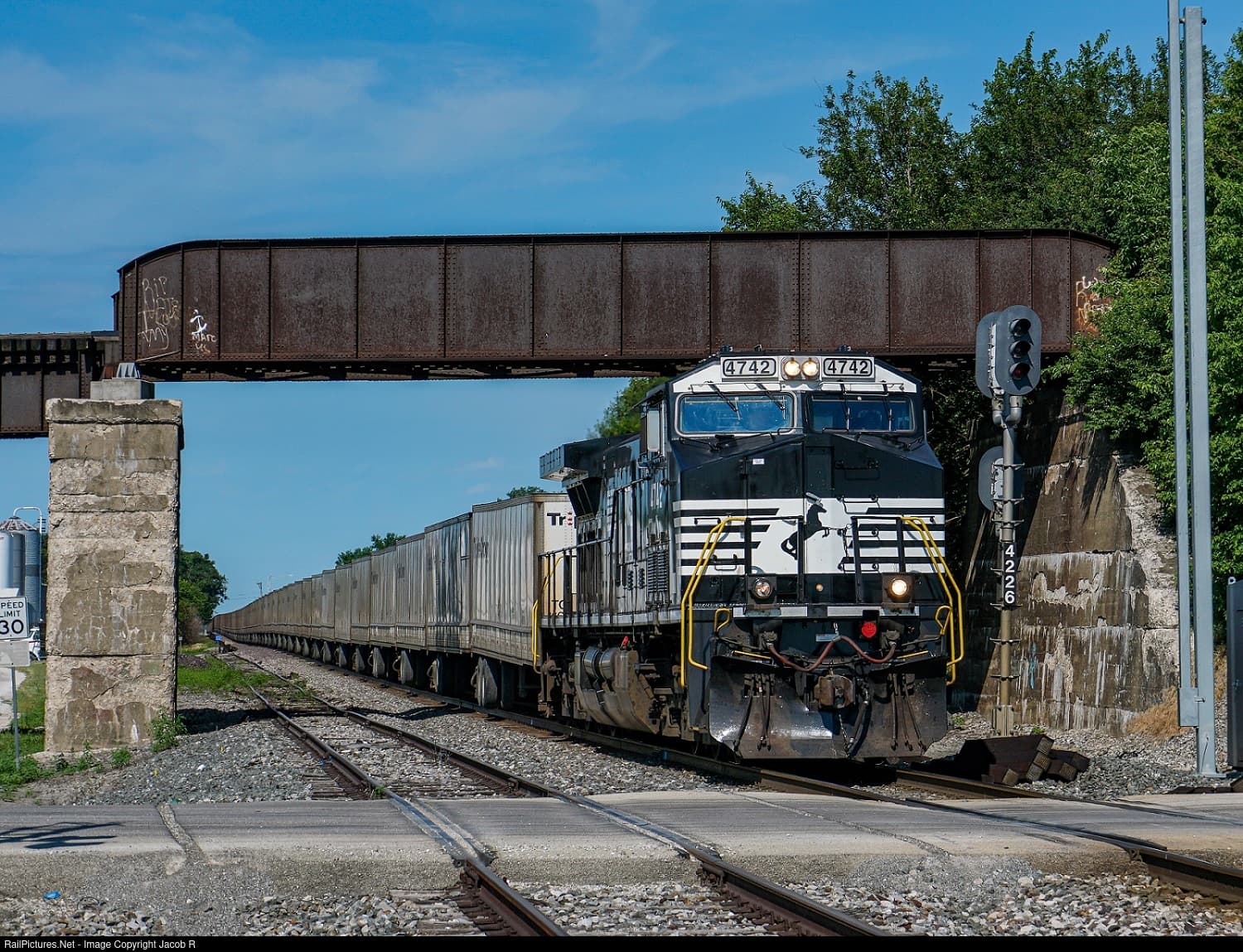
Is this South Jersey?
You can see immediately from the relative height of the locomotive windshields and the signal heads that the sight line will always be below the bridge at any distance.
1 Like
When railroads enter urban areas - properly viewing signals can be difficult, especially when you come to specific locations and you have to know WHERE to look for the signal as there are multiple colored lights all around urban areas - traffic control devices, advertising signs, street lights and a plethora of other light sources.
I think it’s railroad policy to place signals where it’s hardest to see them until you’re right on top of them. One of the things to be qualified on a territory is to know where things, including signals, are located.
With working PTC it’s less of a problem since the display shows signal locations.
Jeff
1 Like
Hi Jeff, maybe a bridge clearance height sign should be posted in neon a good mile lead of a bridge as well.
https://youtu.be/pcqfa_uj2hA?si=sdQA7JGXPj_Fyp4c
Posted before, yes but what a Classic!
It looked like he backed up and did it again. Maybe he felt stuck. And what was up with the dispatcher that miscalculated his route, sending him down that line. It wasn’t the engineer’s fault, was it?
TF
This happened only a few miles from my house, and I was there to see the damaged consist from the road while it was still there.
The story as I heard it:
Local turns go north form both East Junction and West Junction, at opposite ends of the CN (ex-IC) yard. This particular train was supposed to go out via East Junction and drop the racks off early; instead it went out via West Junction. The track you see is a long lead into an oil refinery, CLEARLY marked as low height… as it turned out, the order you drop cuts can be significant…
NS 4742 was released in 2023. The last roadrailer (and by that time the only) route was Detroit-Kansas City.
So between those cities somewhere. You could probably waste 500 gallons of water and ask AI if so inclined.
Signal looks to be an automatic, so at worst you get a restricting. Not a great spot, but PTC tells you where it is, and before that you actually had to know where stuff was.
1 Like
I believe the picture shows the signal to the worst vantage. Viewing it from an engine would be much better.
1 Like
Look closely at signal 4226. The opposite side (which you can’t see the indication of in the photo) has two signal heads and no number plate. This means for trains traveling in the direction of the one in the photo, the signal is an ‘absolute’ or ‘positive’ signal and the most restrictive indication is STOP.
It’s hard to tell, but I think there might be a number plate. I would guess that the dual head is an advance signal before a controlled switch at the next signal. A signal that indicates you will be diverging at the next signal.
PTC still would show the signal location if it was an absolute and if it gives a stop indication, PTC will enforce that stop indication.
PTC in some respects can become a crutch, especially for newer engineers. The screen shows where you are and what’s coming up in the next 6 miles, giving you the distance to that next target. The problem is that my railroad no longer displays yellow and green flags for temporary speed restrictions. They also are no longer maintaining 1/4 and 3/4 mile boards. Some newer engineers, and even some older ones, become too dependent on that screen and PTC warnings. They can become lost without it when it fails.
Jeff
I believe the picture shows the signal to the worst vantage. Viewing it from an engine would be much better.
1 Like