At times, I can see the need to turn equipment 180 to set them up for the reverse direction. I currenly am thinking wye to turn engines and/or cars if needed. I have never seen a prototype turn-table for passenger stuff, but it probably exists. Any thoughts?
I have seen photos of cars on a standard turntable, mostly those with a rear observation deck. Others were just sorted to get them in the right order going the other way. I think this was done mostly on smaller roads. As mentioned above, balloon tracks and sometimes wyes were used on larger roads.
If a wye or reverse loop was not available, a turntable could be used to turn head end, observation and other passenger cars that had a front end. Prototype RR did this. Coaches often had seats with seat backs that could be flipped so these cars would not have to be turned.
Here is a Balloon track in Vancouver. You can see the Via rail coaches being pulled around the round house. It was then a about three miles back to the station. It looks to be late 1970s.
Here is the same place in 1916. Balloon track and all.
Seeing the response mentioning reversable seats reminds me of an excursion trip I took nearly 40 years ago. While the engine did a runaround. the little old ladies flipped their seat backs. The looks on the faces of the under 30 crowd was priceless. “What are they doing.” Then they figured it out.
Turning a passenger train one car at a time on a turntable is a very slow process. In 1968, a derailment on one leg of the St Paul Union Depot wye forced the GN/NP passenger trains to be routed directly into the depot. The GN just pulled their train back wards to Mpls and wye’d it there. The NP took their 14 car NCL apart and used the depot company turntable, then re-assembled the train. Almost a 3 hour delay before they left St Paul.
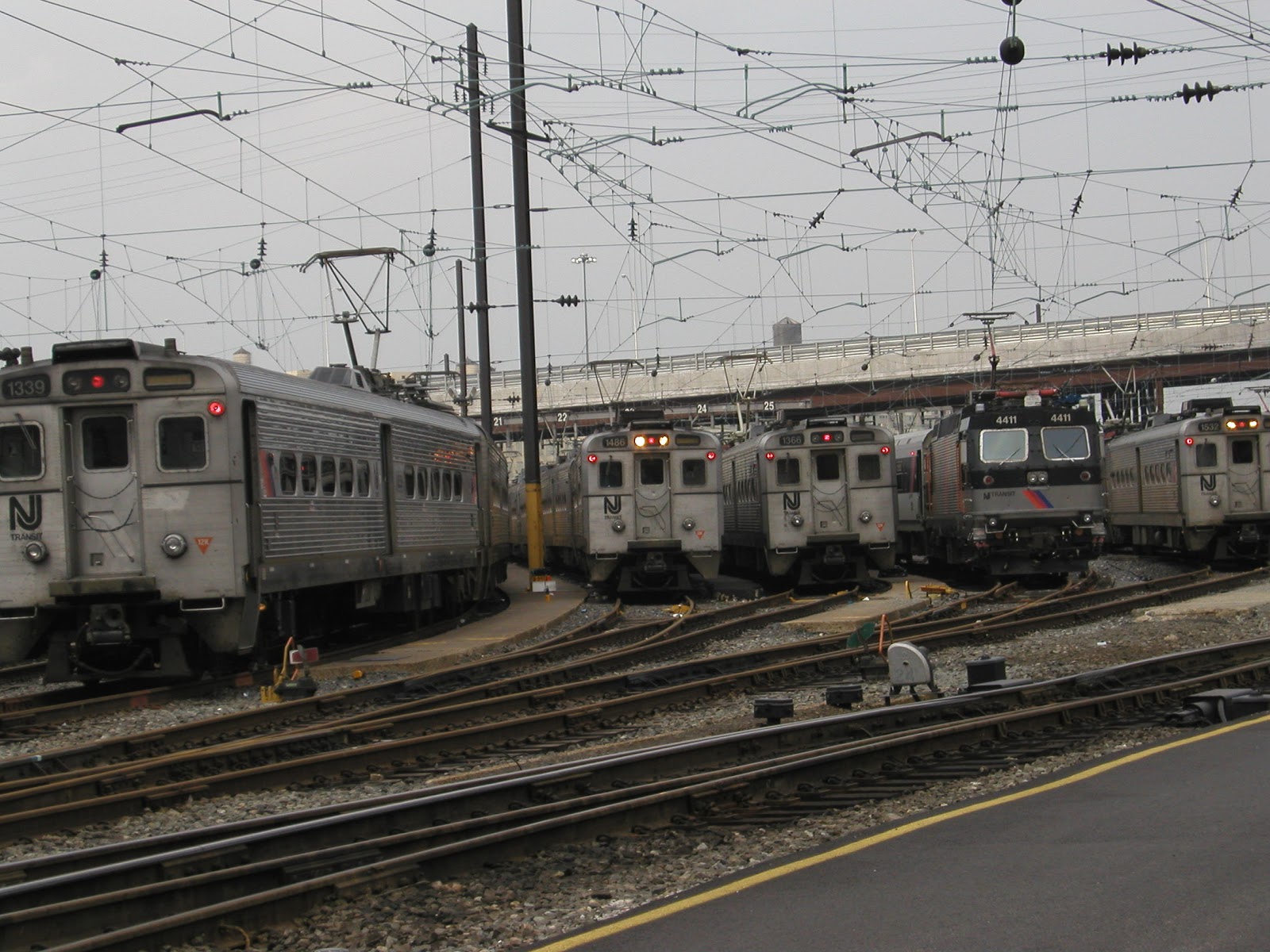
Penn Station in New York City uses Sunnyside Yard in Queens NY via tunnels under the East river. A balloon track turns trains for both Amtrak and New Jersey Transit today, It was built to do the same for the Pennsylvania RR
On my layout a reverse loop was installed and works great for turning the entire consist. Well worth the revision to the original plan.
Commuter cars use “walk-over” seats which can be flipped to the new direction. It takes the conductor only a minute or two to turn a whole car, even less time if some kid like me ran through the car flipping the backs.
But of course the OP is not worried about commuters cars, the likes of which today have fixed seats. “Let the geese fly backwards, what do we care.” He wants to know about long distance trains. Well for sleepers it does not matter. For the diner, and the kitchen it does not matter. As a matter of fact, for today’s AMTK lounge cars it does not matter since they are swivel seats and generally face the outside scenery anyway. That more or less leaves the coach cars, which BTW do have reversible seats, but they turn rather than flip. There is a foot peddle near the isle, under the seat, that can be depressed, allowing the entire seat to rotate. Guess what! AMTK would rather turn the entire train than to fuss with those things, and the conductors have been known to become disgruntled should a passenger dare to turn one seat so that maybe they could play cards together or something.
But when a train arrives at a terminal it is broken up, and sent to the yard for cleaning. Let the cleaners turn the chairs in the coaches, if that is what is required, the other cars do not care which way they are pointed. The observation car is the only car that needs to be turned on the table or wye, and that will be don on the way in or out of its cleaning location. AMTK does not have any observation cars: The cars can go either way, although as I said, they would rather turn the whole train than to fuss with turning the seats.
That said: some personal observations:
AMTK Lake Shore Limited: In Chicago the travel north past Union Station and then back in to the platform. I do not know why they do it this way, it adds a half an hour to the travel time, but now that they have no competition (NYC-PRR) the like to pretend that they are an air line and circle the terminal look
I can only speak for what I know that the santa fe did. It’s name trains (superchief, elcapitan, etc) ran all of the cars vestibule first. diners were always kitchen end first. I’m sure this didn’t happen on every train and less frequently as they neared the amtrak takeover. These trains would have been turned on a wye or balloon, depending on where they were. Lesser known trains were assembled whichever way was easiest for the crew.
I have seen pictures of an observation being turned on a table, but this was probably for maintenance and not the norm for operation.
AMTK Lake Shore Limited: In Chicago the travel north past Union Station and then back in to the platform. I do not know why they do it this way, it adds a half an hour to the travel time, but now that they have no competition (NYC-PRR) the like to pretend that they are an air line and circle the terminal looking for a gate.
Lion…It is my understanding that the reason trains are backed into the Chicago Union Station is so the engine exhaust fumes are left outside or at least closer to the track entrance to the station. I remember being in the station on the platform to board a train several years ago and overheard a couple of conductors complaining about a train that came in head end first. It was very difficult to breath because of the exhaust fumes.
if the passenger station is on a wye like St Louis Union Station, the trains back in and head out so turning the consist is accomplished automatically.
we used to use the E St Louis engine house turntable to turn piggybacks the right way so the trailers all faced the ramp for loading and unloading. this was done if we only had a few “turned wrongs”. if there were a bunch of them (or it was raining) we took them over to the TRRA wye at relay depot and then turned the yard engine on the turntable when we got back.
When the B&M Flying Yankee train set was running between Boston and Bangor ME, there was no place to turn the train near the Bangor Union Station. The Yankee would turn on a wye at Northern Maine Junction, then back 5 or 6 miles into the station http://www.flyingyankee.com/
EDIT: WHile I was looking at the Yankee Reatoration site, I found this video from a couple of years ago about the restoration, a bit off topic, but just FYI http://www.youtube.com/watch?v=Mwnca03W2lo
Two clarifications I wanted to point out regarding the Lake Shore Ltd and Grand Central TERMINAL:
First the Lake Shore: The train may turn, it may not. It depends on the situation. I’ve been on the Lake Shore when we didn’t back in at all and the engines pulled up to the bumper. I’ve seen other trains do the same thing. Sometimes they’ll back in if the consist is being used for another train or if the arriving train is so late that that consist has to be turned as it’s arriving to prepare for departure a few hours later (mind you, the train needs to be cleaned, re-stocked, etc.).
Additionally, the train makes its approach from the south. It turns west on the wye and then backs in. It does add time to the arrival.
Grand Central TERMINAL: Metro-North DOES allow Amtrak trains to operate in and out of GCT although it is rare. Amtrak has AMD-103 (700 series) locomotives that are equipped with 3rd rail shoes. Their technical designation is P32AC-DM (DM stands for dual mode hence the 3rd rail shoes). None of Amtrak’s units have the hatch on the hood however these locomotives ARE allowed to operate in and out of the terminal.
This is a rare occurrence. This typically happens when there is work being performed on the movable bridge at Suyten Duyvil. All Empire Service trains with the exception of the Lake Shore Ltd. (uses the same route out of NYP) operate out of GCT when this happens. The Lake Shore is routed over the Hellgate Bridge via the NEC’s Hellgate Connection to New Rochelle. The Locomotive on the lead end is cut off from the consist and the P32ACDM (which is hooked on the other end) then takes the train south toward NYC and uses the wye to access the Hudson Line at which point it can resume its normal route. This process adds considerable time to the schedule and I can’t speak to the logistics behind this. I can only assume that being a long distan
The Amtrak locomotives that do have third rail shoes CANNOT run to grand central terminal. They have the subway/LIRR type over-running shoe. GCT uses the New York Central type under riding shoes. They are NOT compatible. Locomotives without a front hatch may NOT run in the lead position under Park Avenue. This information comes from a Metro-North engineer. Metro-North is the owner of these tracks, and MN crews would have to pilot any train in these tunnels as there are no AMTK engineers qualified for this track.
Please note that in both instances, I said these occurrances are rare and only happen if there is an issue on the Empire connecting line (typically issues with the bridge whether it be maintenance or malfunction). I know EXACTLY where the LSL travels under NORMAL circumstances.
Just north of the Park Ave Tunnel
Well you should know where this is [:)]
I will give you this though. It’s quite possible that MN ties on one of their locomotives to tow the Amtrak trains in and out of GCT.
I’ll re-itterate again, this is not a normal thing! But it has happened and could potentially happen again if something goes wrong on the Empire Line that requires the line to be shut down.