Page 148 of John F. Strauss, Jr.'s “Northern Pacific Pictorial-Volume Four” has two troop train consists (not UP, but likely typical). One for 1943 and one for 1945 (westbound out of St. Paul).
at the front 2-3 baggage-express or express reefers (the latter surely used as baggage)
11-12 troop sleepers, half of which were the ones you’re thinking of, the others 13 section sleepers, likely visually the same as 14 section. The types tended to be clumped together, as opposed to randomly distributed.
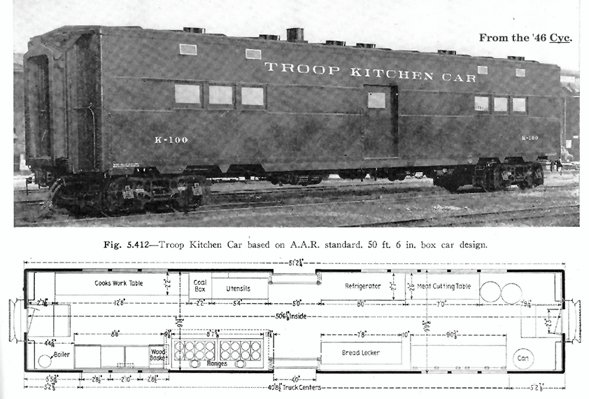
2 troop kitchens. In one train, the first is behind the first three sleepers, and the second ahead of the last. In the other one, both kitchens are together, pretty much in the middle. Keep in mind that these were kitchens, not dining cars.
AFTER all the above was one or two “regular” sleepers. The first train had a 6-3 and a 10-2-1. The second had only a 10-3.
Since the question was about UP, there’s no need to go into more detail.
Putting together a UP train should be a piece of cake:
3 wood PFE express reefers (BLI)(or maybe some brass UP baggage)
2 troop kitchens (Walthers)
6 troop sleepers (Walthers)
6 13 (14) section sleepers (Walthers/Branchline)
1 or 2 assorted sleepers (NOT section only. Those 1’s, 2’s, and 3’s above are for the OCCIFERS.)
Ed
PS: That 1943 date I mentioned caused me concern. I looked up some info in the troop sleeper/kitchen article in RPC # 5 and found the first troop sleepers were delivered in October of 1943. Since the consist is VERY detailed, I believe it to be correct, but the date wrong. Perhaps “1943” was really 1944.
There were certainly troop trains before “troop sleepers”. I figure modeling those would involve a LOT of 13 (14) section sleepers and “regular”