I am planing a new layout, and I would like to try spline roadbed,using masonite. How is the masonite joined together to make the spline, and also how is it joined to the risers. Thanks for any help. SAM
Have you thought of simply typing the phrase “spline roadbed” into Google or other search engine ? ?
Here’s what I got as the first hit using a simple Google search:
http://s145079212.onlinehome.us/rr/howto/splines/index.shtml
Charlie Comstock has some great info for you here
http://s145079212.onlinehome.us/rr/howto/splines/index.shtml
Also, check your in box for more info from me
ratled
Generally the Masonite splines are glued and clamped in place with yellow carpenters glue you can also use Liquid Nails for projects. On Masonite splined roadbed you drill through the spline with a clearance drill and attach the spline to the riser using a dry wall screw. One world of advice unless your building a large railroad your not going to gain anything buy using either Masonite spline roadbed or any other techniques of using splines to make roadbed or sub roadbed. Methods like that are typically used when building a large layout to help keep the cost down. There are several other methods such as ripping 3/4" pine shelving into 1/4" strips and gluing them to square 3/4" blocks with a layer or Homasote on top for roadbed to ripping lengths of Masonite into 3" wide strips and standing then on their ends and gluing them together to make roadbed. I also have seen guys use plywood ripped into strips as well. A few of the drawbacks of using Masonite spline roadbed is A: the mess it makes when you cut it and B:if your building a smaller layout and want to incorporate 18" or 2" 24" etc. radius curves your not going to be able to make them that tight using Masonite. You would be better served using 3/4" plywood cut to the desired curve aka cookie cutter method. Some times somthing new isn’t always the best idea for your layout.
I have about 80’ of spline on my layout. It was my first attempt and like you did it because I wanted to try something different. I used foam for the same reason. It turned out far better than I ever thought it would have, including the slight superelevation I put in it using a rasp.
I used a glue gun to put mine together and had a lot of fun doing it. I bought about twenty clamps for a dollar each at Sears. I say go for it. It takes little time to get good at it and develop your own methods for success. Like the others have said do a search on these forums and Google and develop your own plan.[:)]

Brent
I have no experience with spline sub-roadbed; however, have followed with interest the many threads in which it is discussed. I don’t recall reading that anyone has used pre-milled wood lath/lattice strips for the spline. It seems that would be a no-fuss, no-muss option. Anyone tried it?
Dante
My club has used the wood spline and combination cookie cutter exclusively for over 60 years. Origionally the spline and the 1/4" roadbed were off the rack when clear pine moldings were much more affordable. We now rip the splines and subroadbed from clear pine (C or better). Part of club membership requirements was to make a spline test track. 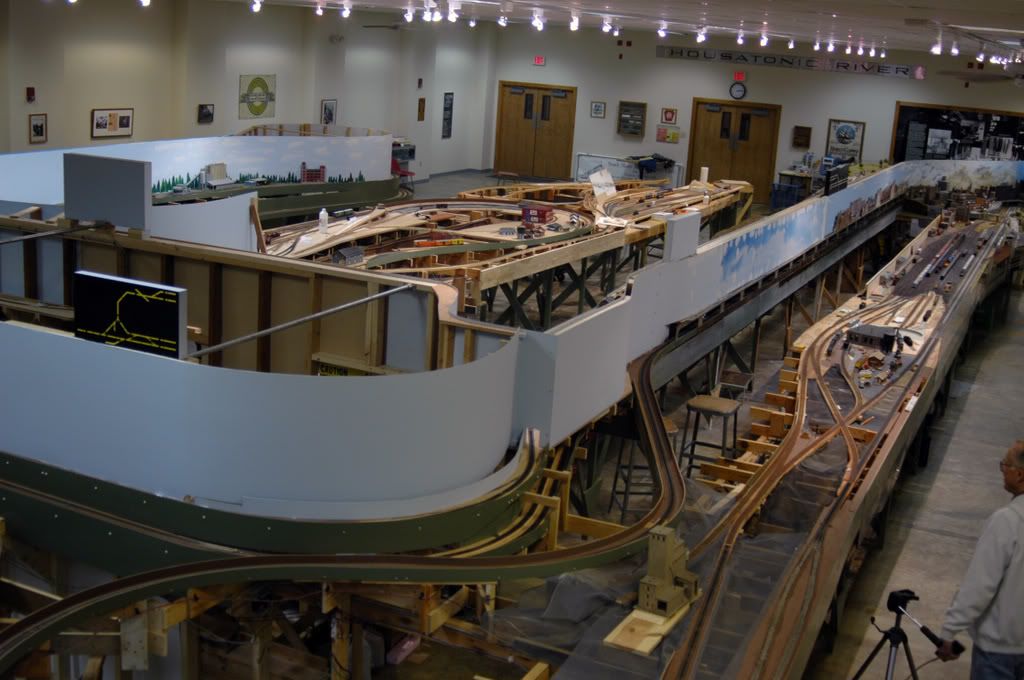
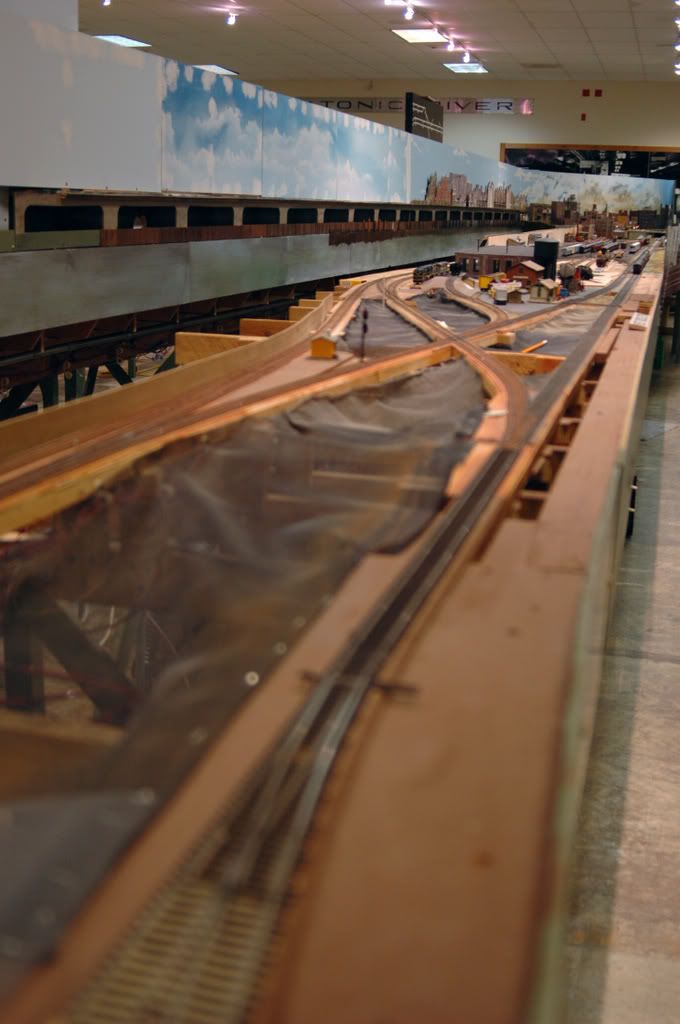
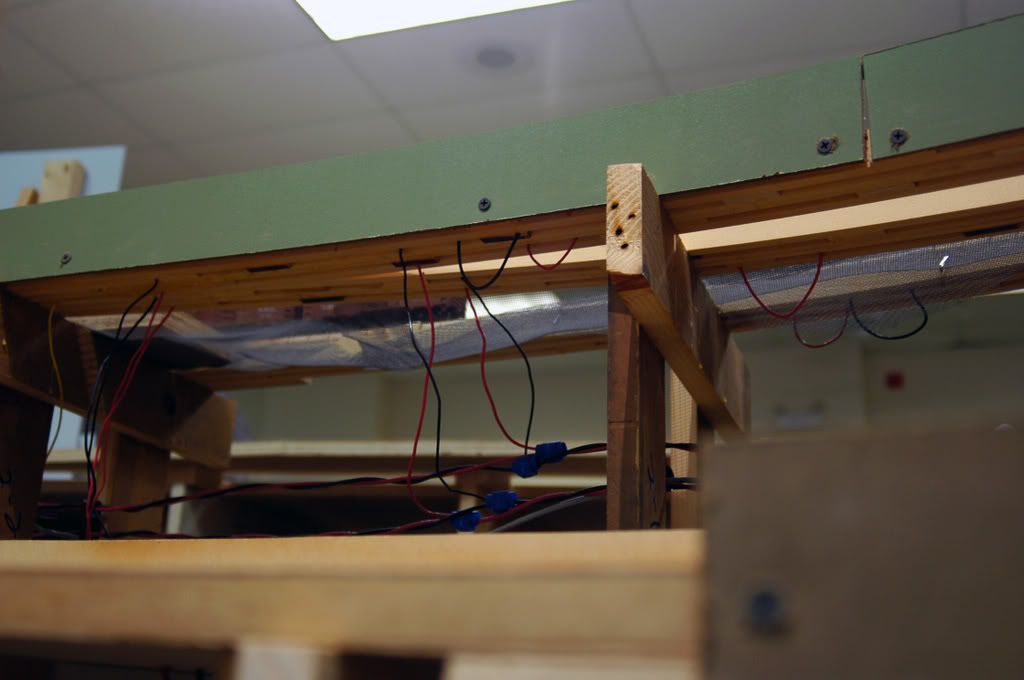
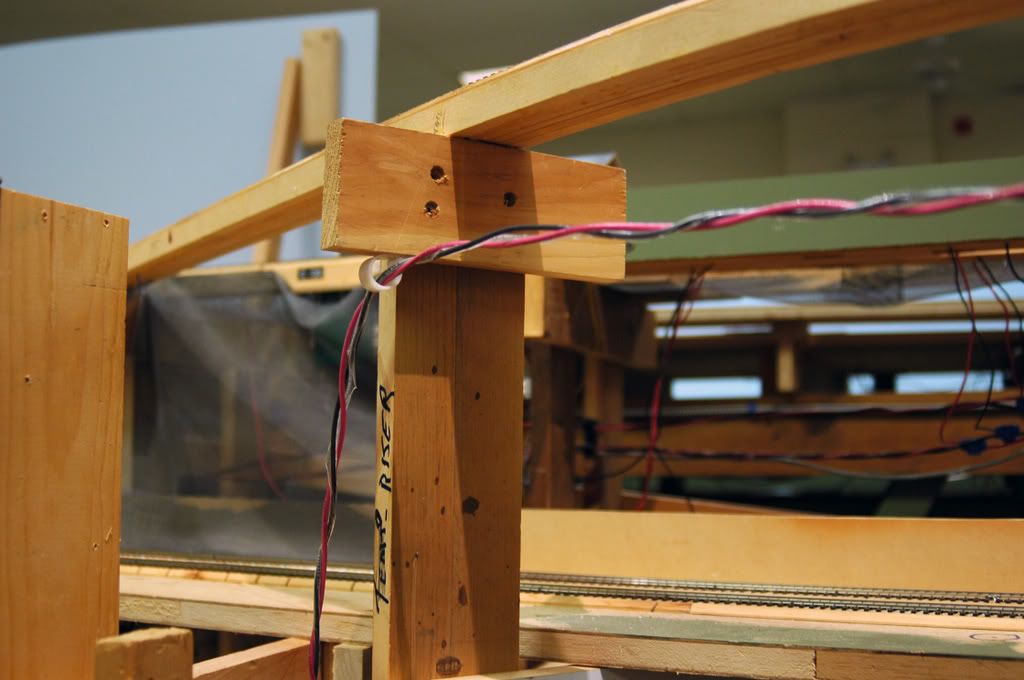 Origionally all our track was handlaid, now we spike the Walther’s flex and ony build some of the special turnouts and diamonds
SAM…
On my last RR I used the masonite spline method for the bulk of the branch and can tell you it works just fine (see the photo below). Yes it makes lots of dust - so rip this stuff outside!. The trick is glue and clamps (and more clamps) - and working directly on the RR 'cause you’ll be glueing this to the risers in the end (well atleast I did). BTW, I used the spline and spacer block variant (2 center splines, 2 spacer blocks and 2 outer splines - keep in mind this was HO). I was able to easily get this to work with 20 inch radii (you might be able to get below this but you’ll have to really work at it - the stuff can be curved to 12-14 inches). Oh, I used hot glue (the higher temp stuff as it seems to be stronger) instead of yellow or white glue. I’m sure I broke a whole bunch of ‘rules’ - but I was very pleased with the end result and it seems to hold up just fine.
Charles
