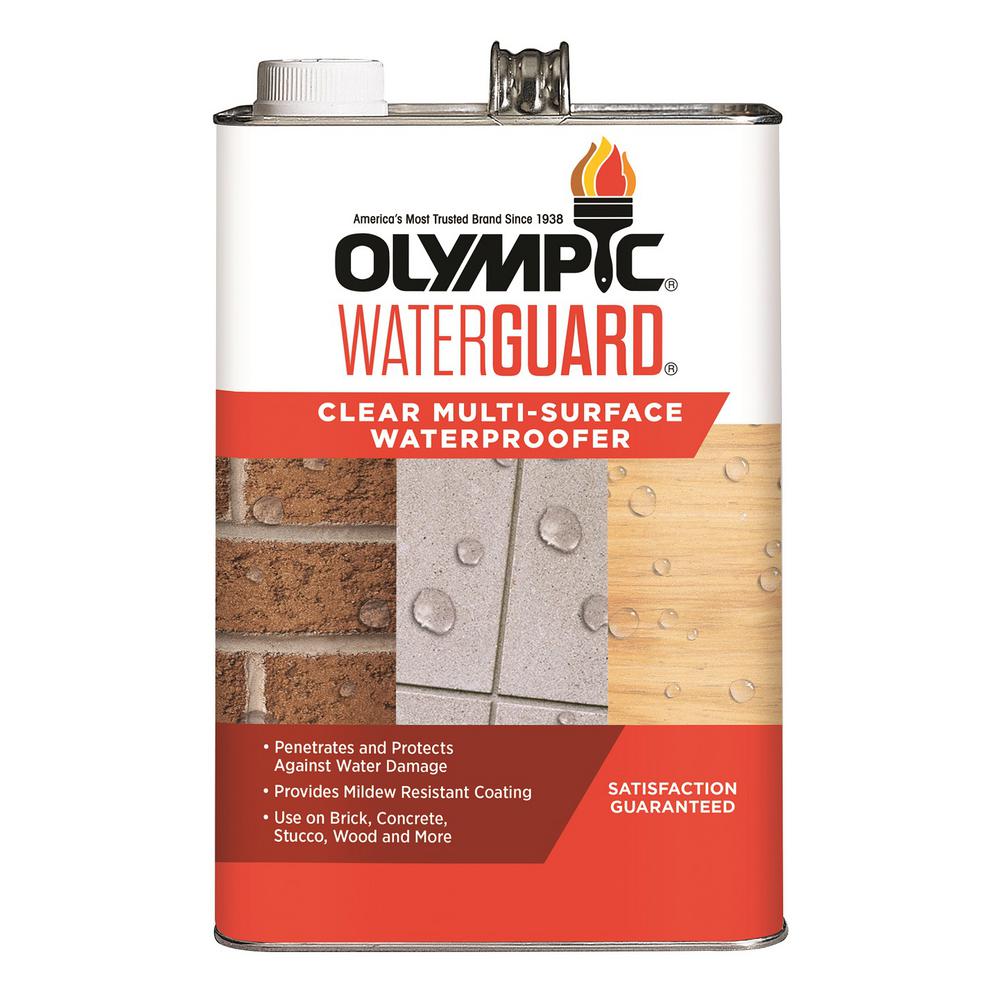
Olympic seems to be the the equivalent to Thompsons WaterSeal, available in clear, and dyed versions, I can attest to the “waterproofness” of the stuff, back in 2016 Louisiana had what we call “the great flood” anyways we got about 3-4" of water in our shed, which has a 3/4" pressure treated plywood floor that was coated with Thompsons WaterSeal, no mold or anything and that was what years ago.
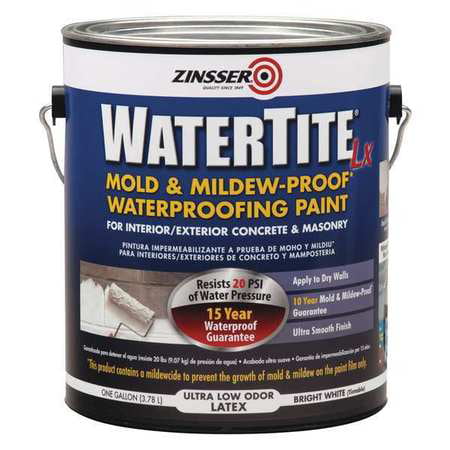
I was looking back thru some products I had collected up from various yard & estate sales and found the full gallon of Behr waterproofing outdoor wood stain. Just a shaking test said it was a more liquidy product than many paints. I like that idea as it indicates it will penetrate the wood surface more easily. (harkening back to my boating days, I recall our diluting/thinning the first coat of varnish on wood surfaces to get a ‘good grip’)
Decided to give this product a try. First trial is the plywood sheet I will be cutting up in half to make the ‘floor panel’ of my helix structure. As I suspected the first coat seemed to soak into the wood surface really well. I will be applying a second coat tommorow.
It’s a bit pricey at $37/gal. At this point I’m planning to go with the much lower cost Olympic Water Guard at about $10.50/gal. I am running a dehumidifier to keep the basement at a fairly constant humidity.
I had not priced out the retail price. As you said a bit pricey. I got it at some estate or yard sale.
I picked up a nice dehumidifier at our local flea market (and one with an external fitting for automatic discharge), but I discovered that it puts out a fair amount of heat in order to function. So I would have 2 cross purpose machines working in a faily small space,…one adding heat, one taking heat away. …dehunidifier and AC
It will be interesting to see how the treated plywood holds up over time. I hope it goes well in the heat and humidity. I was worried about heat where my layout goes over the fireplace so I used cement board. It cuts with a circular saw like plywood, heat and moisture have no effect on it.
And I’m sure it would not work in some of the cantilivered situations I will be imposing on my roadbed/benchwork. I’ll be covering that subject over here,…
BTW so far I have been able to coat two full sheets of 4x8 plywood with 2 coats on both sides using 1/2 gal. So I expect to coat 4 sheets with this one gallon
I’m not sure how to answer that question because there can be some confusions on how to properly use the ‘solvent’ wording,…ie “As opposed to oil-based paints, water-based paints (sometimes referred to as “latex paints” or “acrylic paints“) do not use solvents; the carrier for the pigment is primarily water”
The water in the paint is used to carry the paint pigments to the surface being painted, then evaporates away.
A second coat of paint (water soluble) will stick to the stained surface, so I imagine water soluble adhesives will as well.
I’m not sure how to answer that question because there can be some confusions on how to properly use the ‘solvent’ wording,…ie “As opposed to oil-based paints, water-based paints (sometimes referred to as “latex paints” or “acrylic paints“) do not use solvents; the carrier for the pigment is primarily water”
The water in the paint is used to carry the paint pigments to the surface being painted, then evaporates away.
A second coat of paint (water soluble) will stick to the stained surface, so I imagine water soluble adhesives will as well.
I built my benchwork with metal studs and 2" to 4" of foam on top. My building is also subject to temperature and humidity swings and felt this would be the most “stable” construction. If you are going to use plywood in a damp enviroment I would go with marine plywood. Using regular plywood you would use up the savings tring to waterproof it. As far as using oil or latex or acrylic paint to seal the wood, oil will seal out moisture and seal in any moisture already in the wood. Water based paint will let moisture in and out of wood (ie breathes). Water based paint will also asorb moisture so water based glues may lose their grip. That’s why there is Elmers glue and Carpenters glue. Carpenters glue is more suitable for damp locations. Of course there is always marine glue, think boats. I have no supporting legs on my beachwork with spans of up to fourteen feet with no problems. the foam has stayed as solid as a rock, some rocks are made of foam. Temperature and humidity swings are murder on layouts. So far, so good on mine. Don’t over think what you are going to do! You’ll only confuse the issue. Good luck on your upco
Pretty sure he means the steel studs have unbsupported spans of 14 feet, easily doable with metal framing materials, or even wood in L girder or other girder configurations. I plan much the same at least on the along the walls parts of my layout, I don’t want a forest of legs along the aisle side ofmy layout to get kicked, or get in the way of working underneath or then, once completed, of using the under layout area for storage with everything organized into plastic totes.
The foam itself - on my last layout with sections up to 24" wide, I had just one cross brace in every 4 foot section I built, so 2 feet on center support and there was no sag whatsoever. I wouldn;t go much further than that though.
Interesting conundrum. OTOH, you need to make benchwork resistant to moisture to minimzie the expansion/contraction issues reported by many which can gave adverse effects. OTOH, stuff needs to adhere to it. What to do!
I certainly want to avoid the dreaded expansion/contraction problem so I’m going to go over mine once-over with the Olympic water sealer and at least for track and roadbed, I don’t use calk, but rather track nails and ME spikes so no issues there. Scenery, guess I’ll have to take my chances.
Did you see my latest posting on my ‘metal benchwork’?
[quote]
Over the past year I have been thinking and experimenting with ideas for my benchwork for my new layout in a shed.
I was over at my local metal scrap yard this past Fri and noticed some hollow square steel tubing they use to mount street signs with. Its 2" square verses my flanged 1-1.25" bed rails, and its really strong, and its galvanized. So now I am definitely considering this stuff.
I was originally considering making vertical brackets at each of the wall stud location to support the plywood shelves. then I ran across these steel square tubing at the local metal scrap yard.
My contractor friend. who was going to weld up the considerable number of vertical brackets I had sketched up, came back with an interesting idea. Why not lay these square tube ‘beams’ horizontally along the walls and lag them into the wall studs. Then the plywood shelves (decks) could be attached along their wall edge and cantilevered out. And where the shelf/deck is of a substantial depth, the outer edge might also be supported primarily by another long piece of this horizontal square tubing with only an ocassional vertical support.
I am now planing on utilizing this ‘horizontal framing’ idea on my staging track level and my lower primary deck. I may even utilize the idea for my upper deck, particularly as they will be more shallow than the primary deck. I will definitely utilize the larger 2" square tubing to support the lower primary deck. For the staging level (relative