Waterproofing Plywood

I’m building a layout in a shed external to my house in the hot, humid state of FL. While I have the shed under a carport and insulated well, it does seem to remain cool for the most part. But I do not intend to run the AC full time, so it will experience temp and humidity swings.

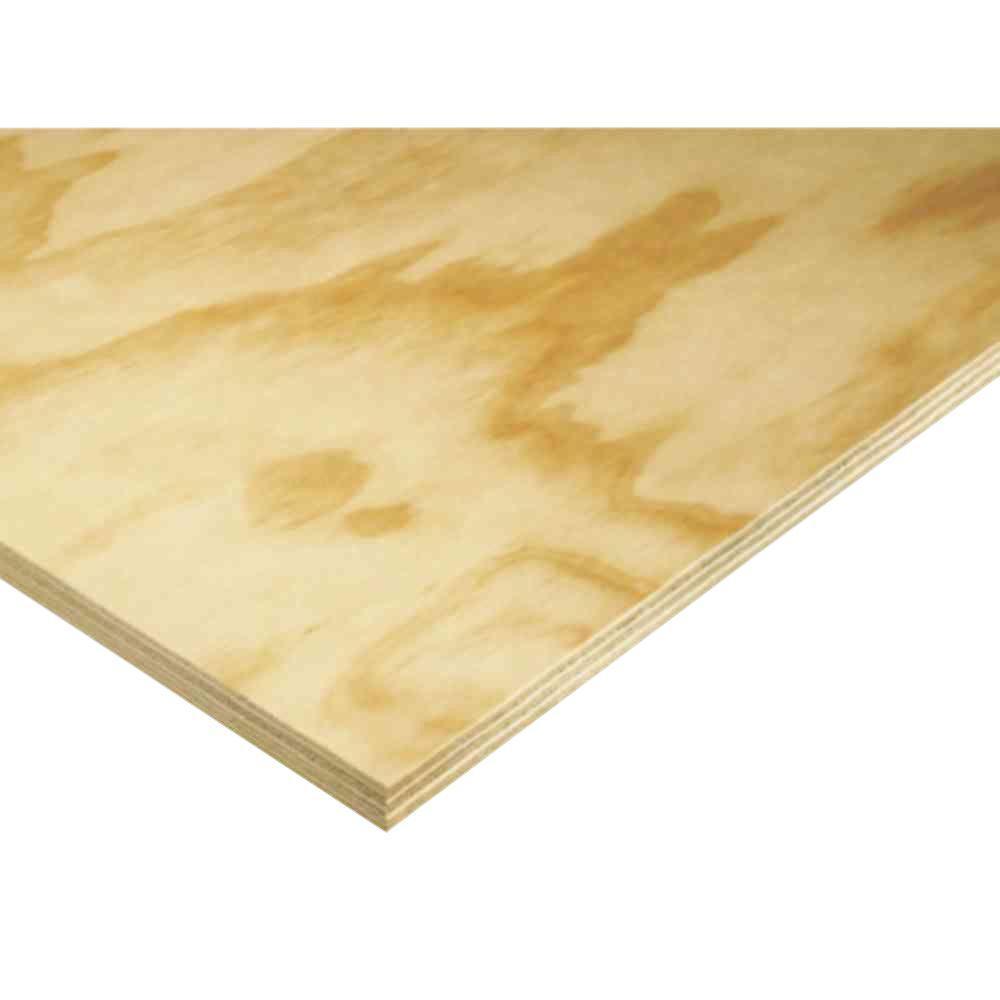
Many of my decks/shelfs will be good grade, multiply layered 3/4" plywood, which I intend to try and ‘seal up’ as much as possible against moisture absorption, and the subsequent warping that can occur.

My first thoughts turned to paints,…either oil or water based. But as I thought more about the situation I came to believe that the paints for the most part just coat the exterior of the plywood. They don’t really penetrate the wood to seal it up.

Deck Type Sealers

I had some Thompson water sealer product setting around I had acquired from some estate sales. I looked up info on the product, and I was NOT very impressed with its capabilities for protecting outdoor decking. Seems as though many folks were unhappy with its performance.

But that said, I do NOT intend to utilize it in an outdoor situation,…where UV can be a big problem. I ran a few test samples on a portion of my outdoor wood deck, and some wood shelves I had made of plywood. I did note that it seemed to soak into the wood much more thoroughly than paint would have. That would seem to indicate a ‘sealing function’?

Has anyone had experiences with sealing up plywood with deck coatings?

Can they subsequently be painted over??

Waterproofing Plywood, Sealing for longer life

I have to clarify that I went to a different search engine to find this site, which I believe is British by the currency quoted. (I’m so tired of Google search engine giving all this ad related references right up front,…no meat to a search anymore)<
If this is going to be an issue, best to get marine-grade or equivalent plywood to start with. It’s glues are made to stay stable under wet condtions, which is the very first problem. If the plys delaminate, doesn’t matter how good the waterproofing is.

i used thompsons on deck it rotted out in about 5 years , after reparing it i used nitrocellulose lacqure in a airless sprayer , that was 8 years ago and its still going strong.

Unless you must use plywood, you might consider using 1x12’s and avoid the glue problem.

Yes, considering the alternatives is important if cost matters. Really good marine is expensive, but overkill for somethung like layout benchwork. Doesn’t need to be fancy, but does need the legit rating and it’ll be fine. Use the “chesp” stuff but the right grade and you’ll be fine in most of our applications.

Boards are a sensible alternative. If you need fancy in other situations for example, look for the New Zealand pine I was raving about a few years back. Marvelous stuff, even in 1x12, not a knot in most of the boards but was paying over $30/each for 8’ lengths. That kind of beauty doesn’t go into benchwork here, but I can see how it is attractive to those who can afford to use it that way given the dimensional stability and the fact you can drive a screw in anywhere without worry over knots.

For often wet areas, some of the new plastic lumber available in various decking “lumber” sizes and some other common SKUs is now not all that expensive. No need to treat it, either, a savings against the total job cst of course, plus the usual environemntal benefits to not slobbering on the treatment every few years.

If you want to waterproof wood, this stuff works:

https://www.amazon.com/Smiths-Original-Clear-Penetrating-Sealer/dp/B072MRYZ5Z

I’ve used it.

Ed

As I said I am not using it outdoors.

Found this on lacquers,…

[quote]
Think of the lacquers as having three basic classes: nitrocellulose, CAB-Acrylic, and Catalyzed.
The nitrocellulose is pretty much your “everyday” lacquer. Its the stuff sold at Home Depot and Lowes (Deft). It makes for a beautiful finish and its relatively inexpensive. Problem is that it tends to yellow over time. So its not really the best option for light colored woods.

CAB-Acrylic lacquers are made with acrylic resins and they dry “water white”, meaning they will not yellow over time. These are reasonably durable finishes that are a pleasure to work with.

Catalyzed lacquers consist of both pre- and post-catalyzed versions. Instead of curing by the evaporation of a solvent only, they also cure chemically. The catalyst can be added ahead of time (pre-catalyzed), or in your shop (post-catalyzed). Both have a limited shelf life as a result. The finish, however, is very durable as a result of the chemical curing process. I like Sherwin Williams products and I actually use them for nearly all of my lacquer. I’m not sure if its available in your area, but you should see if you can get the Pre-cat CAB Acrylic lacquer. It was relatively new at the time I was using it and not everyone could get it. But its kind of the best of both worlds: durable, water white, less toxic off-gassing, etc…

As far as conditions go, lacquers are not as forgiving as other wood finishes. Moisture and cold are your enemies. I don’t like to spray much lower than 70F, and humidity isn’t much of an issue here in AZ. But if its a humid day, forget about spraying lacquer. You can easily end up with &l

WOW, not cheap,…more expensive than my good quality plywood.

In the beginning I was seriously considering 2" foam subroadbed shelves held up with some pretty nice metal brackets from Home Depot. The 2" foam is not so readily available here in FL, so I looked around for options.

Found what I thought was some decent plywood (called Blondwood) at Lowes. I monitored a stack of it at their store and i became less impressed,…and thought perhaps 3/4" rather then 1/2". I had also inherited a 1/2" piece of 4x8 from a friend and stored it in my carport, both on its edge and flat on the cement floor. I became even less impressed. It went thru all kinds of gyrations.

Then I ran across some 7 ply, 3/4" plywood from Chili being sold at Home Depot. It was the best looking stuff I had seen,…Radiata Pine

It was a little thicker (and heavier) than I had originally planned, but then again I am not supporting it with 3" wood framework on its edge as in many conventional benchworks, so a little extra thickness could be helpful for both stability and extra cantilivered strength. And if I paint it all around that should help seal it against some of the moisture of humidity.

With the conditions your layout will be in, I’d skip wood all together as much as possible.

Can you laminate several layers of skinny foam together, whatever they sell in FL, to make it thick enough?

When I buy the penetrating epoxy, I realize that, over time, it WILL be cheaper than any other alternative.

Of course, each task/project has to be evaluated on the matter.

Ed

Just the heat will effect the ply.

How often does it rain in your shed and how often does your layout get submerged or flooded? Let me guess, the answer is never!

Model railroaders tend to overdo things, when it comes to benchwork construction, both in selecting the dimension of the lumber employed in its construction and other protective measures, like painting it. The latter can prove to be quite detrimental, if a wood sealant is applied to lumber which is too “wet” Wood needs to “breathe” and thus shed any moisture otherwise trapped inside.

More important in a climate like yours is the use of plywood which has been made using a non-soluble glue.

I have 3" foam (2" + 1") on my layout sitting on about 14-16" centers and I was surprised at how strong the stuff really is.

I had no luck finding 2" foam at the local stores so I asked at a local hobby shop that was popular with the RR guys. He told me about a local supply house that sold primarily to the construction industry. They had plenty 2" and even sold 4".

You should have bought exterior grade plywood to begin with…end of story!

My layout is built with exterior grade ply…one side smooth…never had any problem’s with it since the early 80’s. As a matter of fact, I have used the same plywood on outside projects and still do not have a problem in 38yrs. I also live in the Midwest with all four season’s. Glue it and screw it. I also do not buy any lumber from a big box store…just to save money…In the long run, you are wasting your money. Exterior grade/Marine grade is the only kind I use…there are no voids in that type of ply, adhesive is moisture proof… I also did My 27ft. cabin crusier with Marine grade for the leather covered seating, engine cover, which covers a 350 chevy engine…works like a charm. Hull is all fiberglass…

Take Care! [:D]

Frank

Don’t you have pressure treated plywood in your area?

I’d consider a garden railway in the backyard. Rather than fight the weather I’d embrace the weather outside year round.

Found this on another forum…

[quote]

Here in Southern California all wood warps unless it is sealed with something. I say it is the dryness. So, in 1998 I built a special computer desk which later turned into a train workbench. Sense I had experience with specialized homemade furniture and prior layouts warping and the cork roadbed crumbling I tried Thompson’s Water Seal left over from another project. I hit a home run! Wood does not move! Cork does not deteriorate. 19 years on my train workbench.

If you want to try i

Dewaxed Shellac

_

What is a ‘two pound cut’?

I looked up the qt and gallon prices on this stuff and they want $20 per quart or $60 per gallon. Not exactly inexpensive.

Does it go a long way? Is it likely one only needs to seal the edges of the plywood, rather than the whole sheet front and back??

2 pound cut means it’s 2 pounds of dry lac cut into the alcohol, per gallon.

The higher the ‘cut’ amount, the thicker the shellac(less liquid, more material)

If you intend to paint over, you need dewaxed shellac.

If the goal is to prevent moisture penetration, then all surfaces would need to be coated, not just the edges.

–Randy