Got thinking about today while in Wal Mart
As NYC
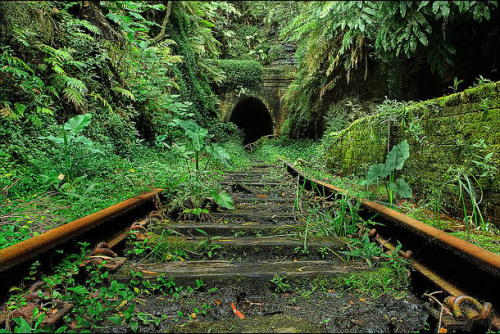
Not much more than a large regional.
Given the regulatory ability to prune duplicate routes and set realistic rates, it might have survived (as would many of the Class 1’s).
Throw in the merger factor, and things might have been much different than they are today. Or not.
Even without the disasterous Penn Central merger errosion of traffic and continued losses of commuter trains would have doomed the NYC along with the rest of the Northeast railroads resulting in something like the ConRail era and ultimately what we see today.
Big GE’s and EMDs dressed up in traditonal NYC livery… double stacks… oil trains… it would be a good looking well running piece of property.
NYC was in merger talks with C&O, but ICC would not approve. Unfortunatly they did approve PC. PRR already had a big stake in N&W. In hindsight it seems a NYC/C&O merger would have avoided the PC debacle, although it did provide incentive for deregulation.
Right! Why go all the way back to NYC? Conrail showed the way to survival of these lines, moving them into the modern, pared-down era. NS and CSX have only followed where Conrail led.
Dakota Fred, wasn’t the NYC in much better physical shape than the PRR? If it had not merged with the PRR to create PC it might have survived. I also think that NYC could avoided being impacted by Amtrak since most of Amtrak’s routes would have been placed on PRR except for Amtrak service to upstate New York. It could have had Amtrak trains to Detroit on GTW not NYC.
NYC may have been in better physical shape than PRR but it was still in weak financial shape. If the PC merger didn’t happen, I’m not so sure that NYC would have avoided Chapter 77 although it may have happened a few years later.
New York Central routes weren’t too badly affected by the initial iteration of Amtrak, getting stuck with Empire Service (GCT-Buffalo), Chicago-Cincinnati and Chicago-Detroit. GTW was not considered a reasonable alternative at the time. However, they would still have had a sizable suburban service north out of GCT plus a small Boston operation.
Freight traffic wasn’t doing too well either. While NYC did promote its intermodal service, it was using Flexi-Van because of clearance issues and this limited interchange. The steel-related traffic on P&LE was a major contributor but even that was in decline.
I’d have to review Loving to refresh my memory on the physical conditions of NYC vs. PRR. Re. finances at NYC, the story (from Loving) that sticks with me is of the first huddle of Perlman and Young after Perlman had been hired. As a welcome aboard, Young told Perlman there was enough money in the bank to meet the next payroll and that was it.
Undaunted, Perlman allowed that it was time to get to work!
Perlman did work miracles at NYC, but I think the tug was still irresistibly downward, as traced by Paul above. I don’t know if anyone could have made a go of PC – two sick giants trying to prop one another up – but I can’t help but think Perlman would have made a better fight of it than the vain, foolish and inept Saunders.
In the end, it was probably only the just-in-time investment of taxpayer money in a struggling Conrail that gave management the breathing room it needed to succeed and make today’s franchise possible.
If I remember correctly, the NYC always derived most of its revenue from high value, time sensitive cargo and was hurt by the construction of the highways. I would imagine it would derive much of its revenues from inbound freight, bridge traffic and short-haul intermodal.
What if NYC+Penn hadn’t been saddled with the New Haven?
What would an indepedent NYC look like today?
A bigger Iowa Interstate?
There is a big, important story here.
Yes, the New York Central was more dependant on high value, time sensative freight than other railroads. They early on recognized the threat of diversion to motor freight. And they came up with a solution to deal with that threat.
In the early 1920s, under the able direction of NYC railroad president Alfred Holland Smith, the NYC developed an intermodal container system that dropped their cost of moving high value containerized freight by 75%. That is not a typo on my part. There was a 75% cost reduction. And also improved service with dedicated container trains offering rapid, reliable, damage free transportation for high value goods. In the early 1920s!
The container service made the railroad fully competitive with the new highway mode. About 2/3 of the savings was passed through to the customer (who got better rail service at a lower cost) while the railroad hung on to about 1/3 of the savings. The customer got a lower price and better service. The railroad made more money. It was a win/win. Who could object to such a thing?
The fools of the US Government could object to such a thing. And they controlled railroad freight rates. In 1931 the stupid (there is no other word to accurately describe the actions) government economic regulators ordered an increase in the rail container rates. They were trying to preserve a “Rate Structure” that the advent of motor freight had already destroyed. The regulators, being the government lawyer/bureaucrat ignorant fools that they were, didn’t understand that the elasticisity that th
I live in NW Indiana and my employer is located just west of CP482 (Porter). I literally park in the lot adjacent to the former NYC tracks. Further, I spend far too much time on the Chesterton webcam, watching the parade of trains.
Yes, it is a parade of Amtraks, hot UPS/intermodals, slower stacks (both international and domestic), a load of general freights, coal trains, ethanol tankers, oil tankers, unit grain trains, and who knows what else. Oh, let’s not forget the giant industrial complex stretching from Burns Harbor west to the state line with several steel mills and refineries, plus local industries serving that complex.
Burns Harbor Yard runs a number of locals, several of which are dedicated steel shuttle trains. The bottle trains add yet more variety.
Had NYC been able to prune it’s trackage and apply accepted railroad conditions such as the balance of the industry, I think it would have basically been a Chicago - Albany/Boston or New York and St. Louis to Cleveland (joining the Chicago line) with a few important secondary lines, such as Columbus to Cincinnati and Charleston WVa. In other words, it would have been very similar to Conrail…and probably would have been purchased.
The NYC in my estimation had superior routes from Chicago and St. Louis to the east coast…“The Water Level Route” if you will. Yes, it missed all the coal out of Pa and the steel mills of Pittsburgh, but those are on the decline.
The NYC out of Chicago is simply the main artery to the east coast. CSX has a pretty good route, particularly east of Cleveland (which is NYC), but most critical tonnage seems to move on the NYC lines.
As I was typing this, NS train B-09 just passed with 57 steel coil cars (empty) and a handful of gons with scrap metal. Those 57 cars will soon move eastward with 3 coils of steel moving less than 50 miles to I/Ntek Steel for processing. Who says short haul traffic cannot move? &
That would have bought them maybe another year, possibly two, but the end result would have been the same.
I agree that the NYC route was a flatter route (no mountains to climb) to the east coast, BUT it was a lot longer than the PRR route over the Horseshoe Curve. across to Buffalo and Albany, then down the Hudson River to New York, whereas the PRR ran to Columbus to Harrisburg, Philadelphia and New York almost direct line.

PRR was 907 miles, with many curves and grades while NYC was 970 miles, largely flat and many tangent stretches. Obviously the “Water Level Route” wasn’t just superior for a better, quieter night passenger ride (as Wanswheel’s) period ad/poster reminds us), but easier for freight as well.
I did not know that the difference was only 63 mils. I would have to vote for the NYC. As you said water level and tangent grades. I live not far from the old PRR mailine near Harrisburg, PA and the run over the Alleghenny Mountains was a tough one. From Altoona to Gallitzen there are two percent grades. What is the maximum grade on the NYC (NY to Chicago)?