I am finally getting my layout to where I can run some trains around without having to back up and retrace myself. I started to run many of the rolling stock I accumulated over the past few years and to check my track work. I found that a lot of the Bachmann Spectrum passenger cars were not tracking very well in turnouts and some curves (most are 30" radius or more!). I checked the wheels with my NMRA gage and found that 75% of them were too wide or out of gage. This was a shock to me; I thought that most wheel sets on the better lines of trains would be in gage. I am now going to check EVERY CAR and LOCO with the gage before running them on the layout. I also found that many of the couplers were not set properly and were getting hung up on turnouts. Isn’t this something that should be fairly easy to maintain on a production line?
Check the weight of the cars also. I’ve found that many times the weight of any one car can be off (too light) by 2 to 5 ounces!
Here’s my policy…
No car or locomotive is placed in service until the wheels are checked,trucks are check for proper turning and tightness and KD couplers and trip pins at the correct height.
I don’t add the extra weight.
You would think so wouldn’t you. Unfortunately that just isn’t the case. I have bought cars and loco’s from Athearn RTR, Athearn Genesis, Intermountain, Kadee, Rapido, Exact Rail, Proto 2000, Kato etc and my findings are about 50% of everything I buy the wheels are slightly out of gauge. It only takes a couple seconds to check them and adjust if needed, it would be a good practice to start doing that with everything you buy new.
In spite of what others may tell you about their experiences, in my experience, the wheels on my rolling stock are rarely, if ever, out of gauge. Couplers heights are a different issue, there I agree that this is an all too common problem. As far as weights go, my freight car weights are all over the place out of the box.
Rich
It would add an extra step or two to the production with the attendant extra cost. Personally, on all rollong stock, I’ve always checked the wheel gauge with the NMRA gauge, and the coupler height with the Kadee gauge before they go on the layout the first time. For the last 40+ years of model railroading, I’ve never found all rolling stock from a single manufacturer that passed both steps without adjustment. It’s part of the process.
I agree. I am lucky in this respect and also with not having to clean my track. I understand that others seem to be plagued by these and other problems. The only coupler height problem I have had are on the Roundhouse Harriman cars and on Spectrum heavyweights. All other purchases, both of engines of various kinds and makes, and in rolling stock the same way, I have had gratifying conformity to quality control and standards set by the NMRA.
I’ll say it once more…I know I’m lucky.
-Crandell
That actually sounds about right, at least in my experience least with N scale. Most metal wheels (axles) are slightly out of spec and yes, enough to cause problems. You either have to adjust them or I find myself switching to good plastic axles (they kinda have to be in spec). Only option on motive power is to adjust. Yes both locos and rolling stock can go back out of spec with enough use.
I rarely add weight, as I’m running pretty steep grads, so unless something is really light or needs “balancing” for lack of a better term, weight is a last resort.
Archer
Another thing to check is that the wheels are centered on the axle. This illustration shows how wheels can be in gauge, but still give you trouble (especially on turnouts):
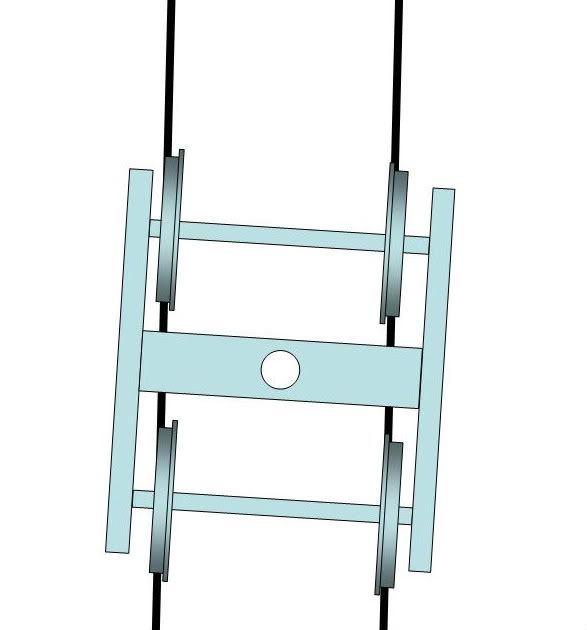
I don’t know why I didn’t think to mention that, as many times as I’ve seen it over the years, Shayfan is correct. A doglegged truck like the one he shows in his pic is a serious problem. The wheels being off center will force the truck into the rails and cause a derailment, usually at a crossing, turnout or crossover. Believe me, I know.
Phil, thank you for posting that picture! This does happen a lot and when a new person has derailing problems it takes for ever to try to but the problem in words they can understand. I hope you don’t mind if I uses this picture later when it could be useful?
Far as wheels going out of gauge, when I started this hobby I had that problem a lot. But, as I got better with track laying I had the problem less and less. I have not had a set of wheels go out of gauge for around two years now. Now, wearing out trucks. That is a different story.
Cuda Ken
As mentioned all the above are true. One other thing I have found with my passenger cars is that the couplers are not long enough if using KADEE #5 couplers. I had to switch to the #46 coupler (long centershank) because watching my cars go around the curves, the #5 couplers were too short and were jerking the cars off the track in the turns. Once I replaced at least one of the couplers with the #46 coupler, the problem stopped. I put a #46 on the B side of the car and a #5 on the A side and no more derailments…chuck
Another rare condition is a bent axle. This puts the wheel in gage at one point and out of gage elsewhere. Check the wheel spacing with the standards gage at 3 or 4 points around the wheel. If bent, contact the manufacturer, I have found they will replace it.
Also, don’t forget to check wheel spacing on locomotives as well as cars!
How do you adjust the wheel spacing or a doglegged truck? Better yet, how can I tell if a truck ia doglegged?
If I have a car that is giving me trouble, I check/adjust the gauge first. If it continues to derail, then I’ll pull the wheelsets off and measure from the tip of the axle to the wheel. I use a dial caliper for this (decent quality dial calipers can be purchased for around $20 - I got mine at a gun shop). If there is variation from wheelset to wheelset, adjust them so that they are all equal - axle tip to one wheel. Then adjust the other wheel to be in gauge with this wheel.
Trucks with this issue (dog legged; I like to say that they crabwalk) will typically derail on turnouts and slightly rough rail joints where other cars have no trouble. My experience is that it’s not common, but it is not obvious and a truck like this can be REALLY frustrating - so, before you tear your hair out, check for it.
I flip the cars on there side and look at the wheels flanges to make sure they are aliened, then flip over to the other side and check again.

I have had around 10 trucks ware out where the axle mounts in the frame. Most people never have this problem, but I run my trains way more than most. Athearn and Walther’s metal axles with plastic wheels, the wheels can slip on the axles and cause this problem. They are easy to fix.
Cuda Ken