I was just going with the brass/plastic question for the main boiler/cab assemblies. I could not have identified the makers or models for any of them except the Bachmann shay.
-Kevin
I was just going with the brass/plastic question for the main boiler/cab assemblies. I could not have identified the makers or models for any of them except the Bachmann shay.
-Kevin
For many railroads if you are modeling steam brass is the only game in town that comes close. If you are in narrow gauge even more so. Besides Blackstone which it appears is out of the game at least for the time being there have been no rtr engines. The roundhouse stuff has dried up and is going for way too much on ebay. That leaves brass and if you are modeling something other than D&RGW or RGS you have to go to brass.
All that being said brass is pretty affordable compared to past years. If you are willing to work on stuff or shop carefully in estate sales antique malls and swap meets there are some real deals out there. Sometimes the best deals are missing their box or need a little work. Most of my fleet was bought that way.
The irony is that when brass locomotives from Japan were a new “thing” in the years just after WW2, one of the big attractions was that they were … so cheap. Servicemen returning from Japan had been able to get stuff, often custom built or close to it, at prices that were shockingly lower than what you’d pay to get something similar in die cast metal from Varney or Mantua. That was an earlier era of brass - the pre-Pacific Fast Mail quality era. Some of those early Japanese made locomotives were not the jewel like masterpieces of later years, and often scale and proportions looked eyeballed rather than measured. The priest of my folks’ church had served in Japan and came back with some of that sort of brass; I particularly remember a NYC Hudson. I am sure it looked at least a little better than the American Flyer HO Hudson, especially the drivers and valve gearm but not a whole lot better. Motors were also iffy in very early, pre 1954 brass.
Broadway Lion touches on another reason why brass became a “thing” and that is, it takes solder well. If you were the sort who wanted to modify a die cast zinc alloy locomotive model and add or remove detail, you had your work cut out for you, and the results were often not great.
If the only soldering you have ever done is soldering copper wire to nickle silver rail. soldering brass to brass is easier and more rewarding. (Plastic is easy to modify too, but remember that it took decades after the first Al Armitage articles about styrene before the type of hobbyist who was fussy about detail and accuracy was comfortable working with styrene plastic, and had an array of detail parts in styrene to choose from.)
The other big thing about brass is that it finally enabled a modeler’s layout to stick to a particular prototype, and thus it played a role in retiring the old way of each model railroader creating and naming his own railroad, often a goo
I model CNR so correct steam means brass. A couple of years ago I wanted a K5a Hudson. Samhongsa did a run of them in 1978 and produced 150. I found one for a decent price that met my main objective and that was a great paint job as I was aware of the high cost for a quality paint job. Anyway it looked great but ran poorly. I spent many hours fooling with it and with Dr. Wayne’s help got it to run better. I found out from my LHS that there was a fellow locally with 40 years experience working with brass. He took the loco and for $100 he replaced the universal, put the bearings on the front axle the right sude up, installed a motor decoder and changed the headlight to led. It now runs smooth and quiet , as good as any of my plastic locos.
So if you can find someone with expertise brass is great. He said I was right about the paint. He would charge at least $300 to paint that engine due to the multi colours.
CN Charlie
And absolutely forget about it if you wanted to model anything Canadian.
The original Bachmann 4-6-0 with which I was familiar, was done in cast metal, mostly as an older-style locomotive…
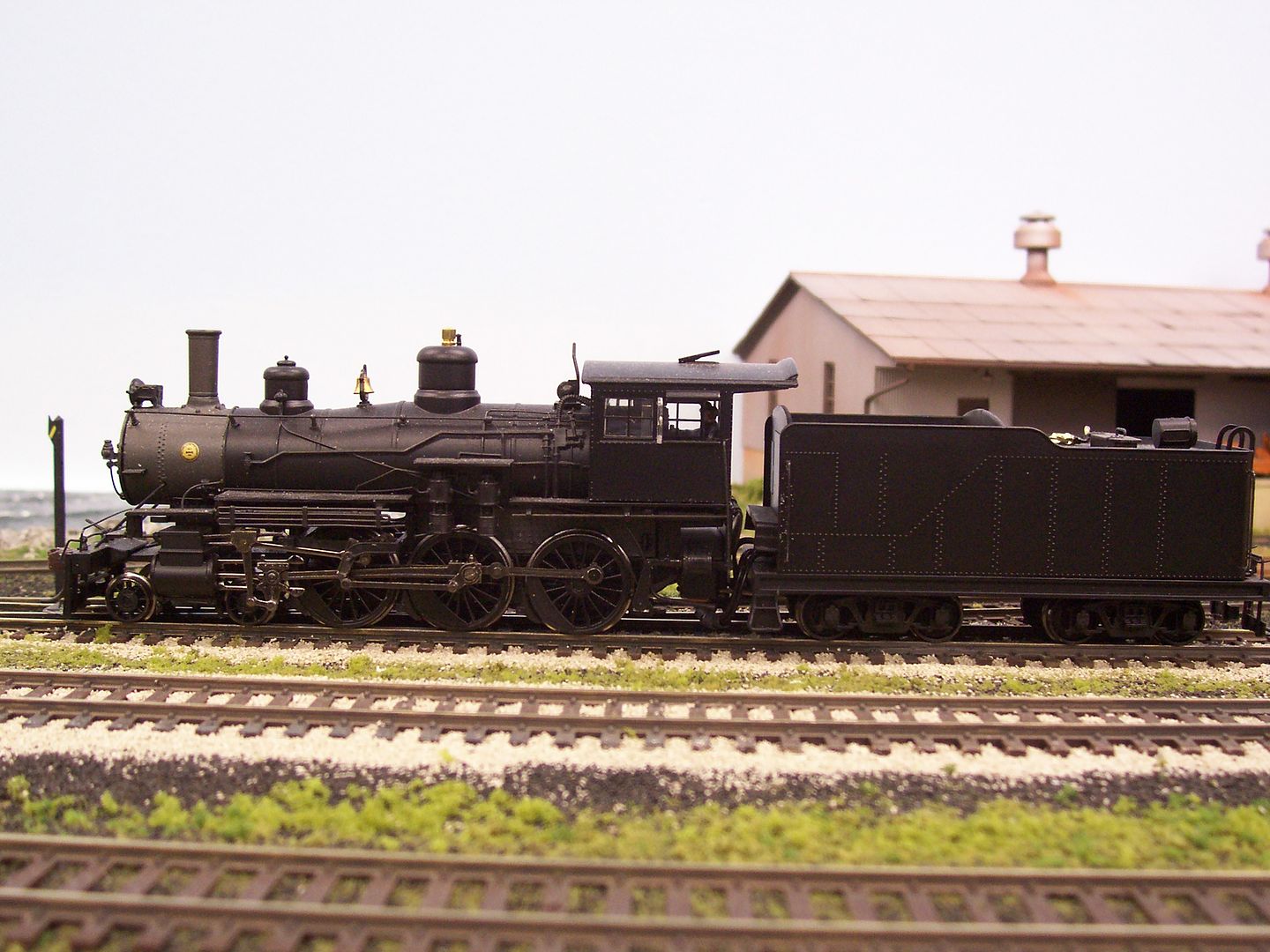
…while the tender was mostly plastic.
While 10-Wheelers are among my favourites, I thought Bachmann’s version was a little too old-looking for my late '30s layout.
I also discovered that the metal boiler details, especially the walkways, were rather fragile, and prone to break-off, even under careful handling, and it didn’t look to me as if those broken-off parts could be easily re-attached.
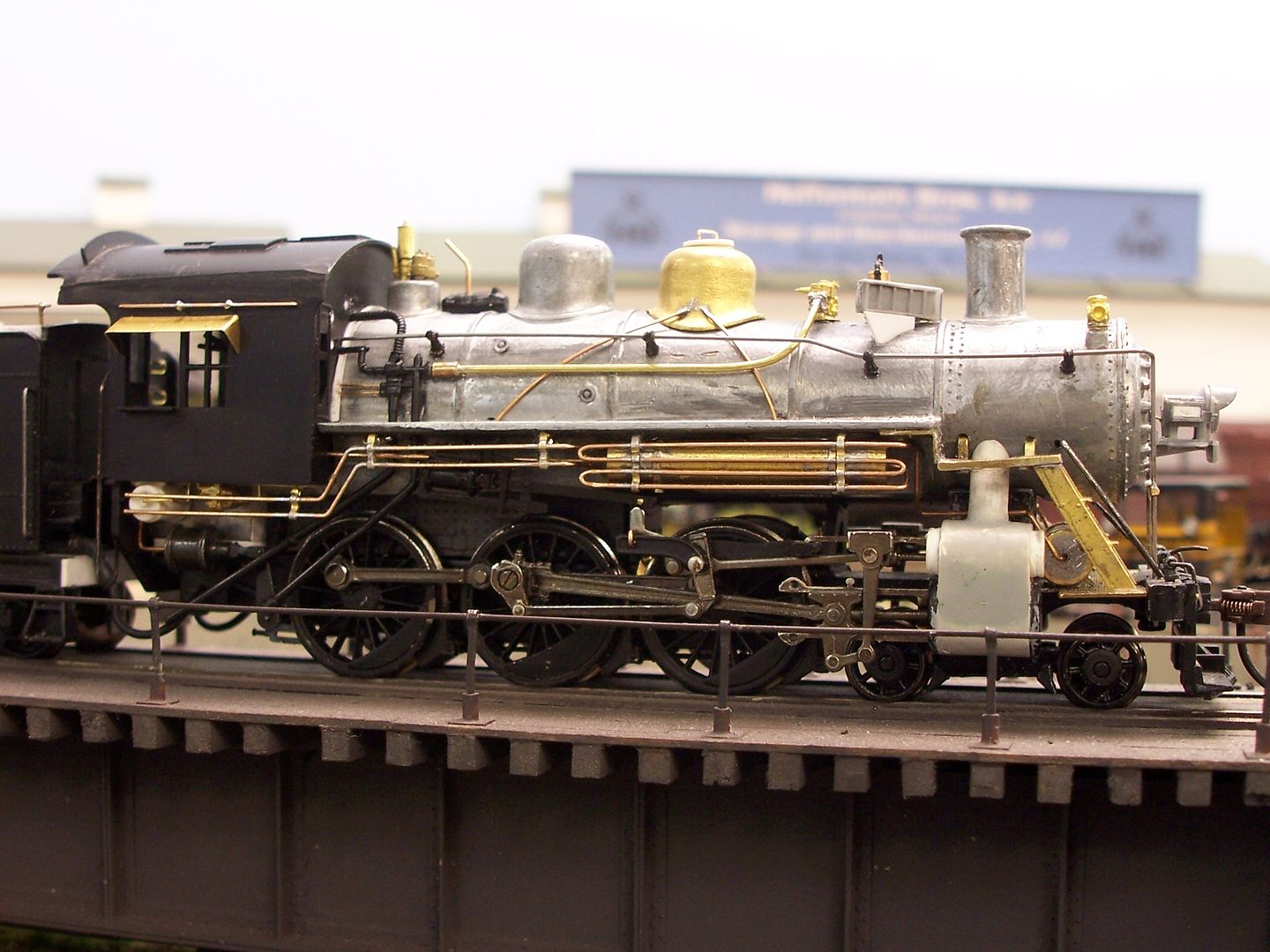
Instead, I removed the two loco’s superstructures (cab and boiler), and replaced, them with cast metal boilers from MDC, but removed the cabs from both, replacing them with ones from Bachmann 2-8-0s (the Bachmann 2-8-0 body shell, boiler with cab, are available, and I have several boiler shells, (minus the cabs). If anybody needs a replacement plastic boiler (you’ll have to provide your own cab), let me know.
I re-built the old-style slide-valve cylinders into piston-types…
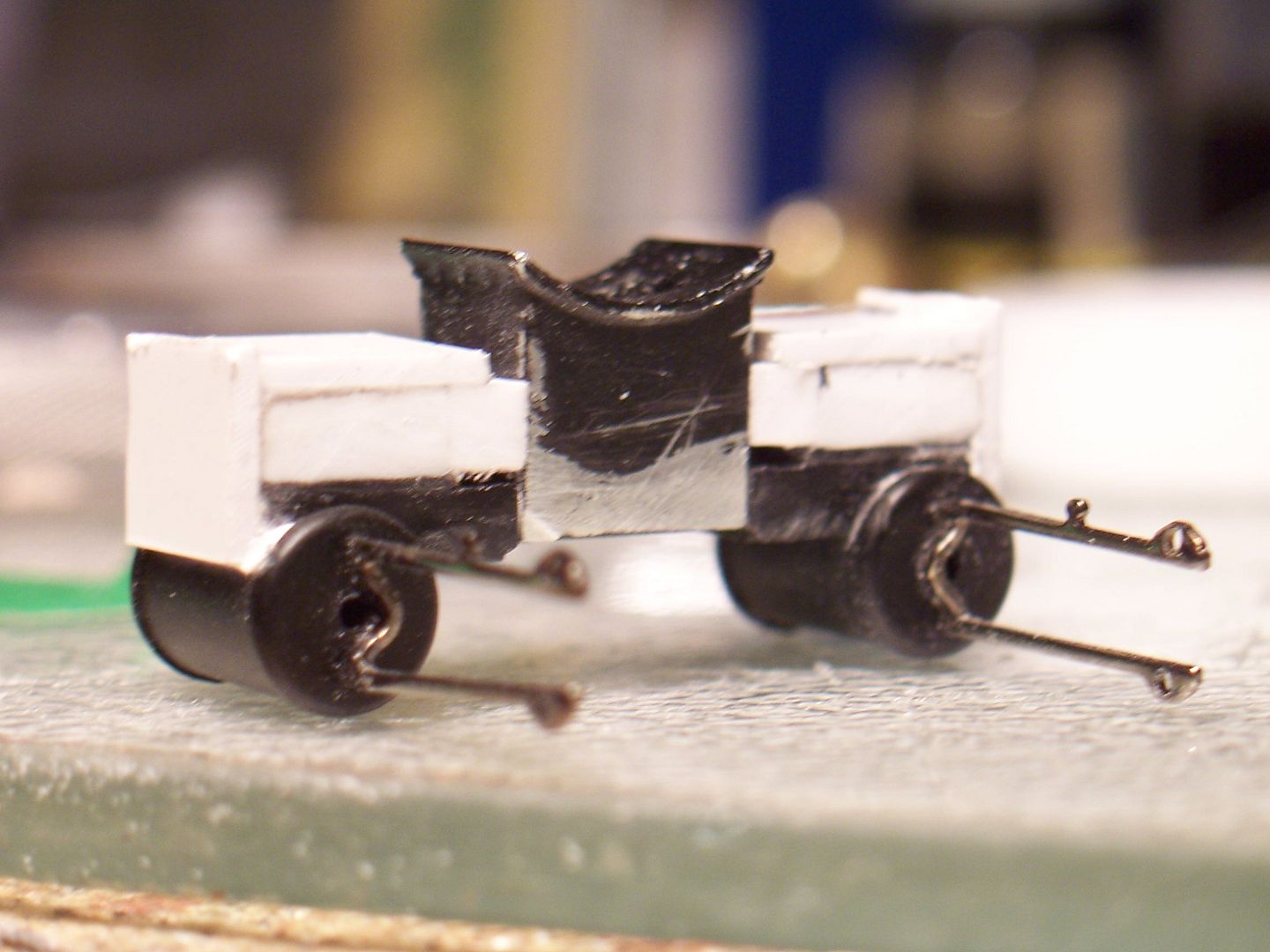
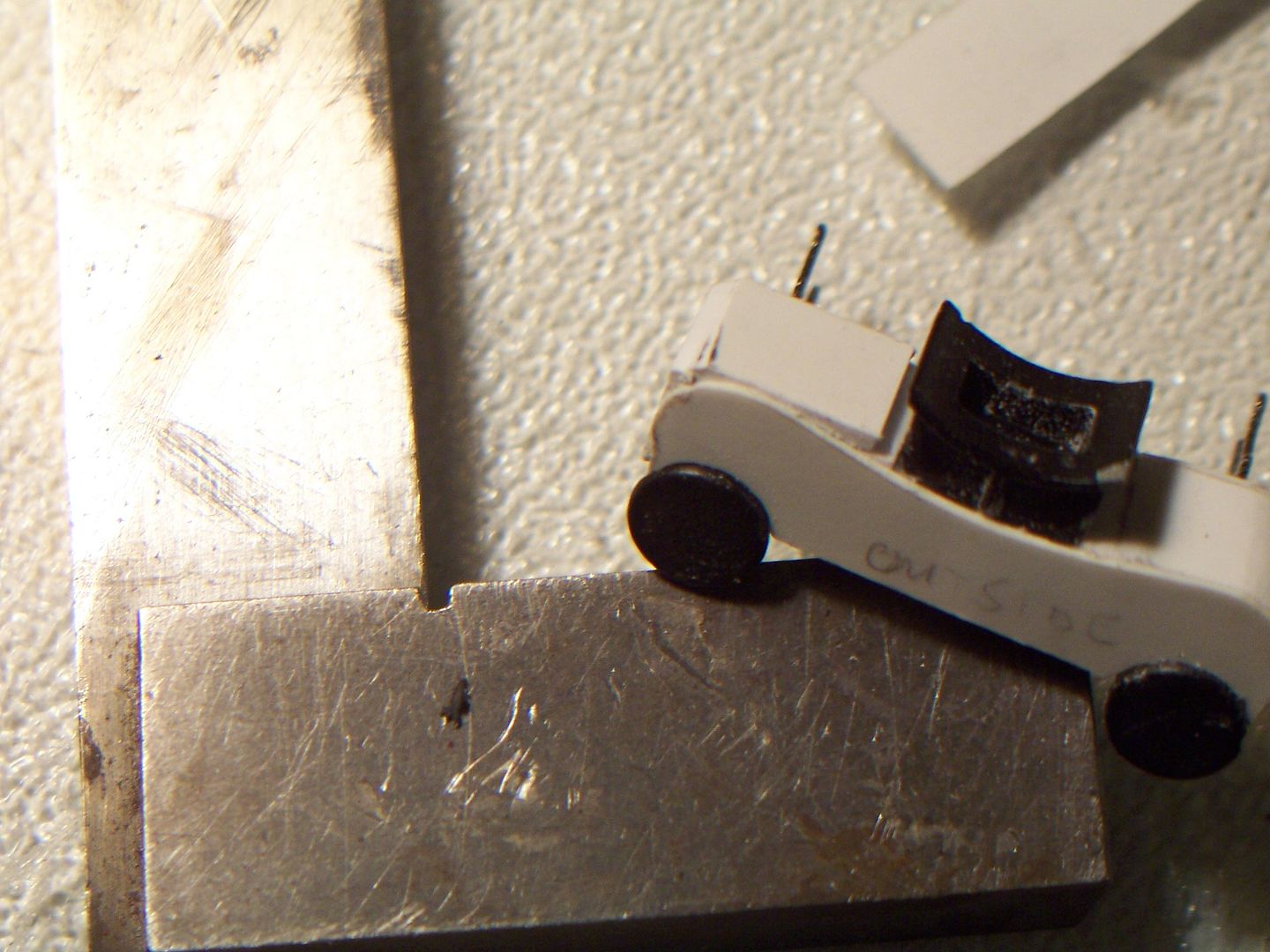
…then added a few details…
Until very recently and the advent of 3D printing, traction modelers were basically limited to brass, or an even smaller selection of plastic and white metal models. If you model interurbans, passenger or freight, brass was basically the only way to get most prototypes. I’m an experienced enough modeler to enjoy tinkering and detailing, so the extra work necessary are no obstacle, and even though there are 3D printed bodies for some interurban and streetcar prototypes available, they’re generally just as much work. When you order a 3D printed steeplecab, you just get a plastic chassis, and still have to do all the under-the-hood labor yourself, including power, drivetrain, lights, and DCC/sound, using a material that’s often either softer or more brittle and frequently far less forgiving than brass. So we’re in the same boat as logging or narrow gauge modelers; brass is often the best choice for the kind of modeling we want to do.
When I purchased brass models it was because I wanted to buy the very best models that I could (also knowing I’m not a good builder or painter). My dad and I did build a Bowser L-1 Mikado once, and when we tried to rivet the valve gear together, it didn’t go well, so I simply bought an assembled set of valve gear to finish the model. Then Bowser’s painter painted it for me to represent one of the three that went to Santa Fe during WWII.
Whether my own railroad is an “accurate” reflection of any given prototype and the mix of appropriate traffic or not–well I try. With a family, and sons in both sports and band, I prefer to buy ready-to-run equipment, but I don’t have a huge roster.
There are brass engines I had that I traded away for something else–a few I wish I’d maybe kept, but I’m happy with the plastic diesels I have now.
There are still a handful of brass models I’d like to have someday, but I have to find a good example at a decent price. With brass diesels, I find that many have been mishandled by people who sloppily bend stuff and/or break it loose. I always want truly mint condition, which can be hard to find.
Also, with advances in today’s molding technology, I find myself looking less and less at vintage brass as today’s plastic models are getting better all the time.
Maybe someday I’ll own a nice brass/nickel plated CB&Q E-5A, or a nice Santa Fe alligator RSD-15 (both Key and Overland did them). BLI’s RSD-15 is not very correct for Santa Fe as it does not reflect their modifications and the battery boxes are incorrect even for as built Santa Fe. So to own a good RSD-15 for me it would have to be a brass one. So there are certain models that for me still hold up as the brass being far superior, on a case by case basis.
John
Ran a PFM PRR late 60’s run K4 for around 7 hours a day on my hobby shop pike for almost two years until I sold the store in1975.Overall I’d guess around 1000 hours of running time with nary an issue except having to clean drivers often due to plating be worn off. The AHM Casey Jones on the same pike…well, let’s not go there. I still have this K4 and it is resting now in one of my cases, but could have kept on going.
The one brass oddity I’d like to have on my layout would be a pair of “Brass Hustlers” wired together and powerd with NWSL power trucks. I don’t even think I would paint these.
However, there are plenty of fake “Brass Hustlers” out there.
This one just popped up on eBay. It looks like it is just an Athearn Hustler painted brass, but it has green tarnish on it. It obviously has Athearn horns and power truck. Not sure what to make of this one.

Athearn Hustler shells:

This is what a “Real” example of a “Brass Hustler” looks like:

-Kevin
Brass got it start with the post WWII GI’s stationed in Japan during the occupation. Back then, full dimensioned drawings were regularly featured in Model Railroader. So a modeler stationed there would get the many local craftsman, who were looking for work, to build him a model of that locomotive. This slowly became an industry where many small cottage parts makers would combine their efforts to one final assembly company to build a model(the United label that PFM used reflected this aspect). Things grew, models got better, drives improved as Japanese builders visiting the USA saw that modelers actually were using these models on layouts. But once inflation got out of hand in Japan in the 70s and early 80s, building of models moved to South Korea and remains there with the few builders that remain. Tenshodo still makes models in Japan for the home market(including some runs of USA locos) but due to the exchange rate, it makes these models very expensive for the American buyer. Many modelers that traveled to Tokyo in the 70s and 80’s would visit the Tenshodo hobby shop in the Ginzu district and I heard it was and still is quite a shop! I got into brass in my early teens as you had PFM Shays or the noisy and usually poor running MDC/Roundhouse kit. PFM’s logging engines were tanks and ran well, especially with a can motor retrofitted. I had a fleet of Tenshodo diesels, which date back into the 1950’s, and while a bit noisy, with a can motor they ran well and pulled excellent. Tenshodo models, except for a few kits, came factory painted and lighted. Something not seen with other importers till factory painted models started appearing from Oriental Limited and Overland Models. Later run OMI diesels are very accurate normally, ran well once some split cups on the drive shafts are replaced.
When buying vintage brass, most of which will be unpainted, no light ect. One has to remember t