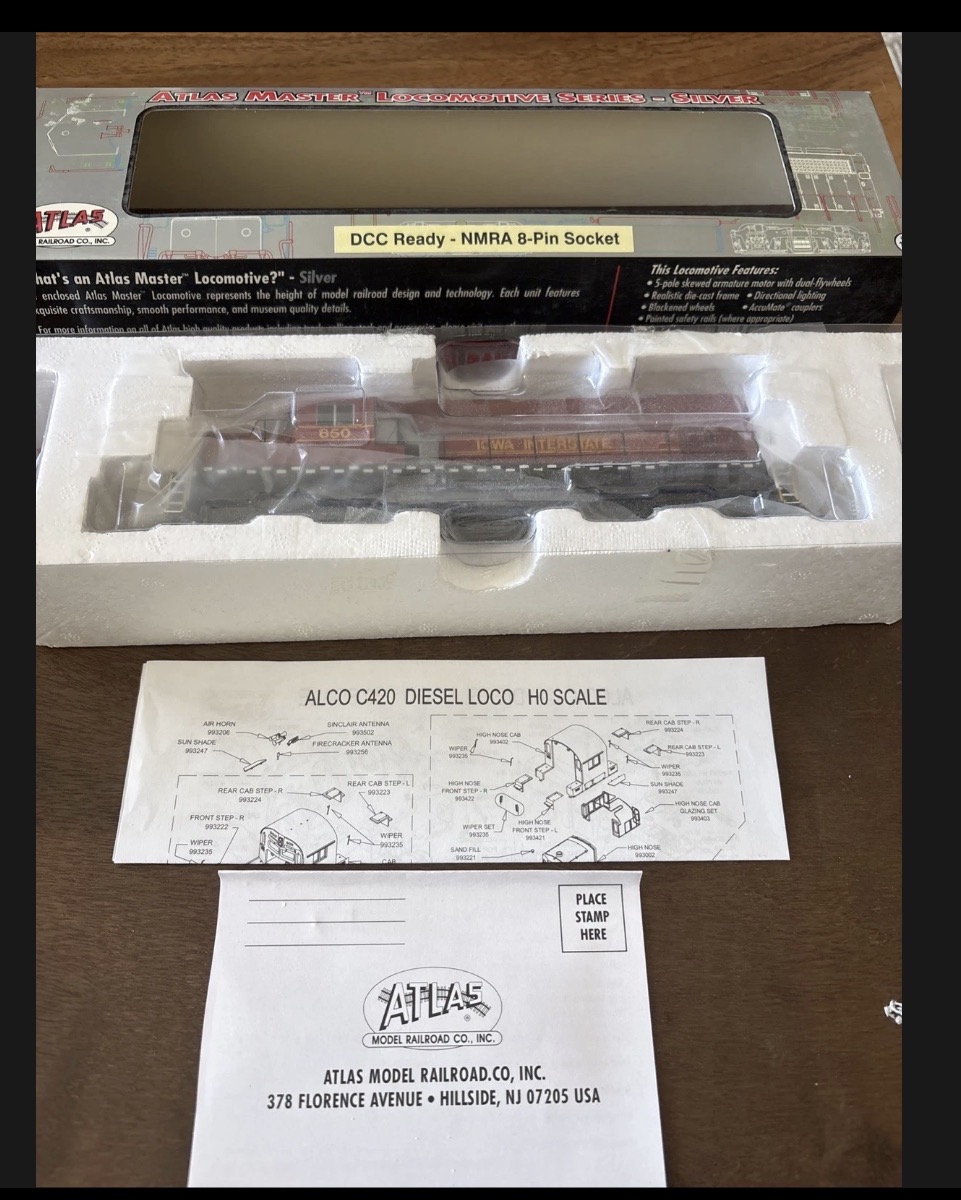
You were lucky. Your concerns are very real. It appears that your engine was new and never had the shrink wrap removed which kept circulating atmosphere changes from evaporating the solvents in the lubricant and oxidizing the electrical contact points.
When a factory-sealed locomotive is removed from that protective environment of basically an effective womb, all bets are off. I have a fairly large collection of engines and they all need to be exercised more or less yearly to not seize up with those two issues.
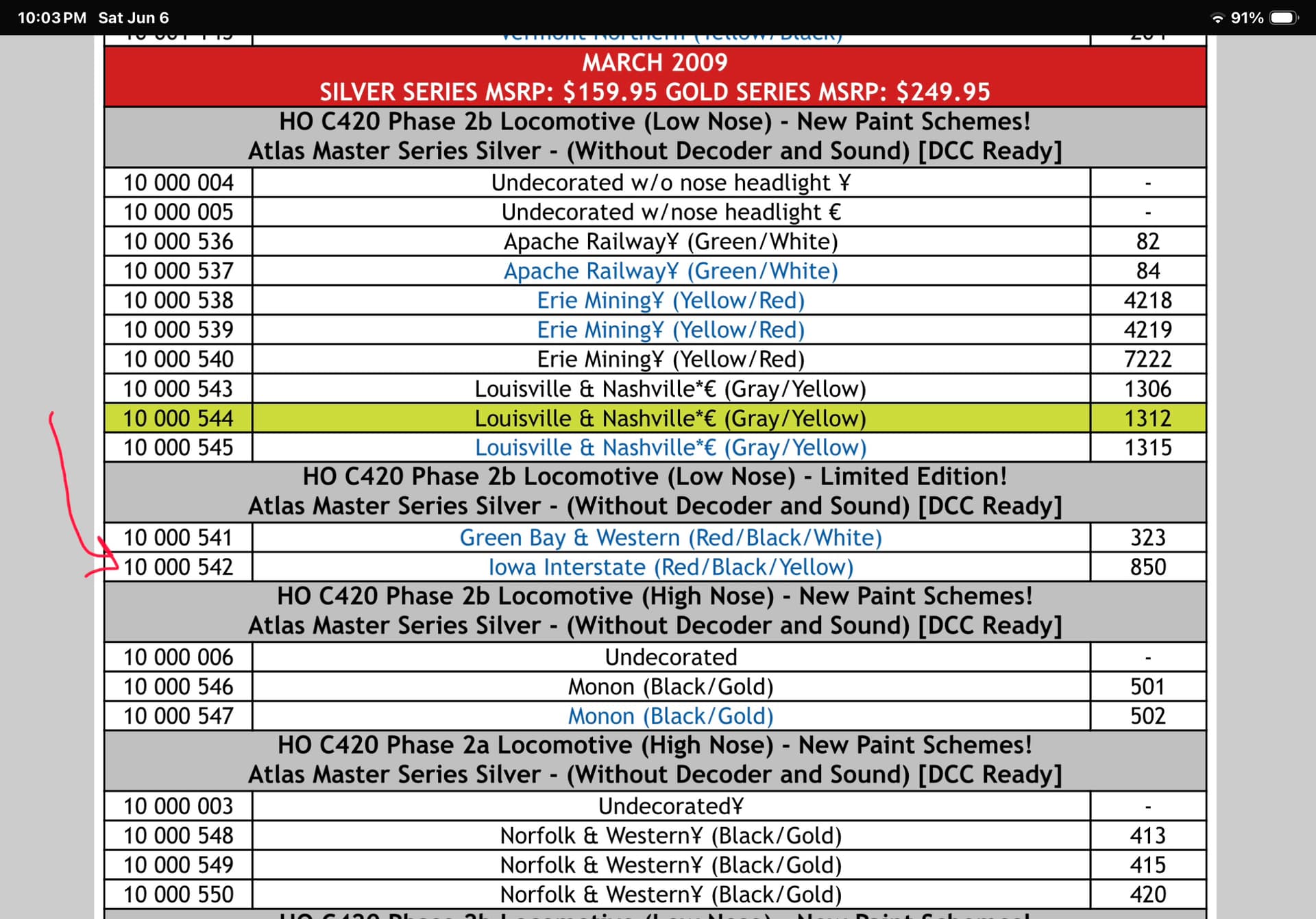
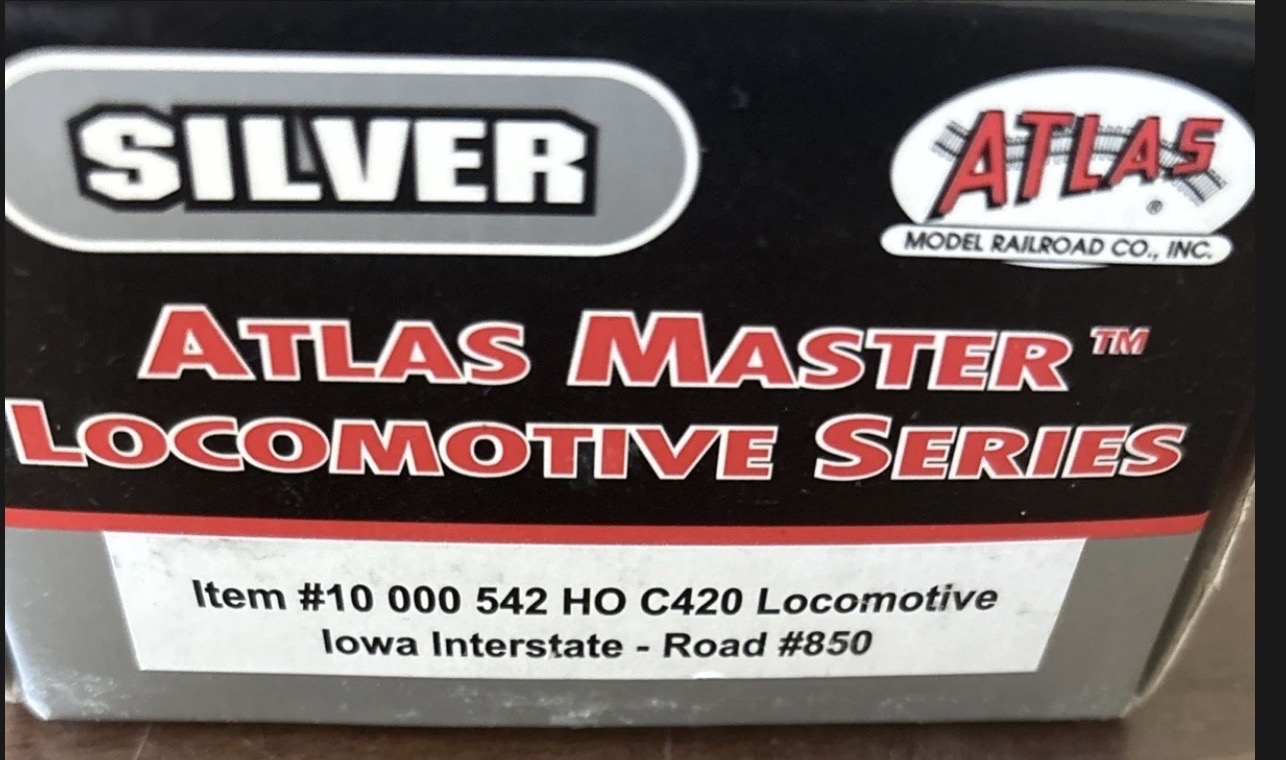
This engine appears to be “DCC ready” which only means that it still runs on DC and is “ready” to accept a plug-in DCC decoder. If you’re running DCC, do not place this engine on the track because the steady AC voltage will fry your motor. If you’re still running DC, you’re fine. And also be advised that when they tell you can just plug in the decoder when you’re ready to go DCC, it’s more than that, you have to also install a speaker which they don’t tell you about of course.
But there’s still remains a caveat, which someone more knowledgeable than I I will have to help you with. An engine that old that is DCC ready will have a much older generation plug than the current generation of decoders. That may need to be addressed. There are plenty of people here with much more knowledge than I have about these issues, standby for them to login about it.
It’s quite possible that all of this can overwhelm you at this very early stage in your Model Railroad adventure. There are techs who can take care of all this work for you for a price. I myself have been modeling for over 20 years this time around, and I did some back in the 60s when I was young. And though I am intimidated by it all, I’m lucky. I have a friend who can do all of this stuff for me, for a price of course, he’s not that good of a friend.
If you want sound, that is a more complicated issue.
Concerning lubrication, I found the following on the web.
It is about repairing an Atlas GP 38 truck. Not the same, but the disassembly process should be similar. Gives you a good idea about what tools are recommended. And if you don’t have one, that foam cradle thing is good to have unless you have three hands.
I also found the following how to lubricate thing which seems to provide good info.
A year ago a bought off of eBay an Atlas NIB rs3 yellow box (so even older). I was of course prepared to strip it. But lo and behold, it ran like it was manufactured a month before that. Go figure.
If you’re going to run it DC only, try it out before you consider taking off the shell. It may run just fine “as it is”.
One thing…
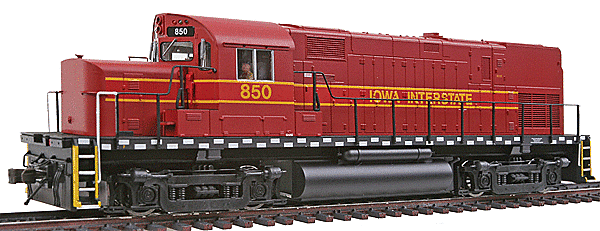
I’m thinking that this one may come without the front and rear handrails installed. Some came this way from the factory.
You’ll need a pair of tweezers, good lighting, and glasses good for close-in work.
It also might help to have a small safety pin nearby. If the pins on the handrails won’t go into the holes with gentle nudging, use the safety pin to VERY LIGHTLY “ream out” the openings. NOT MUCH, very little may be needed and then the pins will go where they’re supposed to…
Normally with Atlas engines you just need to unscrew the screws holding on the coupler boxes, and slide the boxes out. You should be able to then lift the body off while holding on to one of the trucks.
Be sure to lift on the walkways of the engine’s body, not the body itself. Otherwise, you could make the main body separate from the walkways and break the handrails connecting the body and the walkways.
A little scary if you haven’t done it, but once you do, you’ll see how easy it is.
Certainly nothing wrong with DC, but if you ever decide to have a layout where you want to run two engines independently, you might find it’s actually easier to wire it with DCC than with DC. Plus, you don’t have to program or code DCC decoders - they come from the factory already set to go. Just plug it in. Yes you’ll want to change the ID number from 003 to the engines number, but you don’t have to do anything else if you don’t want to.