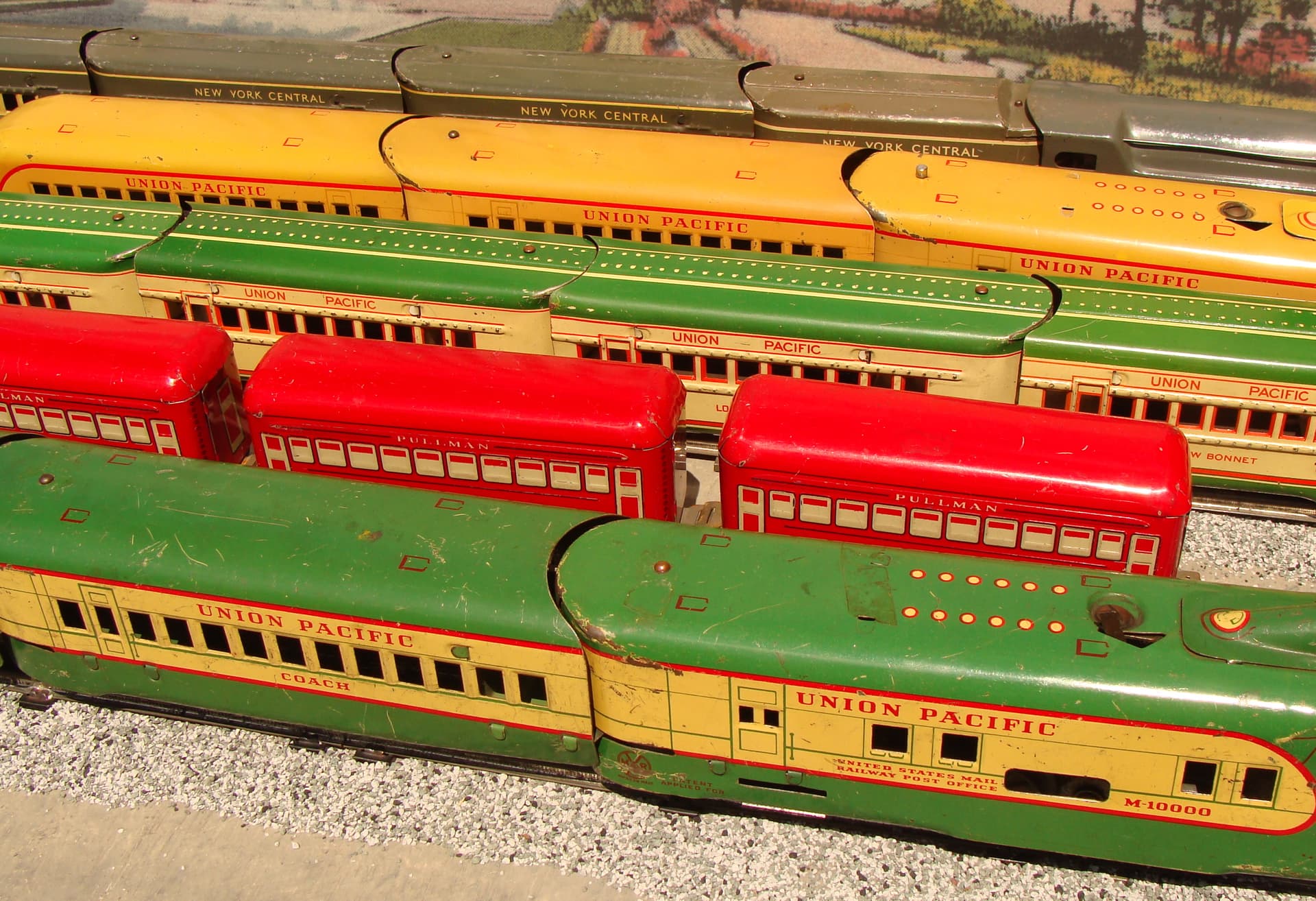
I am blown away by the color schemes on these locomotives.
Rich
I am blown away by the color schemes on these locomotives.
Rich
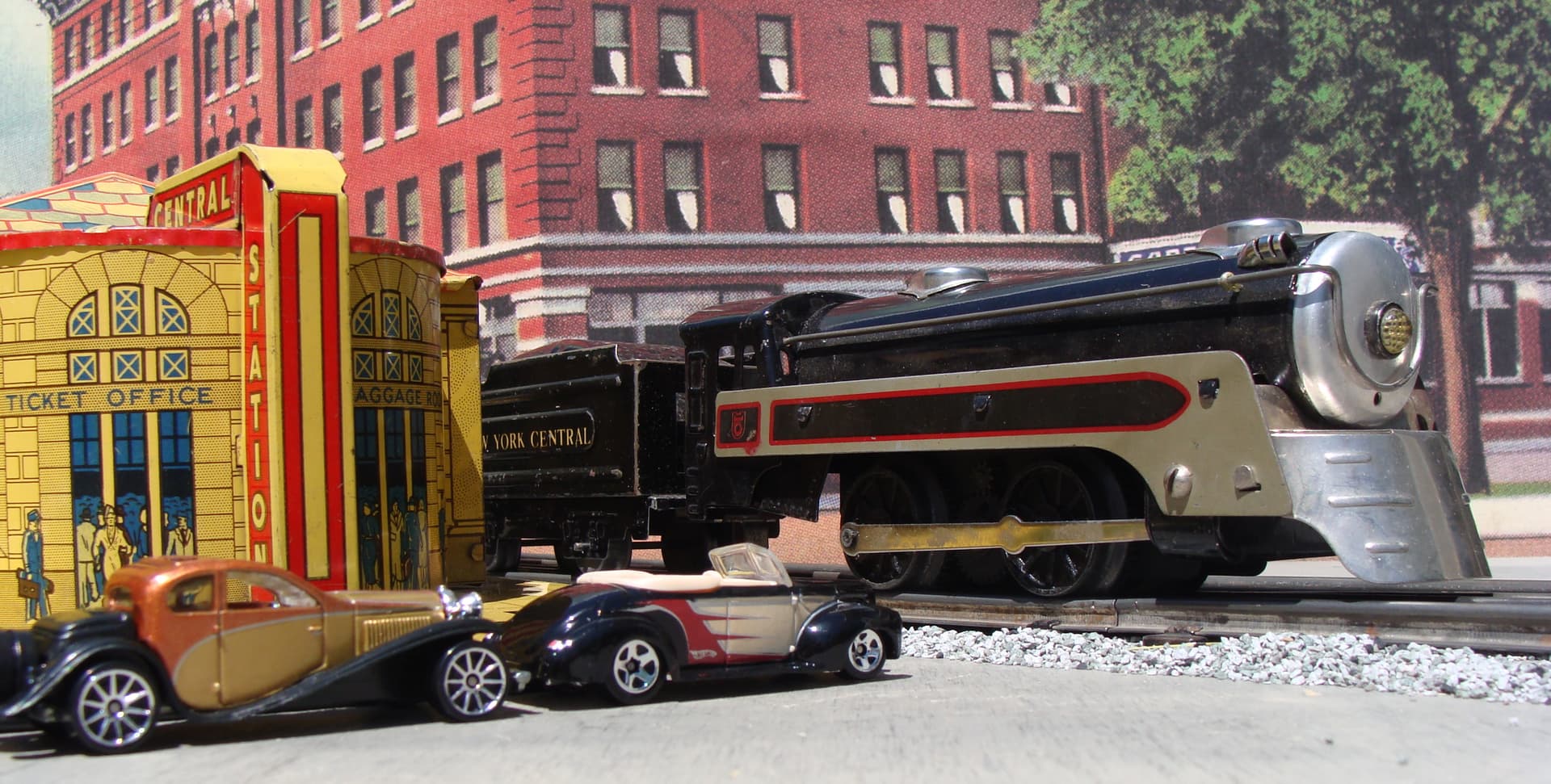
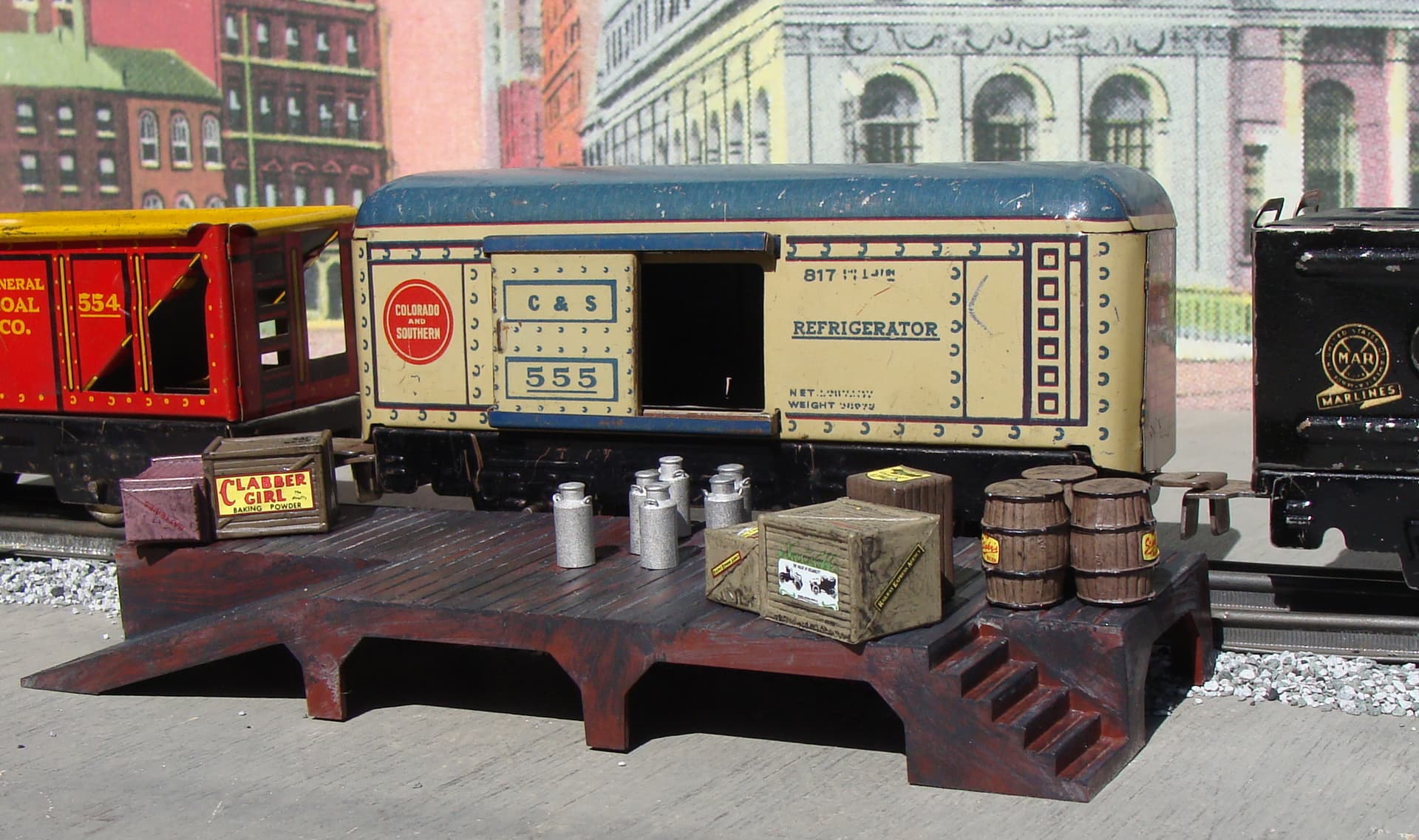
Lots of good action going on in these scenes.
Rich
I need sunglasses. 
Those cars are so bright and colorful.
Rich
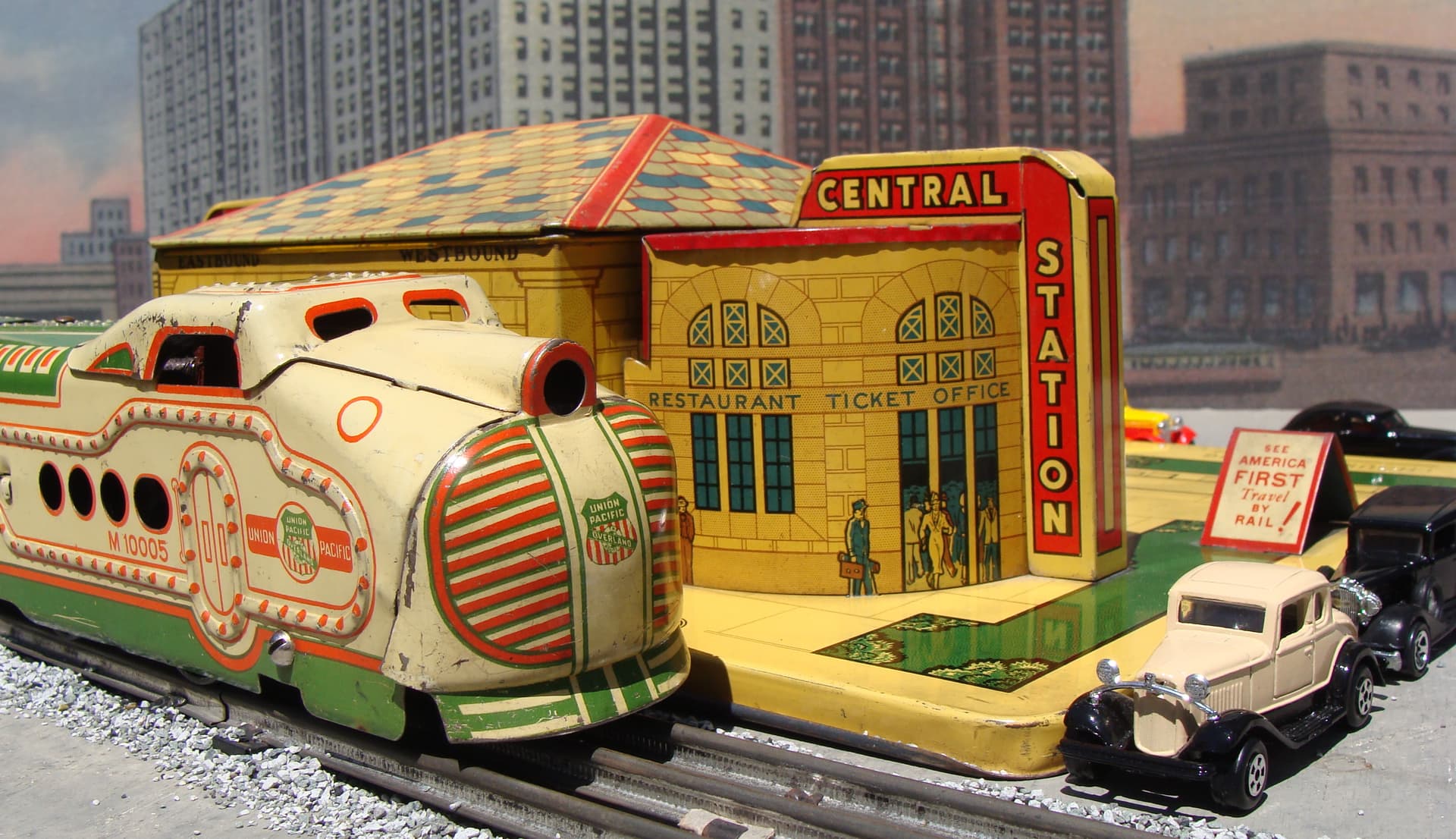
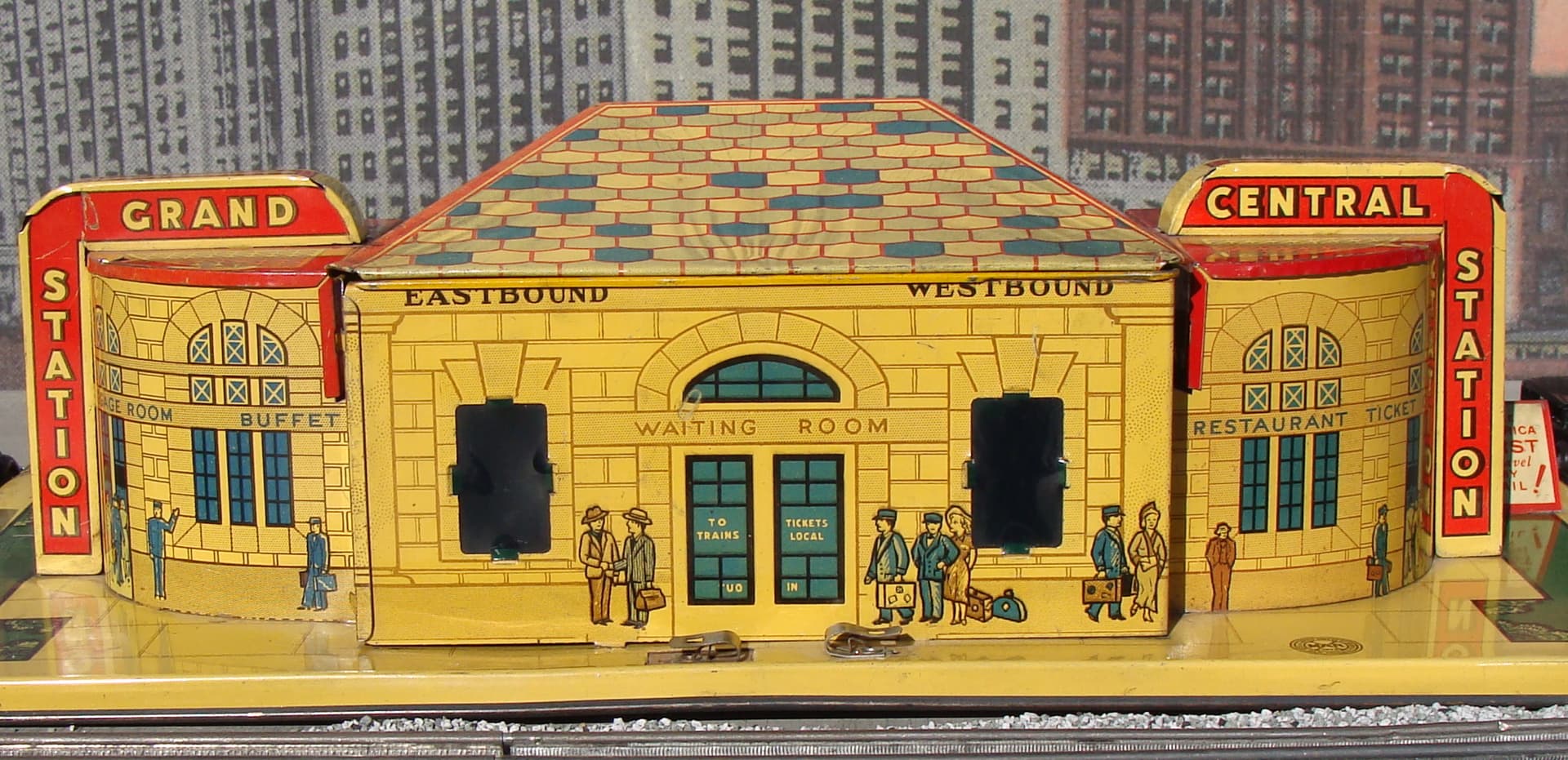
Today, Marx’s GRAND CENTRAL STATION is considered by many collectors to be the most elegant and desirable of Marx’s lithographed metal train stations. (A Marx GRAND CENTRAL STATION that is complete and in good cosmetic condition typically sells for over $100.00 at train shows and on eBay!)
Lol, you are posting these photos faster than I can comment on them. Good looking stuff.
Rich
Very cool looking station.
Rich
I am not at all familiar with Marx. This is an interesting thread, to say the least.
Rich
Marx trains were intended as “electric trains any child could afford” and typically sold for a fraction of what Lionel and American Flyer trains sold for. Marx trains consistently outsold Lionel and American Flyer trains by very high margins. (More children were introduced to electric trains by having received a Marx set than any other brand. My first electric train was a Marx.) Despite Marx’s popularity, the model railroad/toy train magazines don’t give Marx trains anywhere near the same coverage they give to Lionel and American Flyer. In lieu of a magazine for Marx train fans, this thread was started to showcase Marx trains exclusively.
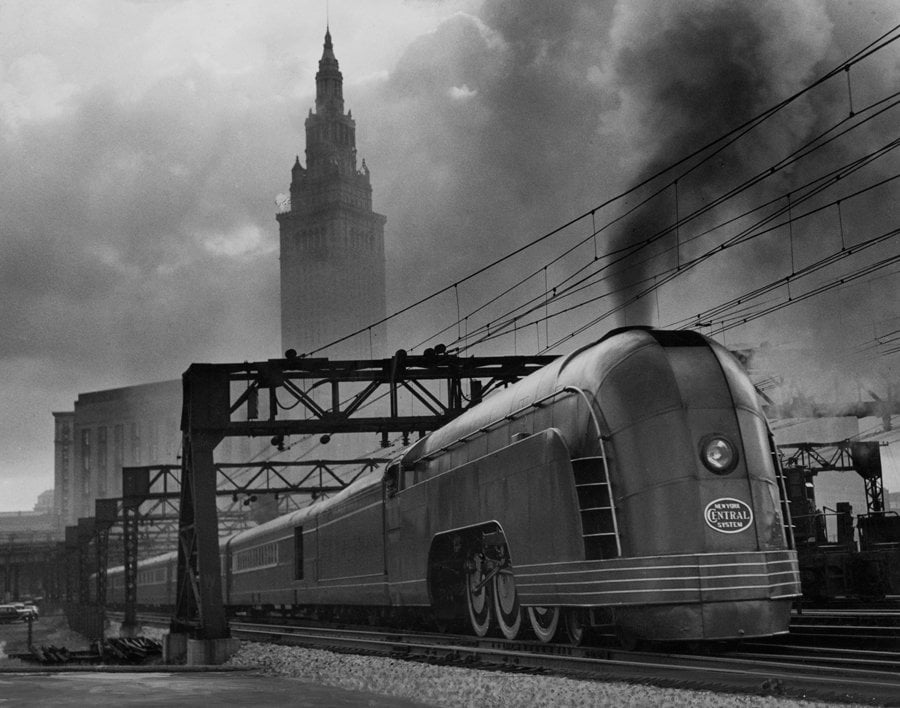
Unlike the prototype, which was painted Armour Yellow with Leaf Brown roof and undersides, Marx’s M-10000 trains were produced in six different color variations including green & cream, maroon & silver, and tan & light tan. (Like Lionel, Marx was aware that the primary purchasers of toy trains for children were women - mothers, sisters, and aunts - whose buying decisions were often influenced by bright colors.)
Thanks for that reply. That’s a shame that Marx didn’t get the kind of coverage given to Lionel and American Flyer. As a kid, my first train was American Flyer.
Rich
Ahh, that explains it. Thanks.
Rich
Eric,
Your knowledge of Marx trains and railroad operation are phenomenal. I learn something with everyone of your posts. They are entertaining and well written. Thanks for your investment of time.
Northwoods Flyer
Greg
As Charlie Chan would say, Thank you so much.
Knowing that my efforts are being seen and appreciated makes all the time and effort involved worthwhile.
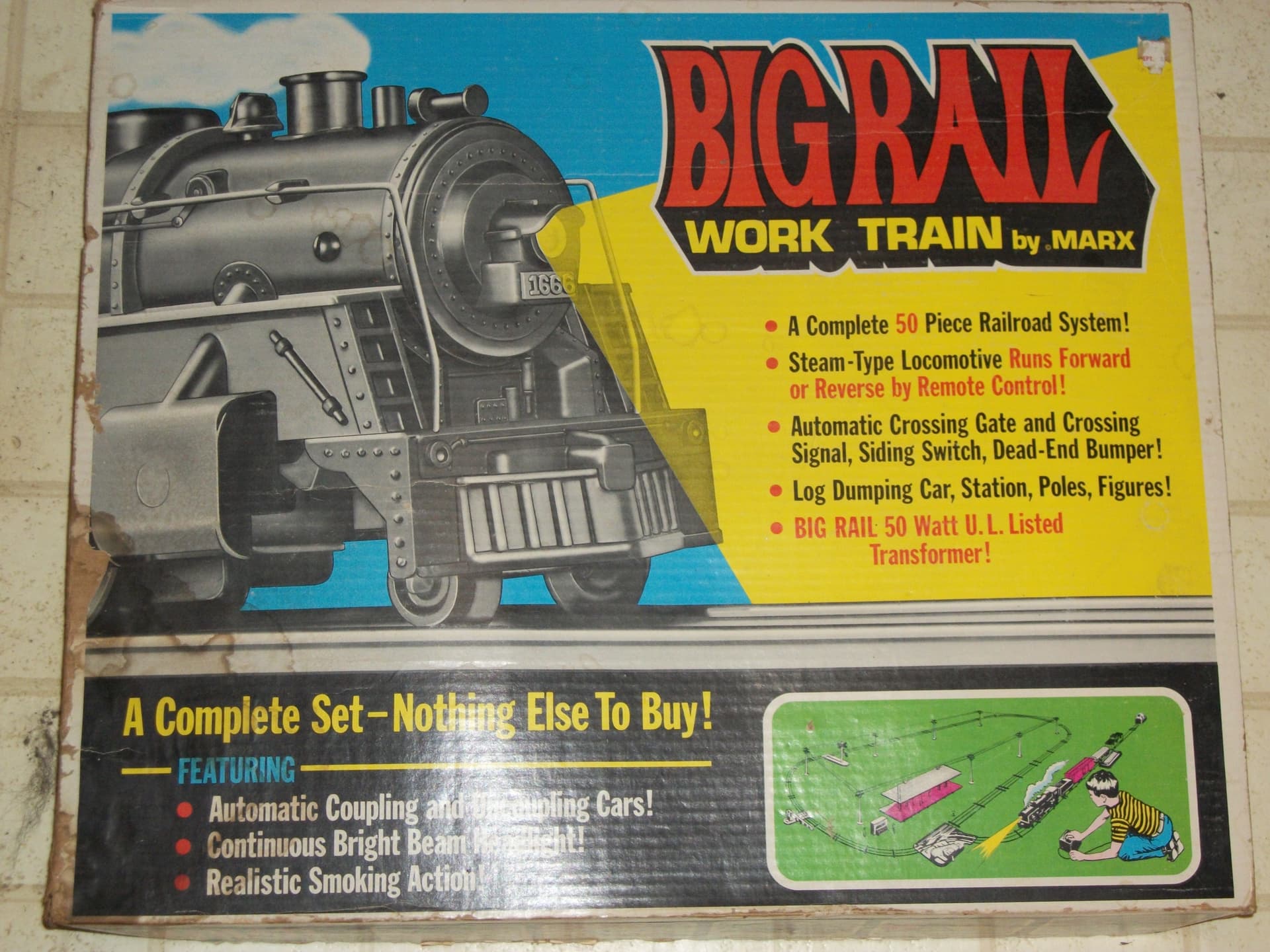
Here’s three pics of my very nice Big Rail set, #50350. First, the box lid. There is staining on the lower left side, but the box is intact.
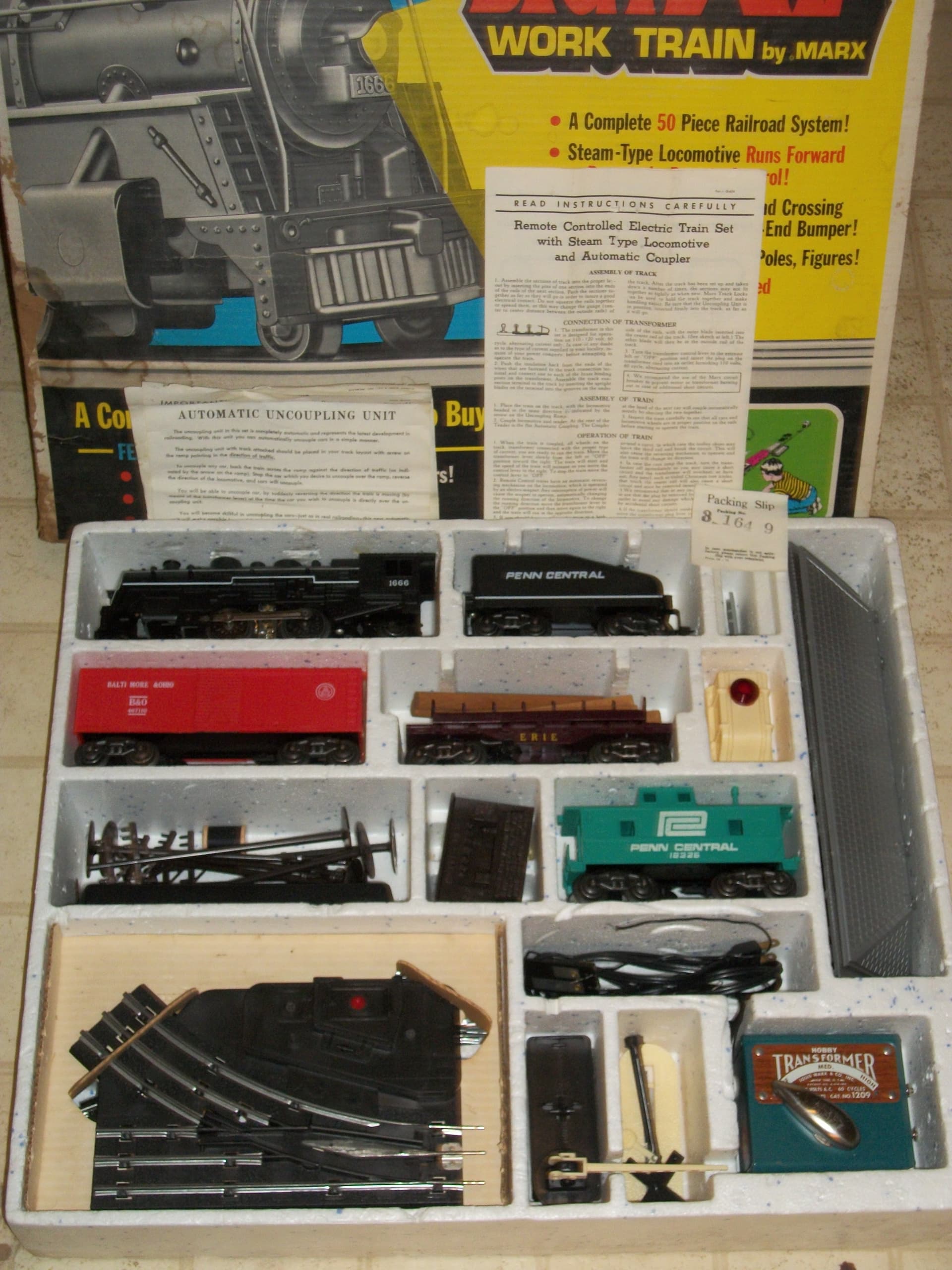
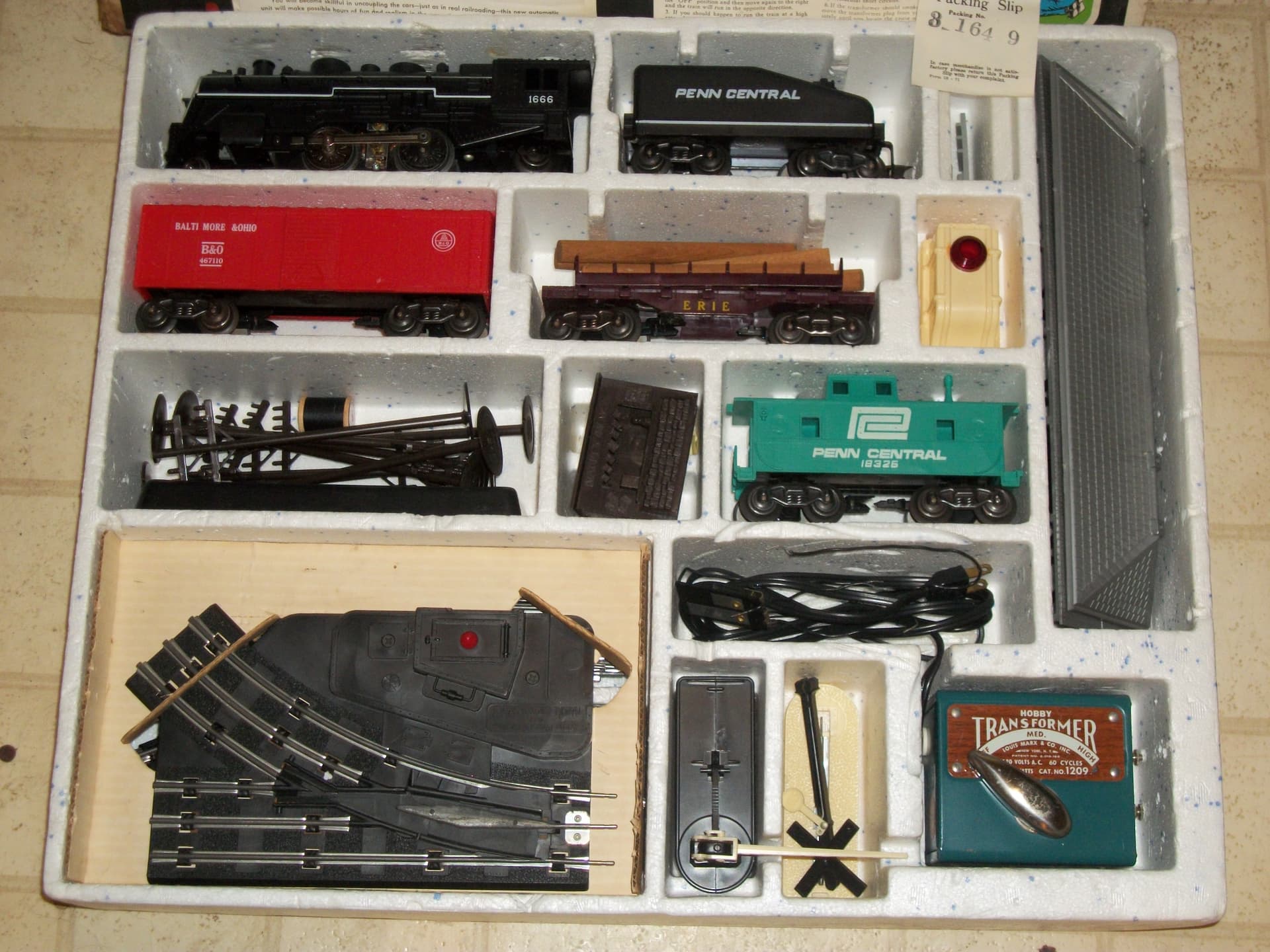
Next, we’ll open the box and show the contents. It’s all there, including the instructions and inspection tag. Guessing by the wheels, i would say it has maybe a couple hours running time.
Here’s a closer pic of the contents, and, in this pic, you can spy the one flaw in the set: the little knob that protrudes from the side of the switch to sift the route is broken off. The operation of the switch is unaffected, but you have to move the rails directly.
This set illustrates to me at least one superiority Marx had over Lionel in many cases: In addition to the train, the purchaser got the station, signals, line poles (with a spool of thread for the lines), the uncoupler, the dump mechanism, smoke fluid (under another item in the pic) and–most importantly–a switch and some track for a spur. The play value of the set is very high, especially as this was a common, mid-range set. Marx made a big push with these in the early '70s. Very few Lionel sets came with this kind of variety, especially after the '50s, and those were generally top-of-the-line sets in their market bracket. (We do have to excuse the humorous fact that Marx lettered a stem loco for the PC, however.  )
)
As much as I honor Lionel and everything that they did, I have a very soft spot in my heart for Marx. They may never have made a scale Hudson, but, what they did, they did better than anybody else: offer solid value and access to electric trains to just about everybody.