I read that Microsoft is using trains as well as baseball for advertizing?
Would Microsoft, Bill Gates, consider sponsoring the California Zephyr? Subsidizing its operation, advertizing its products and sevices in the lounge-sightseeing car?
Other long distance trains coujld be subsidized by other large corporations. And they would have to be run properlly to make their sponsors proud.
It is an interesting concept, but I doubt you could raise enough money to match the subsidy. There are costs involved in selling advertising. Sales commissions, ad creation, and the preparation of the media that will be used to present it. Then, I promise you, there will be fights over what ads and vendors will and will not be allowed.
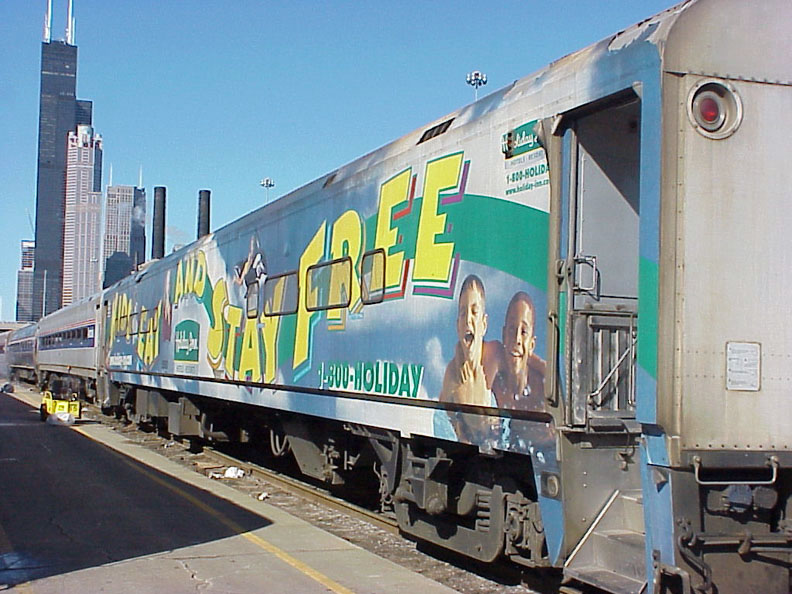
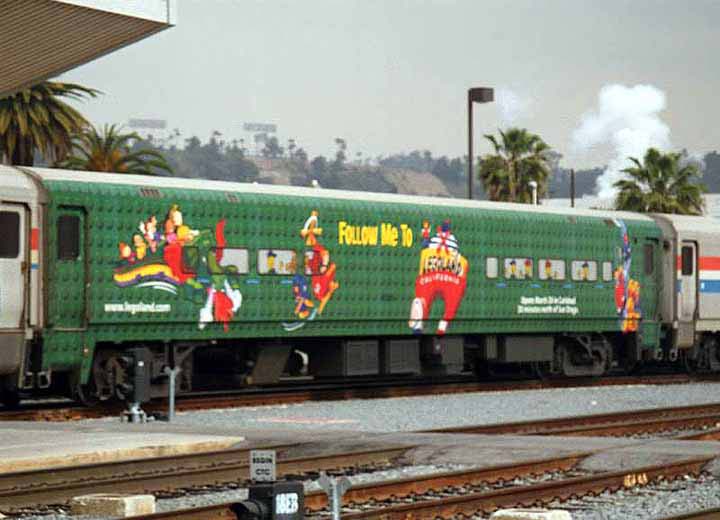
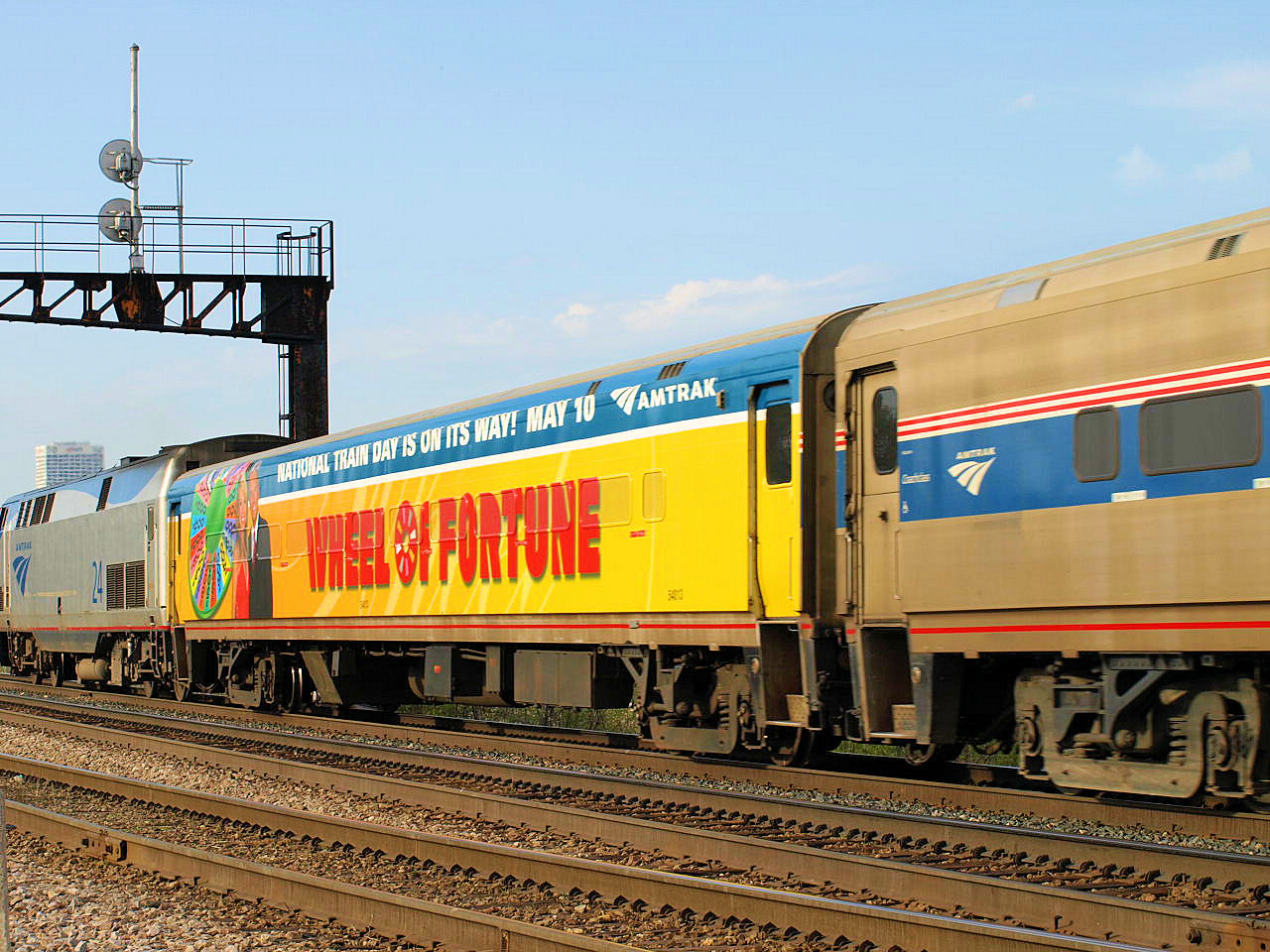
That sure seems like a good “outside the box” thought to me. There have been a few advertising-wrapped Acelas and NEC Amfleet cars over the years and a “postage stamp” P42, but that’s been about it.
You could go a bit farther with this line of thinking. How about a branding tie-in with the food service other than the Coke vs. Pepsi thing? A little bit of this is done on the PNW Talgos. How about running a stream of info/commercials on flat screen TVs in every car with the audio available over bluetooth or similar? (MARTA does this on their trains - a combo of news, weather and commercials). Imagine if resorts along the route were able to shill for their place on the train… If there was sponsorship, the sponsor could have most of the time.
I rode an Aer Lingus flight from Dublin to Heathrow last spring. They do a couple of interesting things. First, they don’t give away coffee and soda. If you want it, you pay a couple Euro. Second, the flight attendants spend a good bit of time selling trinkets. They give a sales pitch for the items and then sell from a cart they push down the aisle. A couple dozen people actually bought stuff!
Consider this: there are way more eyeballs that see the advertising inside DC Metro trains than Amtrak trains, both inside and outside the train and in stations. The biggest advertiser on Metro? Metro itself. It can’t sell the space.
Then what ad space is sold is very, very tailored to who is on that line and what station. A Green line train/station is more likely to have ads targeted to young black men about HIV/AIDS. Yellow and Blue line trains have ads about strike aircraft and drones. Who’s the target audience for, say, the Capitol Limited? DC, Pittsburgh, Cleveland, Chicago, and the rural places in between aren’t served by the same potential sponsors.
But the MBTA has had success in selling the naming of specific subway stations for nearby corporations.
On the Microsoft Califronia Zephyr, I could imagine a portion of the lounge-sightseer car equjpped with a state-of-the-art computer connected to the web and running the most advanced MS programs, with an MS man or woman there to demonstrate the latest and most advanced technology as well as computer operation to those who have been scared to enter the world of the internet and computers.
The two Florida trains might be sponsored by Carnival Cruise Lines.
The California Zephyr, as an example, in FY11 carried an average of 162 passengers per train. The average trip length was approximately 450 miles. Approximately 18 per cent of the passengers were in one of the train’s sleeping cars. Most of them were on the train for just one night, i.e. Chicago to Denver, Denver to Emeryville, etc.
Corporate advertising managers place ads where they can be seen by large numbers of people. Outside of the NEC, as well as the southern California corridor, Amtrak does not carry large numbers of people. Justifying an advertising spend on Amtrak’s trains, especially the long distance trains, would be difficult.
The real question about Amtrak is if it is privatized would it lose its authority to run passenger trains? As for being an advertising medium, it becomes a little more “dicey” I would say, and maybe even counterproductive. Commuter trains and commuter stations do get some income from advertising cards in the cars and on station platforms…Trasnportation Displays Incorporated even used to publish public timetables with advertising paying the freight so to speak. But, Amtrak, with its heritage in long distance, get away from it all, do not disturb if you are doing business or if you are relaxing, has never resorted (as far as I know) to advertising to take you away from your journey and comfort. Because viturally everything we do today from naming stadiums to putting a commercial name on everything you touch, to paying for your internet hook ups with advertising, has commercialized us so much that we are becoming enured to it with the sight of a corporate name or logo being almost meaningless. Plus at even 50 mph, how much can one absorb of a message trackside or on a passing train? Indside an Amtrak coach or sleeper, it would be most uncomfortable for many and probably less effective given today’s commercial evernthing society.
Perhaps the best bet would be to sell the naming rights to the stations. That way even people not traveling would be exposed. Union Station could become the Wachovia Transportation Center, etc.
As a personal matter, I am so sick of this ‘naming rights’ BS. 2 bit company thinks too big for it’s financial foot print and next thing you know you have another name to remember. Seen too many facilities of all kinds go through 2, 3 or more name changes. Bleaaaaaaah!
It’s too bad the Delaware, Lackawanna and Western didn’t think of your idea, Vet. They could have renamed Hoboken Terminal “Phoebe’s Place.” It might have kept them in business a little longer before they had to embrace the Scarlet Woman of Wall Street.
You are not making sense, JohnWR or you do not know what naming rights mean. WIth your train of thought, the DL&W would have solicited naming rights from Lipton Tea, Tootsie Rolls, Stevens Institute, Cocomalt or MytyFine Pudding, Todd Shipyards or The Clam Broth House. Tootsie could have made a white chocolate treat and called it Phoebe, though.
Transit cars are plastered with ads, but still require subsidy. Generally when I hear about corporate sponsored trains, it’s for party trains for executives and their clients.
And Phoebe might have joined Tootsie Woodley and Blondie Bumstead for a cup of Maxwell House coffee a Schaeffers, Henry. They could have created a plan to get suburban housewives to come back to all those DL&W commuter trains and do their shopping so the trains would make money and the Erie merger would not have been needed. I’ve made up my mind so don’t try to confuse me with the facts. But we could meet in the Hoboken Terminal waiting room to discuss this if you want.
The point is JohnWR, that naming rights go to a commercial enterprise off the railroad…thus the names I suggested were all major manufacturers, a school, and a restaurant in Hoboken in the 40’s and 50’s. Phoebe being the railroad name would not have earned money for the nameing rights. Several other things about he era to be clarified. One is that the costs of doing business and advertising at the time did not have the need for naming rights as we know it. Plus those rights seem to be sold by municipal entities to commercial advertisers. The need and the concept were not a big deal back then. Second, the idea of trying to get housewives to come to Hoboken or use the train was not as practical then, either. Individual towns had grown up with virtually every commodity and service needed available. Lifestyle was such that if you didn’t have it, you planned for it or did without. And though hubby traveled to and from the big city everyday, each town was still its own entity self reliant upon itself. Sometimes you made arrangements to go to another town to shop when what you wanted was not available, but that was maybe on a weekend or a weekday planned well in advance. They didn’t live like we do today, the lifestyle was completely different. A trip from the hills to the big city was a big event, and comparitively expensive, too, for many. Some commuter rail lines had hourly or more frequent service all day. People knew it was there and did use it. But as the family automobile became a staple and roads were paved and driveable, there was no need to drive or taxi to a railroad station when you could drive right to your destination. Then, after the 1960s, it was shopping plazas followed by malls that eliminated the train trip for shopping but made the family’s second or third car an imparitive. So, life, lifestyles, the whole structure of the society was so different than today that trying to impose tod
I have to agree that lifestyles have changed, Henry. No longer is there a horsecar line up 4th Avenue in Manhattan. And New Jersey Transit has never asked me to get out and help push the train up the hill on the outskirts of Newark. And neither ships nor homes burn coal anymore so the DL&W no longer can run a profitable business shipping coal from Scranton to tidewater.
But the freight railroads are coming back despite the interstate highways and the trucks. But I think it is about the elimination of Government regulation under the Staggers Act more than anything else. A freight train can replace a lot of truck drivers.
I think there is a lot more to it than just the Staggers Act. Needs to move things have outpaced the ability for trucks, an outdated and abused infrastructure, and a work force that wants to stay home instead of riding the range free wheel style can handle. Railroads have re invented themselves in someways,but definitely have prepared for more. Our political system at present has failed the rebuilding of the infrastructure and our social system has reigned in the wanderlust of riding the rails and the roads for days on end wihout being home with the family. But remember, population centers have moved or been modified to be almost unrecognizable from 50 or more years ago. Waterwheel and smokestack industries have virtyally dissappeared along with the bulky raw materials in and bulkier finished products out. So, yeah, the freight railroads have changed. But that does not mean they necessarily have room on their rails for passenger services, either. That is going to take careful planning, building, service structuring, and cooperation of private railroads and governments at all levels. We actually are on the edge of reeducating everyone about everything transportation.
As a few posts before mine have pointed out, ads on Amtrak cars and locos has been done. Maybe not a full train sponsorship but ads on Amtrak has been done.
Check out these photo links of just a few of the multiple advertising used on Amtrak:
Great pictures. What is the saying, a picture is worth 9,996 words? Actually, it is bit more, but this way someone will have a reason to push back on it.
One of the ads is sponsored by Amtrak. It would be interesting to know how the advertisers judged the impact of their ads. One measure would be whether there were any repeat customers.
I’m in advertising…but I am concerned with two things…one, when do we stop short of looking like a string of circus wagons…and two, Amtrak has a sales message to advertise, too, and this is a great place for it.