Best Digital Camera For Taking Model Pics

So what do you think?

I know the higher the zoom the better (and more expensive). There is optical zoom and digital zoom, not sure I know which is more important for up close focused pics of our models.

Its like wine I guess, you judge the quality of a camera by its price. But I would like to stick to under $300.

I cannot say it is the best for everyone but it is the best for me.

Bluetooth and wireless. Tether to your iPhone.

Nikon Coolpix B500. Bought it from Amazon and many reviews for this camera and others at Amazon. Google it also.

Specs below.

https://www.nikonusa.com/en/nikon-products/product/compact-digital-cameras/coolpix-b500.html

The camera uses AA cells which makes the cameras a little larger than one with internal rechargeable battery. A feature I like. I do not need a charger or charge cable.

Rich

Well, a few basics about cameras and photography first.

Optical zoom is much better at keeping detail than digital zoom. Optical zoom works by magnifying the lens, and therefore everything the lens sees, whereas digital zoom magnifies each individual pixel. Therefore, digital zoom has more distortion of the smaller details.

SLR (Single Lens Reflex) cameras tend to do better at details than a point and shoot. (Especially in photography that involves anything moving.)

Point and shoot cameras tend to do betterr than cheap cell phone cameras on detail shots.

In the best category, that is subjective.

Sometimes, the best camera is the one you have when you need a camera.

Other times the best camera is the one best suited for the job at hand. (Like underwater photography requiring a underwater camera. Not just any old camera would do here.)

For models, I most often use my cell phone. It is quick and easy, and allows rapid posting to the forums, websites, etc… And it does a decent job of taking snap shot style pics.

My main camera, is a Canon Rebel XS DSLR. It does what I need it to do (and like to do) elsewhere.

If it is only model photography that is of concern, then a point and shoot style camera with optical zoom will work just fine, as will the higher-end smartphones cameras.

But if you will be doing other things, like railfanning, or kids sports, you might want to save a bit more and splurge on the DSLR. (A starter one will be in the $500 range, and you are not far from that.)

And, if you are doing underwater modeling, then I recommend a underwater camera, but seeing as this is about model trains and not model submarines…
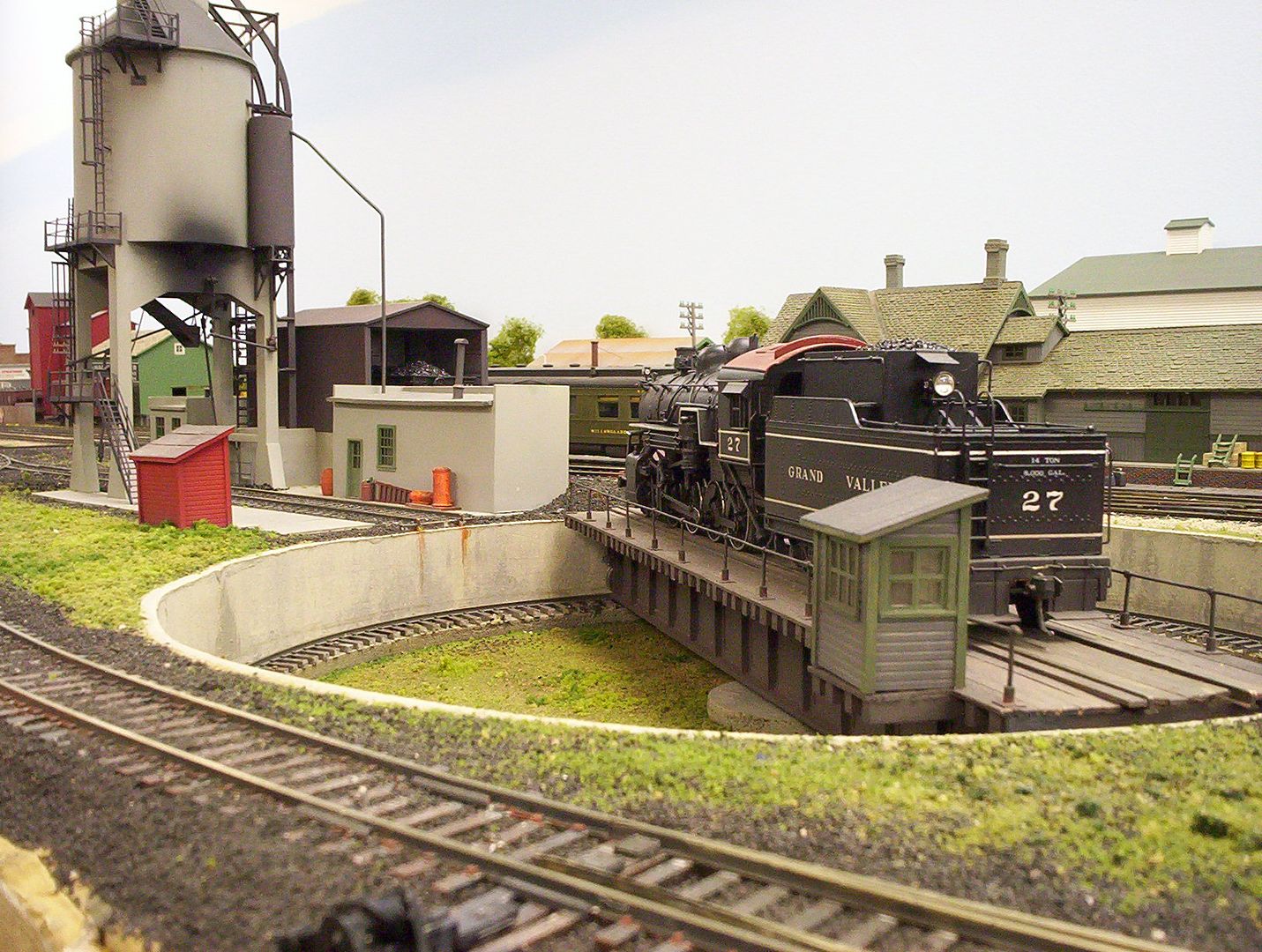
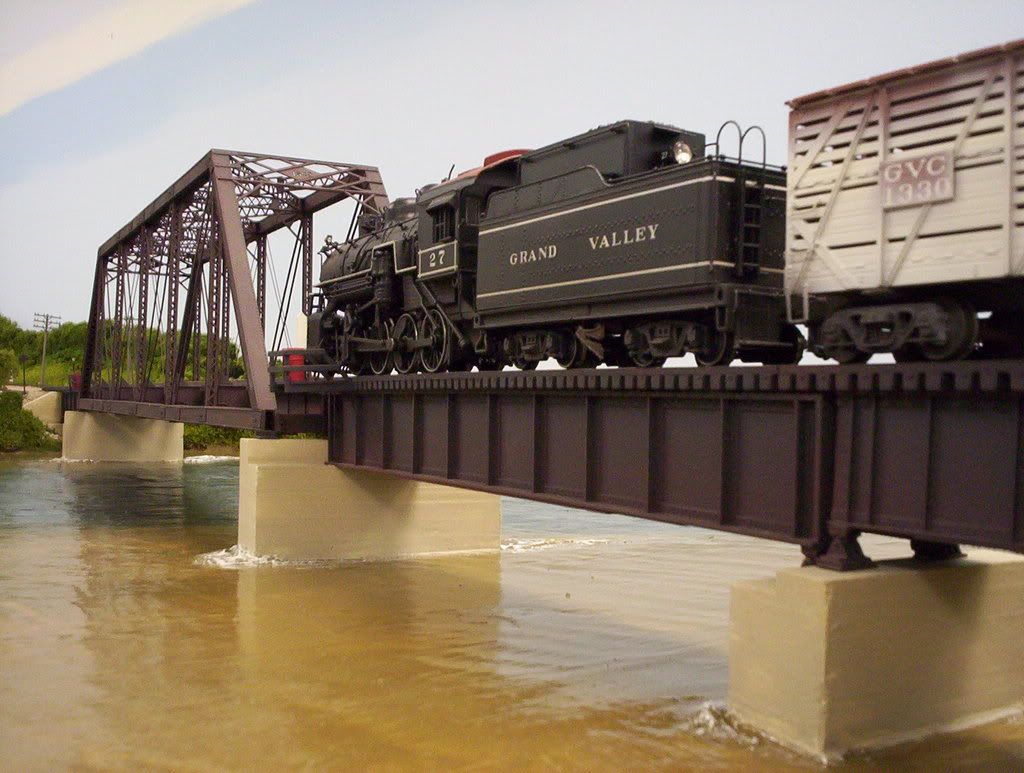
More optical zoom = less depth of field

MACRO is the ability to focus closer to the subject than a “normal” lens; but close in is also less depth of field

Photo stacking software, which uses multiple shots focused at different distances will get you huge depth of field. All I can understand about that is it is magic. There was a recent thread on that subject.

I’ll offer some comments, though I’m not up to date on current cameras. I will recommend Steve’s Digicams website for very good reviews.

a) On zoom ratio, two thoughts. (1) Optical zoom is what counts most. Digital zoom goes past that, which helps compose a closer shot than at max optical zoom, but it compromises the resolution (which may not be noticeable) and you can always adjust a photo with your PC by cropping. (2) As a rule of thumb, a higher optical zoom lens can have two drawbacks; i.e., some loss of image quality, plus usually a higher max open f/stop, which means less low light capability. Overall, I’d avoid the 20x optical zooms, for instance.

b) I have a nice (7 yrs old) Canon G12, a great overall camera that I’ve found just fine for people and vacation photography. But it has two drawbacks that I’ve found when taking model RR photos. (1) It has a fairly small “maximum f/stop” at f/8 (vs. f/16). That affects depth of field (the depth in focus) signficantly, maybe minimized if I stood back farther and zoomed. (2) I never bothered with videos before but have made a dozen or so with modelling, mostly for demonstrating sound locos. I discovered that my G12 will not adjust focus (even manually) during shooting, so either the near or far of my shooting is poor focus. So if planning model videos, check whether auto focus works in shooting those.

It will be interesting to hear what some of the serious modelling photog’s suggest, particularly at different price points.

I’d say that it would be better (and financially wiser) to judge the camera by what you want from the photos.

If you’re speaking of posting them on-line, any point-and-shoot camera will be more than adequate. I have an old 2MP Kodak point-and-shoot which I’ve used for years, and occasionally still do. It offers decent depth-of-field, colour correction for fluorescent lights, and is small enough to place on the layout or even on a train, as I’ve done to shoot a video.
It also takes decent close-ups, and if I want a detail shot, I take the photo either through the lense of my Optivisor, or, for a really close view, with a jeweller’s loupe over the lense. I’d offer some examples, but they’re currently not available.

If you want the camera for taking photos for use in a magazine, you’ll need something capable of taking photos in multiple formats, especially RAW. Such a camera will, of course, also take photos that could be posted here, but you’d likely have to re-size them severely to place them into a hosting service for that useage.

Anybody with the money can buy a professional-style camera, but it won’t guarantee that the photos will appear professionally-done.

Wayne

Hi, Douglas

As others have pointed out, “Best” for me may not be best for you. Wayne’s comment about what your end result expectations are probably your main considerations at this point.

Maybe the way to look at the selection process is to look at what features you don’t want. A process of elimination.

I’ve been a Canon devotee since I bought my first film SLR in 1977, an AT-1, which I gave to a friend and he is still using 41 years later.

I have three recent models of digital SLRs and maybe a dozen lenses I swap between the three. However…

For 95% of my layout photos I use the Canon Elph 340 HS that I bought for my wife several years ago. It is small so that I can place it amongst layout obstructions easily and also get the lowest angle for a “little people’s eye-view” instead of the usual bird’s-eye view which is a common angle for many photos of layouts.

Generally, anything I shoot with the larger DSLRs I have it on a tripod in the aisle, shooting in toward the scene. Usually in these cases I will select a lens that will have the smallest aperature to give me the best depth of field, which also translates to a very long exposure, sometimes a minute or two.

I wouldn’t be too concerned about the zoom ratio. It can be a handy feature for some outdoor uses* but I seldom use any long focal length for layout shots prefering the widest field of view I can get then cropping the image later in Photoshop. I have never used the digital zoom range in the camera, it is essentially “cropping” the image sensor which then introduces “noise” which translates to blurry and pixelated images. I turned the digital zoom feature off in the camera menu settings.

  • If you are going to use the camera for general photography, away from the layout, the longer zoom feature may be more beneficial but beyond a cert

I find point-n-shoot digital cameras adequate for model railroad photography. I started out with a Kodak Z1485. That lasted about five years and then became flaky. I now use a Canon SX170. Both camera’s made decent pix on my layout, under fluorescent lighting. They both allowed me to set the lens opening (aperture) to minumum (f8 or a bit smaller) for best depth of field, even at the expense of very long exposure times. Which demands a tripod, no one can handhold a 2 or 3 second exposure time.

There are better camera’s made, with extremely high prices. I would love to have one, but the low cost point-n-shoots make decent pictures and I don’t have the money to buy the top end DSLR camera’s.

I always like your practical solutions.

Not necessarily so. On small cameras with pinhead sensors, more zoom means you need lots more light and you’ll get noisier images…images with more grain. If all you want is to be able to take nice panoramas of vistas, or capture that nice trestle across the canyon, yes, more zoom is better. But it isn’t necessarily good for your close-up layout shots by comparison.

Optical zoom brings things closer keeping the pixels in full use…all across the sensor. All you do is narrow your field of view. Digital zoom is just a software gimmick that ‘crops’ the digital image taken optically and blows up what’s left…what you cropped as you kept zooming past the yellow marker in your viewfinder. Most people learn to take the maximum optical zoom image and to crop THAT in a post-production software like gimp or FastStone or Sage Light, or photoshop or lightroom if you can afford those.

[quote user=“Doughless”]

Its like wine I guess, you judge the quality of a camera by its price. But

Thanks, Douglas. Those solutions were inspired by a tight budget, but as you can see below, they work reasonably well.

A couple of photos from the 2MP Kodak of which I spoke earlier…

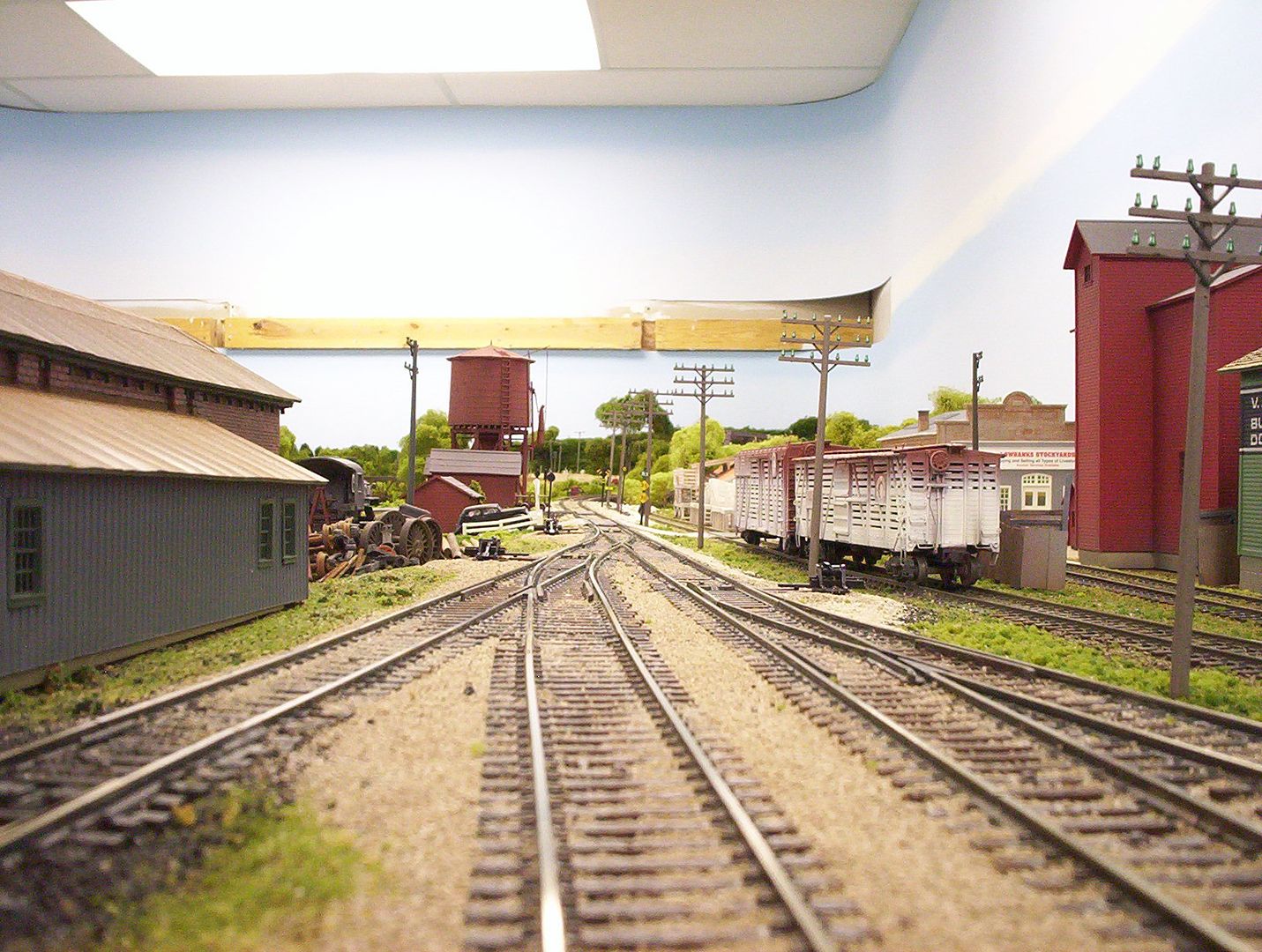
This scene, from camera to backdrop, is about 20’ deep…

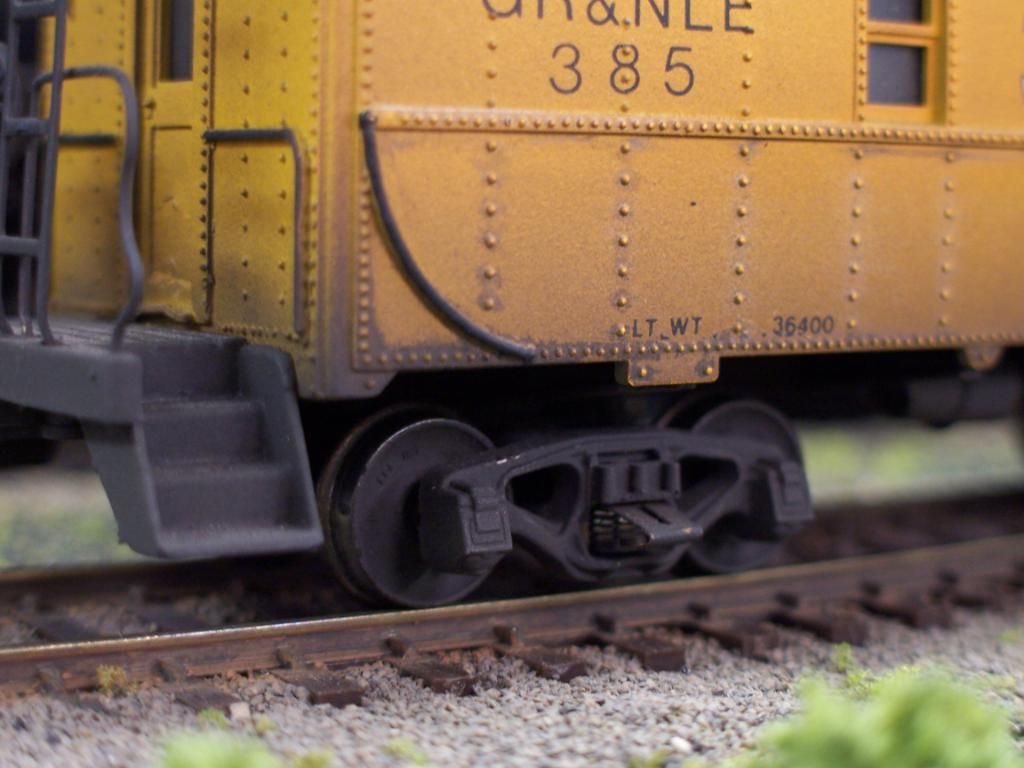
I belive that this one was through the lense of the Optivisor, showing a Kadee truck with leaf springs…

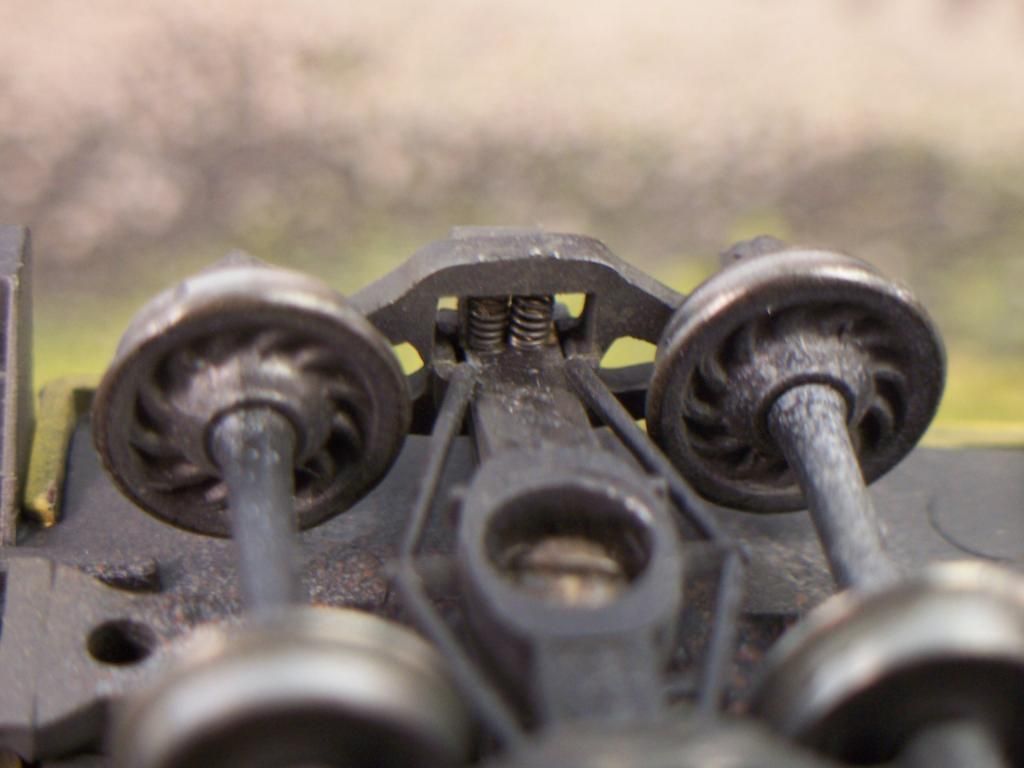
…and possibly through the loupe, showing how the original coil springs can be re-installed to keep the leaf spring in place…

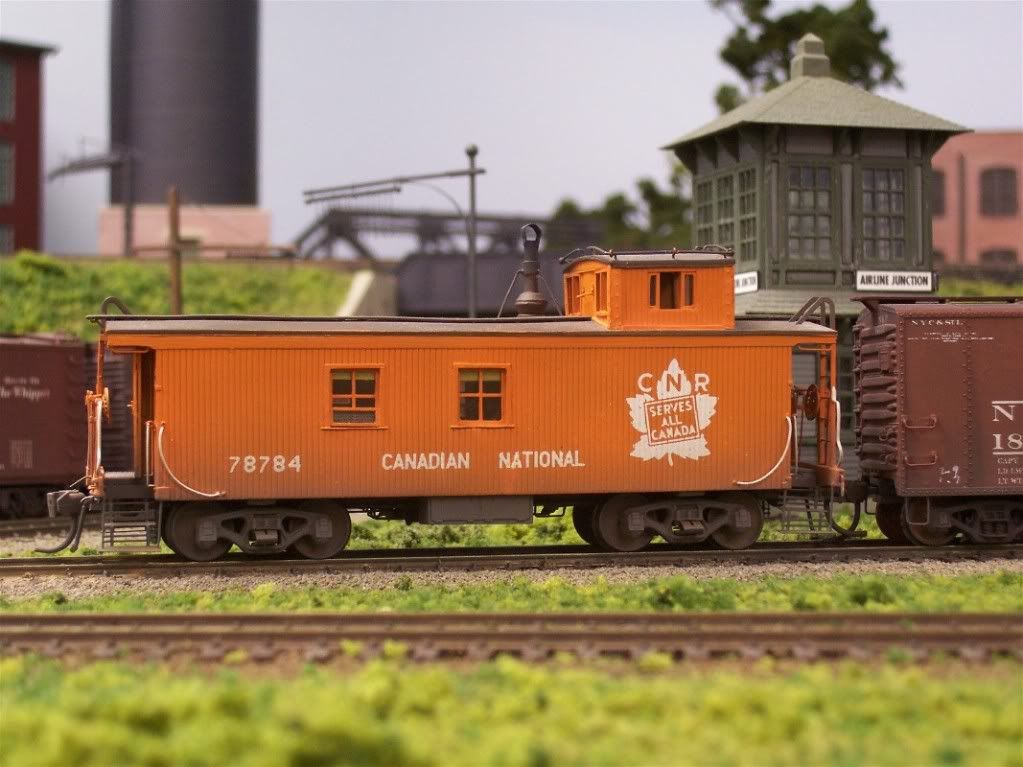
A Sylvan caboose…

…and a close-up through the loupe…

I’d guess that today’s version of a point-and-shoot might be even more capable.

Wayne

This is a difficult answer and subjective as to your final needs.

A sony point&shoot with a telescoping lens will do the job. You can also make movies with it. But the picture tends to be noisier at dark levels. The focus is not as sharp, and chromatic abrasions greater.

If you want production quality photos you’ll want a DSLR with a full frame sensor and a wide angle lens. On a full frame 35mm camera, 50mm prime lenses mimics human vision. But the experts tend to like 35mm and 18mm lens (wide angle) as they have a tendency to make things look bigger up close, and the background fades away quickly in a blur.

You can pick up a quality used DSLR with zoom or prime lens for <$300. You can get a decent new DSLR with lens <$600

I suggest you take a gander at DPReview.com and ask the forum there. They have a sub forum for point & shoots as well as reviews. They also have a used market place.

I mentioned before I have the Nikon B500 DSLR camera. I can set the camera up on a tripod and use my iPhone to control it. Nice feature. There is a newer model out.

Rich

Quite the opposite. It depends on your focal point. The longer your focal length (ie 100->200->300mm) the greater your field of depth.

If you want a deep depth of field, you set up a zoom on a tripod, and increase the lens focal length. Problem with this is the field appears “flat” with less a conveyence of depth between objects.

If you want to focus on one area and emphasize depth, you get up close and use a short focal length (35 mm, 18mm) and a big f stop number. If you decrease the f-stop to a lower number you’ll get a bigger area that is “in focus” But your shutter time will increase.

The general rule of thumb is to use 1/focal length as your shutter time. So if I have a 18mm lens on, then 1/18th a second should be your MAX shutter time. It it’s any greater, then you should mount it on a tripod to avoid image blur.

I use a Canon Rebel T-6 that I bought about 8 months ago from Colonial Photoi and Hobby in Orlando.

.

It is better than anything you need for on-line. I bought it for publication, but as of yet I have not managed to get anything published. The images are supposedly good enough.

.

It has mulitple options for light balance, manual fStop setting, simulated electronic ISO speed for “film”, and with e tether cord I can set the shutter exposure for at least 120 seconds.

.

Before this I used a “cheap” 14 Mp Kodak point and shoot for online posting, and it worked great.

.

You can take “good enough” pictures with pretty much any digital camera.

.

I Phone 6:

.

.

Kodak point and shoot:

.

.

Canon Rebel T-6:

.

.

Buy what you need.

.

-Kevin

.

With any lens there is a minimal focus point. It is the point at which anything closer will be out of focus due to the physical nature of the lens. On most cameras it is about three feet. Anything closer will be out of focus.
To solve this problem some cameras are equipped with a MACRO focus which allows you to photographic very small objects at a distance as small as just a couple of inches away or less. This is what you need for model railroad photography, especially if you are taking pictures in very close quarters like narrow aisles in a train layout.
The amount of light determines the depth of field, which is how much of the image is in focus. The closer you are zoomed in the less light enters the lens. To reverse this use lights. The more light the more of the image is in focus. If you’ve ever seen a TV or movie set you will see how many lights they use to keep everything in focus.
Summary. The best camera to use is one that has a MACRO focus option.

DrWayne and SeeYou190 seem to have it figured out. I use a Nikon D300 and often either a 50/3.5 Micro or a 24-85/2.8-4 that has a decent close-up range. The key is following the advice of people like Bob Boudreau and Charlie Comstock, and becoming familiar with your equipment.

A second-hand dealer like KEH.com can get you into hardware at a good price – there are a lot of hobbyists who have to have the newest thing and trade in perfectly good equipment.

In between the basic point-and-shoot camera and the DSLR is the bridge camera, which can be easily purchased for under $300. At the higher zooms, you will need to use a tripod. They can be used like a point-and-shoot on full auto mode or you can set the camera to shoot on manual depending on the model. I have two Nikon bridge cameras and two Olympus DSLRs.

Check on Amazon which usually has the best price.

Technically, the reverse is true. The longer the range of the focal length of a zoom lens (the more numbers between the widest focal length of a lens and the longest focal length of a lens), the greater the inability of that lens to produce a shallow depth of field. Maximum aperture is determined by the following equation F/number = focal length/aperture diameter. So as one increases the focal length, the ability for that lens to produce an image with a shallow depth of field becomes increasingly difficult.

I know what you’re trying to say, but lots of folks get that aspect of things twisted up because of the way the physics work.

But, in general, sensor size also has a huge effect on the ability to produce shallow depth of field and is largely ignored by the lay photographer. (f/4 on a point and shoot camera is not the same as f/4 on full frame DSLR.)

I used to do quite a bit of photography at a level slightly beyond hobbyist. If you want my REAL recommendation here, I’ll give it to you.

I’d seriously look into Sony’s NEX line of mirrorless cameras. The older models can be found used for a very reasonable prices. The advantage of sony’s line of mirrorless cameras is 1). They contain a full sized ASP-C sized sensor (they even have full frame sensors, but those models are not inexpensive) and 2). they give one the ability to adapt “legacy” (old 35mm lenses) with both “dumb” and smart adapters. Now you have to use manual focus to use these old lenses, but sony includes tools in the camera’s software that helps with this task. It’s a perfect scenario for one that wants to put a camera on a tripod and take still life photos of a

Thanks for all of the replies.

What I’m looking for mostly is to get clear pictures of details, up close, with a depth of field about 12 inches, understanding that the further details won’t be as clear as the up close details.

I assume a high-numbered optical zoom is what to look for, within reason.

And if I read some of the comments correctly, lighting also has an impact on the clarity of the photos, not necessarily only the brightness.