lately have been reading about troubles of north american tourist railroads in canada and the united states, and wondered how many ahve shut down or will be soon. Ones i have heard which have shut down or face good possibility of that happening, included Catskill Mountains, Adirondack Scenic, Lake Superior & Mississippi, Prairie Dog Central, Stillwater & St. Paul, and many more. Any word on the Toledo, Lake Erie & western and Fremont & Elkhorn Valley (Fremont Northern now i believe) are these two operating or shut down also?
The Catskill Mtn and the Adirondack Scenic are only facing partial shut downs so far. The Denver & Rio Grande tourist RR in the South Fork/Creede area of Colorado, which operated with large speeders, is for sale. Many of the tourist trains I rode in the last 50 years have gone out of business.
I have heard nothing about the Prairie Dog Central being in trouble or shutting down, to the contrary they are gearing up for the 2016 summer operating season, and according to their website plan to use their ancient steam locomotive on an increased number of runs this year.
Michigan had two small tourist lines that I watched fall. The first was the Cadillac & Lake City which ran a small lumber railroad 2-8-2 from Poison River and Saginaw. The cute little line was a former Pennsylvania Railroad branch line into the forever lost woods of Michigan’s central lower peninsula. The little “mike” ran from around 1963 into the early 1970’s and was the homeliest looking railroad I ever saw. One or two coaches of questionable heritage pulled by the engine forward for 20 miles and then run around the train and pulling it backwards for the return trip. Was kinda cute to see it run ahead on the morning trip through the woods.
Myself, raised on the NYC hudsons tearing through the northland and the Pennsy K4’s running up the west side of the state the little logging mike lacked glory - but it was steam!
The railroad pulled up roots and tracks and went out west to operate a section of the old Rock Island and then abandon that line also.
Lake Superior & Ishpeming Railroad was a mining railroad in Michigan’s Upper Peninsula. This was some serious heavy trackage and real BULL 2-8-0 “consolidation” locomotives. Three of these survived into the tourist business on the Marquette and Huron Mountain Railroad. Which was a fantastic historic trip of original engines running on original track.
The railroad hauled heavey iron ore loads and the railroad was built to stop and start these loads in a land of heavy winter railroading. The tourist line ran into the 1970’s before abandonment.
For those of you who have never been to Michigan’s upper peninsula it is a land that time forgot. Closer geographically to Wisconson but in a political move given to Michigan it is a romantic place lost to the modern world - yah NO EXPRESSWAYS!
I remember arriving in Marquette in the 1970’s and getting a motel room for the trip the next d
Love your passion Doc D, but I’ve got to disagree with you on something.
I’m sure an old LS&I fan like yourself gets a little miffed seeing “Wild Mary” markings on that 2-8-0 but you’ve got to remember, it’s THEIR engine! They own it, they pay for the upkeep, so they’ve got every right to mark it as they see fit.
Hey, if it was mine I’d probably slap Erie or Susquehanna markings on it!
That old C&O 2-6-6-2? I wouldn’t worry about that one, it’ll probably be restored with C&O markings. After all they don’t own that one, it’s a “loaner.”
Some of the other Michigan tourist operations that are gone: Boyne Valley; Leelanaw Transit; Keweenaw Central; Kalamazoo, Lake Michigan Western (EDIT: Kalamazoo, Lake Shore & Chicago); Reese Central; Traverse Dinner Train; and Coe Rail/Star Clipper Dinner Train.
Cadillac & Lake City originally came to be as a freight-hauling short line that happened to use second-hand steam locomotives. Like many short lines of that period, all it accomplished was to postpone the inevitable abandonment for lack of traffic.
Lake Superior & Ishpeming is still a fascinating operation after they dropped steam. They were noted for a primarily Alco roster with a few GE’s tossed in for variety. The Alcos were replaced by U-boats and Dash-7’s, which still made it attractive to the next generation of enthusiasts.
SD70 glad to hear the Prairie Dog Central is doing well and gearing up for the 2016 season with its ancient steam locomotive. Glad to know the magazine i read that mentioned the Prairie Dog Central was incorrect. Nice to know the shortline is doing well. We dont have standard gauge torurist line here in michigan using steam locomotive.
I remember the Cadillac & Lake City Railway well. We came across it in summer 1968, when we stopped at its M-66 rail crossing near missaukee junction. We had plans to go camping at Indian River, but took unplanned ride on the CLK. Was nice strolling streets of Lake City, window shopping and getting some ice cream, then riding another train back to Missaukee Junction. Shame, that it and so many other michigan lines like Coe Rail/later Michigan Air Line, Reese Central, Leelanau Scenic/Leelanau Transit, Boyne Valley/Boyne City, and now probaly Charlotte Southern are gone.
C&LC’s major customer was the co-op in Falmouth, which was caught up in the PBB Feed crisis, where fire retardant was accidentally mixed with cattle feed in the early 1970s. Eventually it was bought out by the co-op in McBain on the Ann Arbor RR. In 1976 when I was moving into the area, they were tearing up the C&LC, except for the last 5 miles to Missaukee Junction. Those rusting rails lasted until about 1990. A developer bought the ROW, and now homes and trailers sit on the old grade thru the woods.
I rode the line in 1971, when they leased the CP 4-6-2 from Steamtown. I understand this was the 4-6-2 that blew up on the Gettysburg RR about 20 years ago.
Back in 1970 traveling with my folks through the western USA, I had a copy of Ron Zeil’s book Twilight of Steam he covered the Reader Railroad in Arkansas. Ron portrayed the Reader as a hard scrabble southern steam operation run out of a couple of tin buildings by local steam mechanics who could and did keep a couple of old turn of the century steamers running in back woods fashion.
At the time I visited the Reader RR, I didn’t realize that this would be the last year of any major freight operation. The 32 mile tourist/freight line included a several hour steam passenger run with a couple of old steel coaches painted green traveling throught the turpentine woods to the “picnic site” where the steam engine was turned on an armstrong turntable and then recoupled to run back the other direction.
I was, however, disapointed to find the steam locomotive running at the time of my visit was RR1702, a former military US Army Transportation Corps S160 class 2-8-0 “consolidation” built for operation in Europe during the Second World War. While a fairly modern high power locomotive it was definitely built for the needs of European railroads with their very tight clearances, and as a result was quite a homely compact steamer by most traditional standards.
The engine had been converted to oil firing and was also painted southern style as a Western American engine and as such presented itself with a kind of bastard appearance which would have come across much better if it had been left in Army green with US military markings. The red painted cab roof and silver smokebox with Pyle headlight just did not work well.
At any rate, dad and I bought the “cab ride” option while my sister an mom rode the coaches. We spent the day with the engine
Your story brings to mind The Rebel RR in Tenesee. My family (from NJ) visited there in the mid 60’s. We were afaid to open our mouths. You could very well taste the disdain that Southerners still had for Northerners. We were all given “rifles” and were instructed to shoot at the “Yankee Camp” which we would come across during the trip. When we passed the camp we all started shooting. The “yankees” started running around like stupid idiots, with some having the pants shot off of them. I don’t recall if any were actually “killed” as this was “clean, family entertainment”! I was about 7 years old at the time. I never forgot that, but like you with the Reader RR I remember it for the wrong reasons.
TOURIST LOCOMOTIVES
The USATC S160 2-8-0 “Consolidation” military engines bring to mind the common “tourist railroad” which is often powered with smaller antique types of steam locomotives.
The US military Transportation Command in World War II built over 2000 of the little 2-8-0 “Consolidation” type engines which brings to mind the very small numbers of larger steam locomotives built at the end of the steam era.
TYPE AND NUMBER OF COMMON ENGINES PRODUCED -
Lets start with the 2-8-0 “Consolidation” type of which the astronomical number of US military engines were copied. The 2-8-0 was the workhorse on practically all of the railroads in the United States. It was built in large numbers from 1866 to 1916 for freight service primarily for greater adhesion on the drive wheels. This engine was never built with drive wheels greater than 63" or 64." Common speeds were up to 40 or 50 miles per hour with this design. A simple and rugged engine that for many years represented the maximum financial return of steam locomotive investment that a railroad could make. Heavier 2-8-0 engine designs were later benefited with mechanical stokers and superheaters.
In the United States more 2-8-0 “Consolidations” were built than any other locomotive type - over 33,000 were built, and 21,000 were for mainline service.
2-8-2 “Mikado” aka “Mike” this common freight engine was built in larger numbers than any other engine with a 2 wheel trailer truck between the years of 1905 and 1930. The 2-8-2 was among the most successful freight locomotives ever built. The first truely successful engines built for service in the United States were for the Northern Pacific Railroad in 1905 a design which had 43 sq ft of grate was not stoker equipped
The Bard of the High Iron does it again! Thank you again, Dr. D, for a most enjoyable read!
The production numbers were over the course of decades and longer and there were often as many variations in a specific wheel arrangement as there were diesel models on PRR’s roster.
Also keep in mind that the last steam locomotives built for service in the United States were 0-8-0’s built for N&W in 1953 and mainline steam locomotive operation was pretty much DEAD by 1960. Maintaining a steam locomotive was a much more routine operation in 1945 than it is today. Many of the skills required for such maintenance are also in increasingly short supply. How many steam locomotives do we need to maintain in operable condition to preserve its memory??
Pacifics continued to be built after 1930. The Boston and Maine got some in the mid-'30s, and the Reading built some after WWII!
There are always a couple of exceptions to every list. Dr. D’s chronology is accurate for the general synopsis of that it was intended to be.
Some interesting exceptions to the fine synopsis:
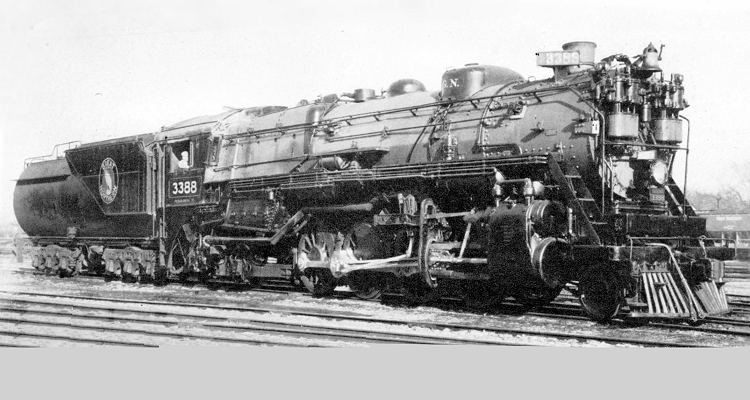
Great Northern rebuilt O-8 Mikados with 69 inch drivers (the firebox was so large it could have been on a four wheel truck)…
Green Bay & Western picked up three 64 inch drivered Mikados in 1937 and another three in 1939…

Detroit, Toledo & Ironton, after purchasing six 2-8-4 Berkshires with 63 inch drivers in 1935 then went back to the Mikado, picking up twelve with 63 inch drivers in batches of four each in 1940, 1941 and 1944…
DT&I Berkshire…

DT&I Mikado…
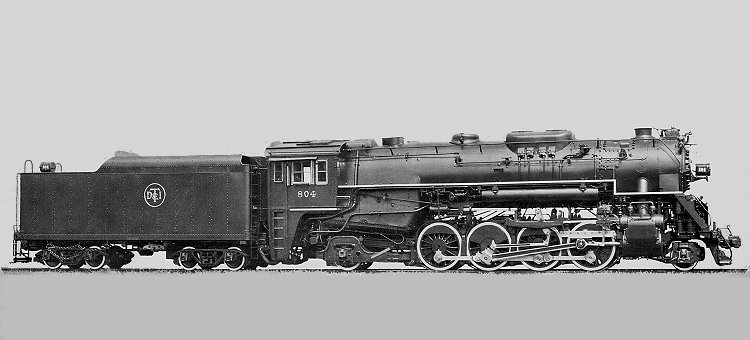
Here is one of those Reading Pacifics that Dave mentioned…

Missouri Pacific rebuilt some 69-inch-drivered Mountains into Class MT75 with 75 inch drivers…
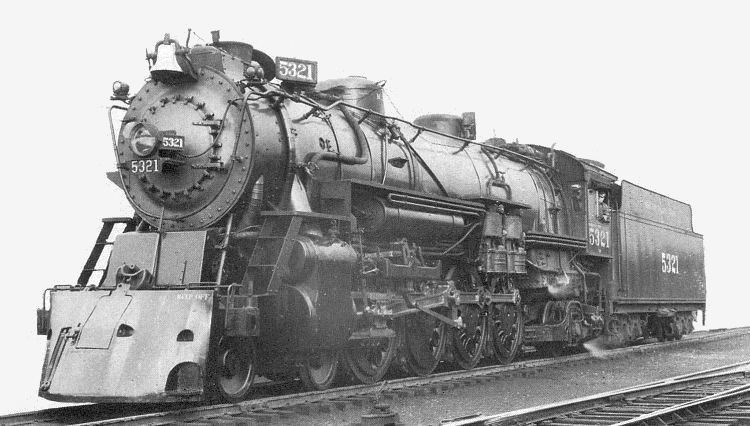
Here is one of those Boston and Maine Pacifics that Dave mentioned…

And of course, CP was producing G3 heavy Pacifics, G5 light Pacifics, and P2 Mikados into the late 1940s…
G3 Heavy Pacific…
Another tourist railroad. I saw the two seat rail bike at a local trains show. Rail Explorers also has a four seat bike.
Even at seventy five, I ride paved rail trails in Western Mass on my bike in my area a lot. Probably this might happen there also. Some in Ct are dirt trails.
http://www.wptz.com/news/potentially-big-changes-for-remsenlake-placid-railroad/37089722
I have been to Steamtown a few times and see all the maintenance a steamer requires.
Times are changing and many cannot accept that.
Rich
To bump this topic … and to note that Catskill Mountain isn’t the only entity that gets fallout of the wrong kinds … there was a recent report in everyone’s favorite Daily Freeman about a complaint at a recent town meeting, a complaint that the Empire State Railroad Museum was conspiring somehow with the Catskill Mountain people to preserve those awful train cars and stuff before they can be decently scrapped. I thought the following response to the story (reposted on RyPN) was worthwhile passing along, for a number of reasons. (I do not know if the bold-facing was in the original or added for RyPN, but it does add a certain salutory emphasis…)
A response from Paul LaPierre of the ESRM:
"Typically, as with many articles relating to anything railroad, there was no contact by the reporter of this article with the Empire State Railway Museum regarding the work being done on our property. As the ESRM Board member overseeing the work let me assure one and all that yes, we are cutting trees and overgrown brush, removing accumulated flood debris, and cleaning up the remaining debris from the site of a trailer on a parcel at the west end of our property that we purchased three years ago. The purpose is to make way for two sidings on our property leading from our barn so that we, the ESRM, NOT the Catskill Mountain Railroad, can move ESRM cars(of which there are currently seven, one due for de-accesion), and our steam locomotive( recently moved from the former CMRR yard in Kingston) in and out of the barn as necessary for RESTORATION and DISPLAY. Operation of ESRM equipment on active track is not part of our mission as a New York State Chartered not-for-profit corporation. The locomotive currently resides on track formerly leased by the CMRR and they and we have until 31 July to be off that property—hence the urgency to lay a second track to the barn to accommodate the locomotive. As an aside, the locomotive is very unlikely to e
I don’t know how to politely respond to Ms Taylor. Is there a state arborist that can attend to her caboose?
I feel for the CMRR. If they did a scorched-earth retreat, I wouldn’t blame them.