I’m a newbie and need help for my layout, It’s no easy task to make a nice realistic layout but I’m sure with some professional help I can manage, I’ve been building models since I was 6, I can build and paint pratically anything. I built many complexe garage kits which require scratch building, lots of mods ect… this is a totally different ball game but i’m up for the challenge, I always loved model railroading, especially the realistic scenery aspect of it.
My main concern is to create a realistic layout in HO scale, I would like a nice functional; layout set in 50’s and run both freight and passenger trains with at least a double track going threw train station, small town with hills ect… but don’t know were to start. Would like two train on a continuous run while I can play with a third one, I’m maybe asking too much for such a small space, but I came here for some help and ideas.
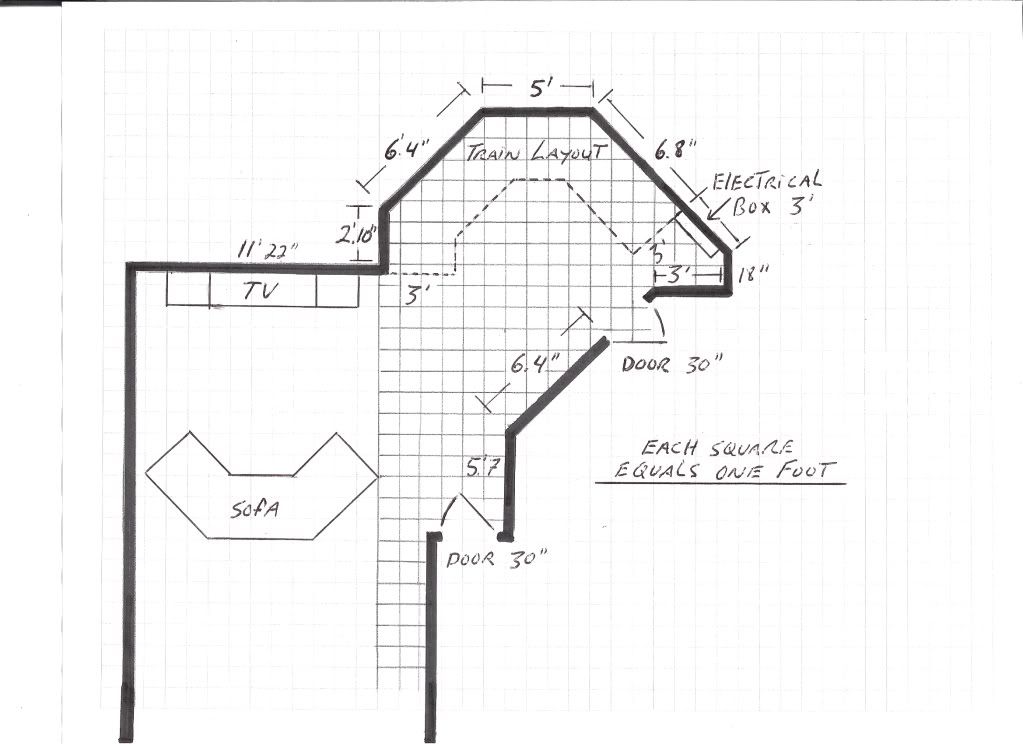
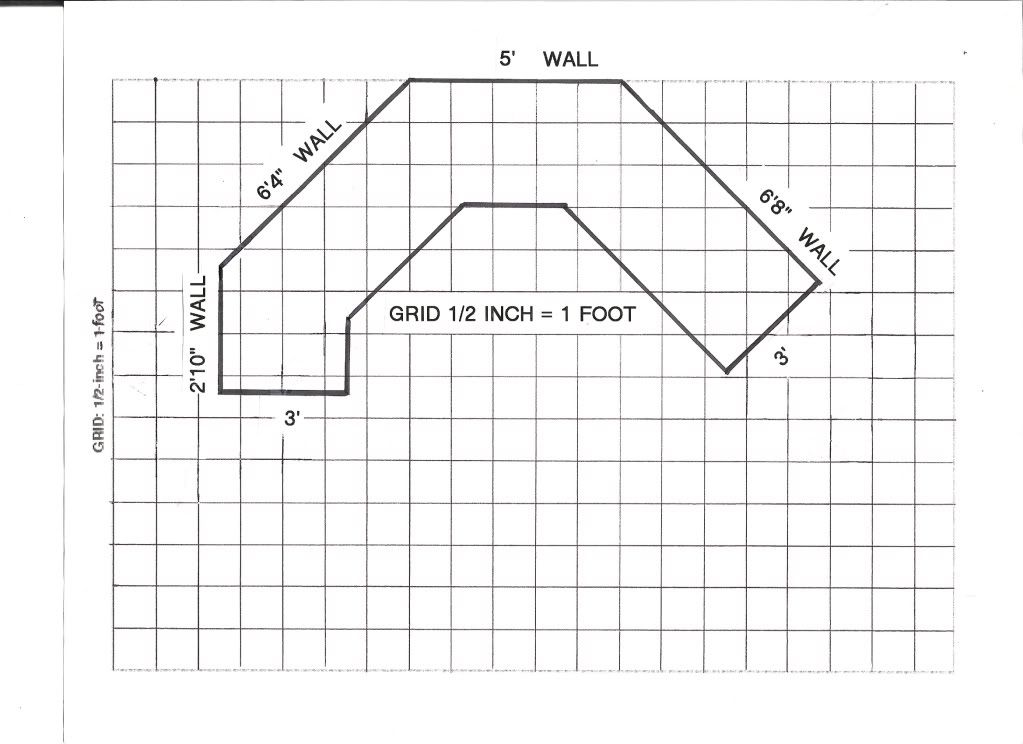
As you can see my workbench is not that big, 3 feet wide by 20 feet long going along my basement wall, both ends are 4 feet wide to accomodate the minimun 22" radius required, I also added a detalied plan of the room were layout will be.
Any suggestions would be greatly appreciated, and sorry N scale is not a option I’m really set on HO scale. Sorry I still don’t know how to post photos directly here so I put a direct link to my photobucket.
I’m no expert but if you are as short as am I, you might have a problem reaching the tracks closest to the walls. Its one of Murphy’s laws that the area with the least access is also the area that generates the most problems. It would be tough for me to re-rail a car along your tracks close to the walls- even if there were no scenery across that reach. Perhaps bringing that rear most main track forward and running your sidings outside the loop back there might make your operations a bit more enjoyable. Better yet figure some way to get easy access to those areas (hatches or room between the wall and your bench work?). My layout is similar but smaller. Its a logging shortline with tighter curves (18") and the bench work will have to sit 18" from the back wall because I couldn’t reach those backside tracks (thankfully I’m as skinny as I am short [;)]. Roy
As we get older the duck unders become a problem. I found that my reach is only good for 3 feet but you need at least 4 feet for the loops. You might try moving the right loop out so that only part of it is against the wall and the track curves out more to the center. This would give you a little better access to the right end of the layout. Also, if you plan on running longer cars and engines watch the “S” curves.
You’ve heard about reach in problems; somewhere between 24"and 30" is considered the max. But there is more. A tabletop is limiting your radii. A good rule of thumb: devide the prototypical lenth of your longest car(in feet) by 3 and you’ll have your minimum radius in inches. So a 90-feet long coach will need a 30"radius and table width will be almost 6 feet. You will understand why a lot of model railroaders chose a around the wall shelf type layout.
The two plans that follow need the same roomspace and can be built from the same piece of wood.
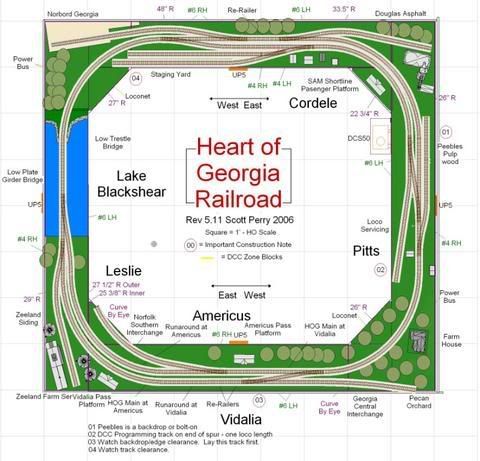
A nice beginners layout in a smaller space then yours is the HOG. Only problem is getting to the central operating pit; a drop-in or a horizontal-door (drop-leaf) can be the solution. An issue with pike is staging; your cars have to go somewhere and are comoing in from somewhere. This can be done in many way’s; on the HOG it’s done by hand.
.
I will give you some nice and one really outstanding webside(s).
Buy and read John Armstrong’s Track Planning for Realistic Operation (available from Kalmbach or elsewhere).
While 22in radius curves are frequently cited, 24in is a better choice and work out nicely with No.4 or No.6 turnouts (automatically creating a short easement - as per Armstrong above). Armstrong has several suggestions for linear or shelf type layouts with turnaround blogs at the ends.
There is also a book from MR/Kalmbach by Jeff Wilson (Building a Ready-to-Run Model Railroad) that has a “water wing” type layout that you are proposing. Would make a good first layout.
The reach factor is really the last of the problem for me, 36" is not deep enough to give me trouble of reach, for now anyways. I play hockey 4 times a week, I’m pretty flexible from being a Goalie all my life.
Once I figure out a nice track layout things should go pretty nicely. I was suggested to build two cliffs with tunnels on each end to camouflage the contiuous loop effect and hide the sharp curves.
Unfortunatley I can’t have a table going all around the room, I only have that odd shape wall space to make my table,
Is there such a service were someone can design a layout including all the track segments I need if I gave him the exact table size ect…?
36" reach is not a big problem if your layout is low and you are viewing it from a helicopter pilot perspective. It is a problem if you place your layout at a height were you look into the scene instead of down on the scene. A scene often looks best when the layout is at chest height.
Well, it really depends on how much space you actually have. You could e.g. do something like this without using all that much more of the room than what your design uses.
It means you will have to have to get into the operator pit in the center, but on the other hand - you can easily do 24" radius curves, and you get a number of visually separate scenes, instead of having your train pass through the same scene twice (once in the foreground and once in the background).
Yes, there are several people who offer such a service for a fee. You can find ads for layout design services in e.g. Model Railroader Magazine.
WOW thats a very clever idea beautifull display!!! the problem is that I don’t have that much room space to fit 4 1/2 feet table, the room will be totally cluttered and in order to appreciate the display people need to get inside as it will pratically be enclosed, but I must say it’s a very fun, practical and functional layout with several scenery opitons.
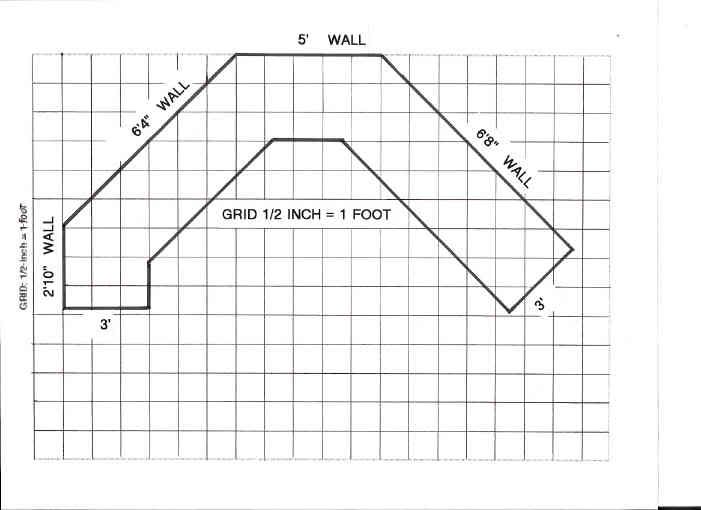
BTW my table is not really in a corner of the room, it’s actually against the back walls of my basement which has a octogon shape , Here’s my exact table size against the walls. I can make the ends at 4 feet to fit the min. 22 radius. How do I post photos directly here from my photobucket?
Yes that’s a smaller room section of my basement, the much bigger rectangle shape area of my basement is my home theater/movie prop room. The problem is the left hand side has no wall which is a open space into the bigger area of my basement. here’s a few photos.
1st photo showing the left hand side, rest of the photos going towards the right.
Basically I can’t make a continuous layout becaise of dorr and opened space into bigger room, so I’m stuck with 4 walls octogone shape.
Ah, that alcove is a challenge for H0 scale continuous run, all right.
Trying to understand the configuration of your space - this alcove is kind of off to the left side when you walk from your home movie theatre to your bathroom ? I am guessing that the room behind the door might be a bathroom - I can see tiles and something that looks like a towel holder in one of the pictures where the door is open. Or is this door the main entrance to the home movie theatre and your layout area ?
How far is it from the innermost 5 foot long wall with the electrical heater and the wall with the door and the Darth Vader mask ?
How wide is the opening towards the home movie theatre part of the room ?
You want H0 instead of N. Okay - but N (or even Z - 1:220) would probably have been considerably more suitable for a dogbone or water wings style layout in the alcove part of this room.
You can maybe do a H0 scale layout with a tiny operator pit - Essentially just fill the hole “half-octagon” area with layout, except for a small central pit with a swiveling chair, and then you just lift up or swing out a small gate to get into the layout. The narrow gate behind you does not need to be modelled - that’s just somewhere where trains run outside your view for a moment when they circle - the modeled scenes are left (6 foot wall against movie theatre), center (5 foot wall) and right (6 foot wall).
Ian Rice has a design like that in his book “Small, Smart and Practical Track Plans”. You probably won’t get two moving trains and several towns etc. You will get one town scene with a few sidings. Have you thought about era, location and theme for your layout ?
I can’t find it back but it would be a great idea to make a scale drawing of your “room” with walls, all obstacles and off limit area’s drawn in.
The drawing of your “alcove” above is not correct. When the one foot grid is is correct some easy math (Pythagoras) will learn you that the left side will be 8.5 feet long (in stead of 6.4’) and the other side just over 9 feet (instead of 6.8’).
You do not need to have a backdrop on the fourth side; without a backdrop visitors do not have to enter the operating pit and can see all the action from outside the proper layout.
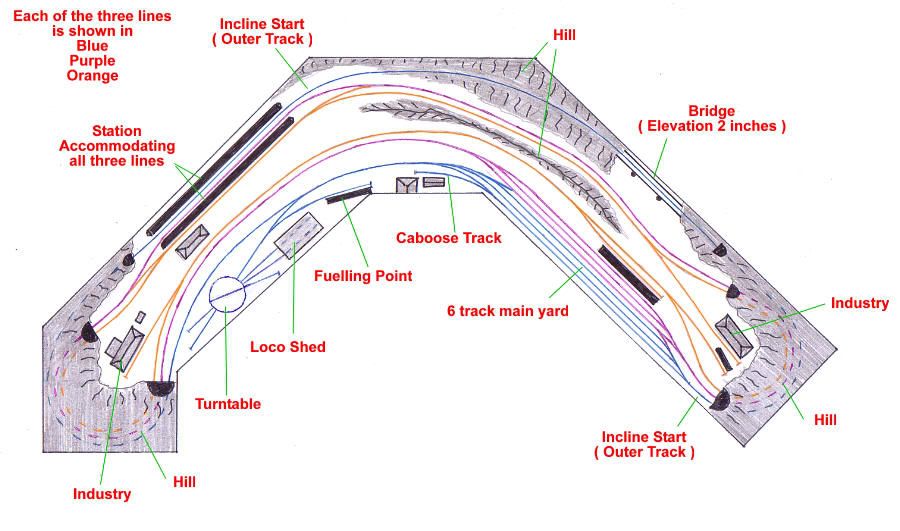
Quick sketch of one plan (out of several possible plans) - I have just sketched it with your alcove having sides 5 feet (top) and 6 feet @45 degree angle (left and right) - no idea if the angles are right, but since I took the length down from 6’4" to 6’, you should actually have a little more space to play with than in this sketch. Smallest radius 19" (on double ended siding), smallest radius on main is 21".
Play with the concept and see if you can come up with sidings and industries that fit your vision of your layout.
Hello Paul and thank you for your input, greatly appreciated your correct it’s wrong.
Stein,
I can’t thank you you enough for your help, you have some great ideas which I would have never crossed my mind, I will draw a a full layout of my room to give you a much better idea.
Hmm. You are sharing space between a layout and a home theater/prop room? The photos show a bunch of stuff looking for a place the live. Think about building cabinet work to hold the stuff and running the layout on the top of the cabinets. Think about running a very thin 6" wide layout section along the walls of the theater space. Then you only need to squeeze in a quarter circle turn in stead of a half circle turn at the corners of the room. Allows a broader radius curve on the same amount of bench work.
Be sure to get the John Armstrong book “Track Planning for Realistic Operation”. It’s the bible. I nearly wore my copy out planning and building my layout.
If you want to run two trains at once, think about a double track mainline. Think about industrial sidings for peddler freights to service. Think about staging track, track upon which ready to run trains can pull out onto the main line, and other trains can pull off the mainline to await their next time to run. Think about getting the track to cross doorways on liftout sections. My round the room layout crosses three doorways on two liftouts.
It is not clear to me how big your layout room is, and how much space goes to which function and what dual uses could be arranged. Nor how many doors and un movable obstacles like furnaces you have.
I like to hear it, but from this very drawing I took the conclusion that there must be something wrong. Math is my profession; the grid pattern and the length’s don’t match. And the difference is more then two feet, not 2 inches; way to much for a solid design start. Your kind words are even more appreciated when my message was coming through.
In my first posting I had 4 messages:
Reach-in problems; Stein explained it well, and consider also that a derailment or some other problem always occurs behind a tree or that nice but fragile structure.
The equipment you use is determinating the radii you have to apply. Long coaches need large radii and long switches and not only for looking good. On the NMRA webside I gave you, you’ll find useful information. The length of freightcars is very much depending on the era.
The two messages above are leading to a more shelf-like approach (in stead of a table).Those shelfs don’t have to be along the walls. Stein did a great job with his design. And by seperating scenes these shelfs are even doing double duty.
On two of the other websides I mentioned, remarks are made about staging; a very important issue when just running around becomes boring. Spacemouse wrote some nice lines about this subject. Byron Henderson (Cuyama on this forum) mentions interchange/staging as one of the cornerstones of good design. Tony Koester filled books on how to apply staging to get realistic operation.
So a good design is much more then drawing some lines on paper and calculating witch and how much track has to be ordered.
yes I probably screwed up like usual, Math has never been my strenght.
I just did a accurate full basement plan and accurate to scale size table layout, and showing were I was planning setting my train layout, both ends are only 3 feet, I can go to 4 feet but room will look pretty cramped, unless I try a new concept . It’s really not easy with a weird shape limited size room, thats why I need professional help to get the most out of the space I have to work with…
The bigger area of the basement (left) is my home theater/prop display room with glass displays, shelves, Studio scale models and life size costume displays, I just got this small basement room area to work with.
This is a rough layout track plan that a member at ALL MODEL RAILROAD FORUM did for me for N scale.but my heart is truely set on HO, I really like the idea of the hidden tracks under cliffs on both ends which hides the continuous loop effect.
Yep - this is why people (including me) are telling you that your desired layout shape (36" shelf along three walls) is better suited for N scale than for H0 scale if you want continuous run with several trains running at the same time, without getting too sharp curves.
Of course - how sharp curves you can get depends a bit on what kind of trains you want to run - I believe you still haven’t said any thing very clear about desired era (time period), desired location and desired theme. Interurbans or subways or logging railroads can handle quite a bit sharper curves than passenger trains pulled by long steam engines, or doublestack container trains or 89-foot auto racks. Well, you have mentioned hiding end curves with mountains, so it is not likely that you are planning a city layout or one set in flatter part of the US midwest
Looking at the full room sketch you posted:
Main entrance to the rooms is the lowermost door, right? You obviously need access to the electrical panel in the far right corner and to the bathroom (?) door.
But do you need all of the space below the alcove to be free of layout? Or could you build part of your layout on a table that runs parallel to the 6’4" wall to the l
Again thank you for you help, Byron Henderson actually mentioned your name in regards of this thread and he spoke highly of you, I have no doubt oyu have lots of experience in train modeling, I would love to see photos or video of your layout if possible. Anyways to answer your questions.
Main entrance to the rooms is the lowermost door: No thats the door to access water tank which is under staircase leading down into basemen,
You obviously need access to the electrical panel in the far right corner and to the bathroom door? YES
But do you need all of the space below the alcove to be free of layout? If I understand correctly, you mean putting a table parrallet to the 6.4’ wall at the center of room going up to the wall that has the elec box?
You could always put up a lightweight dividing wall along the left edge of this area. I not sure I understand, but want to avoid putting walls as the space is small as it is
You want an American based layout with American freight cars and passenger cars? Yes to both, I like American 1930-40’s steam engines set in a 1950’s layout, a very small town or industry, a station a few cliff with trees, I do like double tracks.

 .
.


![http://s929.photobucket.com/albums/ad140/gfollano/?action=view¤t=TrainLayout.jpg[*img]](http://s929.photobucket.com/albums/ad140/gfollano/?action=view¤t=TrainLayout.jpg%5B*img%5D)