Missouri Pacific branch line - 2

This thread will be mostly about cabooses and various equipment items, but I left room for a few random photographs that might turn up worth showing.

I think I need to clarify that there’s always been an identity crisis about this layout, probably very detectable. I call it a Missouri Pacific branch but it retains the name Midland Western from my days of youth, which I’m not really willing to give up. Plus, I run Frisco equipment on it regularly and sometimes engines from other Regional roads. The MP branch back home originally was a Frisco line, but was created under a separate short line name. A short-lived entity called the Gulf Coast Lines assumed operation in 1914, until 1925 when the MP took over. So I have enough precedence there to allow me to wiggle waggle with my own road names on this layout. I also like other regional roads too much exclude their engines, hence the Louisiana & Arkansas and Cotton Belt stuff, and also the Rock Island , which not many people are aware of ran right down the middle of Louisiana north and south as part of a ill-conceived empire expansion plan of a guy named BF Yoakam.

So with the conclusion of this housekeeping, I’ll start showing pictures of some of the equipment that has run over this line over the years, a lot of it not present anymore.
1 Like

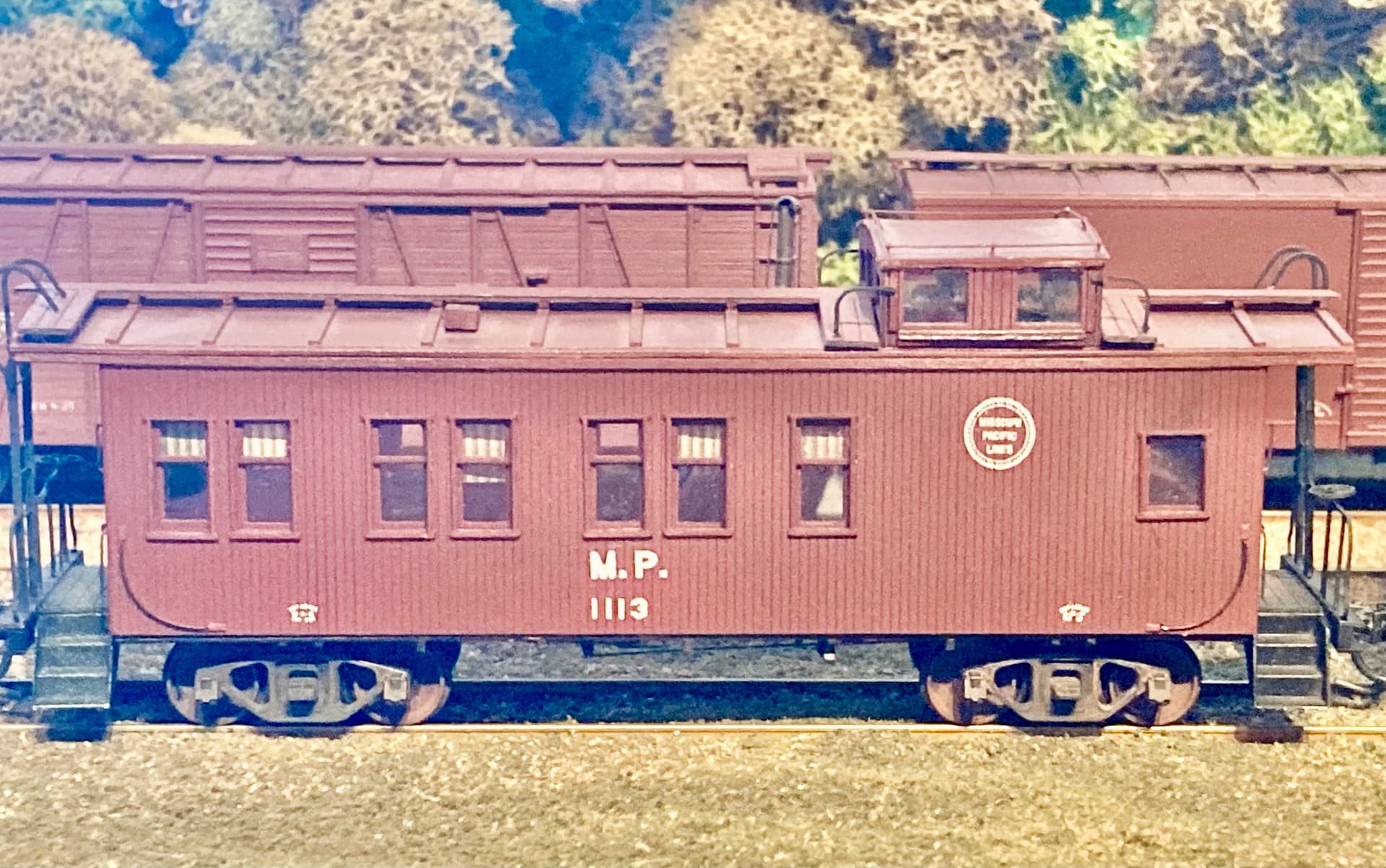
In the very earliest days of this layout, I was continuing the operation of my high school railroad very much as an independent short line. I was running two of these side door cars for minimal passenger service. I still have them and once in a while, they still run.

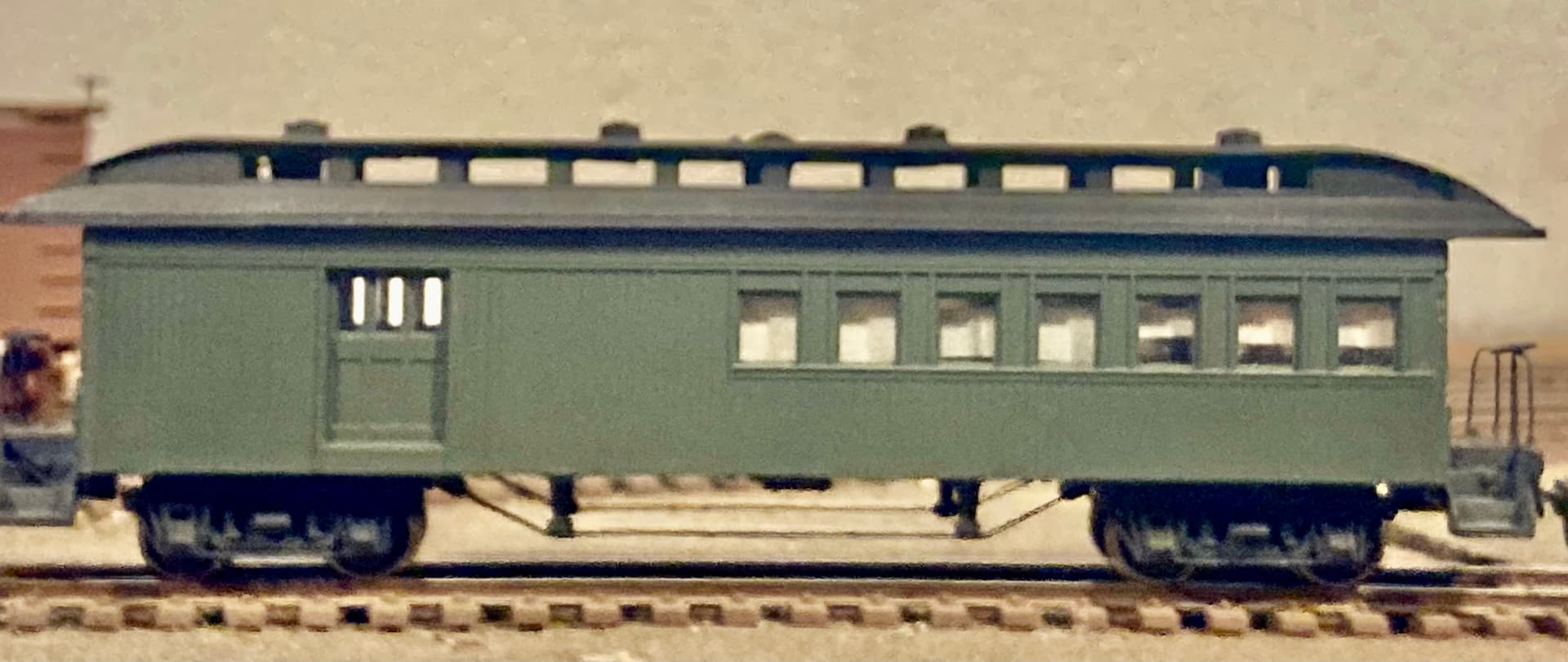
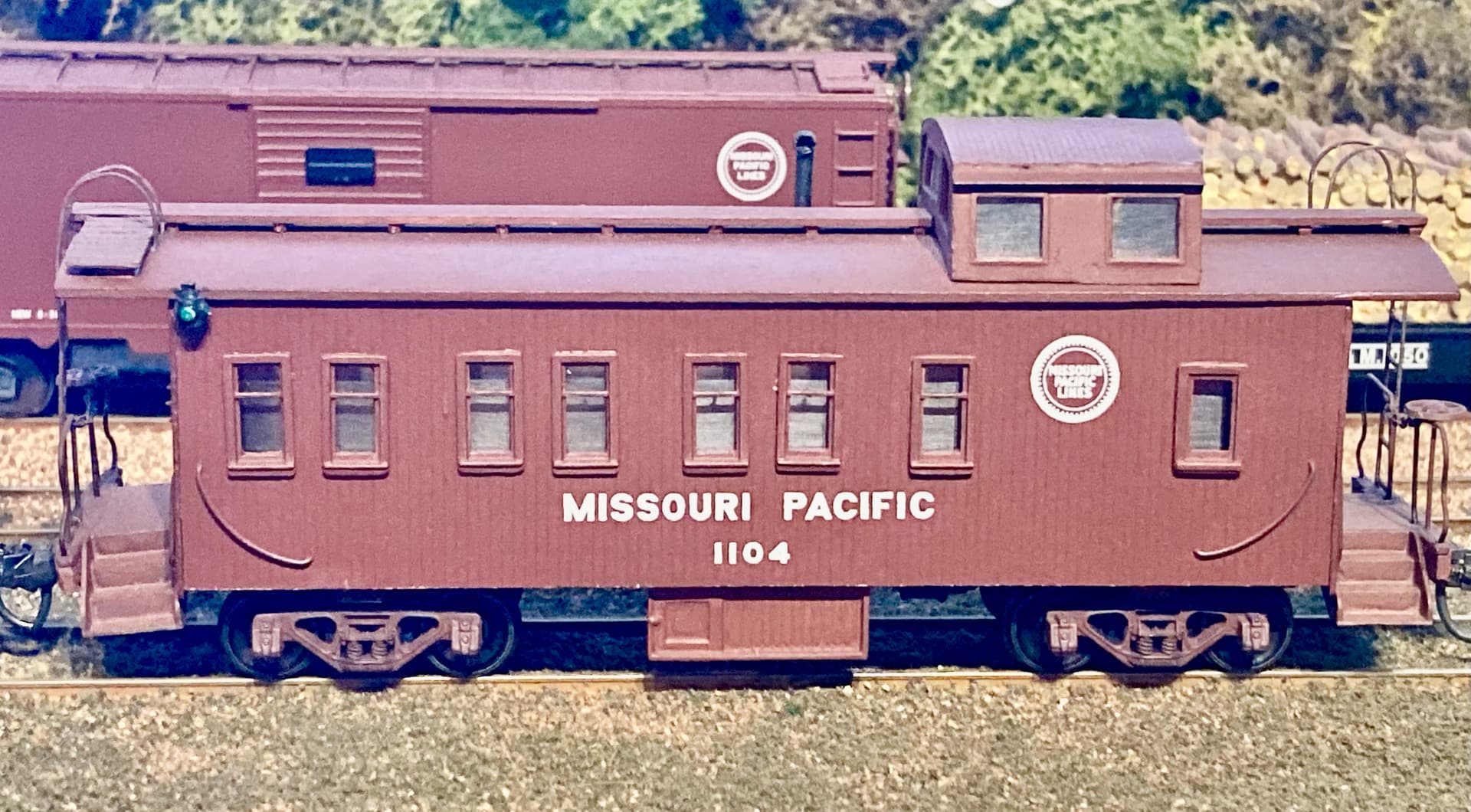
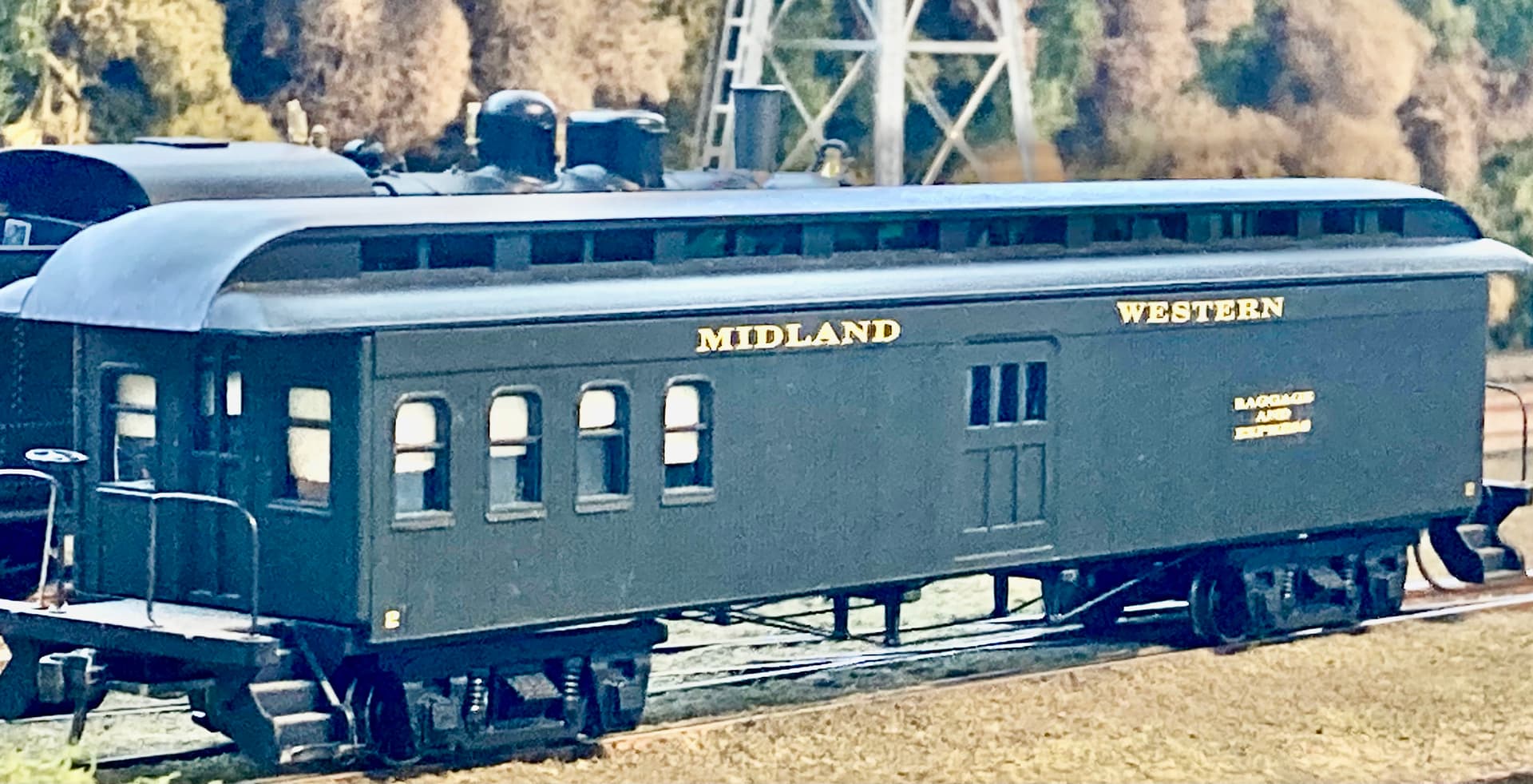
But I was very familiar with the common short line practice of providing passenger service with an open end wood combine at the end of a mixed local freight. I bought two of these Roundhouse combines. Here is one of them that my friend painted and decorated for me, it came out very nice. I still have it also and will never part with it, but it rarely runs since I have nice side door cabooses now.

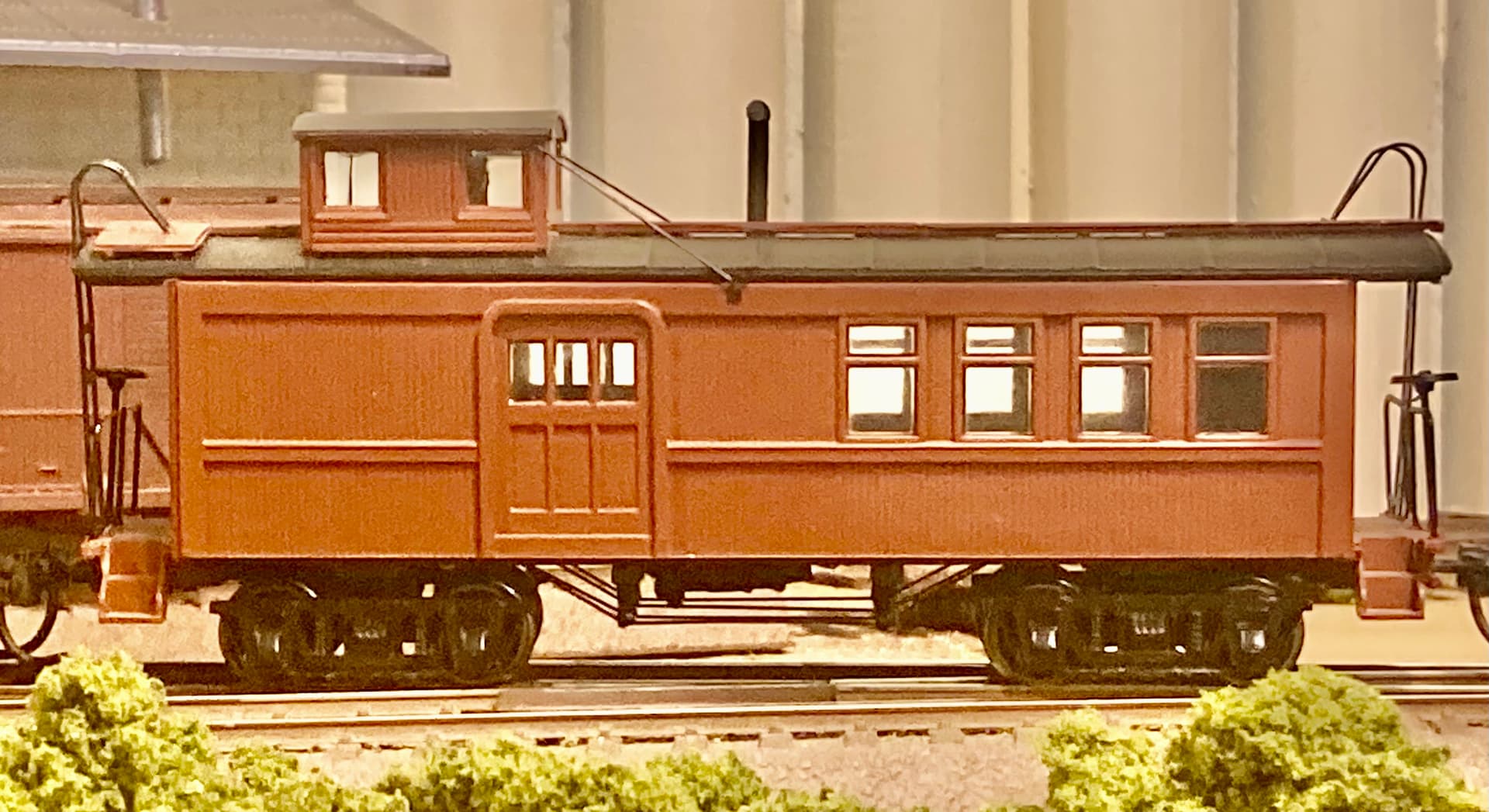
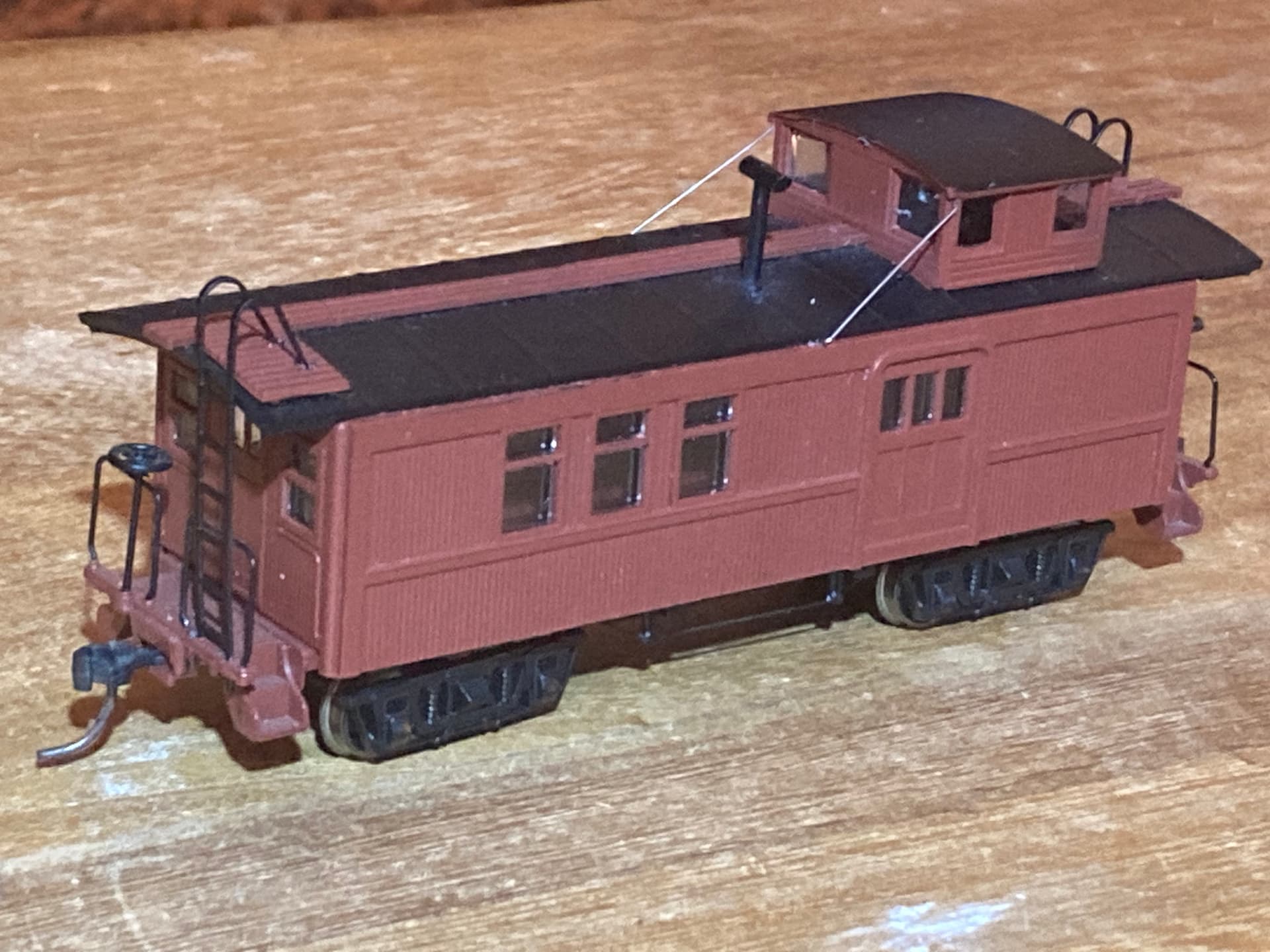
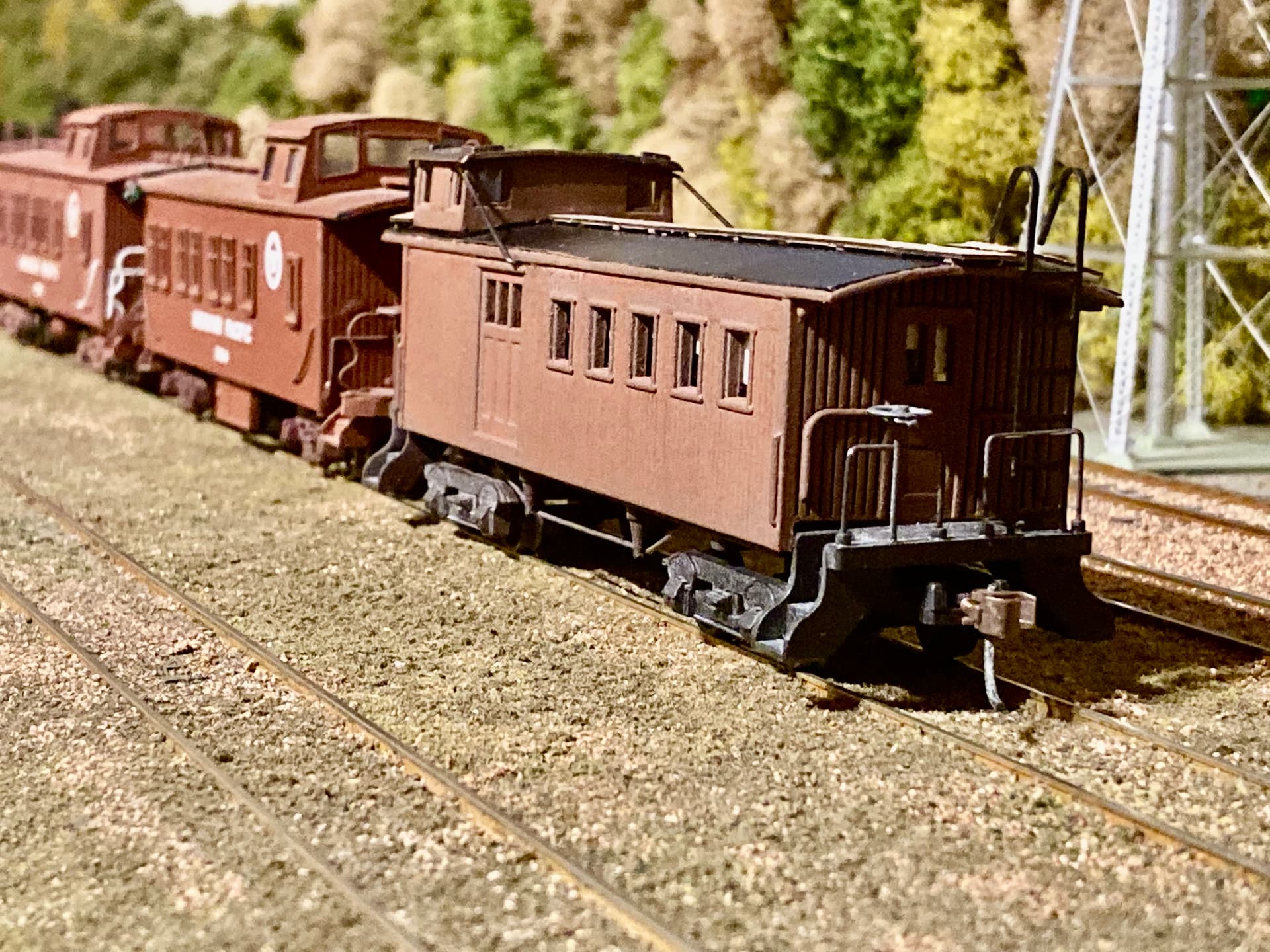
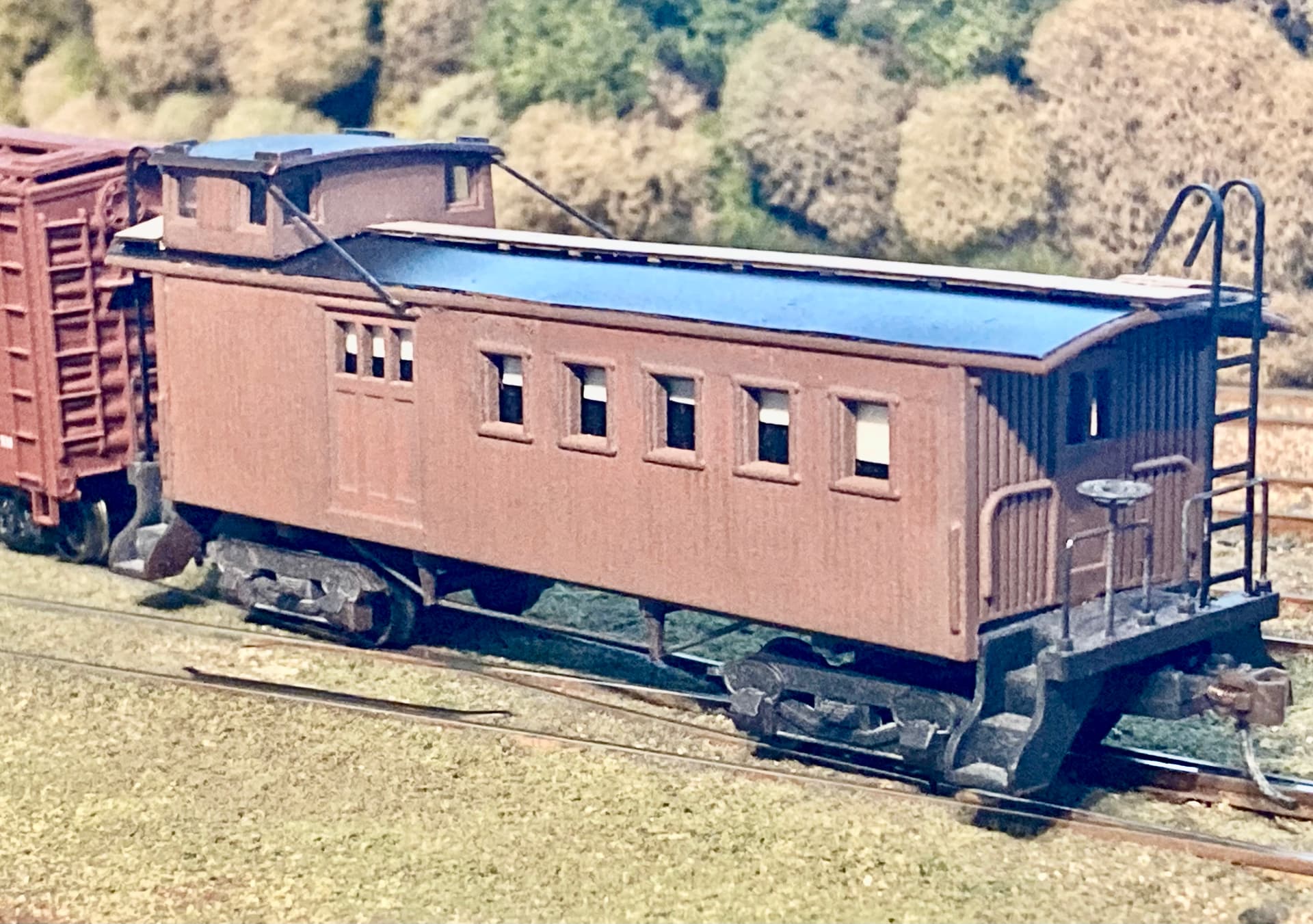
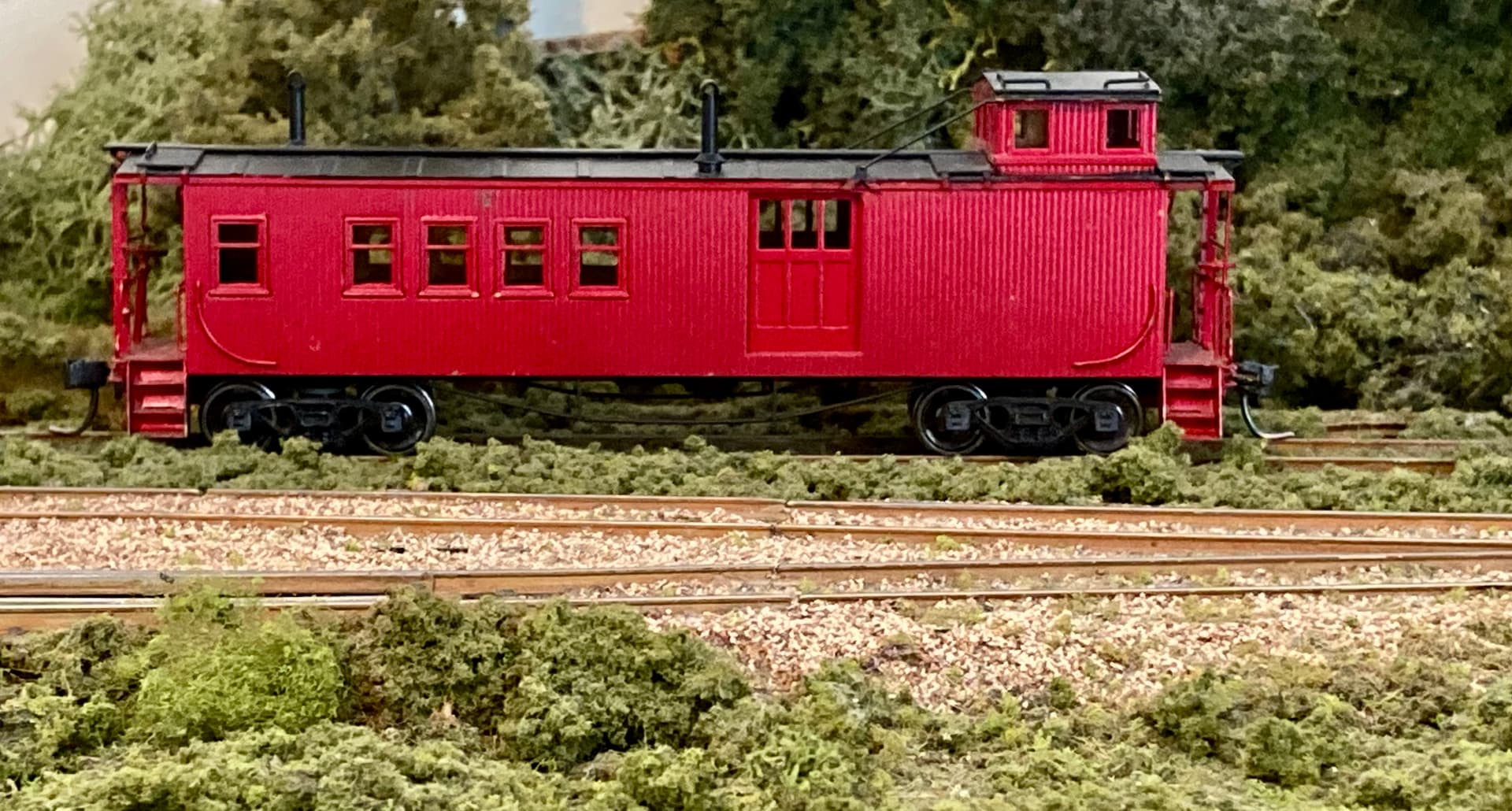
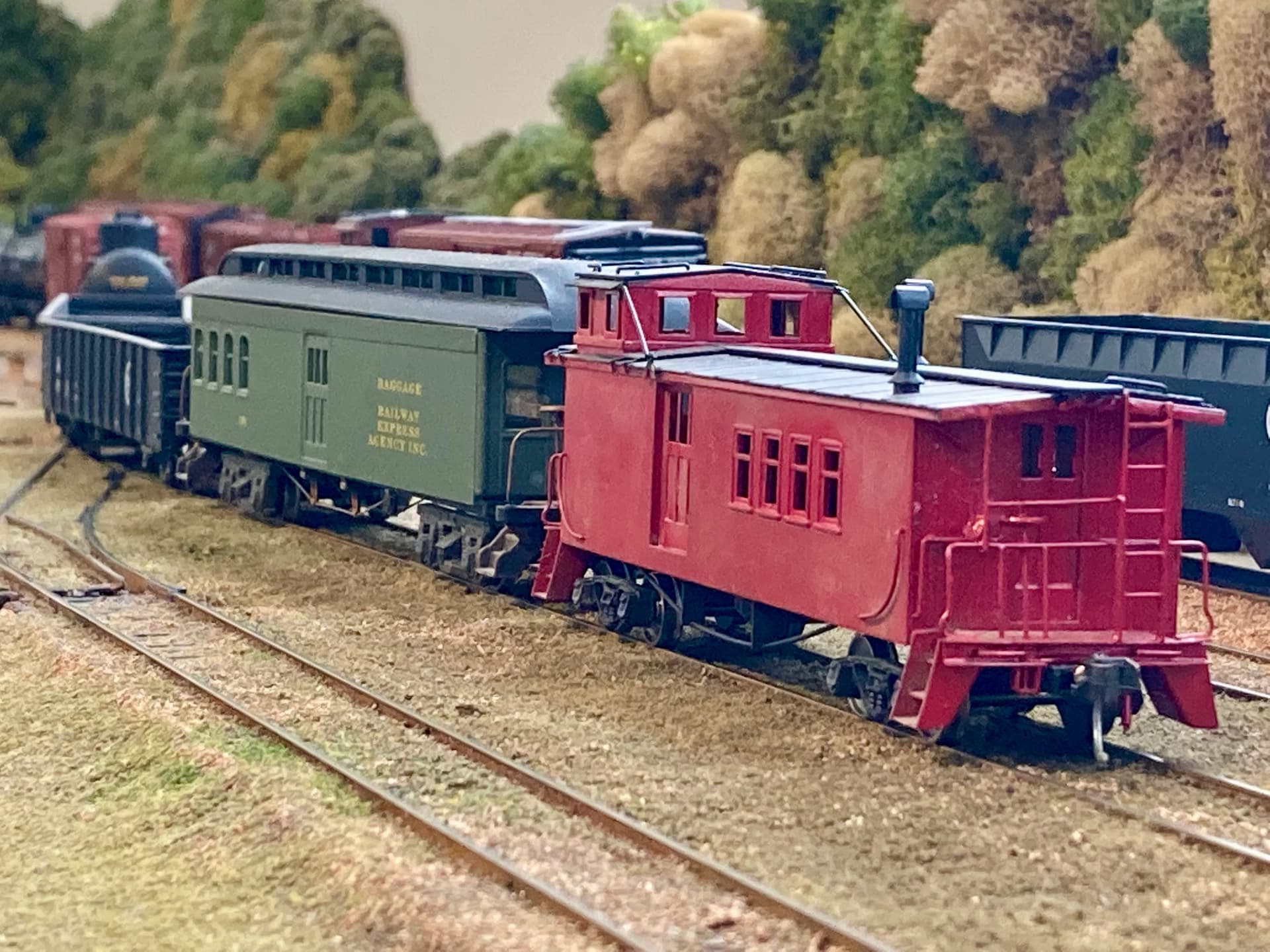
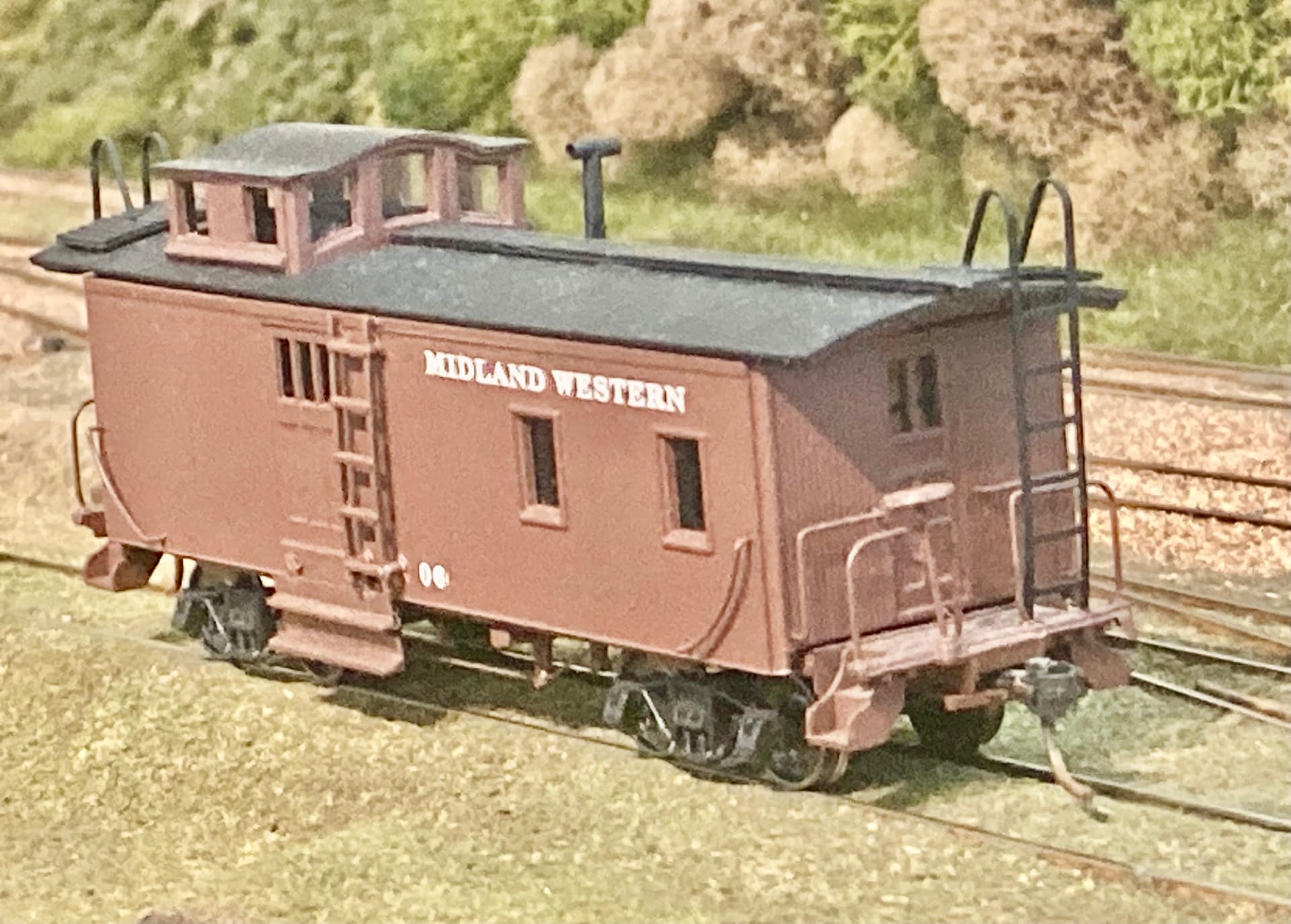
I still wanted side door cars, sometimes erroneously called drovers’s cabooses. RoundHouse very conveniently introduced their car right around that time, basically their Sierra combine exchanging its roof with their regular caboose kit. Eventually, I added better end ladders and cupola braces as shown here.
4 Likes

A better photograph of the roundhouse drovers’s caboose.
I found this car in the trashcan at the old club. It was painted in some god-awful red Circus billboard advance advertising scheme was missing some of the handrails. Which was OK because the handrails were a grossly overscale thickness along with the truss rods. I spray painted the car with a floquill pullman green can that you can’t get anymore, replaced the handrails and truss rods with wire from an old guitar string, painted the roof black, installed body mounted couplers, added some shades in the windows, and that was it. It came out great, but I traded it away, I have no idea why, I wish I had it now and have no idea where it is.
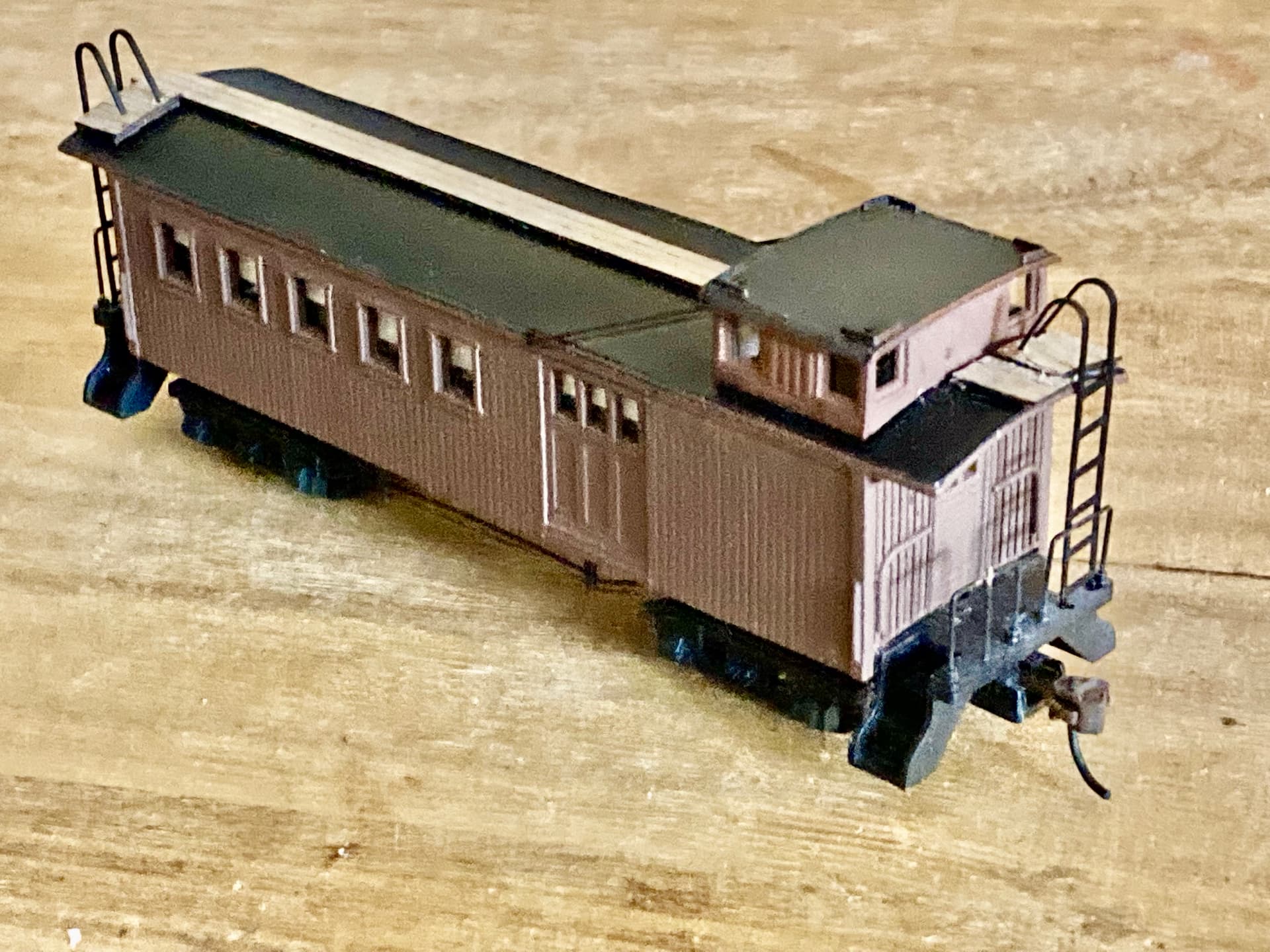
This is another car that I found in the trashcan at the club, a Mantua drovers caboose, again painted in some horrible paint scheme. I took the cupola off, which was incorrectly mounted right over the baggage doors, filled the resulting hole in the roof and relocated the cupola down on one end like the Cotton Belt did, I added a new wood roof walk, added Athearn end ladders, added Cotton Belt style cupola braces, added body mounted couplers, window glazing and shades, painted it, and that was it. A great looking car that I made for my friend in New York. Why he did it though I have no Idea, he gave it to some 11 year-old kid and the thing has probably died a horrible death by now. Not to worry, though, I have another combine and spare cupola ready to do this all over again.

But. I was not watching, the spray bomb paint I used ended up a lot like diluted chocolate milk, really bad looking as per the photograph below. I was not about to take that car apart and repaint it, so I tried stroking the boards with a terra-cotta art pencil. Look at the photographs of the car in the yard, it came out great!

Before pencil:

After pencil:

The car before;

8 Likes

About three or four years into this layout, I began to really want to try to get some closer resemblance to the Missouri Pacific on my railroad. I joined the Missouri Pacific Historical Society and I am still a member. A couple of people there in particular really guided me in the right direction in my modeling. I came to terms with the use of both names and running different equipment on the layout, but what I really needed was some actual Missouri pacific cabooses.

This was the first car I had, 2 of them. They were about 90% correct for the MP but that was good enough for me. However, they were not a very common car and I had never seen one down on my branch back home.

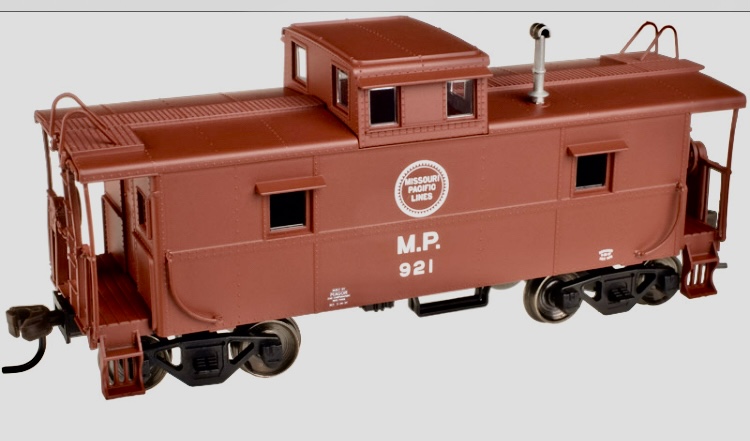
This is an Atlas car:

I begin to understand that if I was going to have prototypical Missouri Pacific cabooses, I was going to have to buy some brass cars. The brass caboose world is a world where almost any caboose prototype can be found…….. at a price, of course. Once you come to terms with the fact that you’re going to pay certainly over $150 for each car, you realize that it is a very precious world where you are only going have a couple of them at most.

I remember seeing a very odd caboose with both cupola and bay window on the same car back home very early on in the MP yard one cold winter morning. Imagine my surprise when I saw a brass version of it online. Of course I had to have it, and shelled out what it took to get one….. and another one a little later on.

Another car I really wanted was the Missouri Pacific drovers caboose. A beautiful model in kit form was available by AMB, now discontinued, but was way out of my league in kit building ability required. Years back Silver Streak made a much easier to build kit, and I was able to find one already built on eBay for a relatively reasonable price. After looking at a bunch of these, they appear regularly, I realized that I had acquired one of the only ones that was built very cleanly and not by a chimpanzee. I ended up getting another one unexpectedly from a friend of mine, I didn’t even know he had it until I said I wanted a second one.

This car is acknowledged by most serious model to about 80% correct but it was good enough for me. The biggest problem is the oversize cupola, it was recycled from a Southern Pacific kit.

Imagine my surprise and joy when I found an already built AMB kit for sale. I paid a premium price for it but it is a beautiful model, compared to the Silver Streak car.

7 Likes

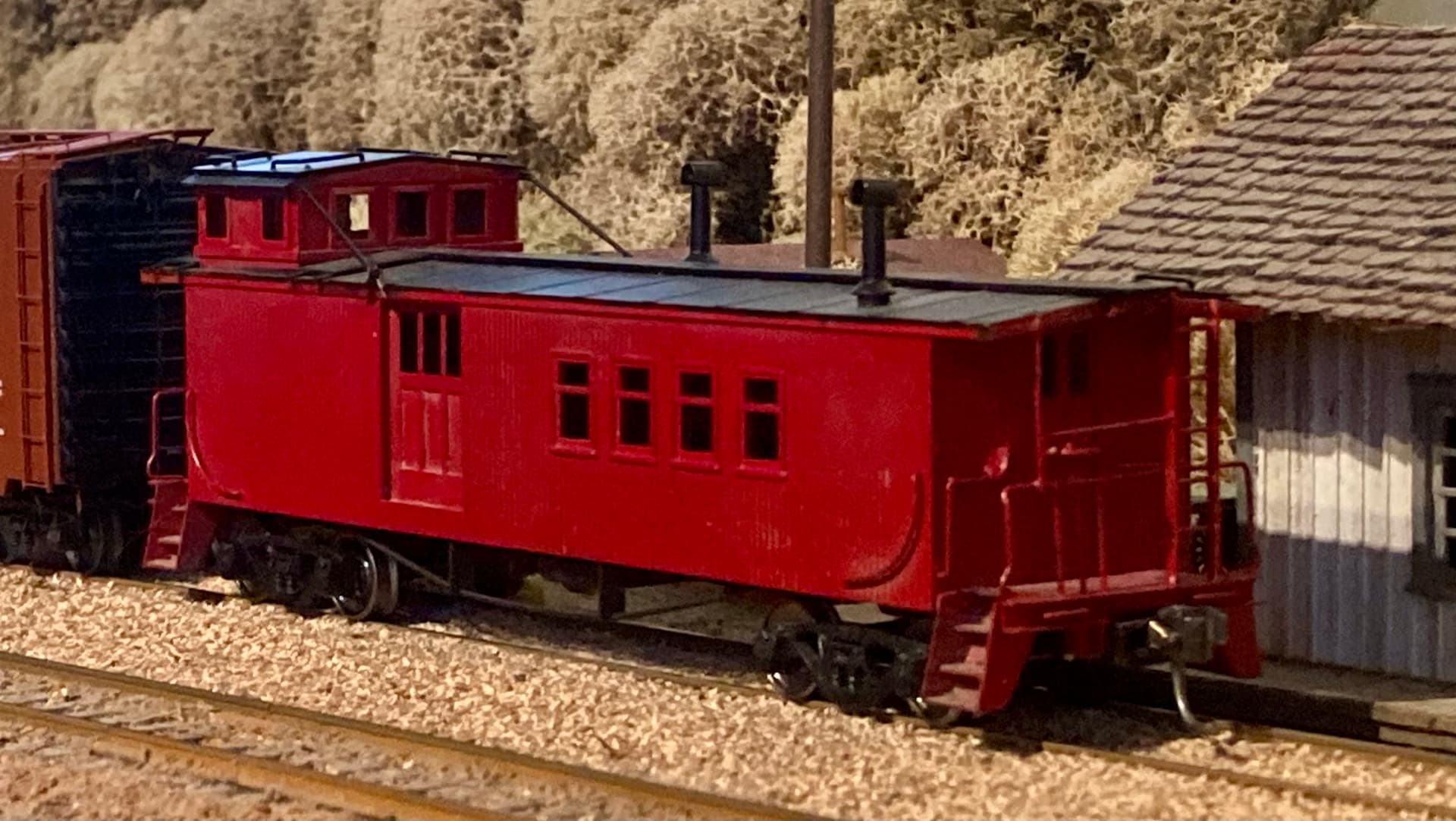
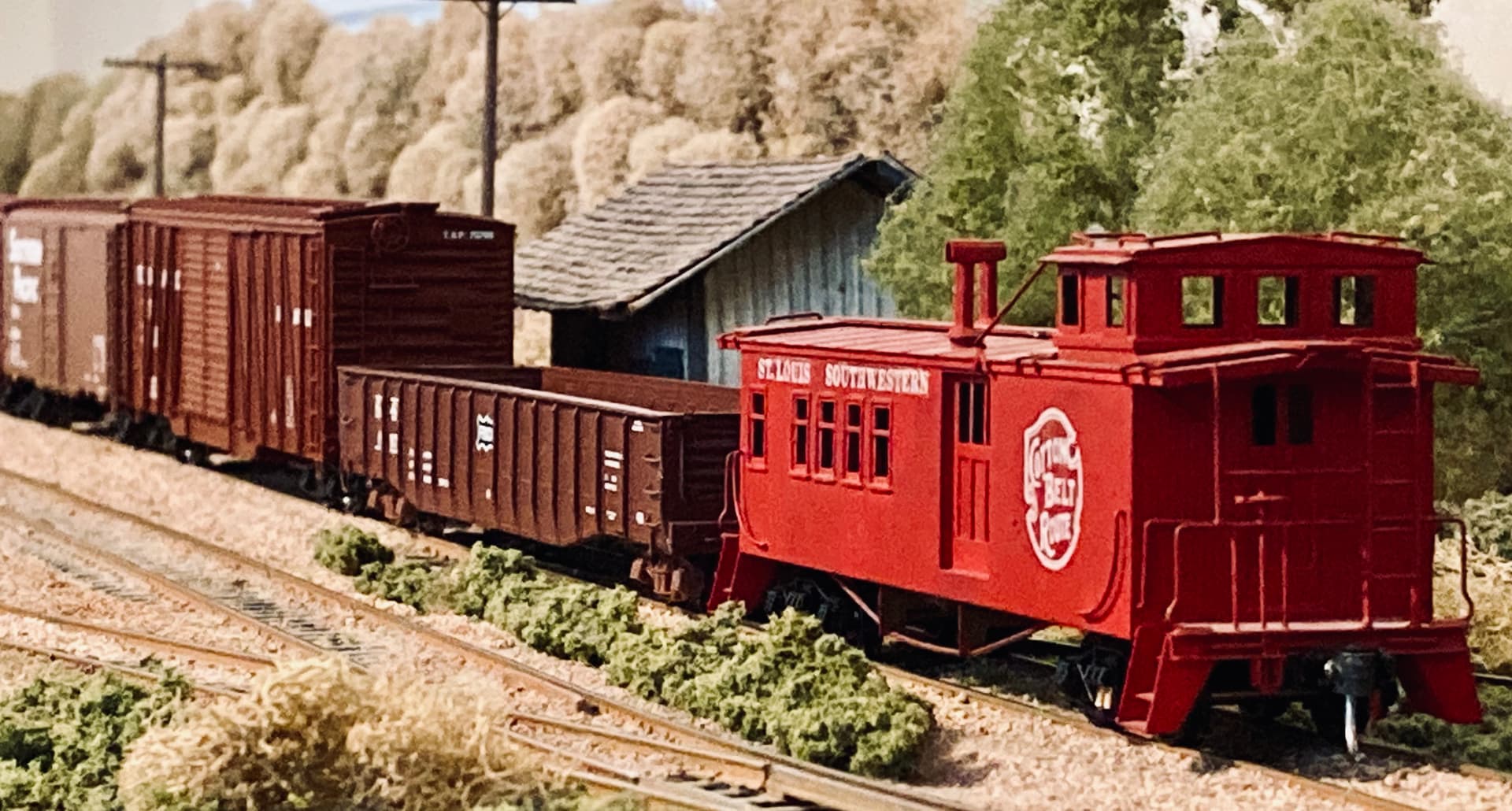
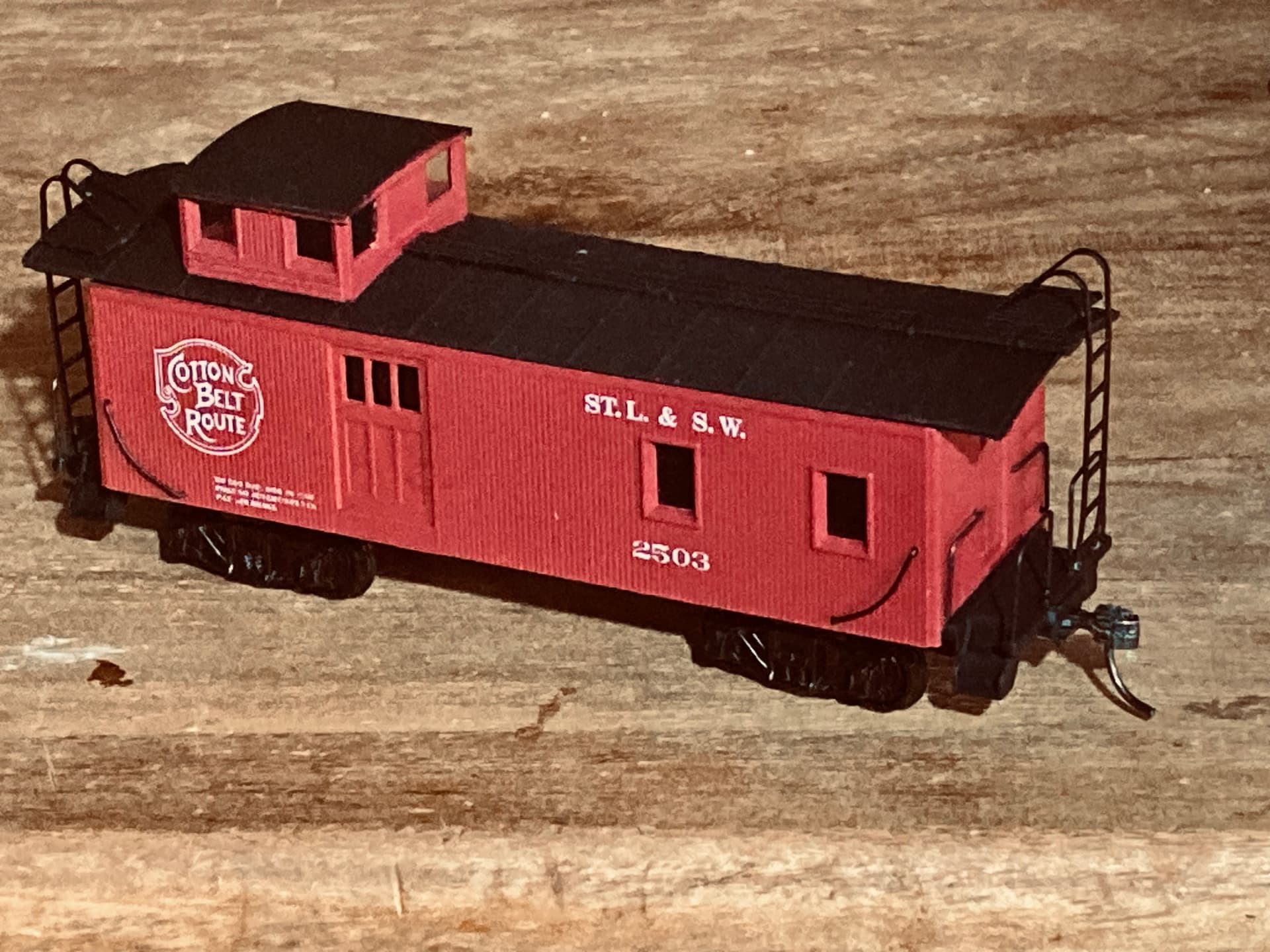
Along the way in my quest for Missouri Pacific cabooses I was diverted. Sometime before I had seen and was really taken by what the Cotton Belt called a “long caboose.” When I became aware of the fact that you could get a brass model of that car, of course I also wanted to have one even though it doesn’t have a direct connection with my Railroad. It took a little while to find it, and I finally found one painted already, a boon to me since I don’t have painting facilities.

At first, I thought the red was way too red, but then when I got some Floquil caboose red out to do a little touchup I found it was an exact match. Not only that, but I found out finally that the Cotton Belt had painted their car such a bright red that some wags said you needed sunglasses to look at them when they came out out of the paint shop.

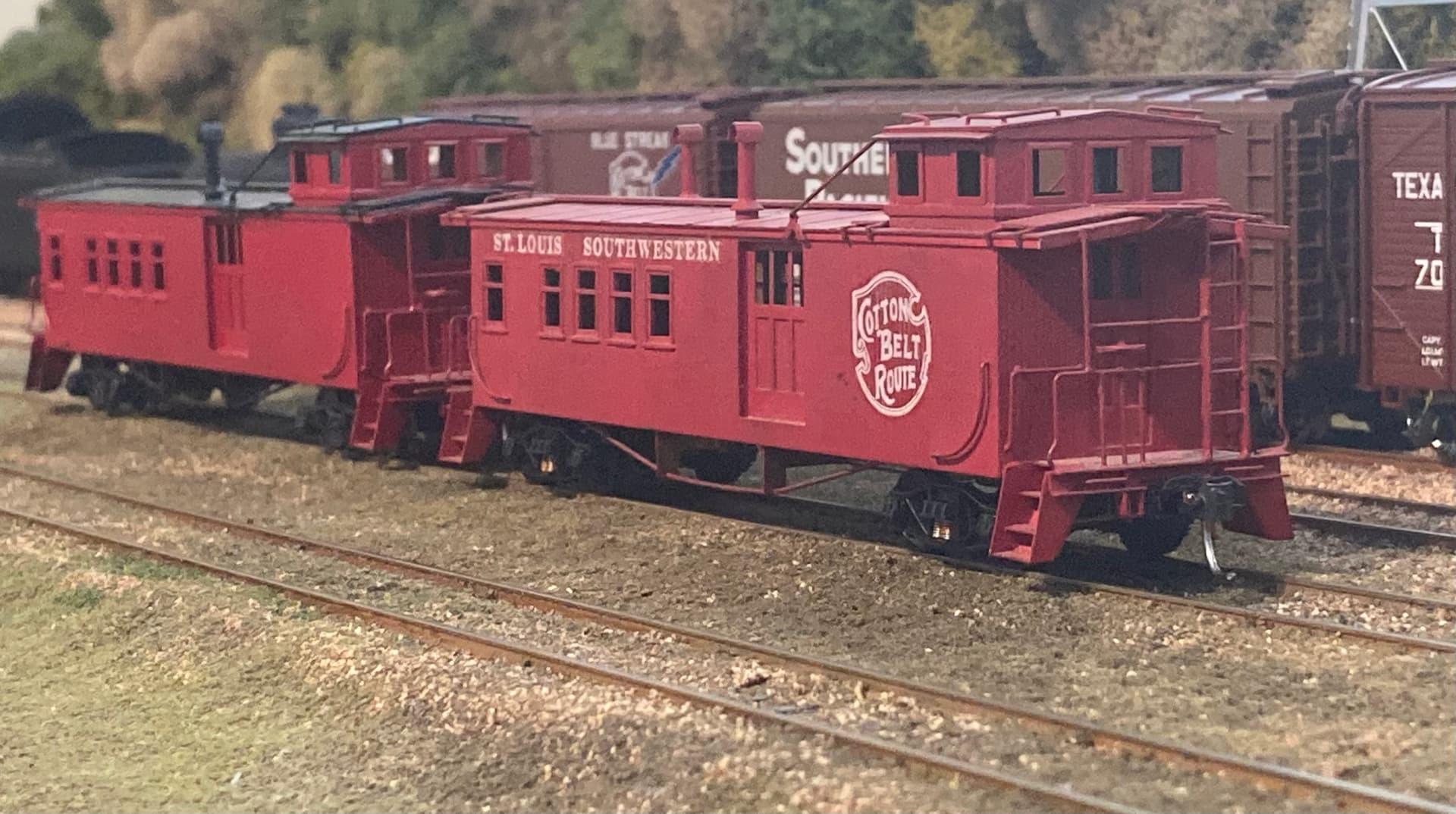
As usual, I always wanted a second car, but I was not in a big hurry. A little bit later while I was on a Florida vacation, I went into a local hobby shop. I didn’t buy anything and was on my way out when I happened to look into the brass case. I saw another one of these cars painted and decaled already. It was listed for $150 so I got brave and went to the counter and just said right out, I’ll give you 125 for that car. The guy didn’t even blink, he said OK, and later I realized that I should’ve said I’ll give you 100. But. There was a surprise coming when I got home and looked at the car more closely. It was only decaled on one side. At first, I was annoyed, but then I got over it and decided to leave the car alone. It’s not as bright a red as the first car and doesn’t have a black roof, but it looks really good to me, I am satisfied.

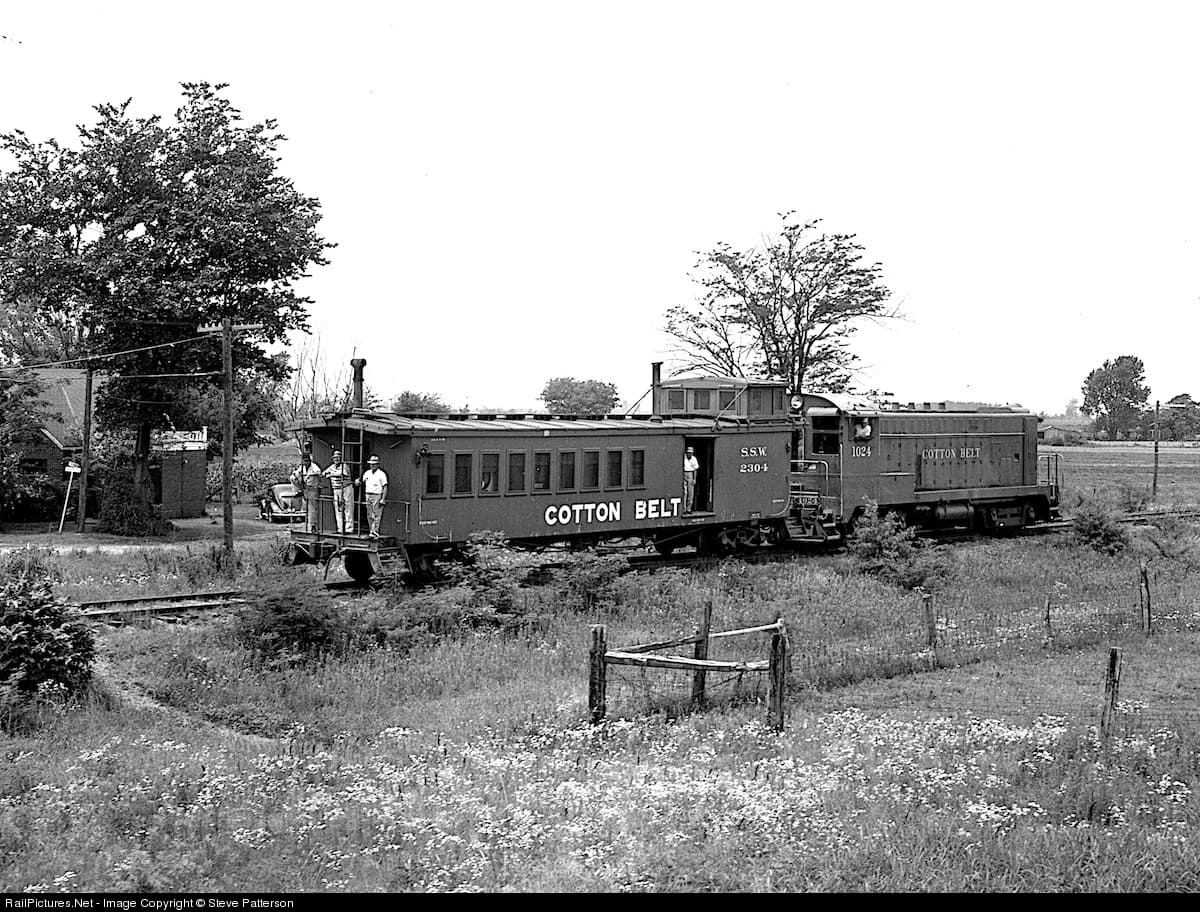
These cars were never used in drover’s service, I found in my readings about them, but were used in mixed train passenger service, almost exclusively on one branch in Northeast Arkansas. If this car was a long caboose, there’s an even longer version that as far as I know has been never offered as a model, but when it does appear, I’ll be first in line. This is a later picture by virtue of the modern Cotton Belt lettering, it also appears to be an inspection trip because those guys look like officials on the back platform. Take note also of the early Baldwin diesel switcher. And the general appearance of the railroad and setting itself, which is exactly what I want my layout to be.

I remember very early on, in 1961, I saw one of these cars painted gray in a T&NO MOW consist parked on a siding back home.

5 Likes

Passenger rush extra:

Cotton Belt long caboose at Laskey:

After getting those long cabooses, it was pretty hard to resist this car:

I have heard the Cotton Belt called a 1500 mile long short line. With cars like this, it’s not hard to believe.

Extra points to those who can name what the shape of the Cotton Belt herald is supposed to represent.

6 Likes

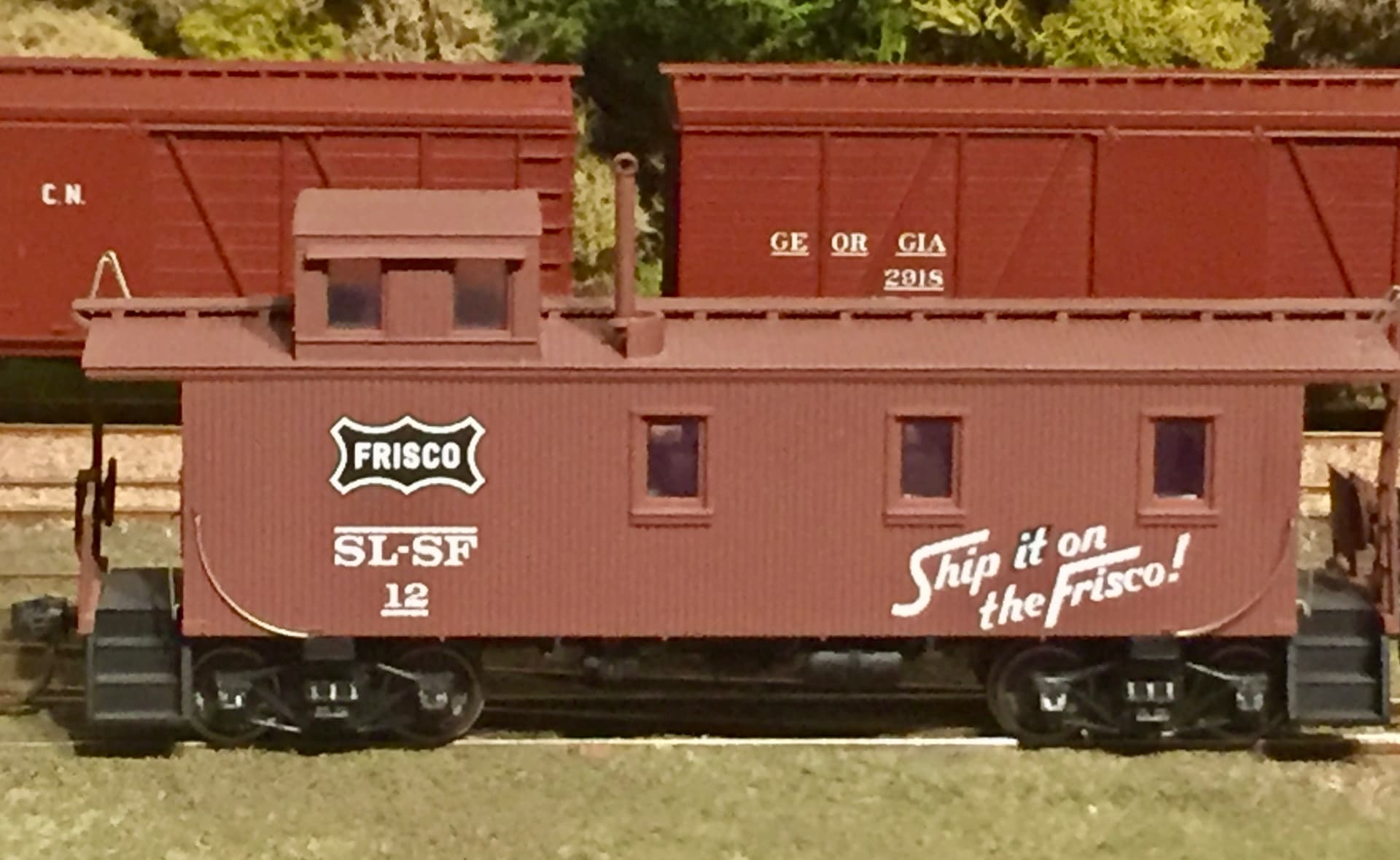
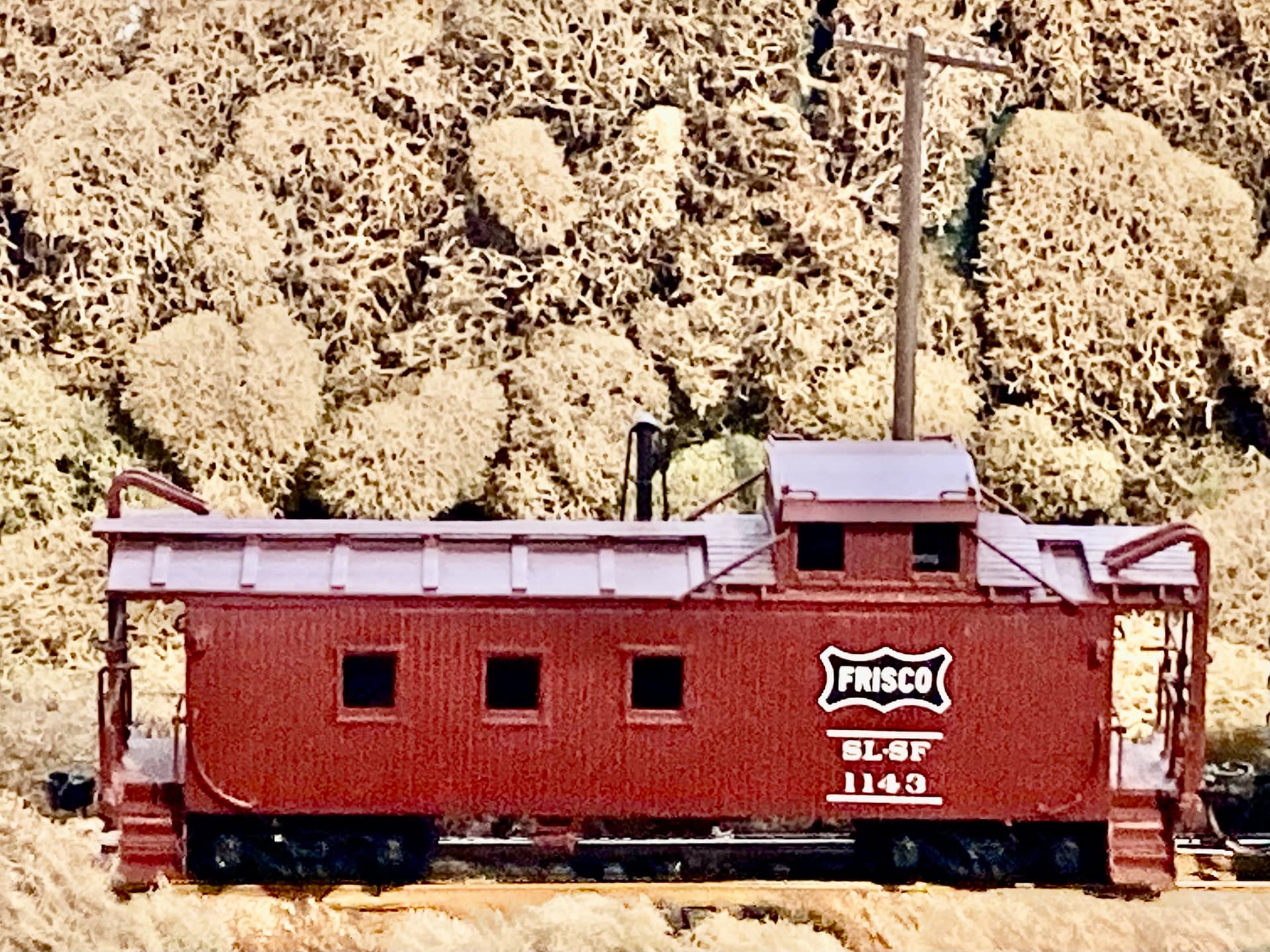
It’s time for me to talk a little about the Frisco component on my branch line. The branch back home was originally built as a short line in 1909, but was always backed by Frisco financing, and was intended to be part of a Frisco/Rock Island empire that would eventually create a Chicago to the Gulf of Mexico system. It was ill conceived from the beginning since at least two other railroads had already done that scheme, it fell apart, and eventually after changing hands a few times the branch ended up as a Missouri Pacific property in 1925.

I remember in the 60s old people around town still calling it the Frisco, and I couldn’t imagine why until finally years later I read some history that explained it. With this rich history, the Frisco was going to have to have a presence on my railroad.

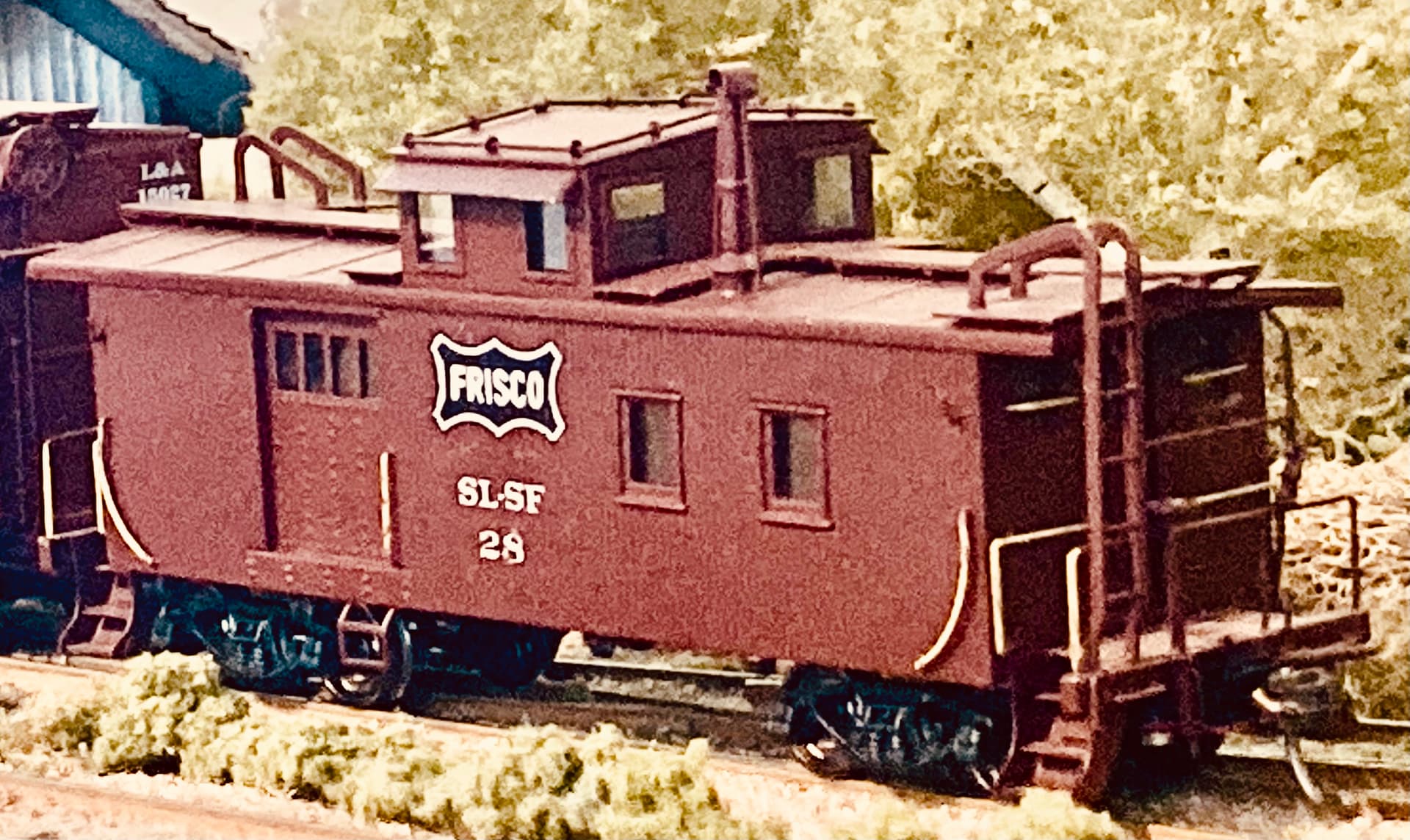
This was my first Frisco caboose, an unaltered Walters three window car. I still have it but it’s been a pretty long time since it has run since I have two much nicer brass Frisco cars now. The ship it on the Frisco slogan is a pretty modern affectation that pretty much keeps it off of my railroad when I’m in the 1930s.

The second car I got is a three window car, really not a whole lot different from the plastic Walthers car.

This unusual side door rebuild was my third car, it rolls up and down the branch fairly frequently.

My Frisco engines are another subject that I’ll get to another day.

6 Likes

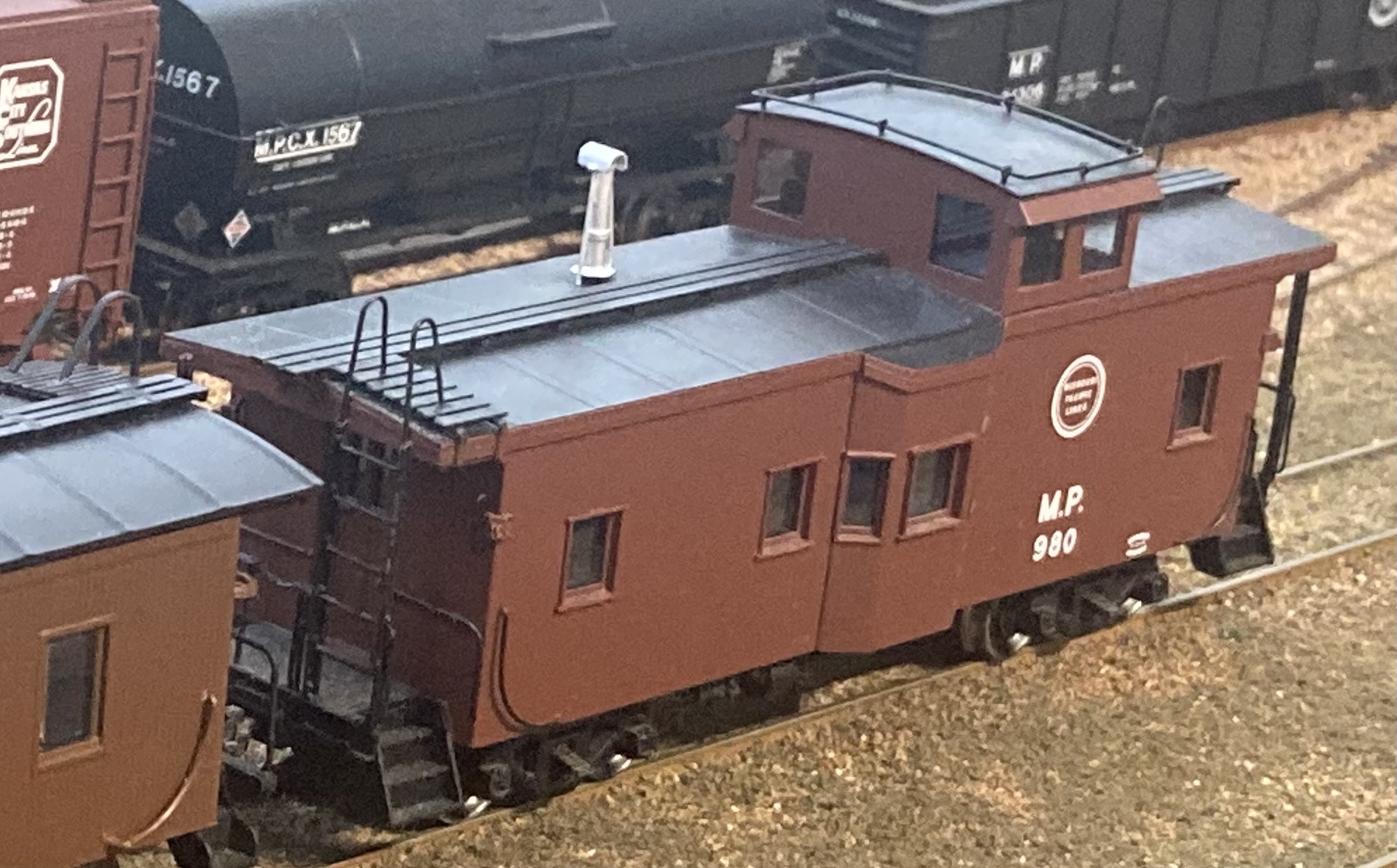
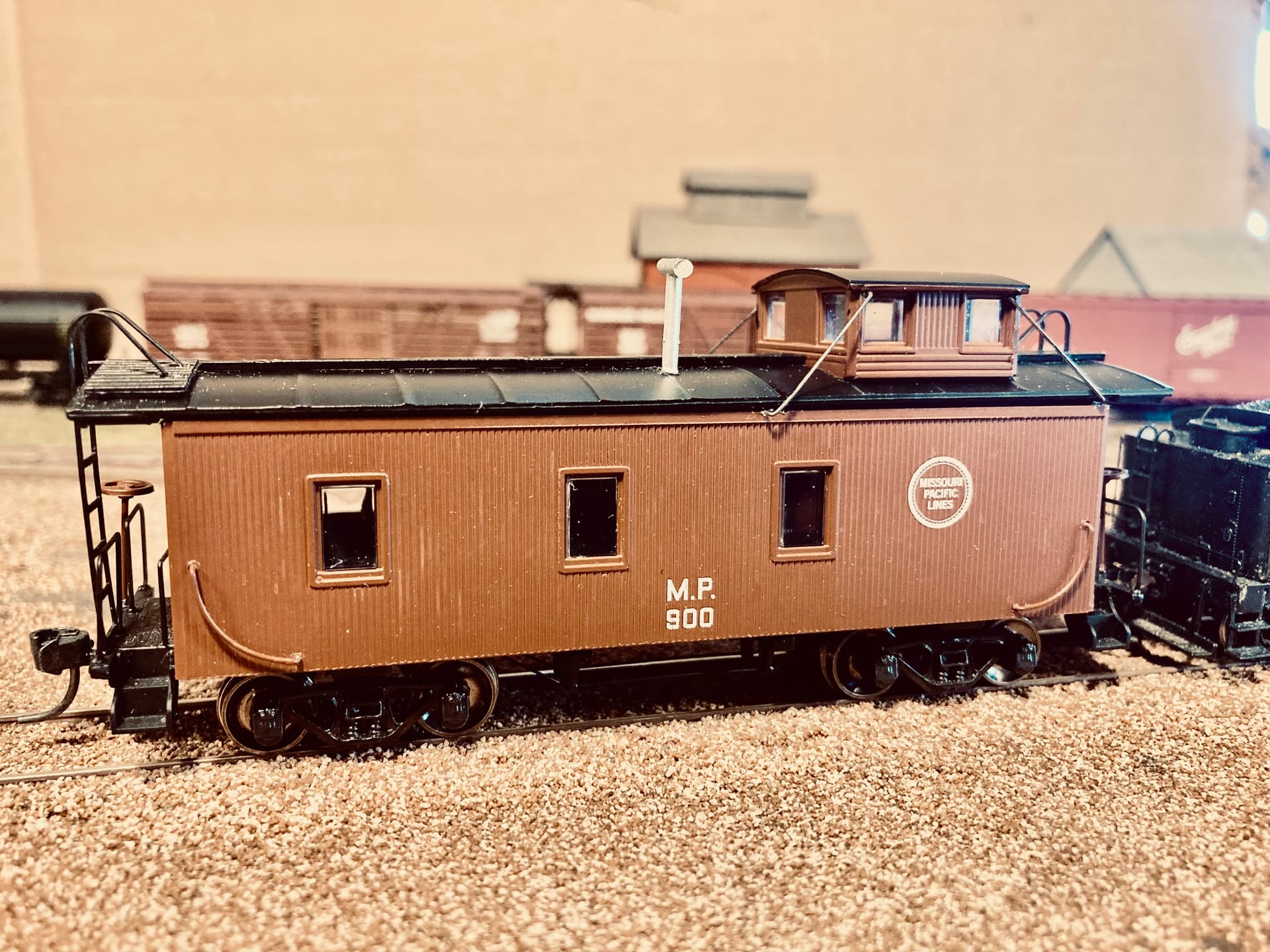
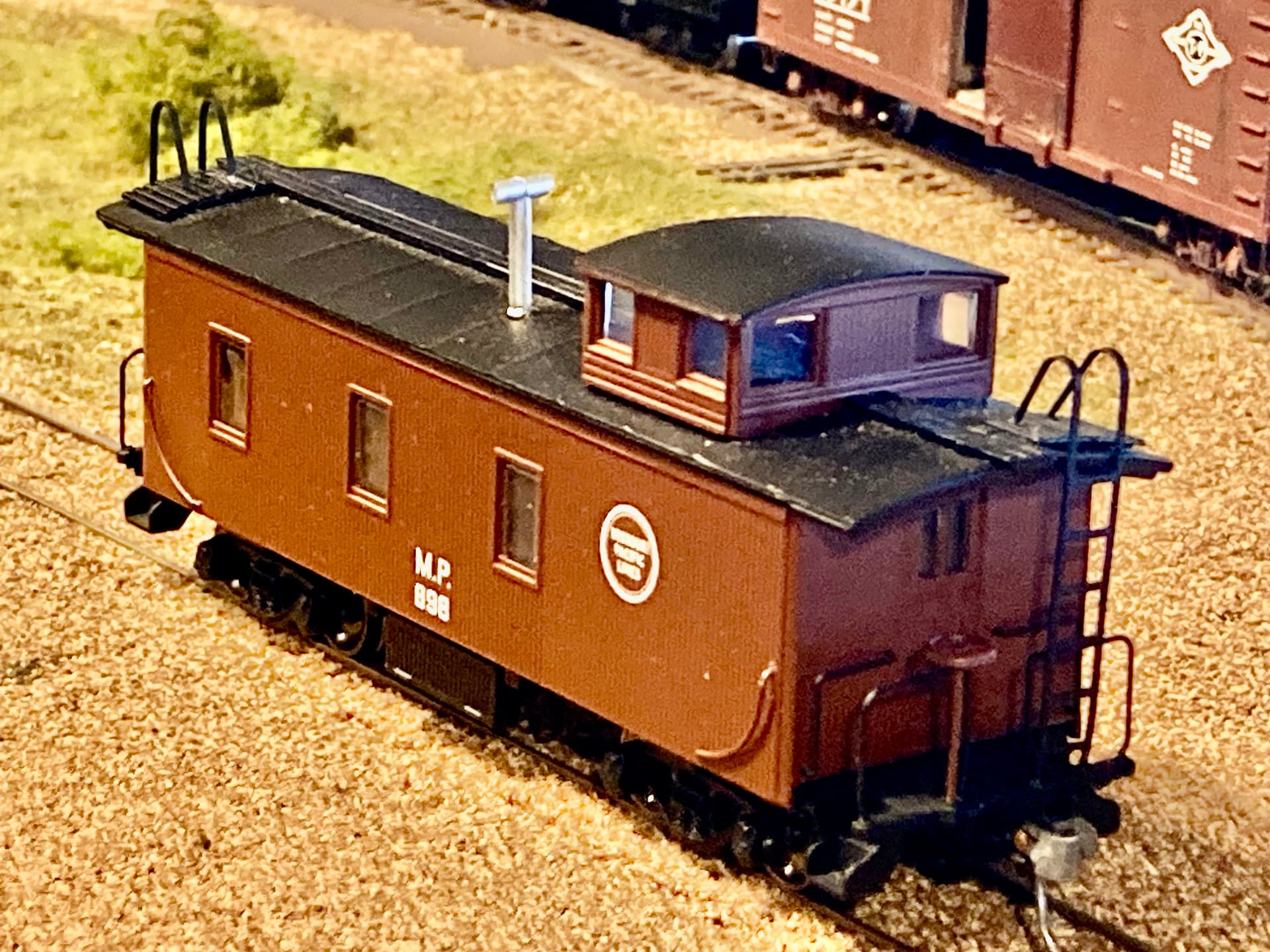
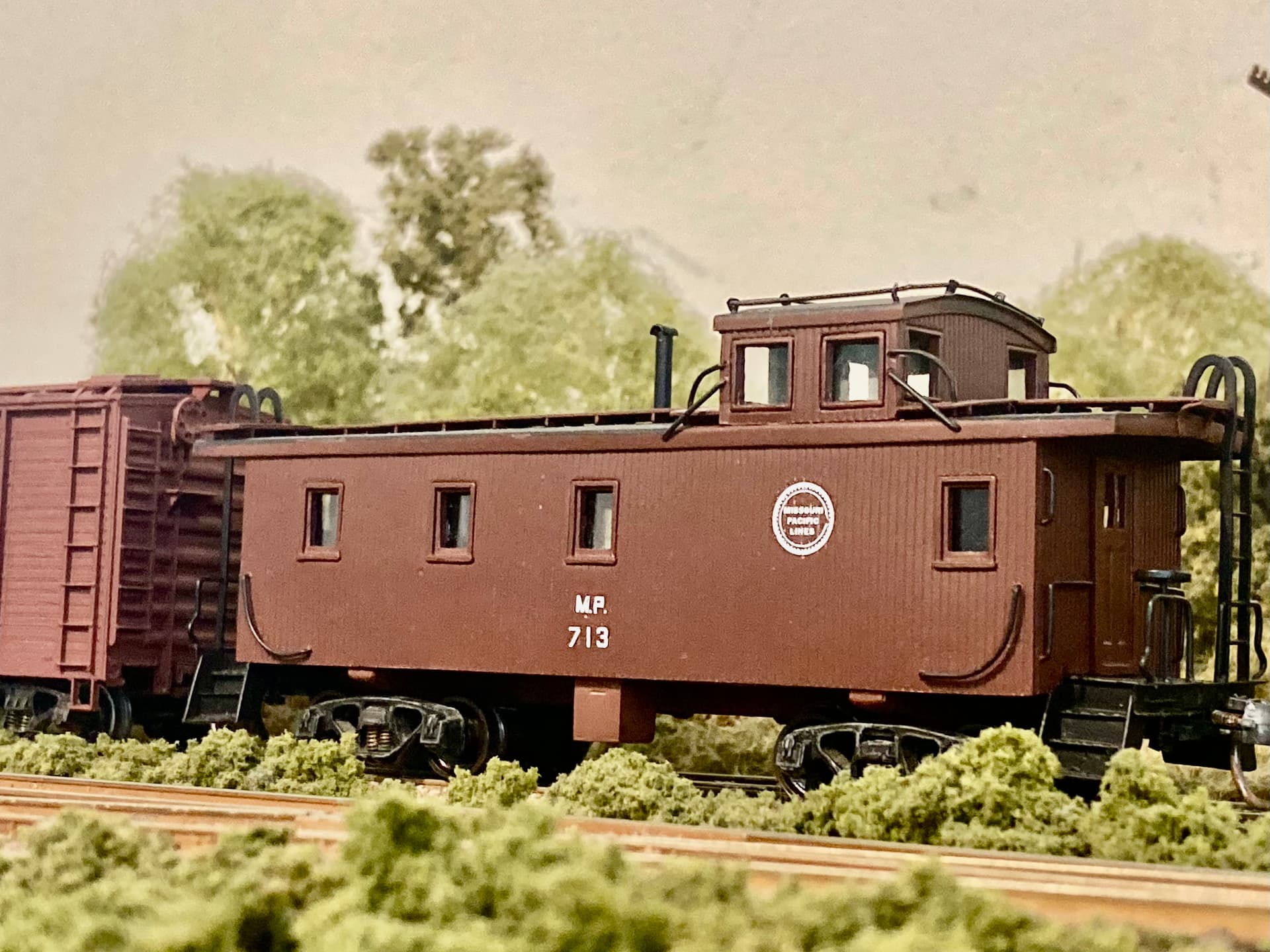
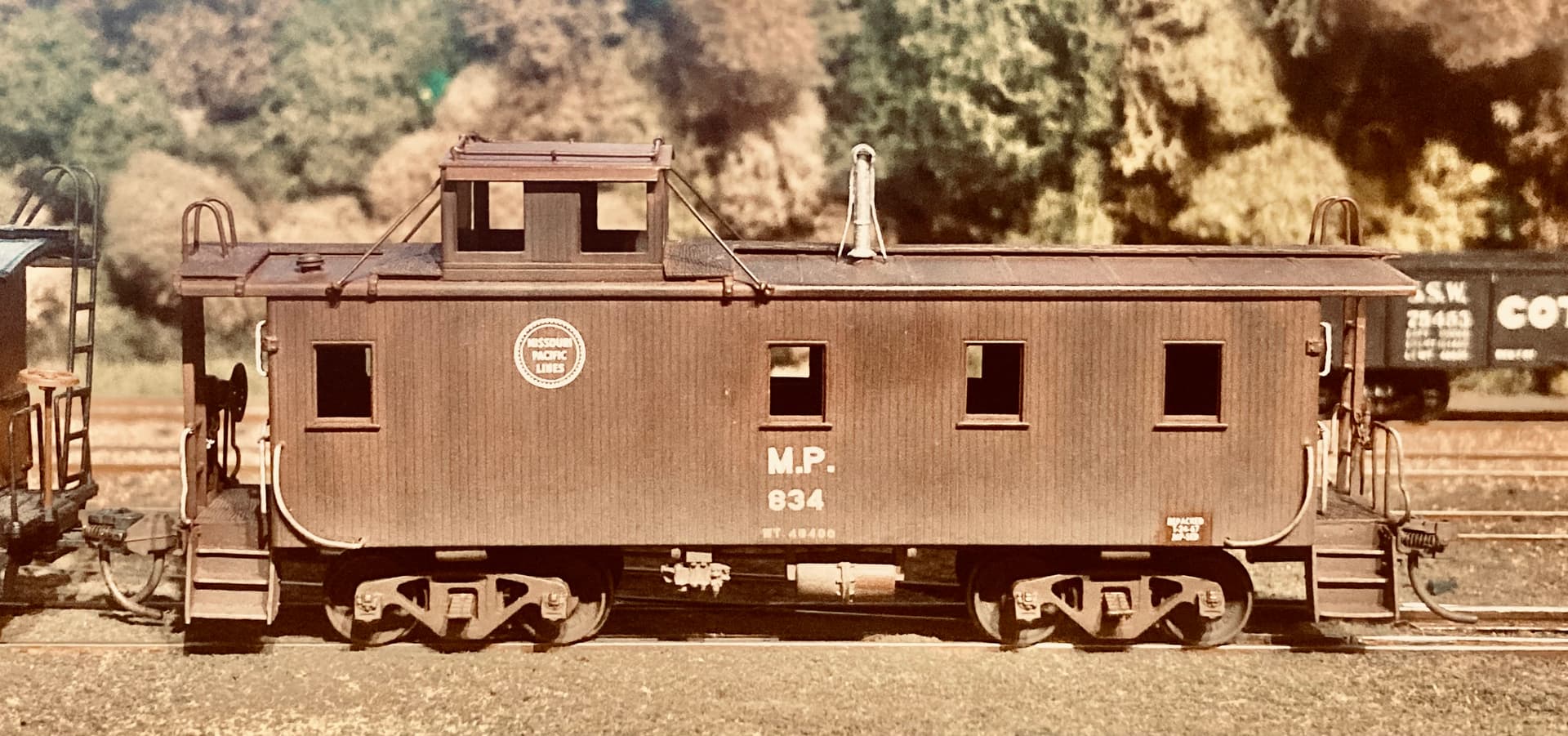
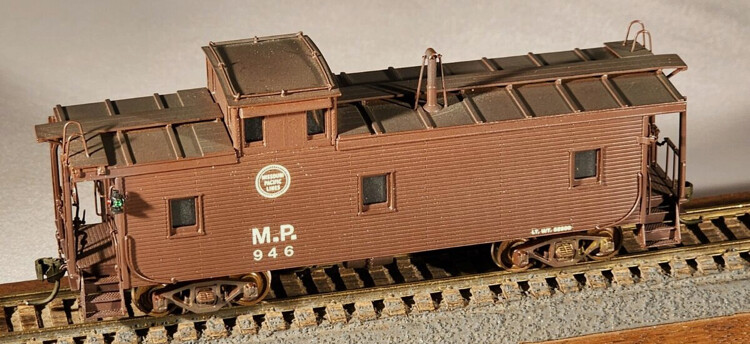
The Missouri Pacific car that still eluded me was the standard four window caboose. I still wasn’t aware of the brass models of them when Roundhouse produced a run of their plastic three window cabooses lettered for the MP, with correct road numbers no less. The guys at the MPHS told me that these cars, while not completely prototypical, were not that bad of an overall profile to be a decent stand-in for the MP car. So I bought all three road numbers.

Right away, I realized that with a little help they could be even better in their stand-in role. I added Athearn end ladders , which were closer to the MP ladder, and cupola braces, which were present on a lot but not all of the MP cars. These cars held me for a long time and still run with frequency. Even if they aren’t completely correct, I like the way they look.

Here’s one of them before the braces:

One big improvement on these cars was to lower the car body down onto the trucks. As sold, the car rode a little high with a somewhat toy like appearance.

But eventually, I saw the brass four window cars in the online auctions. It took a while to find one with a good paint job, correct road numbers, and at a fairly reasonable price. This is one imported by Hallmark.

Eventually, I found out that the Hallmark model was considered to be an ill-proportioned poor representation. The quest was on for a better model of the same car by Overland. I finally found one:

But it came with a weathering job that I feel was too heavy to be real. I’m not crazy about the car the way it is and will probably eventually have it repainted and redecaled. I might try the terra-cotta art pencil first and see if that improves it a little.

There’s one thing about every brass caboose I have acquired. While the trucks that come with the car are very realistic, they are extremely poor performers, very sluggish rolling, with older style journal boxes that don’t accept modern wheel sets. Plus, being metal with metal wheel sets, it doesn’t take much for one wheel to touch the metal under frame on a curve and short out. I replaced the trucks on the worst performers with plastic, but still have a few left to go.

5 Likes

There’s two last Missouri Pacific cars left to account for.

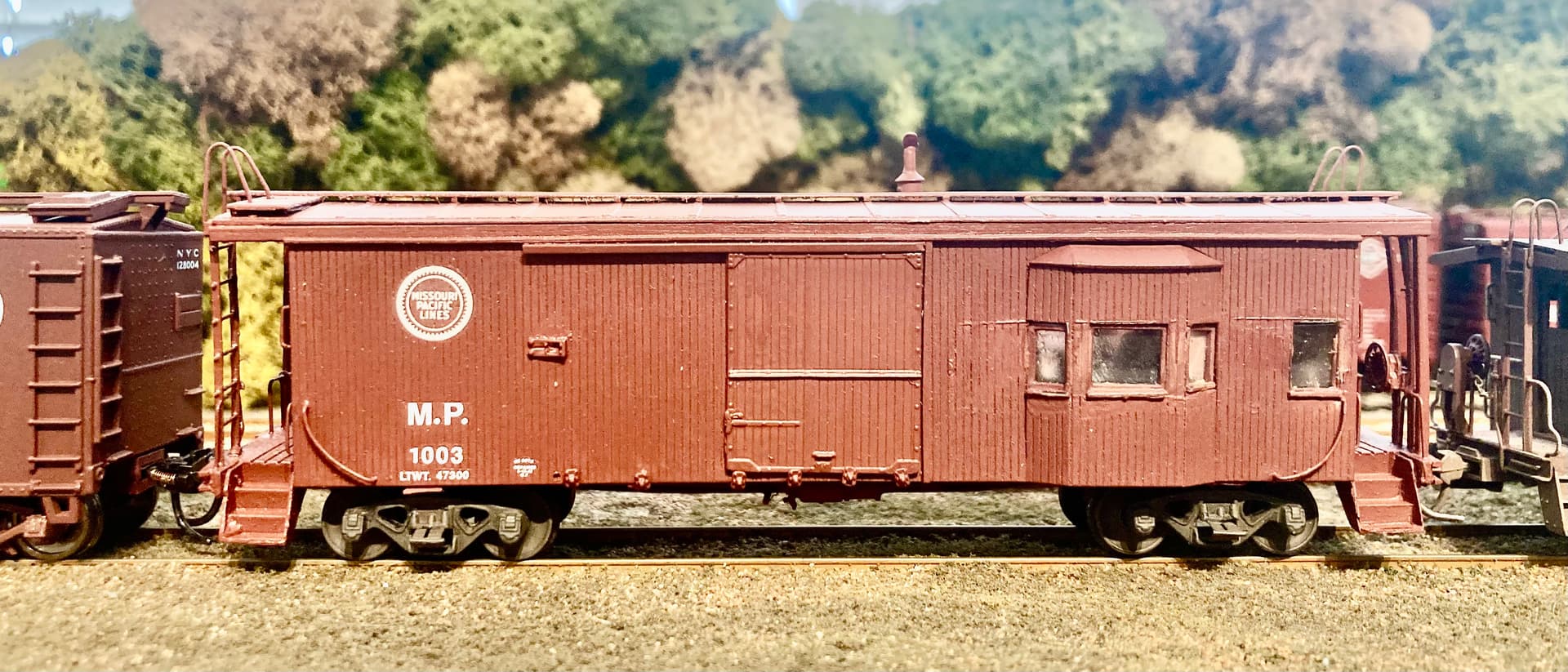
One was a very odd horizontally sheathed car, basically a four window car, but with the boards running horizontal instead of vertical. I’ve never been able to get any information about why they did this. The brass model was by Hallmark, but it appeared that it only came as part of a set along with a Missouri Pacific 2-8-8-2, a single articulated, the only one that the MP ever acquired. Why such a set, I’ll never know. But I wasn’t going to buy an articulated locomotive just to get the caboose. It became a quest for Holy Grail, one I was never going to find.

I had pretty much given up when a couple of them suddenly appeared as a single item on eBay. Here’s mine:

It has the same bad trucks that all of them have, they need replacing.

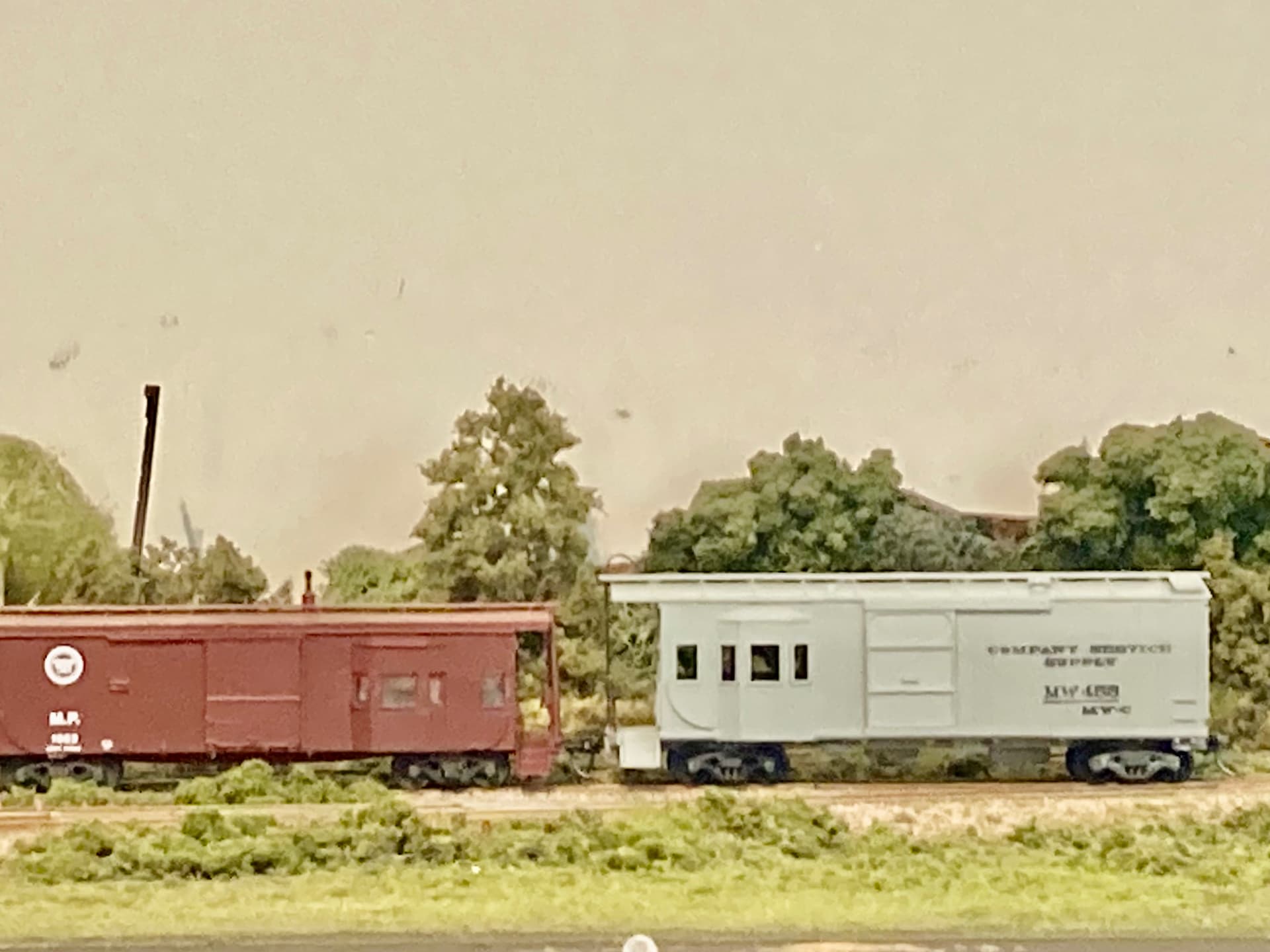
The one last car I really really wanted to have was an oddball World War II rebuild of a boxcar into a LCL caboose with a bay window. The only one I’ve ever seen in Model form belonged to a guy I know in Nebraska, and that was only a pilot model sent to him to try out.

Years before a plastic model was offered of a very similar car as part of a work train, but it only had one end platform, the other end was left as a boxcar end.

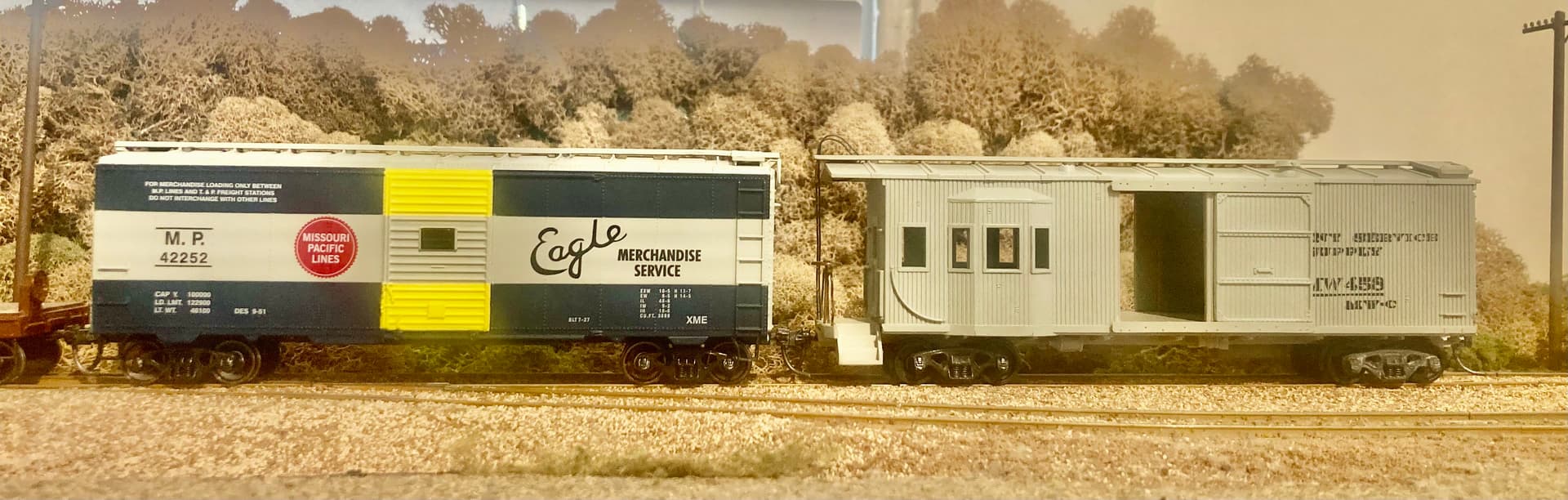
The plastic model appears often on eBay. Here’s the one I bought next to the regular Athearn boxcar which shows that they pattered it after a modern steel box car.

But. The prototype was rebuilt from a much older and shorter wood double-sheathed box car considerably pre-dating the 1940s. I finally acquired a scratchbuilt model of it from the estate of a deceased well respected MP modeler. Look at the difference between the prototypically done model next to the plastic one, it’s shocking. I would not be surprised if that gray car is close to S scale.

Here’s a better view of the actual car.

I knew there would be a difference, but not that big of a difference. I don’t know what to do with that gray thing now, but it’s not worth trying to rebuild into one of those MP LCL cars. It’s like trying to find a home for an elephant when you have always had dogs in the yard.

5 Likes

I have to apologize to everyone for flooding the forum with all these posts. We’ve been down in Florida for almost a week now and I’m supposed to be on vacation, but with no model railroad around it’s not much of a vacation for me, so I’m vicariously model railroading by talking too much about my stuff.

:shaking_face::joy:

4 Likes

I’m afraid not going to accept your apology cos I find your topics interesting.
Besides, historically, the Forum is not that busy during the Northern Hemisphere summer, and it can be hard to find an informative, and entertaining read!

Cheers, the Bear. :wink:

2 Likes

I’ve enjoyed your posts, Patrick. It is great learning about your layout and prototype. I too am on vacation and using the forum to take microbreaks from the chaos.

1 Like

Vacation = chaos. :joy::joy::joy:

I’m basically a service dog on vacations while everyone else is having fun. :shaking_face::shaking_face::joy::joy:

1 Like

A few random photos-

The switching lead for the Midland yard extends into the woods north of town.

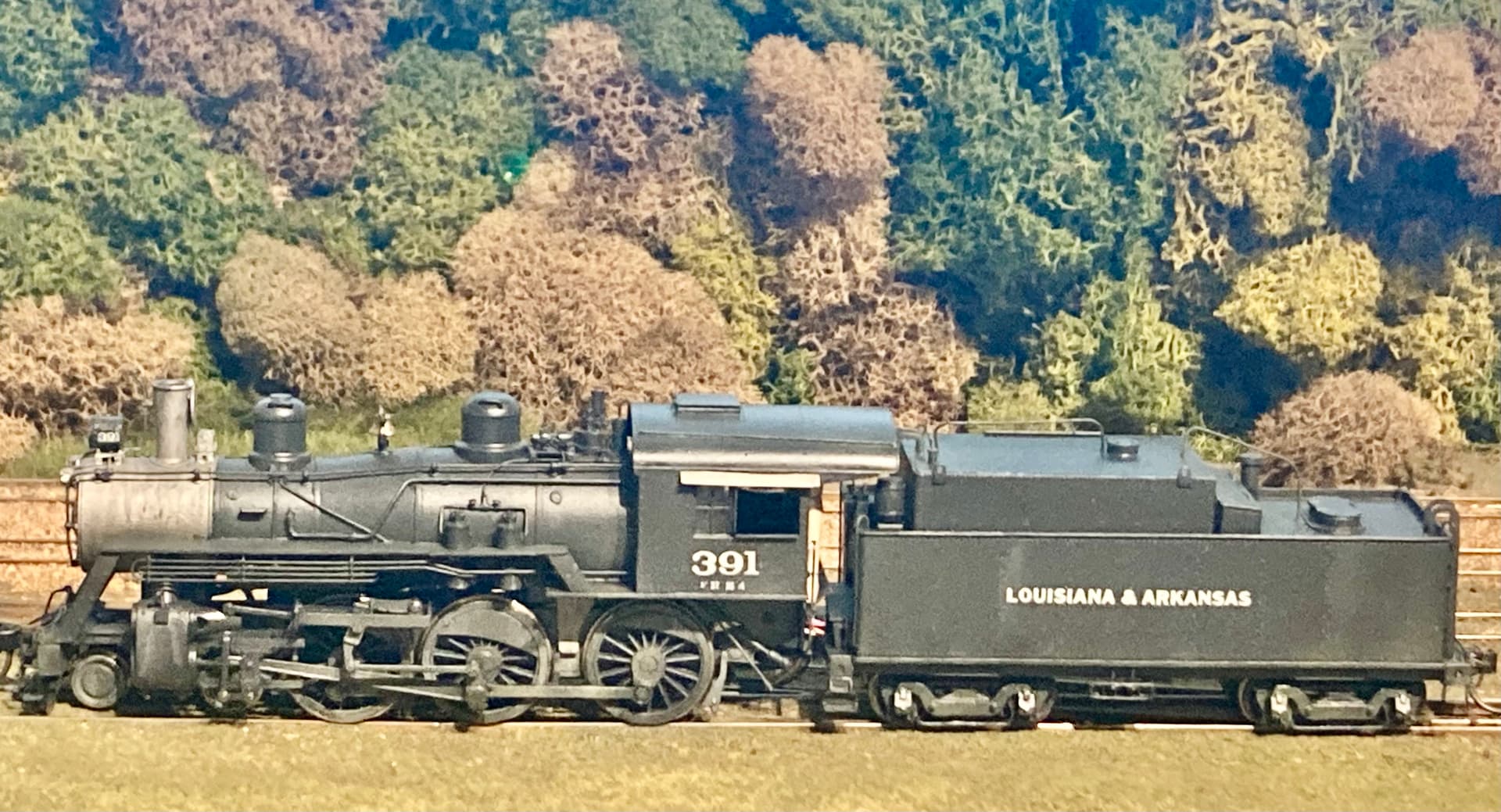
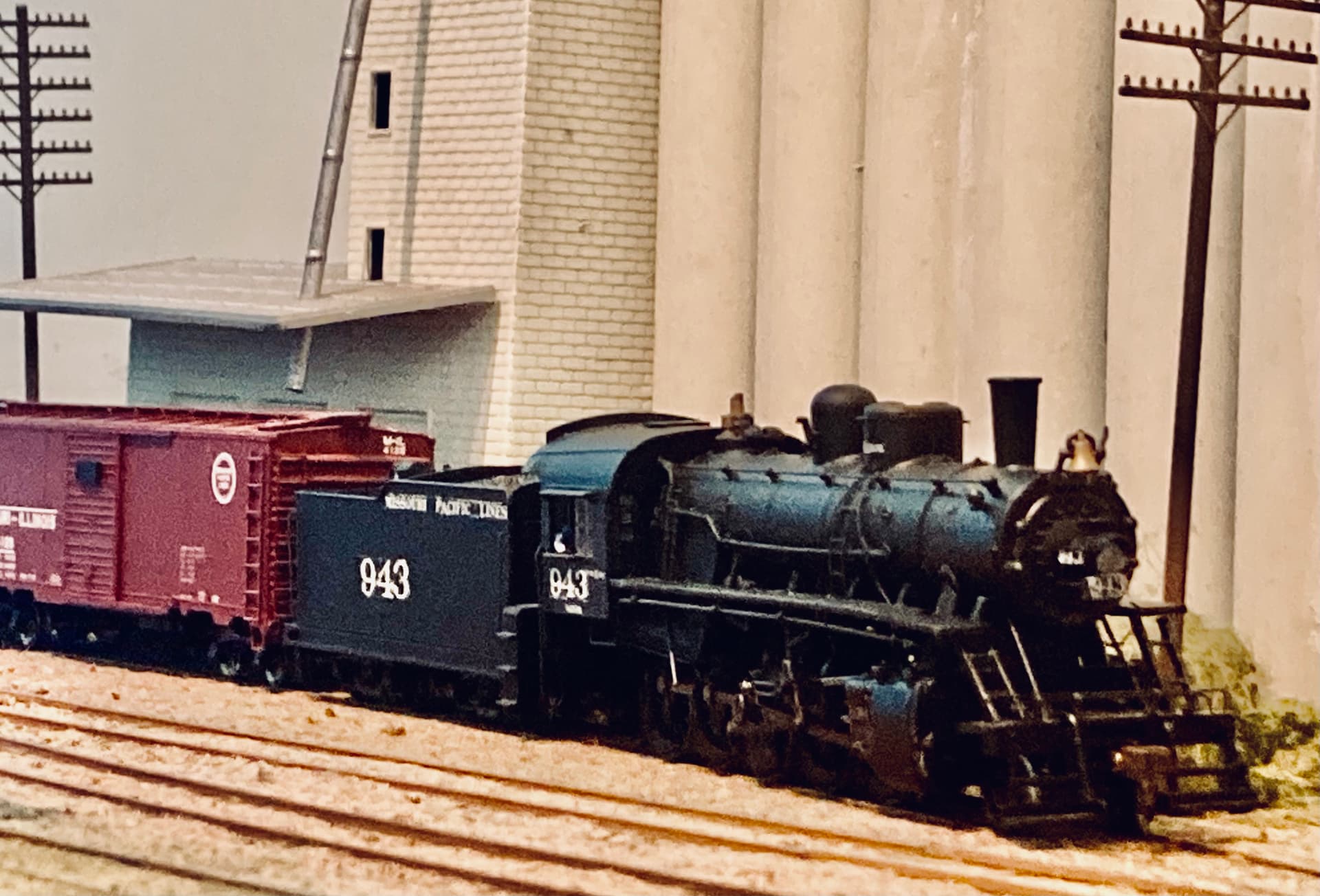
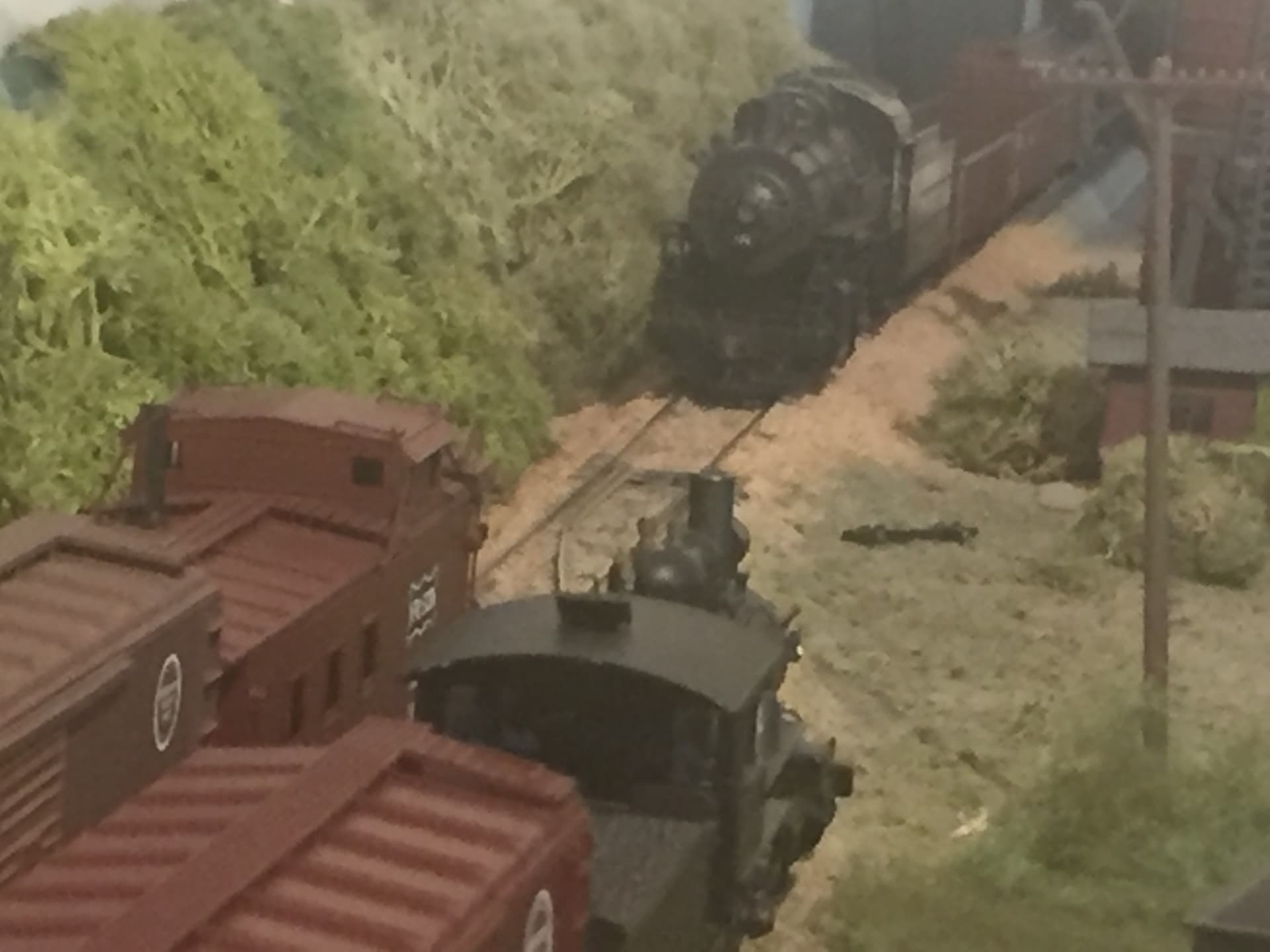
The 391 in the Midland yard;

Switching the Hardbilt rice elevator in Thunder Grove. The name came from the fact that it was one of the hardest kits I have ever tried to build. It was very poorly engineered, the parts didn’t fit right and it was missing some pieces, especially to help the silos space from each other, I had to make them out of sprue.

This is interesting. Not the layout but a screenshot grab from a 1970s gangster movie. I’dseen it years before and was always trying to figure out where this depot was and what Railroad it was. Finally was able to grab this from a YouTube video. In the film it was way off in the distance and I had to zoom in to get this close. A long internet search and discussion on another forum finally revealed that it was the Rock Island Freighthouse in Enid, Oklahoma, demolished not long after the movie. This is the kind of building I wish I had room for my layout, but don’t.

4 Likes

More photos:

A three-way meet at Donna Pass:

Sunrise in Thunder Grove. Actual sunrise, natural light on the layout, good for literally less than a minute before it went away.

Switching the Midland interchange:

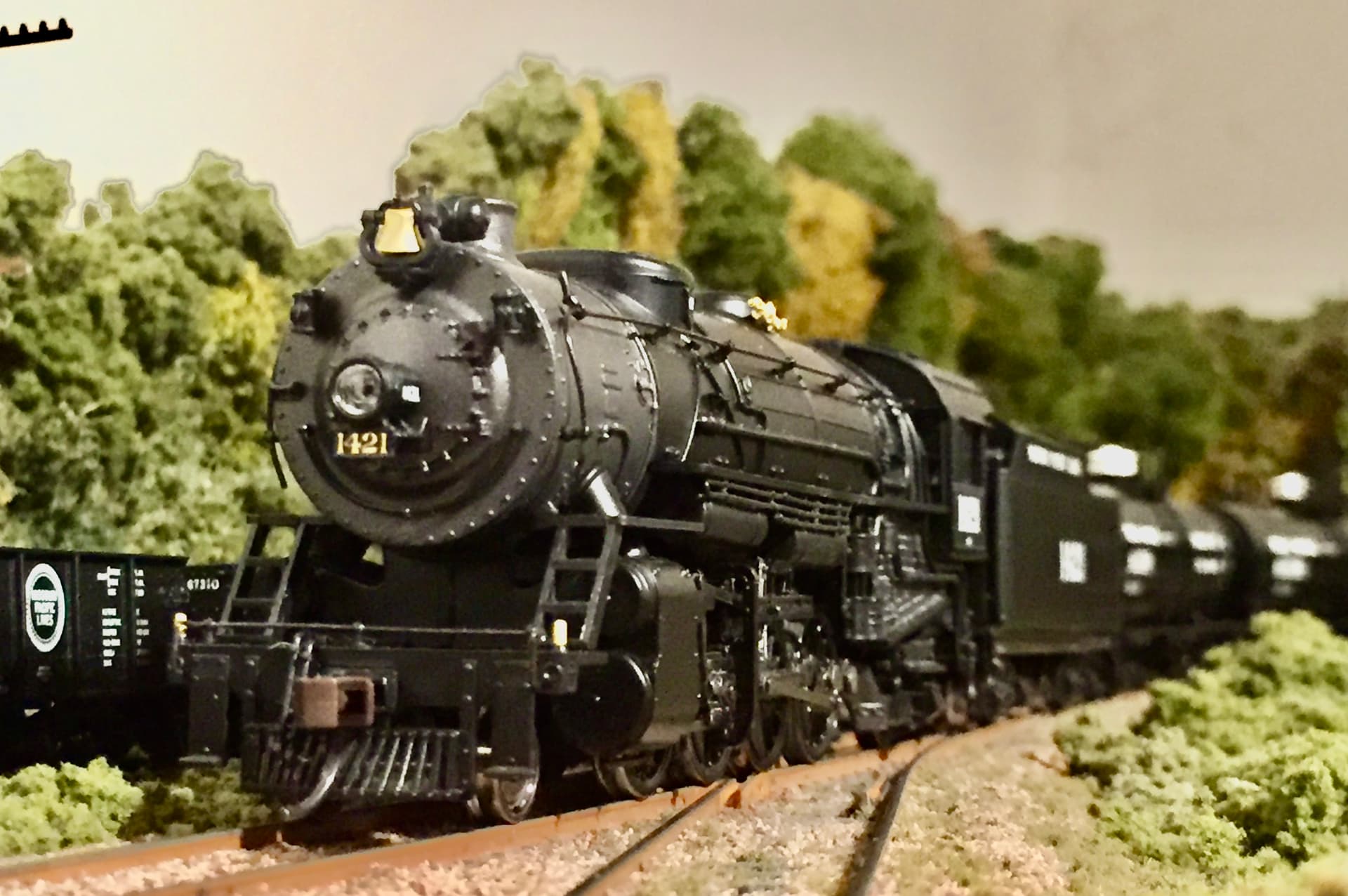
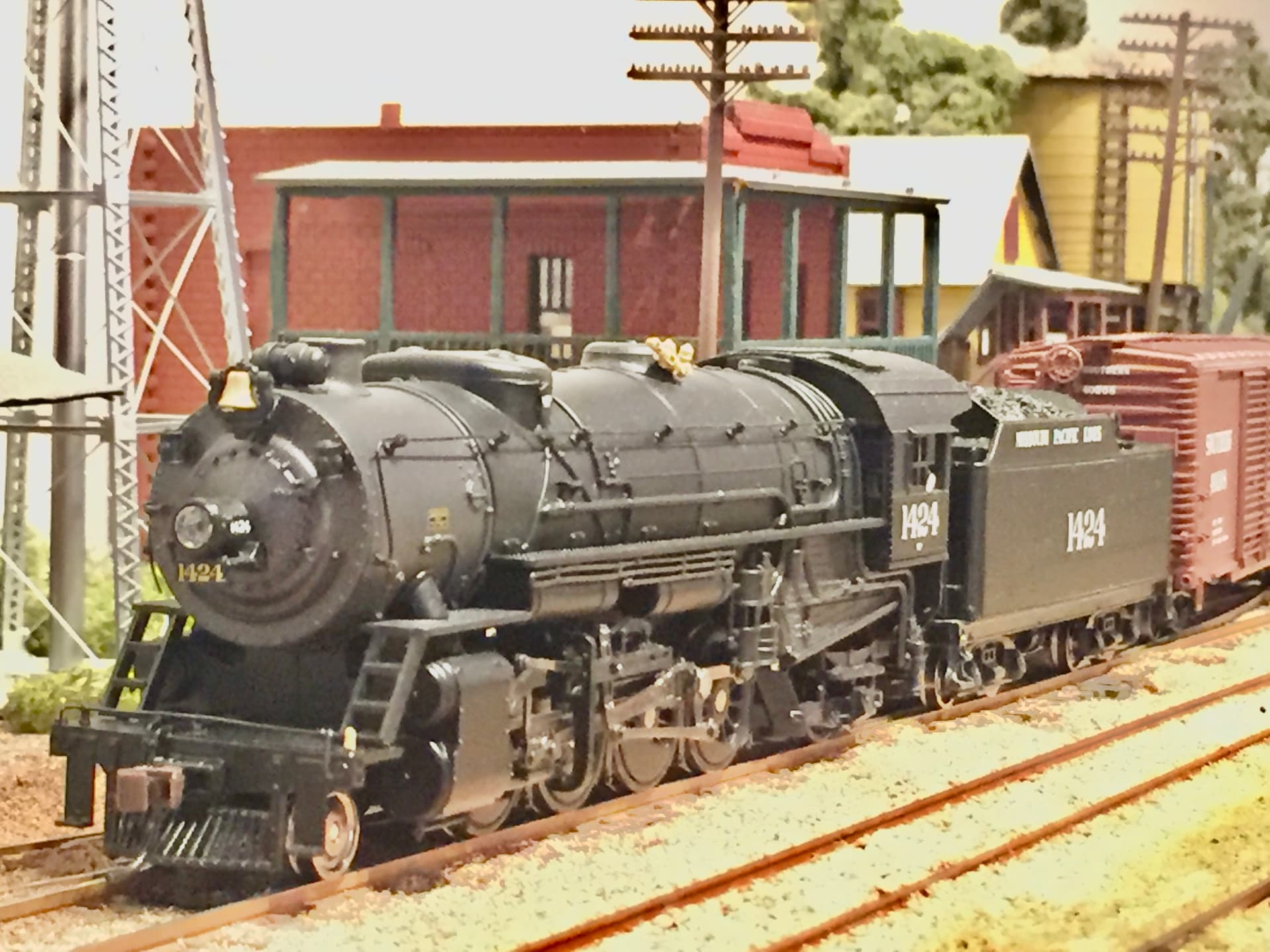
Big power in Laskey. A very rare run of a USRA heavy MacArthur, an MP 1400 class, over the branch.

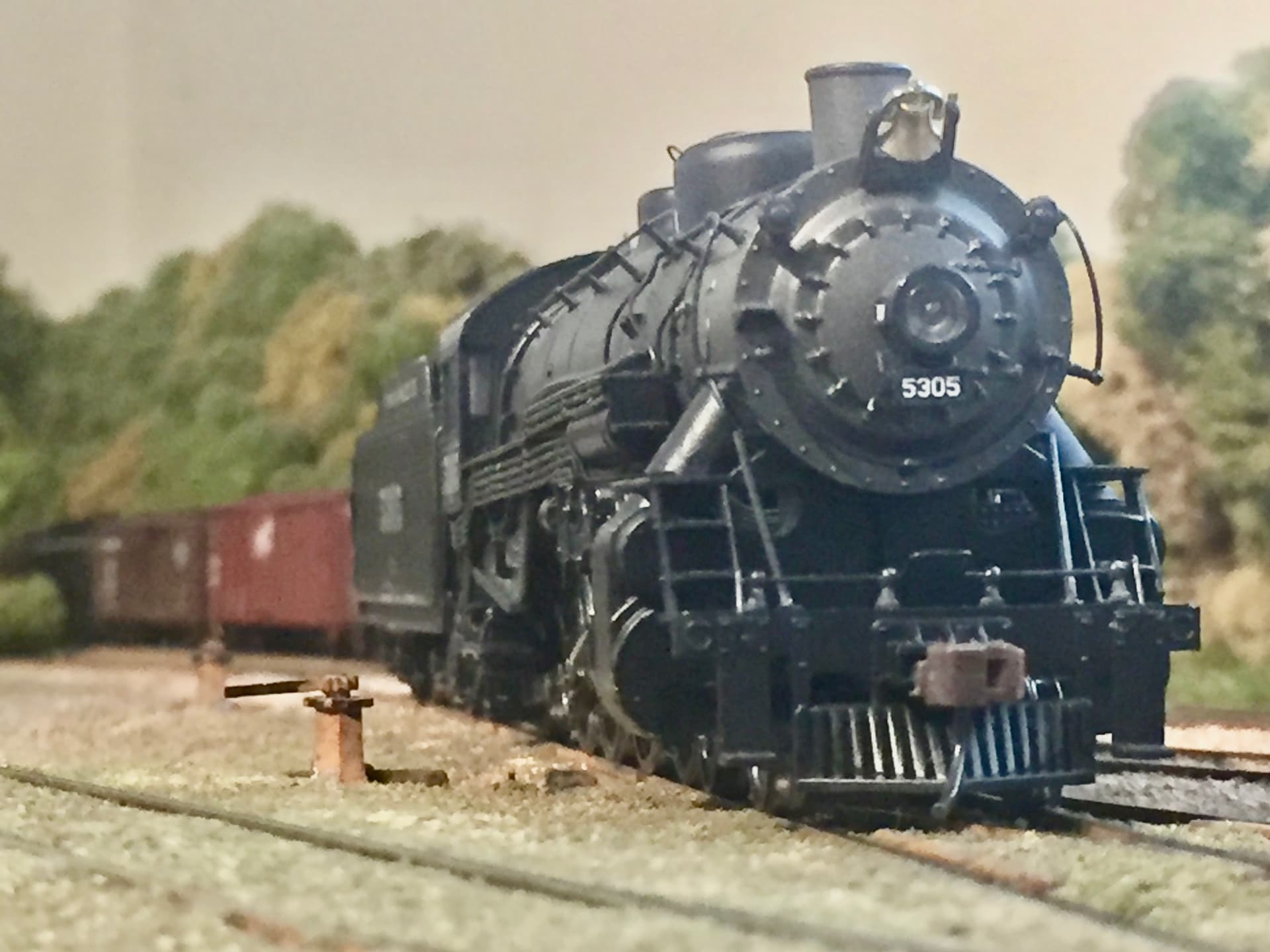
Another rare big power event, Missouri Pacific 5305, a light USRA mountain, in the Midland yard.

3 Likes

A couple of videos.

Twilight approaching Thunder Grove;

Westbound No. 3 on Donna Pass

7 Likes

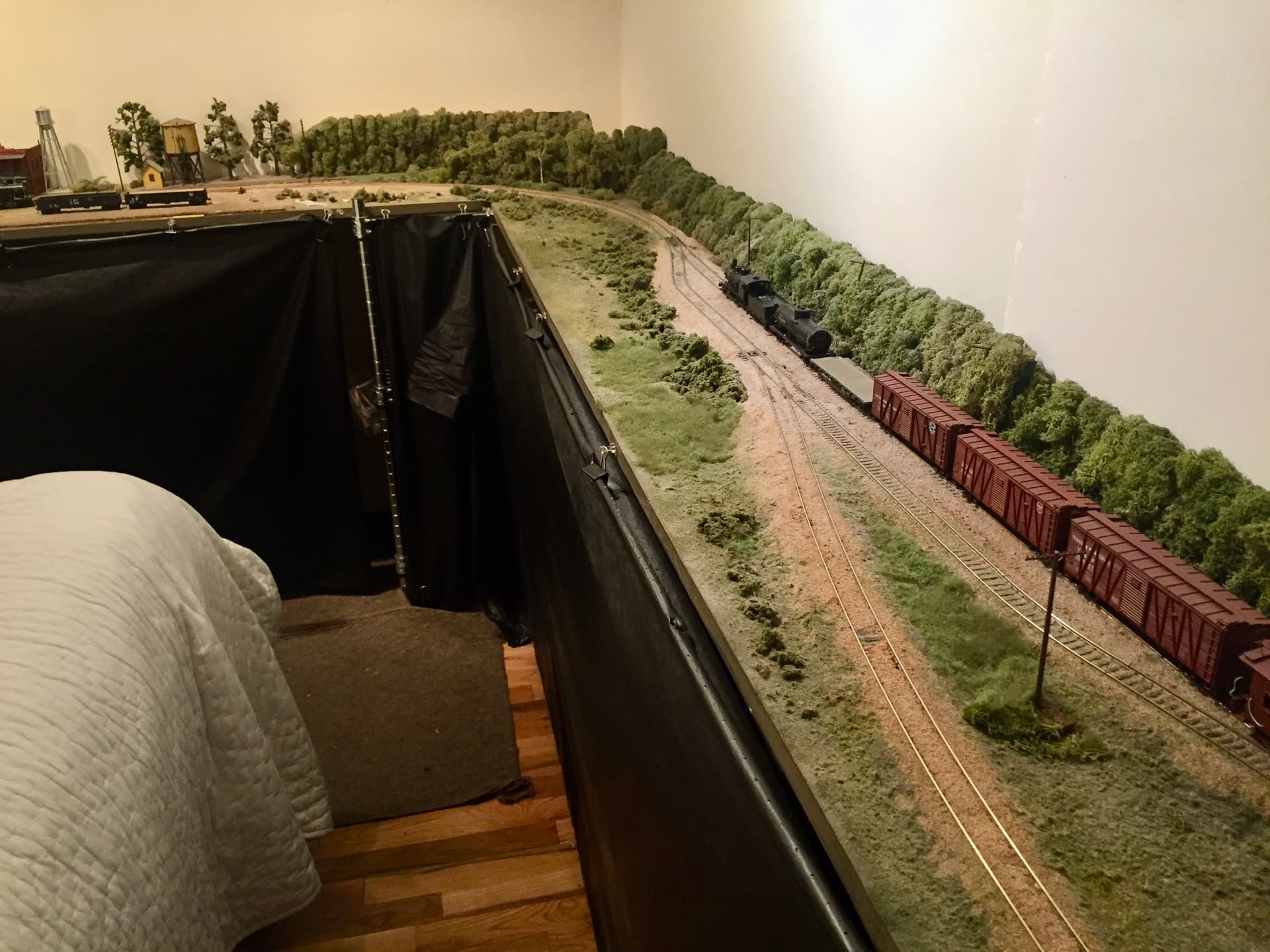
For those who wanted more helicopter reviews of the layout, I found a few back in the files.

Here’s a meet at Donna Pass:

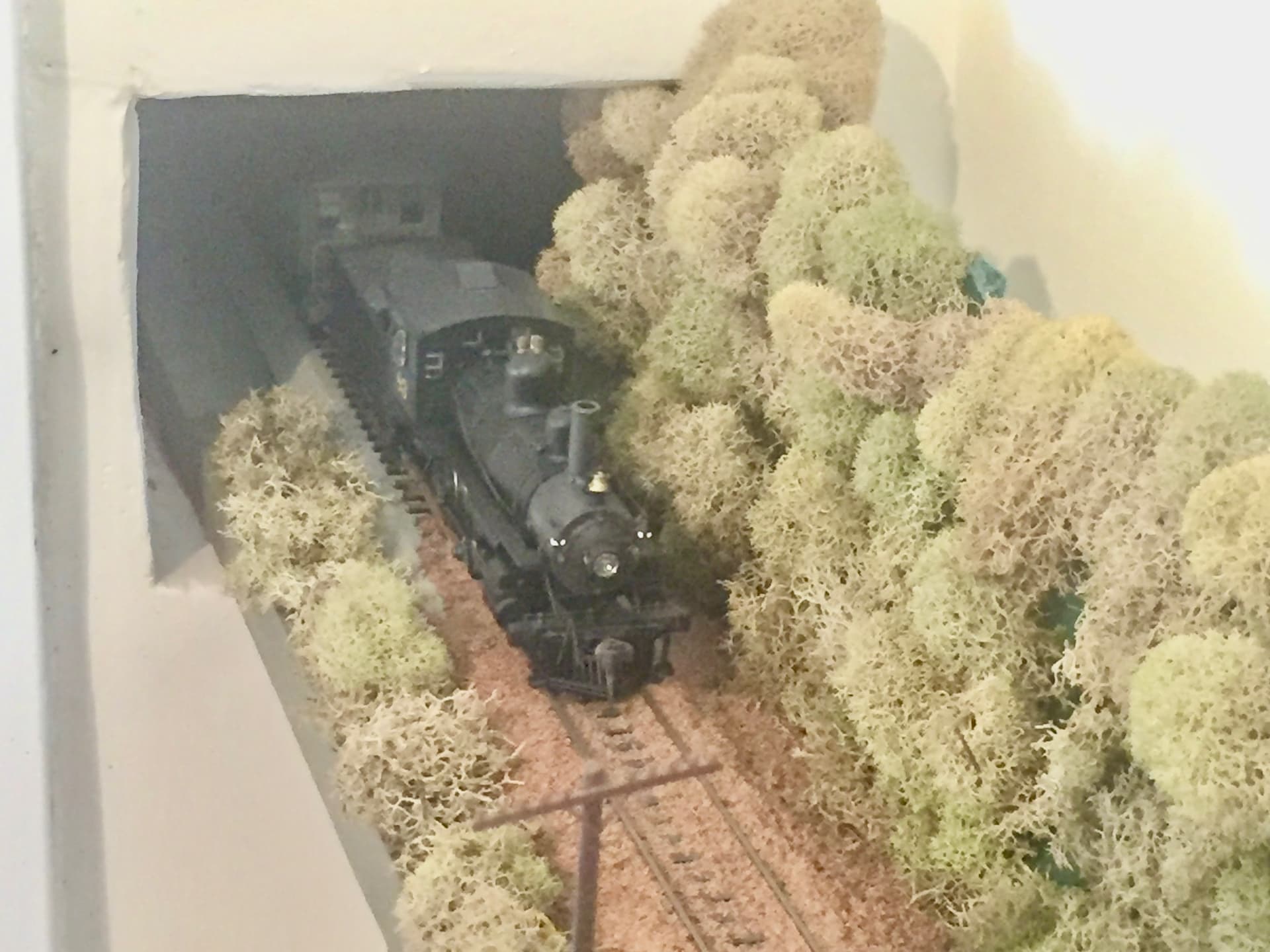
Helicopter over the East End of the Metairie Ridge Tunnel:

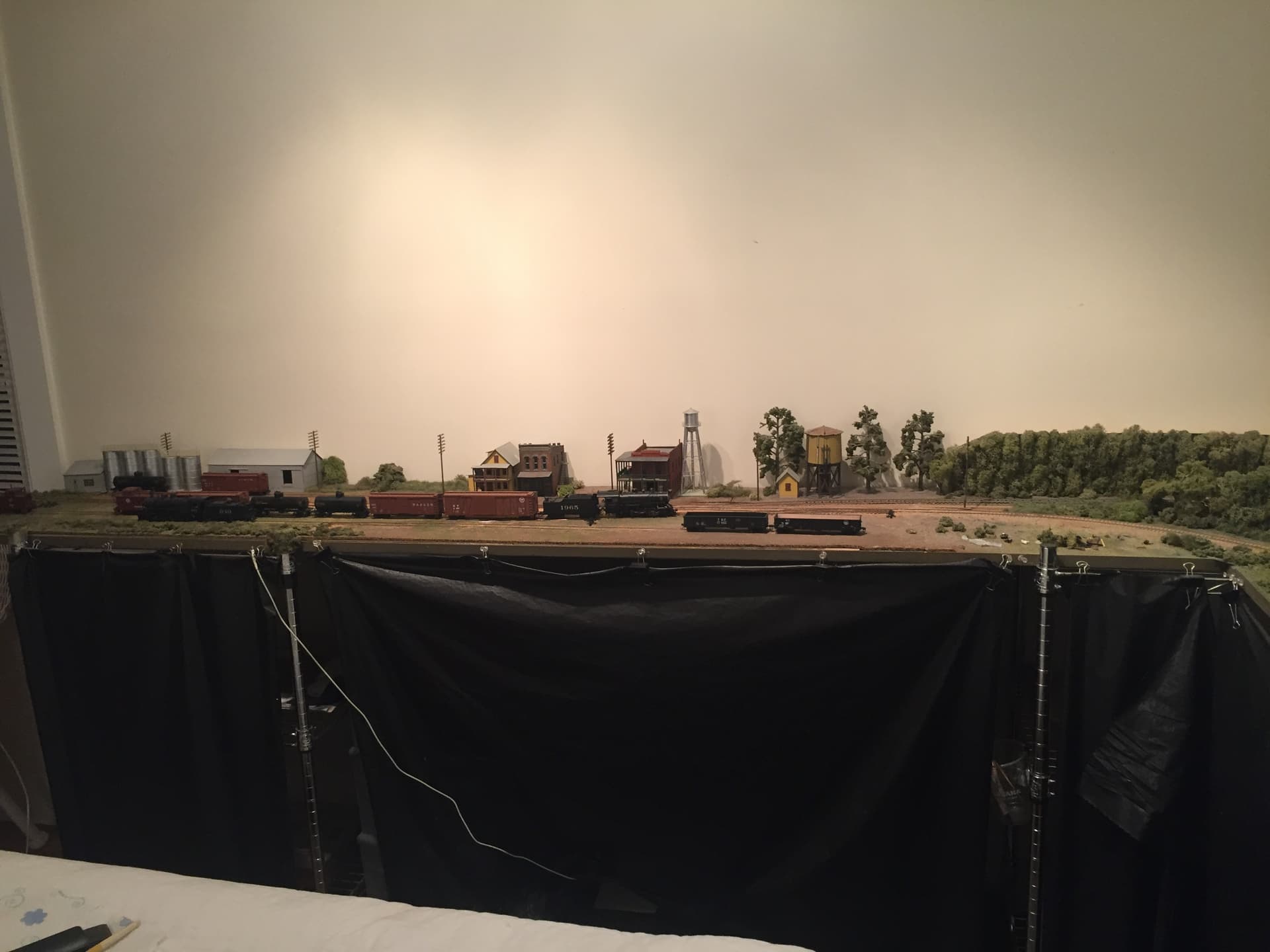
The next three shots show almost the entire layout. I told you that it wasn’t very large.

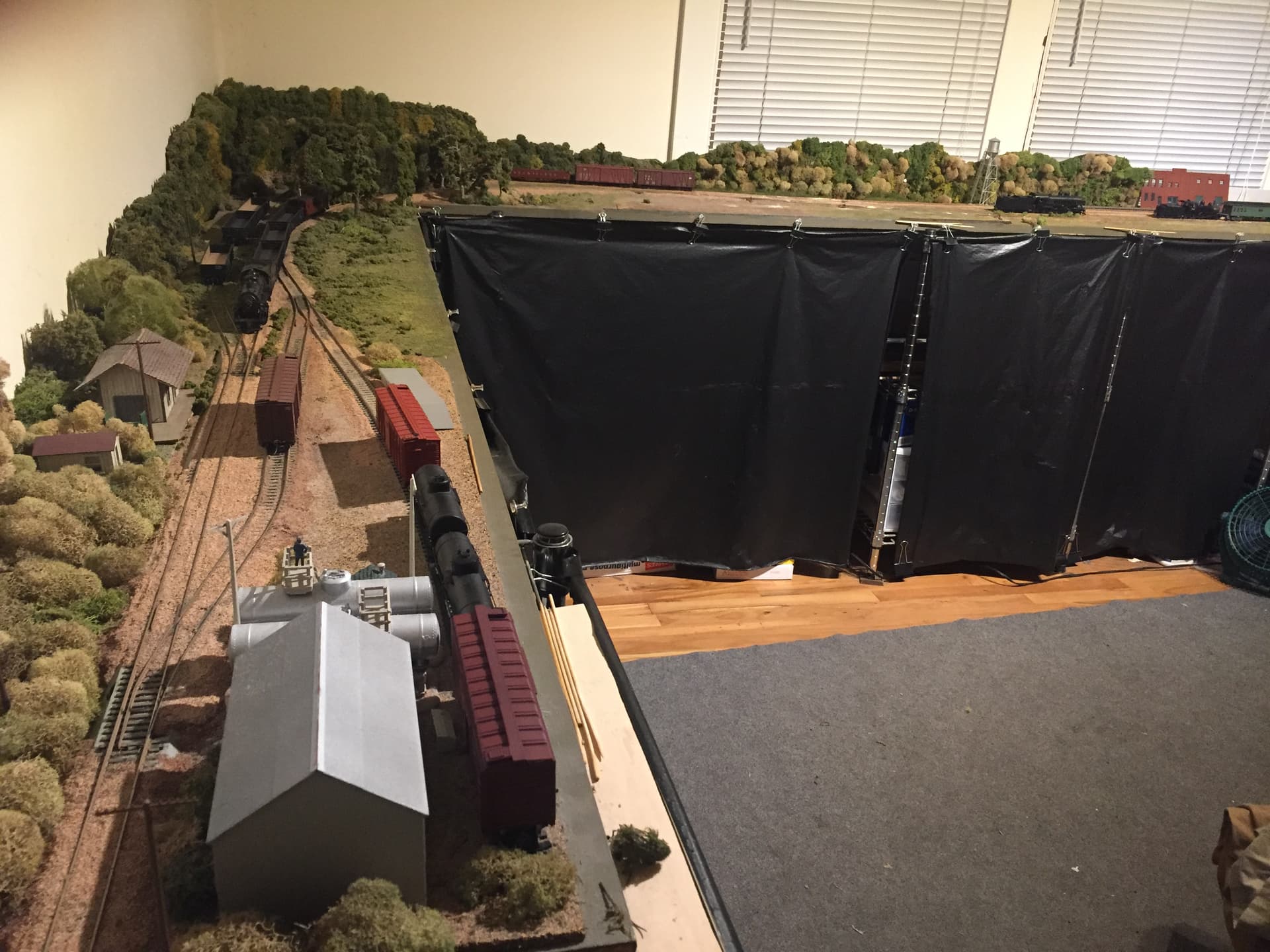
Helicopter over the east end of the Metairie Ridge Tunnel , looking east towards the town of Laskey and around the curve to Midland. This is the entirety of the eastern division.The metal warehouse has since been removed, I felt that the layout was getting too crowded with it on.

The next two photos show the western division.

The helicopter is over the west portal of the Metairie Ridge tunnel, looking west, down the track at Donna Pass, enter the curve, going into Thunder Grove, and the north end of the town of Thunder Grove.

The rest of Thunder Grove, 5 years ago. The buildings have been completely rearranged since then.

4 Likes

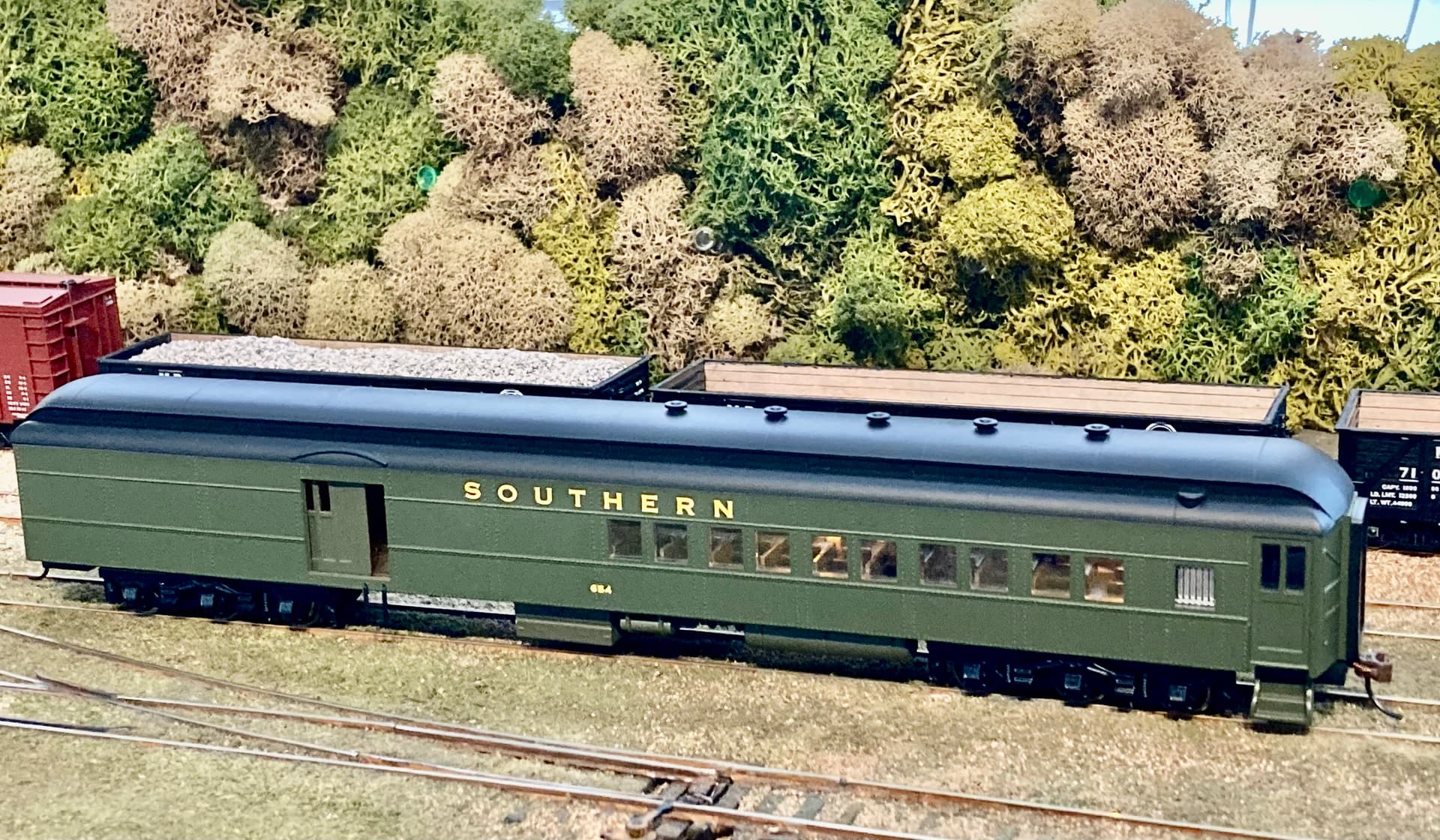
Way back in the Jurassic in high school, I always dreamed of running heavyweight car passenger service. I always loved those Pullman green consists, especially the head end cars like the wood express reefers and express box cars that rode on express trucks.

Imagine my pleasure in 2007, when I started collecting equipment again, that heavyweight cars were in good supply, along with the reefers and the express box cars I always liked. I joined the club with a very large layout. I was able to run a head-end heavy heavyweight consist of about a dozen cars, such a long train that I had to get a 4-8-2 to pull it. We called it a Pullman green freight train. The closure of the club in 2014 ended those glory days and put all that equipment in storage indefinitely.

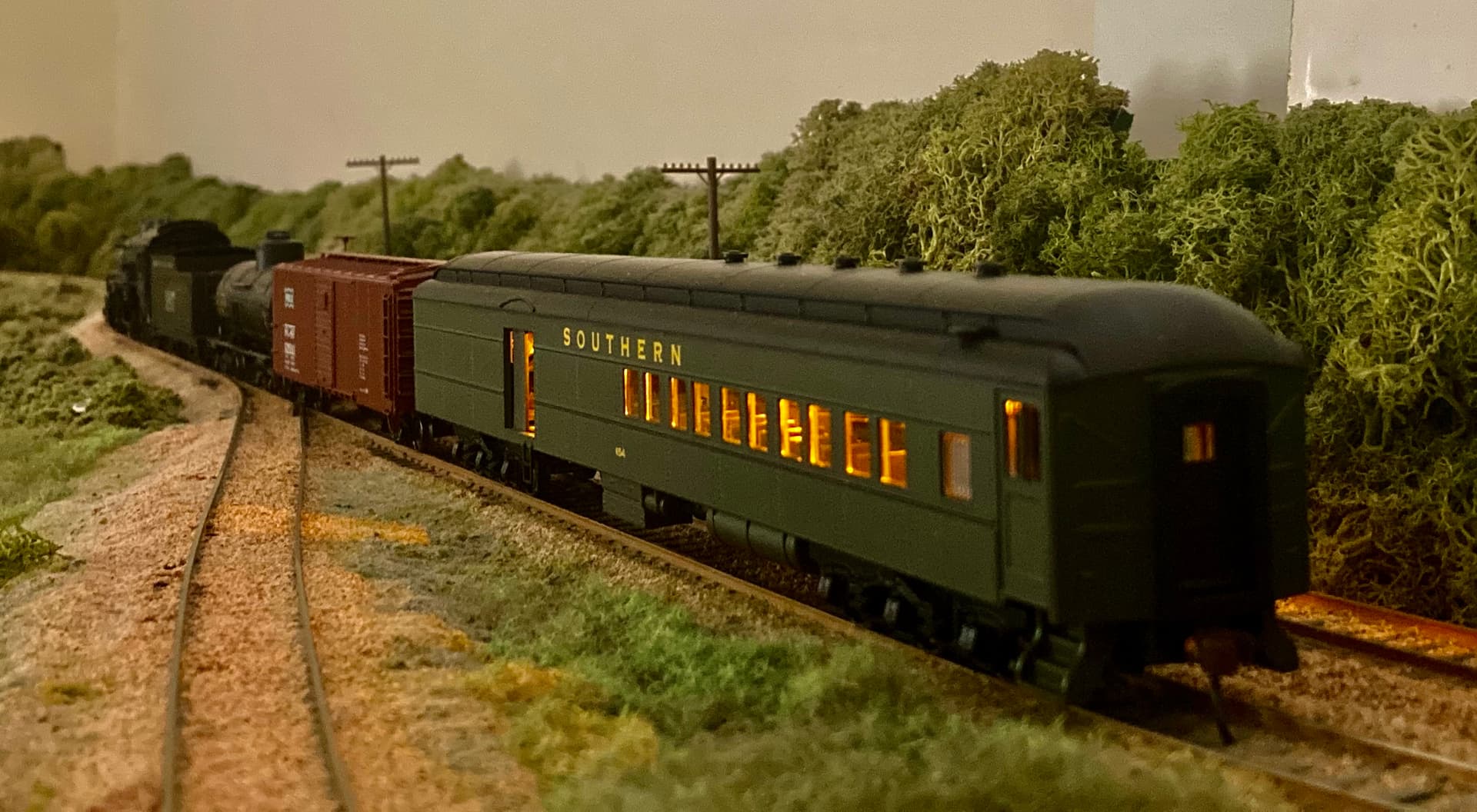
But. One car I never had for that consist was a heavyweight combine. When Bachmann offered such a car around six or seven years ago, I bought 2, thinking they might look good behind my mixed train.

I was wrong. Those cars are just too long for a little layout like mine. While such a car on a mixed train is entirely correct on branch lines, that car just takes up too much room in the yard, displaces (3) 40 foot cars. This train would look really good on a much larger layout. Maybe one day……

5 Likes

Historically, Rivarossi and Roundhouse made 60’ combines that would be good starting places for something you could operate with less ‘cognitive dissonance’…

Someone else here can give the current history of various 60’ cars, and current sources for examples.

1 Like

I have examples of both of those. They have never looked right to me, although well detailed. Even 60’ is too long, and they take on a sort of sawed-off look…… even though there were supposedly prototypes for the 60 foot cars in commuter service here and there.

Con-Cor had a somewhat shortened combine that looked really nice and sometimes I wish I had gotten one of them.

The Roundhouse 60 foot combine was a Harriman car, appropriate for the Southern Pacific, with which my Gulf Coast themed layout would have logically interchanged. I have a couple of those.

My open platform roundhouse wood combines are 50 feet long and they are at the limit, I do run them now and then. The final conclusion is that side door cabooses work best for passenger service on my layout.

“Cognitive dissonance.” I like that.:joy:

1 Like