Missouri Pacific branch line - 2

Some have asked, what is the origin of your town names on your layout? My belief is that most people, in naming locations on their layout, choose names with personal meaning that have a story behind them. I am no different.

Donna Pass and Laskey refer to the very dear lady, who takes zero interest in the layout, but on the other hand is very forgiving and understanding about my own interest in it and has never questioned anything about the budget or the space.

Midland is a name I’ve had since I was 14 years old. The family was driving west to Houston on a vacation, on US 90 traveling through Southwest Louisiana. This highway pretty much paralleled the T&NO over most of its route. Following the railroad through the prairie country, we came upon an abandoned wood depot in the settlement of Midland. It had once been an important branch line juncture and was still active then but barely. The depot, in the middle of nowhere, was beautiful and run-down and seized my imagination very hard. I immediately named my layout the Midland Western, a name that has stayed with me through all these years and I will never let it go. On the same trip the next year, the depot was gone. I cried for it, but it will always be memorialized on any layout I have.

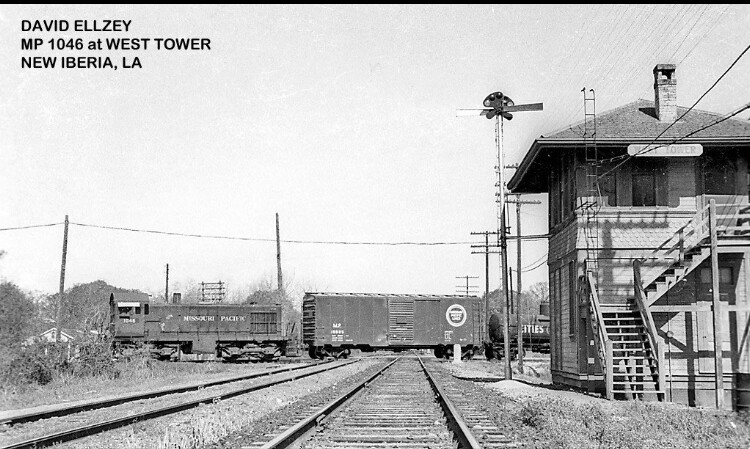
The name Thunder Grove came a couple of years later, also in an instantaneous flash. One of my railroad pals and I, we were 15 or 16 at the time, decided to spend the day out along the T&NO main line just west of town near the interlocking tower called West Tower. We had brought sandwiches and went to cool off and eat lunch in a little grove of willow trees across the road from the tower. We never found out what had actually happened, but suddenly the ground shook insanely, yet silently, like a large earthquake. It was actually pretty scary, but in that very moment that place became known forever more as Thunder Grove.

West Tower ca 1962. Thunder Grove is directly behind the tower in the photo, across the road. Everything is gone now, except the main line.
My layout dead-ends south of Midland in what appears to be the remnants of a line that once went further. Way back in the same golden high school days, my pal and I were talking about some rock formation scenery that we saw in some magazine layout photos of some guy’s mountain railroad. He said that he really liked that crumbly rock. In an instant, I said, “ that sounds like a town name.” And from that moment on, Crumblyrock was the old terminus of the Midland Western on a part of the line that was abandoned years before. One day, though, my road will actually reach Crumblyrock.

My friend also was talking about something that looked good on some layout somewhere and said that it “fits well.” Immediately I said, that sounds like a guy’s name. And from that moment on, Fitzwell was a guy who lived over in Crumblyrock.

I hope that you all don’t mind me telling those little stories. Those names go back to my very beginning as a serious modeler and transport me back to those golden days in memory. They will always live on, on any layout I ever have.

4 Likes

Very nice layout. Thanks for sharing it.

1 Like

The Rivarossi 60’ combine was based on CNW commuter 60’ cars, monitor roof.

1 Like

Great. Thank you. I knew they were based on something, but I didn’t know what.

1 Like

The Roundhouse cars are based on Harriman standard cars, also monitor roof. But it might be less work to build a clerestory roof than to shorten an existing long heavyweight.

Erie and other Stillwell cars are just a smidge longer than 60’ and have clerestory roofs; several versions have been made over the years.

2 Likes

The roundhouse Harriman series included an RPO and diner not shown in the photo above. The RPO and baggage car are prototypical at 60 feet long. The passenger cars I believe were 72 feet on the prototype.
No matter. They look good. I have the entire five car set in Pullman Green lettered for Southern Pacific, and they look great, all they need is diaphragms and window shades to partly close off the view of the empty interior. I’m not a big fan of doing complete interiors of cars like that. At my age that’s is just too much work and I haven’t got enough days left on earth to do all that when I could be running a local freight. :joy:
I also have a Harriman baggage car and RPO lettered for the Midland Western, as well as a pair for my friend’s road, the Natchez and Bogue Chitto.

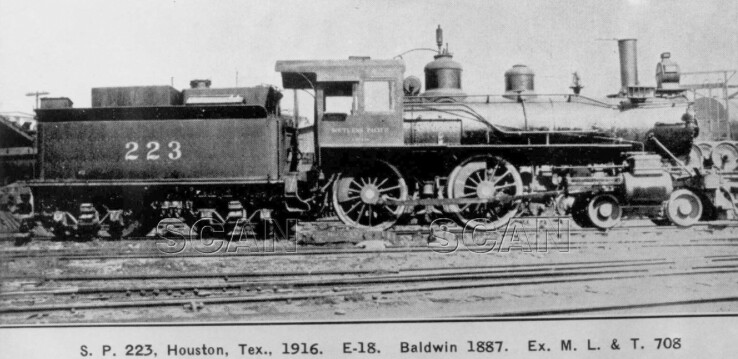
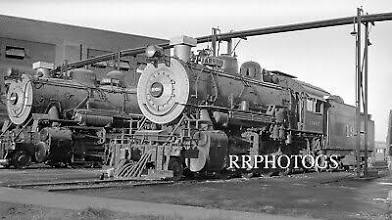
I’m a branch line/short line so I need an appropriate Southern Pacific steam locomotive to haul a couple of those Harriman cars and also interchange freight. I’ve thought about getting another brass engine like an SP mogul, but I think that I’m going to model (sort of) this actual T&NO locomotive:

And do the very early style SP lettering seen in the photo since no one does it.

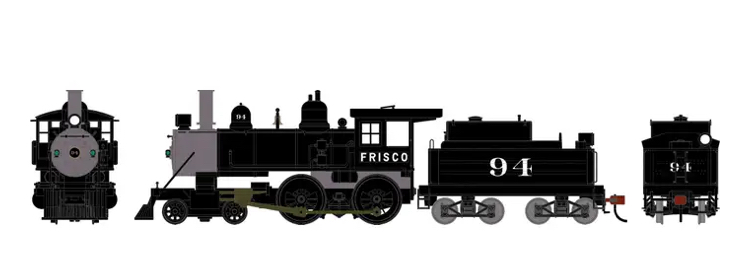
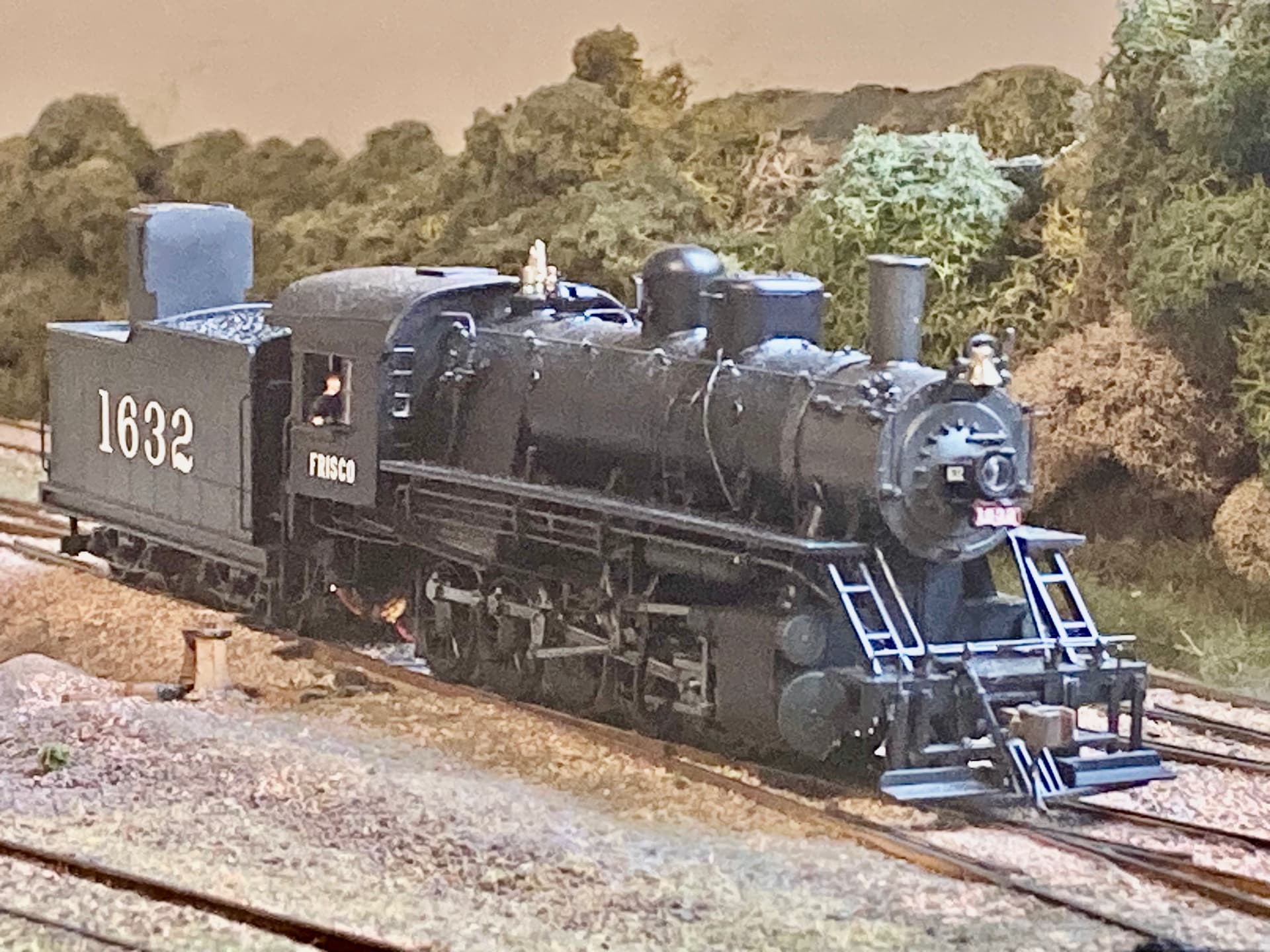
I think this model is close enough to do the SP engine. Don’t worry, I’m also getting both Frisco Road numbers . :joy:

5 Likes

I forgot that the roundHouse Harriman series also included a combine of which I have a couple

1 Like

Even more random photos:

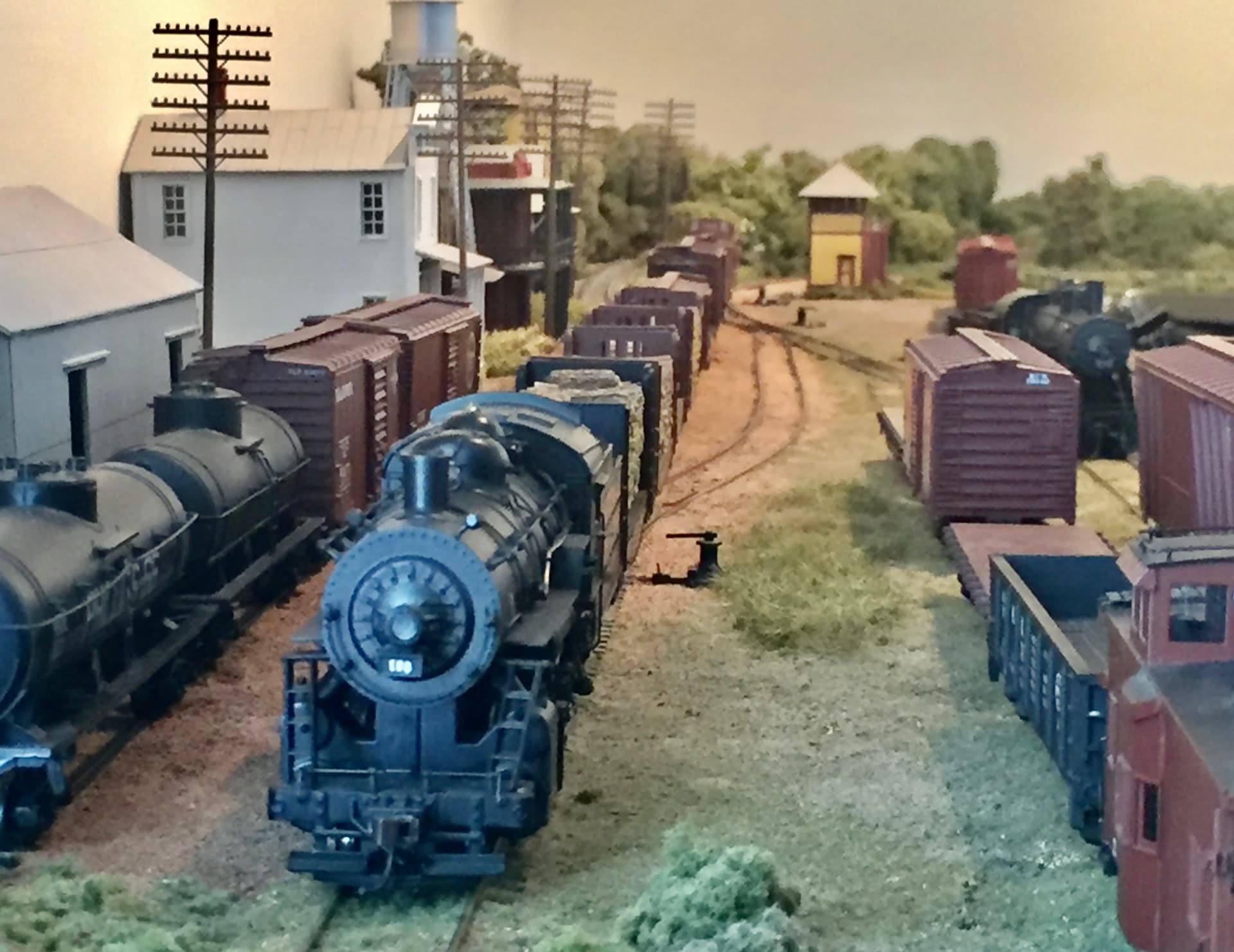
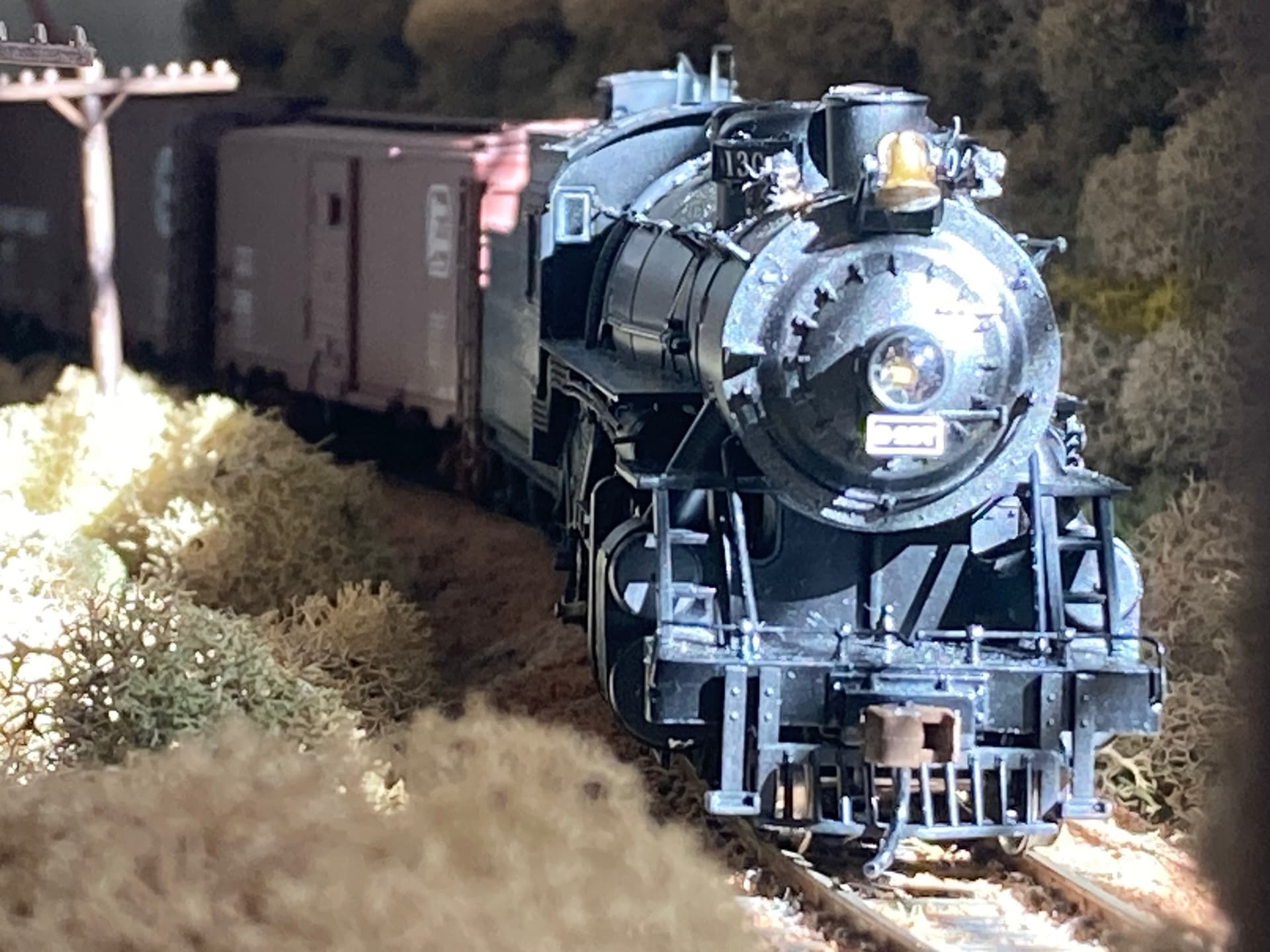
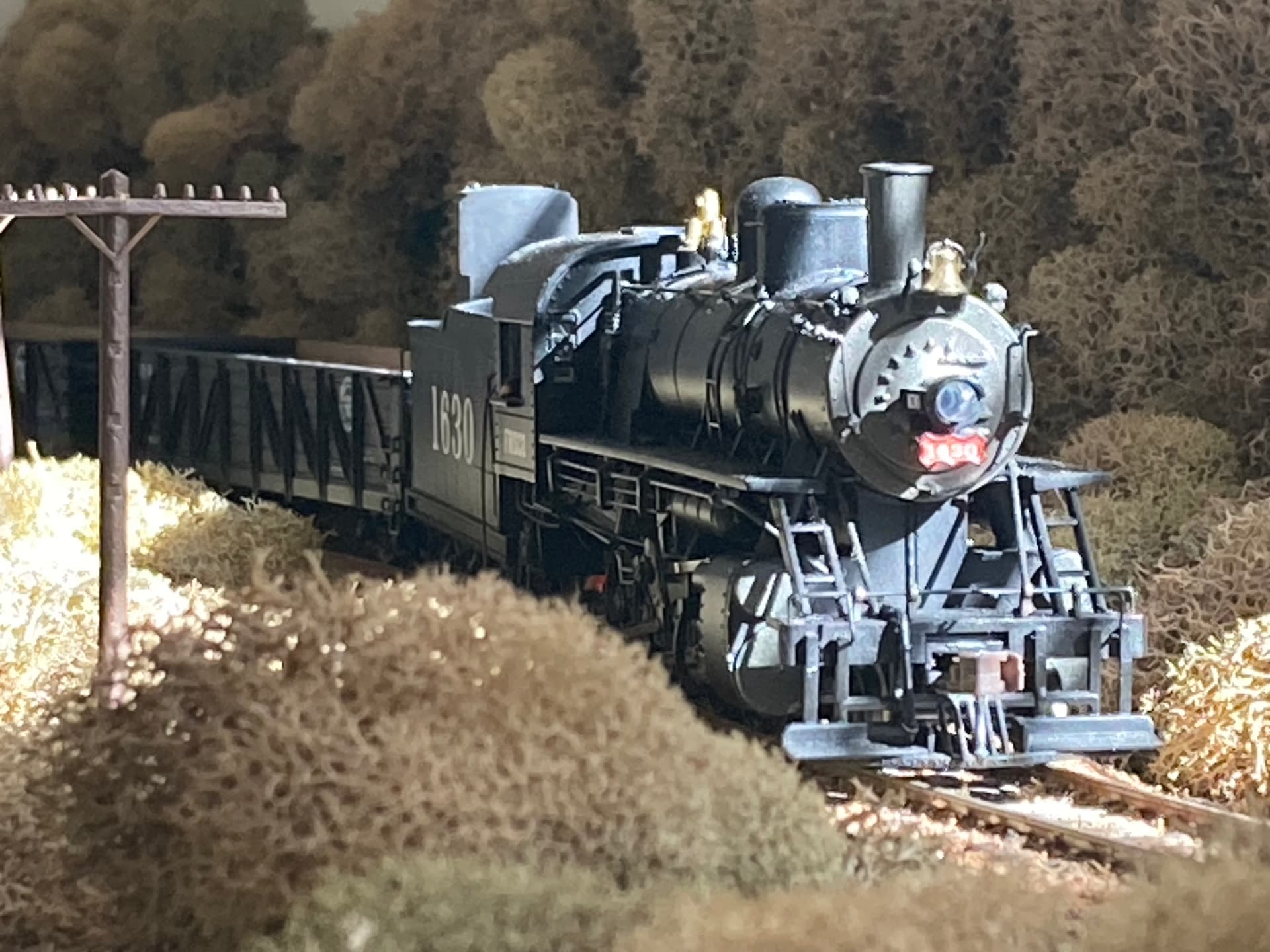
A Missouri Pacific consolidation pulling into Thunder Grove, at the end of track. The end of the layout is just out of the photo at the bottom.

This photo is quite old, Thunder Grove has changed some since then. The white wooden store was removed from the layout when I began to put a size limit on structures to help a sense of distance in a constricted space. It’s a Walthers kit, quite nice, well engineered, and really improved by white paint, which most wooden buildings were. But it was just too big. I have it taken apart now and I’m getting ready to try to take the second story off to create a one story building which will look a lot better.

The interlocking tower in the distance was very painful for me to remove. It’s a Plasticville kit that came with my very first HO train set when I was 11 years old, and has managed to survive all this time, close to 70 years. I terribly painted it as a teenager and as an adult applied a prototypical Missouri Pacific yellow paint job a few years ago. The tower unfortunately has no real function. The Frisco interchange is back in the woods out of sight and the tower is too far away to be realistic from the actual convergence point. I have the tower carefully stored until I find a meaningful place for it.

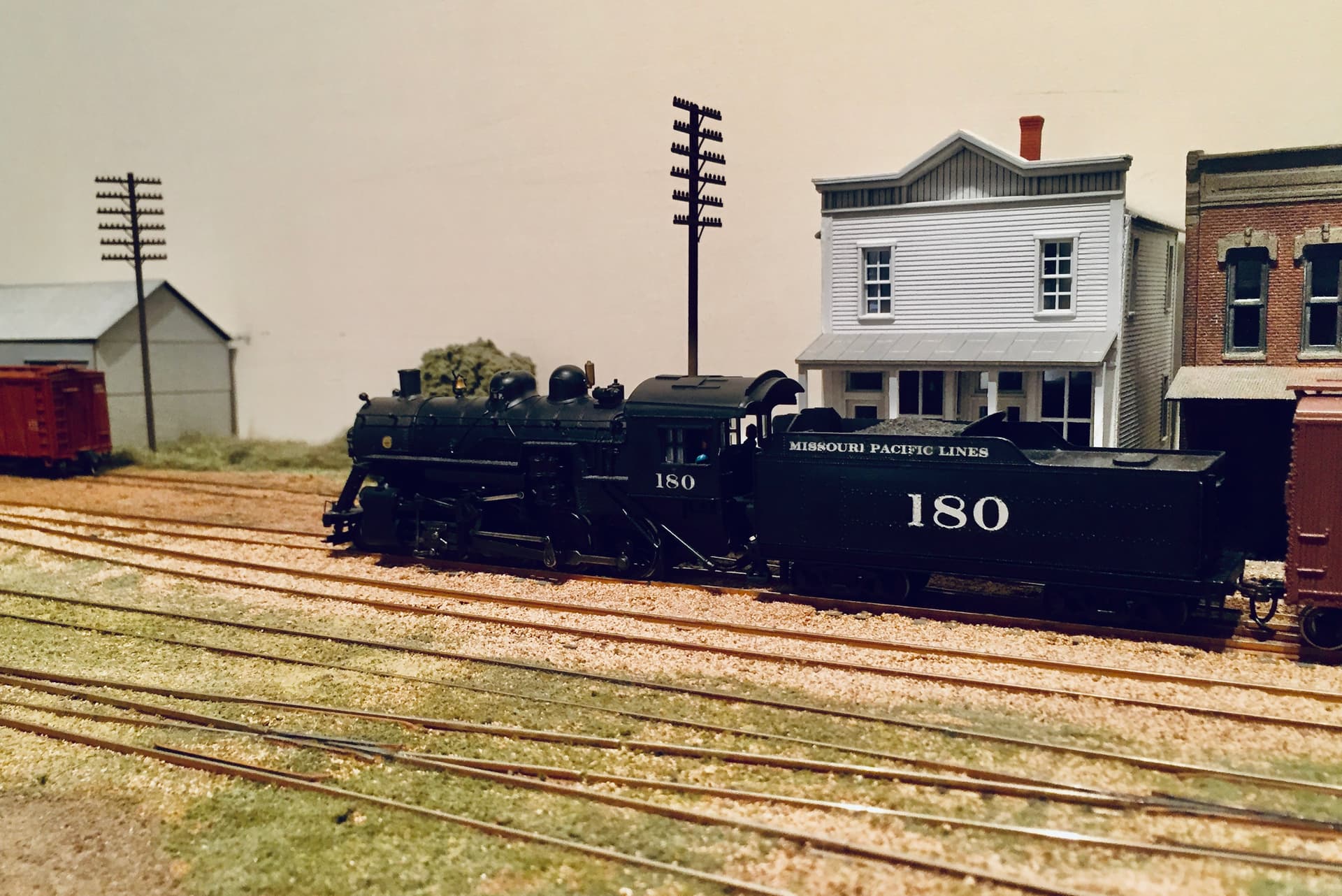
Here’s MP 180 in front of the now-removed white store and Thunder Grove. The brick building to the right, containing the Ratland Cafe, is as tall as the store but it’s only about half as wide so it’s not as overpowering. It was a DPM kit I saved along with a water tank from an agonizing death when the old club was dismantled.

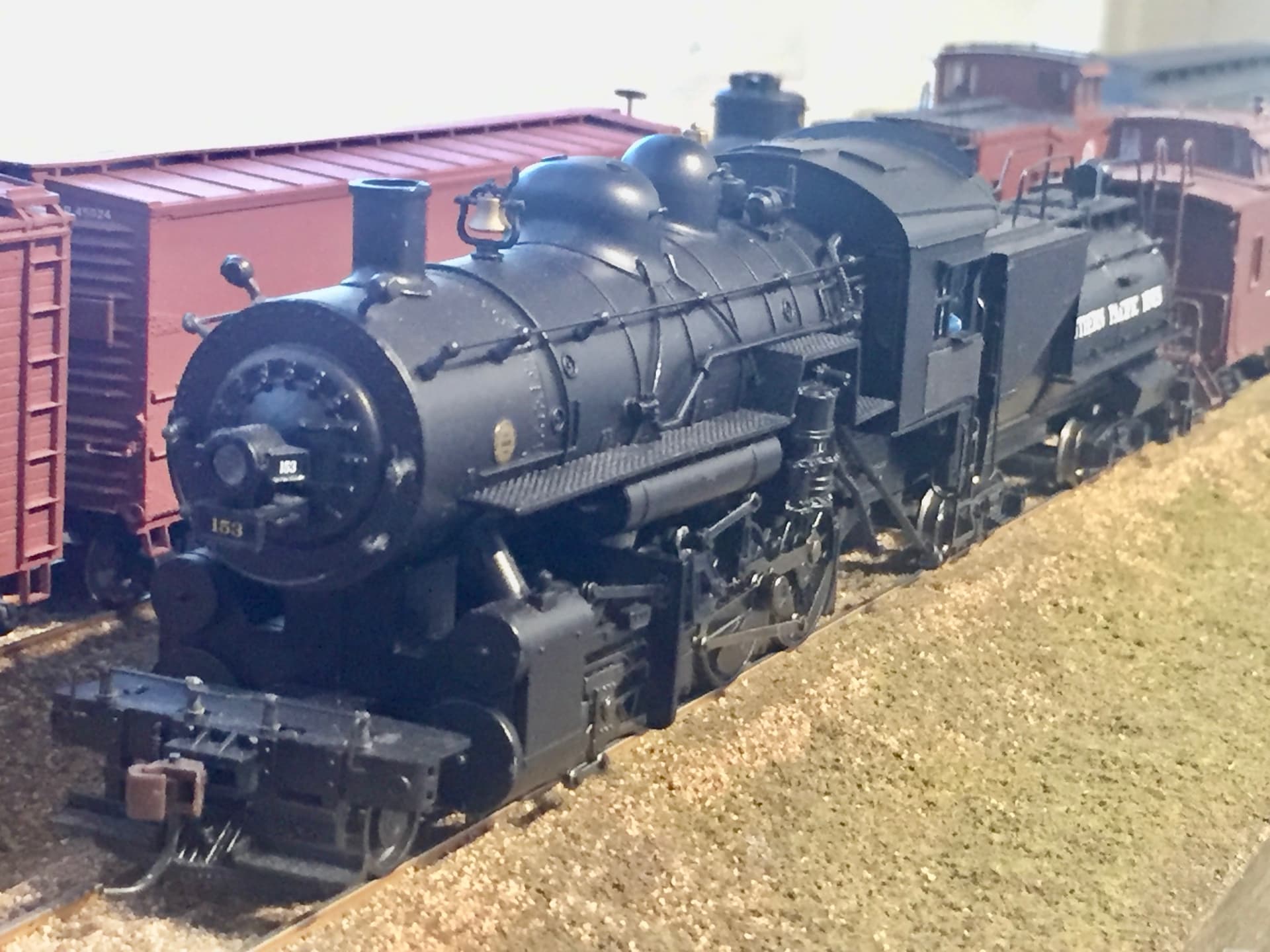
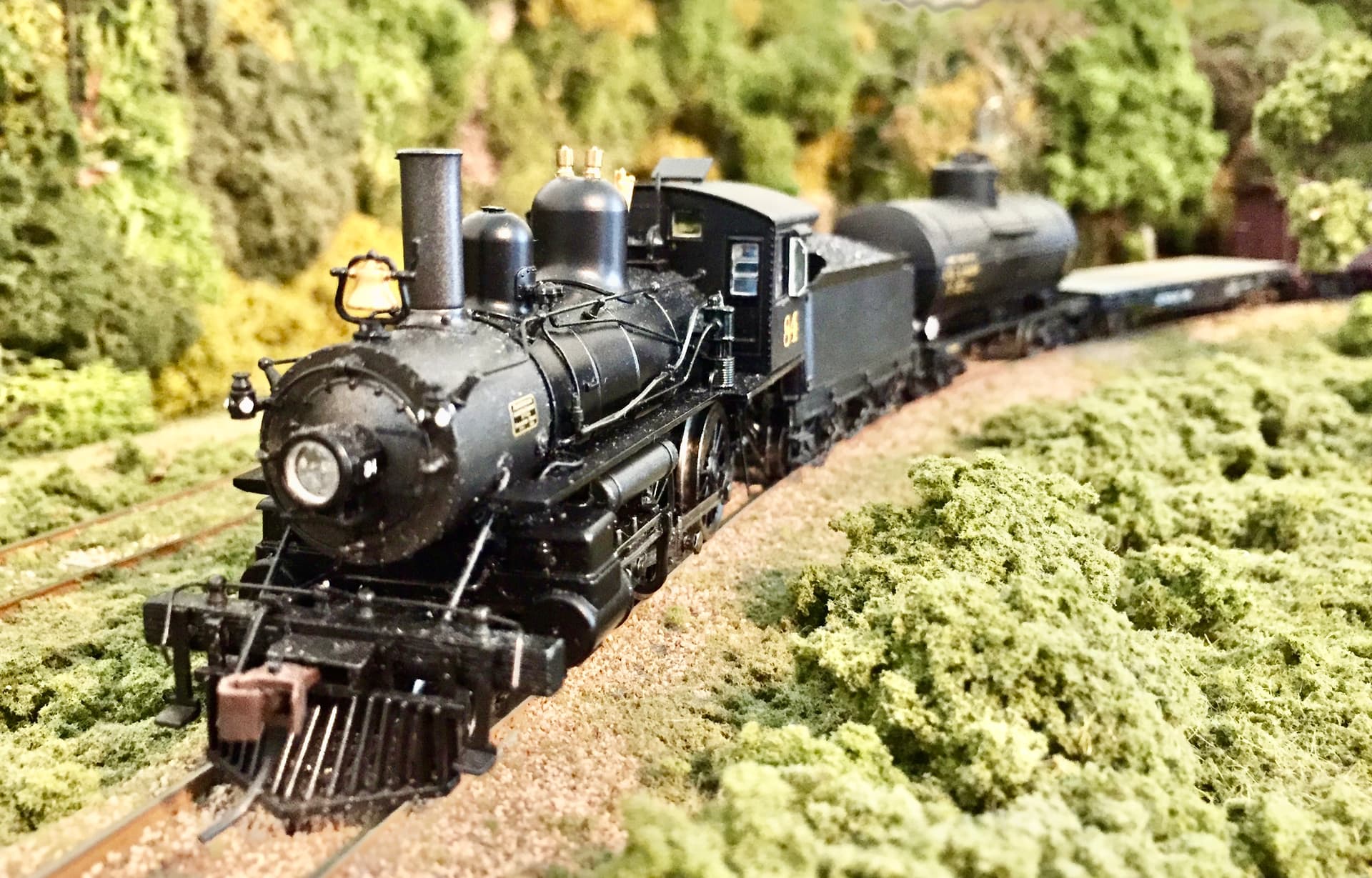
A Texas & New Orleans consolidation in the Midland yard. This is a Bachmann consolidation with a Vanderbilt tender that Bachmann used to sell back at least 10 years ago. It needs a lot of work to really be an SP engine and I’m not a really big fan of the SP so I keep putting it off, but the Gulf Coast was blanketed with SP branches and I really ought to have one of their engines. Especially since I have about eight or nine T&NO wood cabooses. The detail is not complete, especially noticeable is the lack of the characteristic sheet metal pilot steps instead of the ladders that the engine comes with. Also, a lot of people believe that SP steam locomotives all had silver smoke boxes all the way back to behind the stack. In reality, only the front of the smoke box was silver, and in addition, that particular affectation only came after 1946 when the SP decided that it very effectively improved visibility of the engine. The Texas and New Orleans was late doing this, so I’m leaving my engine without it to reflect that. Plus, that same year showed the change of the tender lettering from “Southern Pacific Lines” to a larger plain “Southern Pacific.” Fortunately, for me, the tender came with the older style lettering. Unfortunately, for some, the lettering is white when in reality, it was a color called “aluminum bronze.” Do you think I care? :joy::joy:

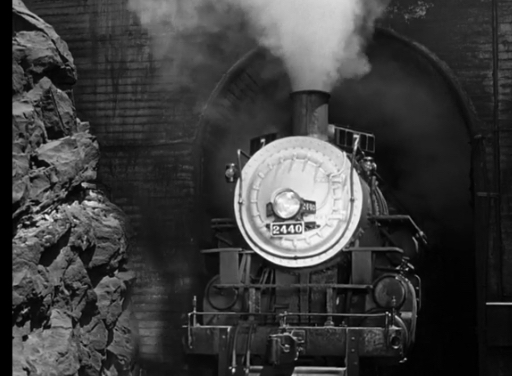
Look at this movie clip of a prototype engine emerging from a tunnel, the silver front really jumps out in the darkness.

7 Likes

More random photos - 3

I’ve just about shown everything there is to show on the layout and tell all the stories that could be told. But there are a few random photographs here and there, I’ll put them up if y’all don’t mind.

Frisco decapod in the Midland yard. This version of Bachmann‘s 2-10-0 has always been my favorite.

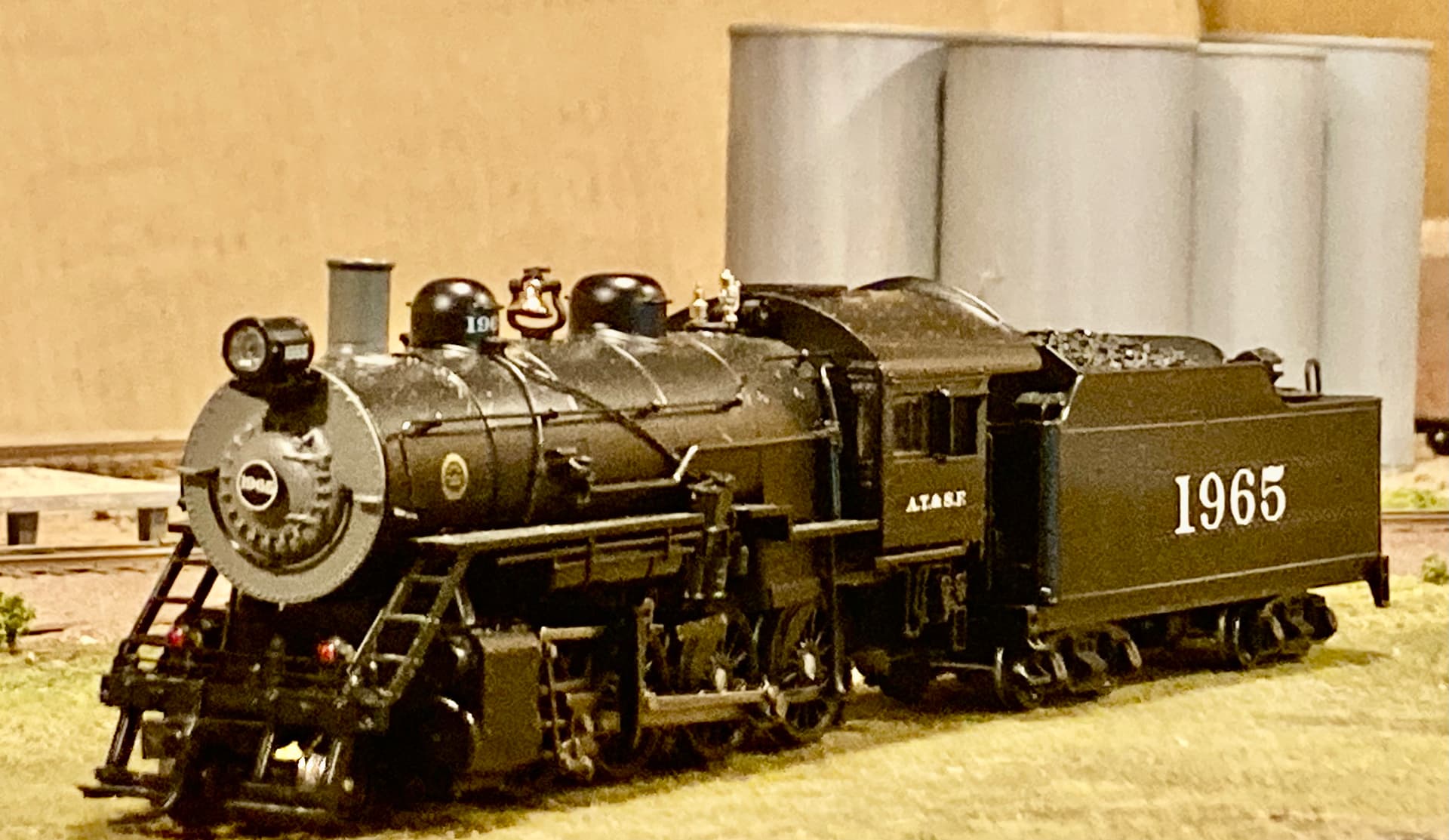
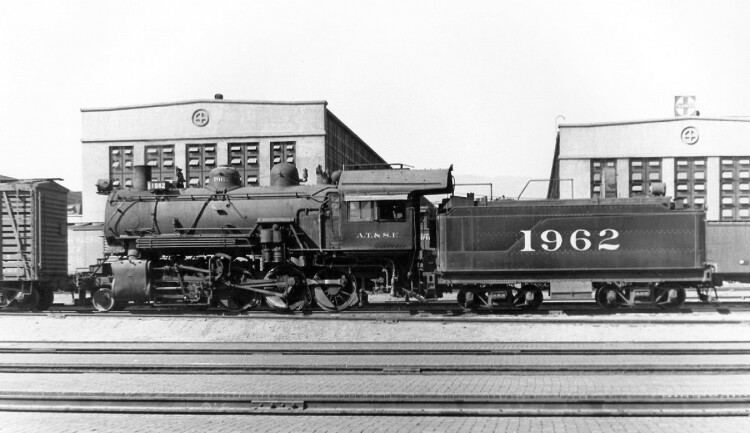
Santa Fe consolidation on loan to the company, shown here on the Gulf Coast Extension.

This is a Broadway Limited engine that they made with as little work as possible, converting critical details of their PRR engine to make this as generic an engine as they could without much effort. But in the process, they came pretty close to creating a Santa Fe locomotive. Check the prototype photographs.

Although my primary goal is to somewhat recreate a Missouri Pacific branch, if something ran in Louisiana, I can have it on my layout. And very few people know it, but the Santa Fe did stick its toe about 20 miles in Louisiana to serve a military base and some timber resources.

I bought two of these engines and they have been a disappointment in operation, mainly because they can’t move an inch or two without stalling on something. I know that a current keeper will fix that, but I just haven’t gotten around to it. These are good looking engines and I have the wood cabooses to go with the engines.

5 Likes

A busy morning at Laskey. Two eastbound trains closely following each other, emerging from the Metairie Ridge tunnel and approaching the depot. Photograph shot in natural light. That natural light happens one day a year for about four or five minutes and that’s it, if you don’t get the photo then you’re not going to get it.

A westbound train departs Laskey after meeting both eastbounds.

I wish I’d had the sense to raise the blinds to avoid the shadows. It would’ve been so easy.

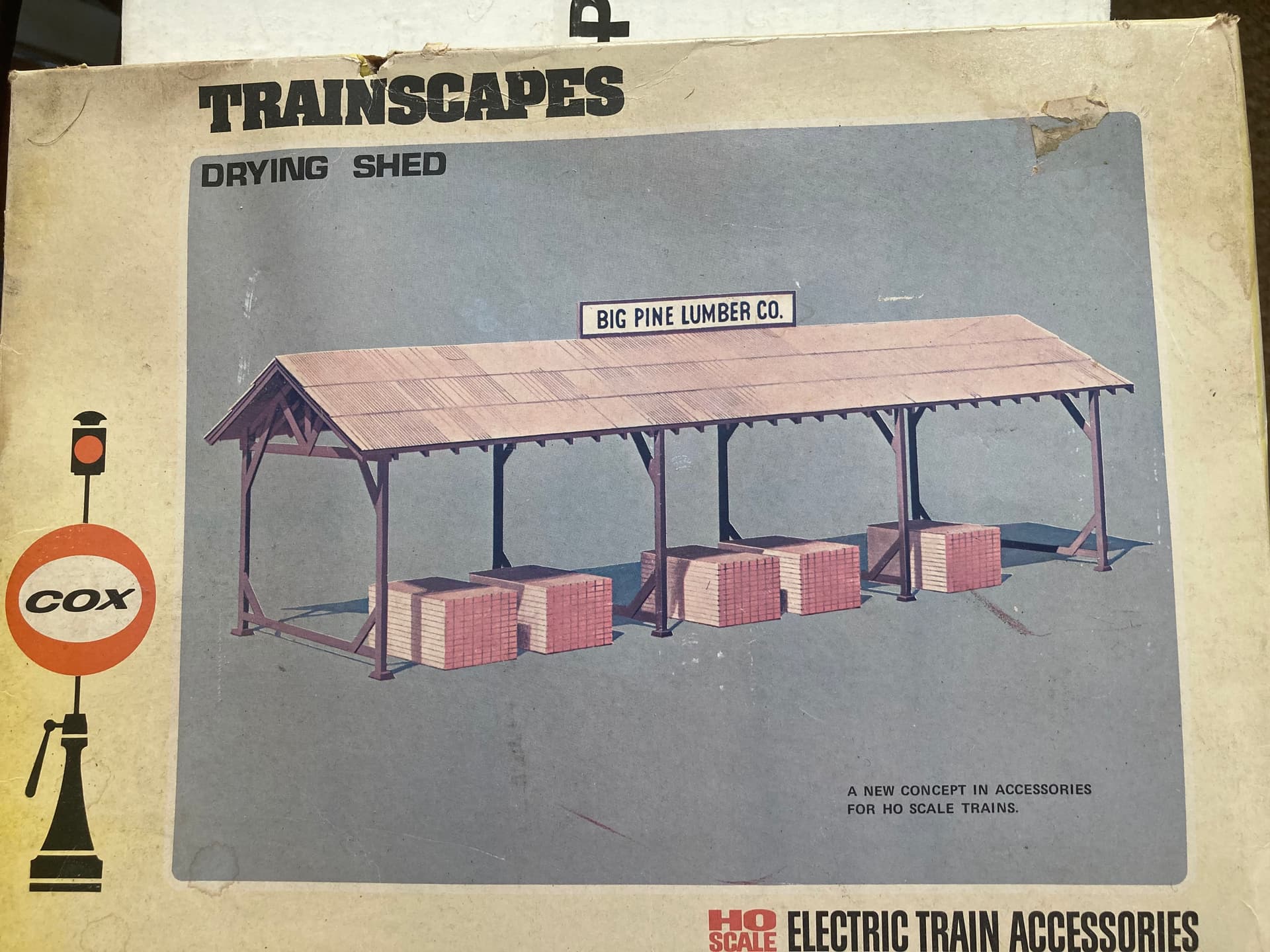
Railfans at Laskey. I am not a big fan of scale figures on the layouts. Most of them don’t look very realistic, the problem being that they are frozen in a major swing of some pick or engaged in some kind of severe motion of the moment. I read a long time ago in one of the magazines that the most realistic figures are passive, like these railfans. They are the only figures on the layout and the only reason I have them is that they came with some building that was given to me a long time ago.

Here’s my future engine shed, if I ever get around to building that little part of the railroad. Open air engine shops were very common in the deep south. The best part is that you can see all of the shop detail inside it.

5 Likes

On the contrary, I think the shadows add to the drama of the photos. Nice work!

2 Likes

I agree with Mike. The sun and shadows seem to add to the photos!

2 Likes

Even More random photos – 4

The Midland Western is in the movies! I don’t even remember the name of it now, but I’m pretty sure that’s Jimmy Stewart walking in front. I was watching the movie and that stock car went right in front of me. I went and got my camera and had it ready in case it happened again and it did, snapped it right off the TV screen.

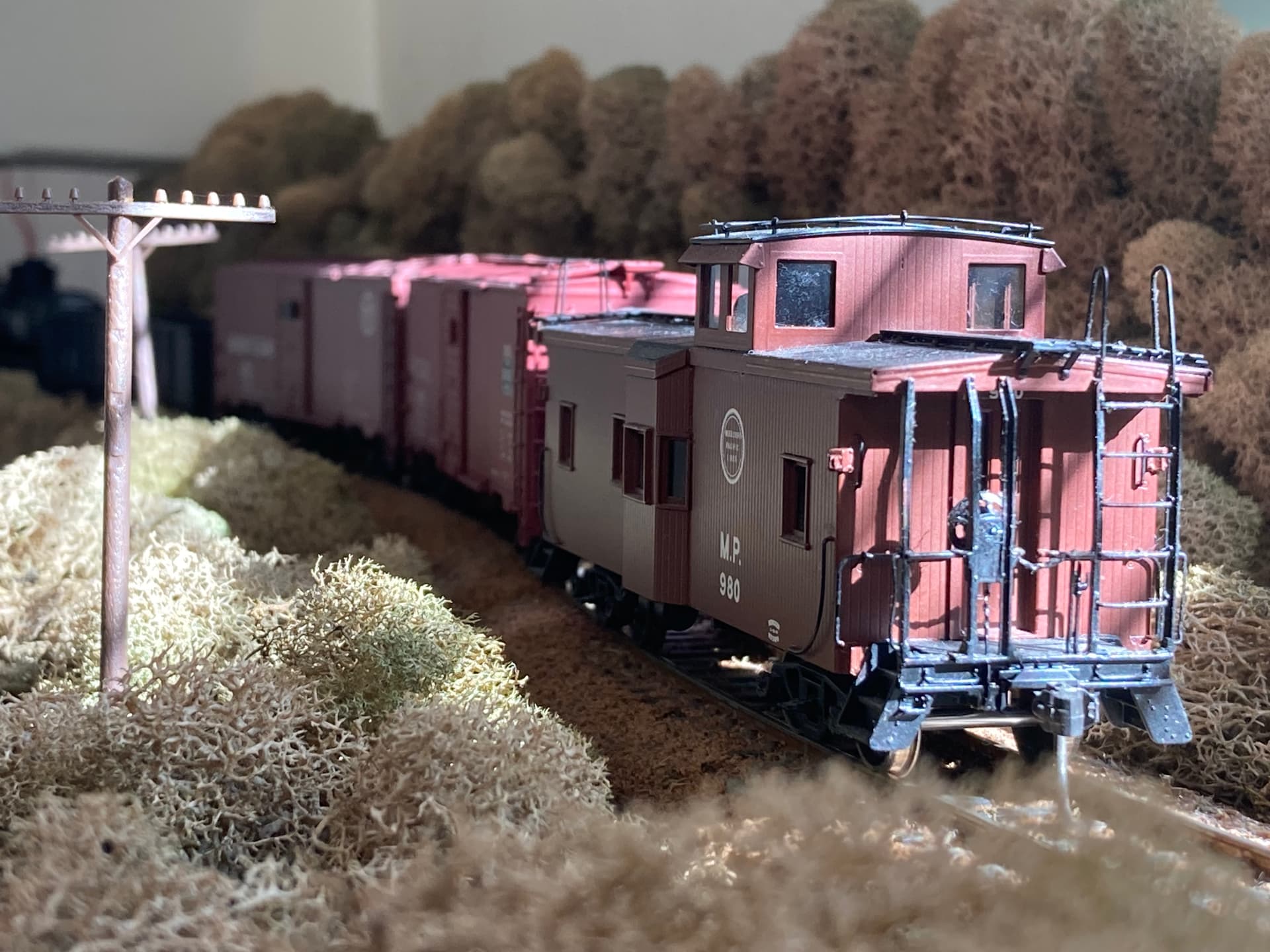
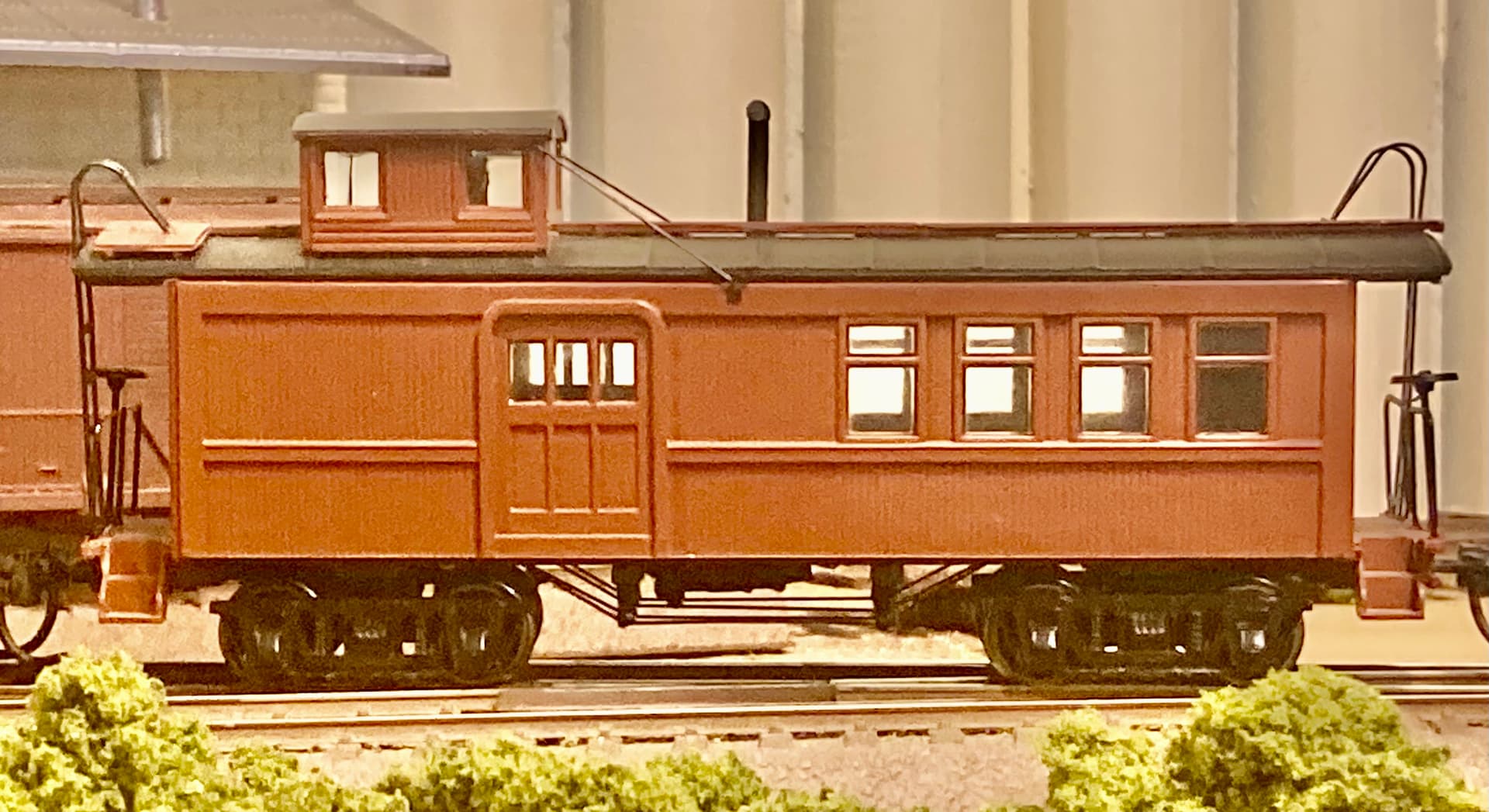
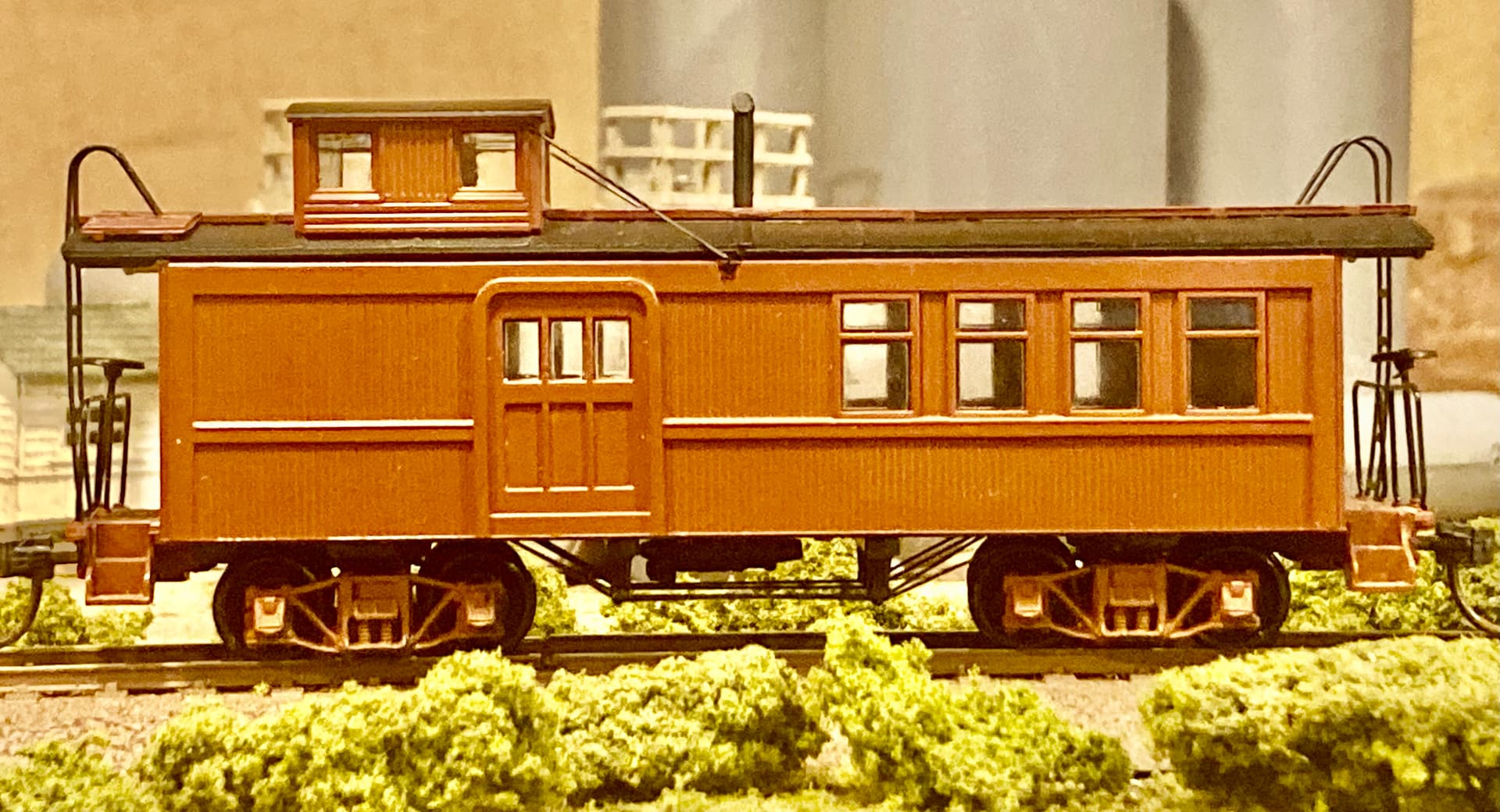
I’ve talked about this roundhouse car before, how adding cupola braces and better end ladders enhanced the car. It comes with some wood beam early passenger trucks, a legacy of its origin as the Sierra combine. I wanted those trucks to use on another caboose project so I put archbar trucks on this car. It changed the character of the car entirely, it really looks like a caboose now. And has that ramshackle short line look that I really want.

The car with original trucks:

With the archbar trucks:

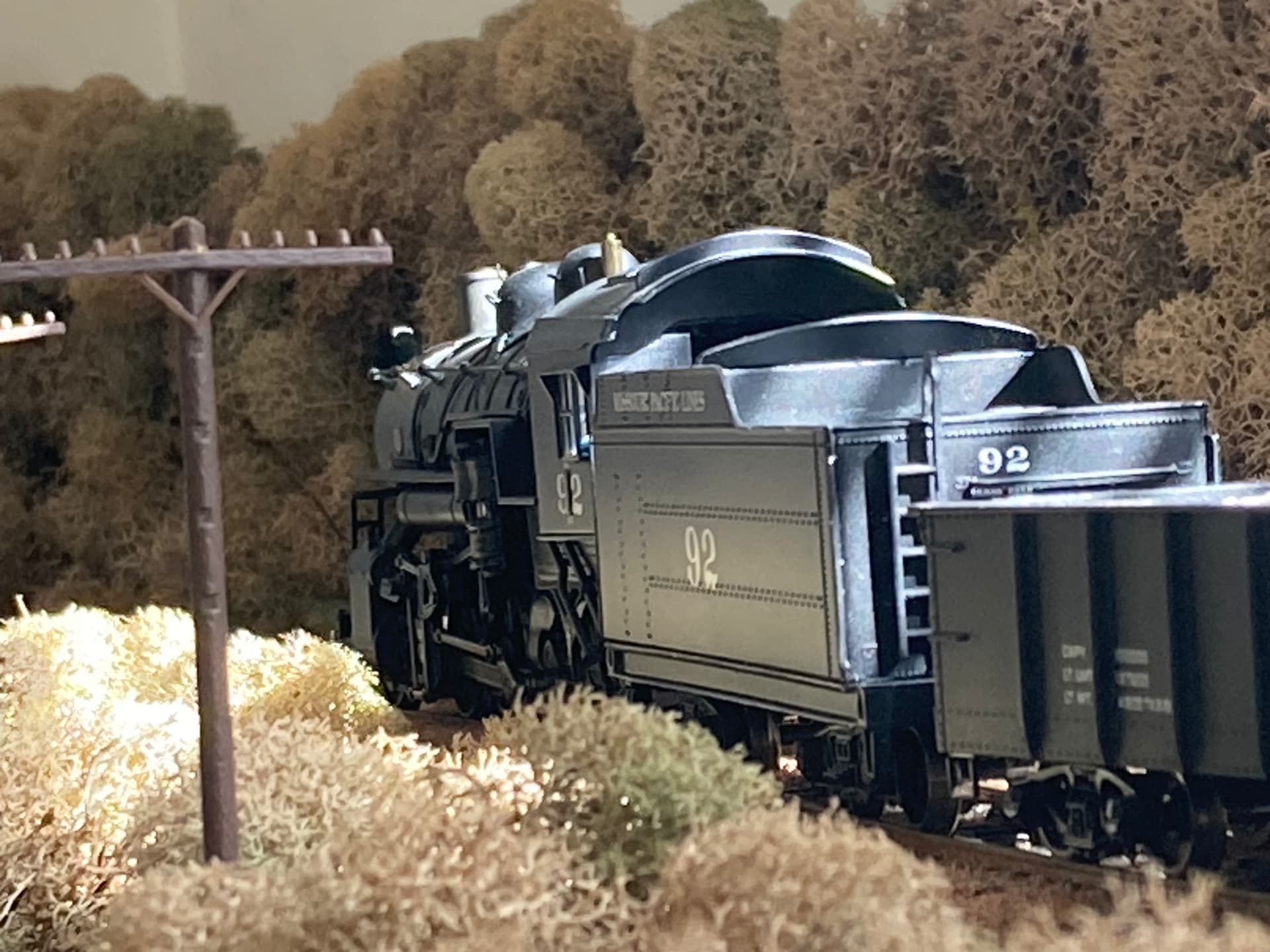
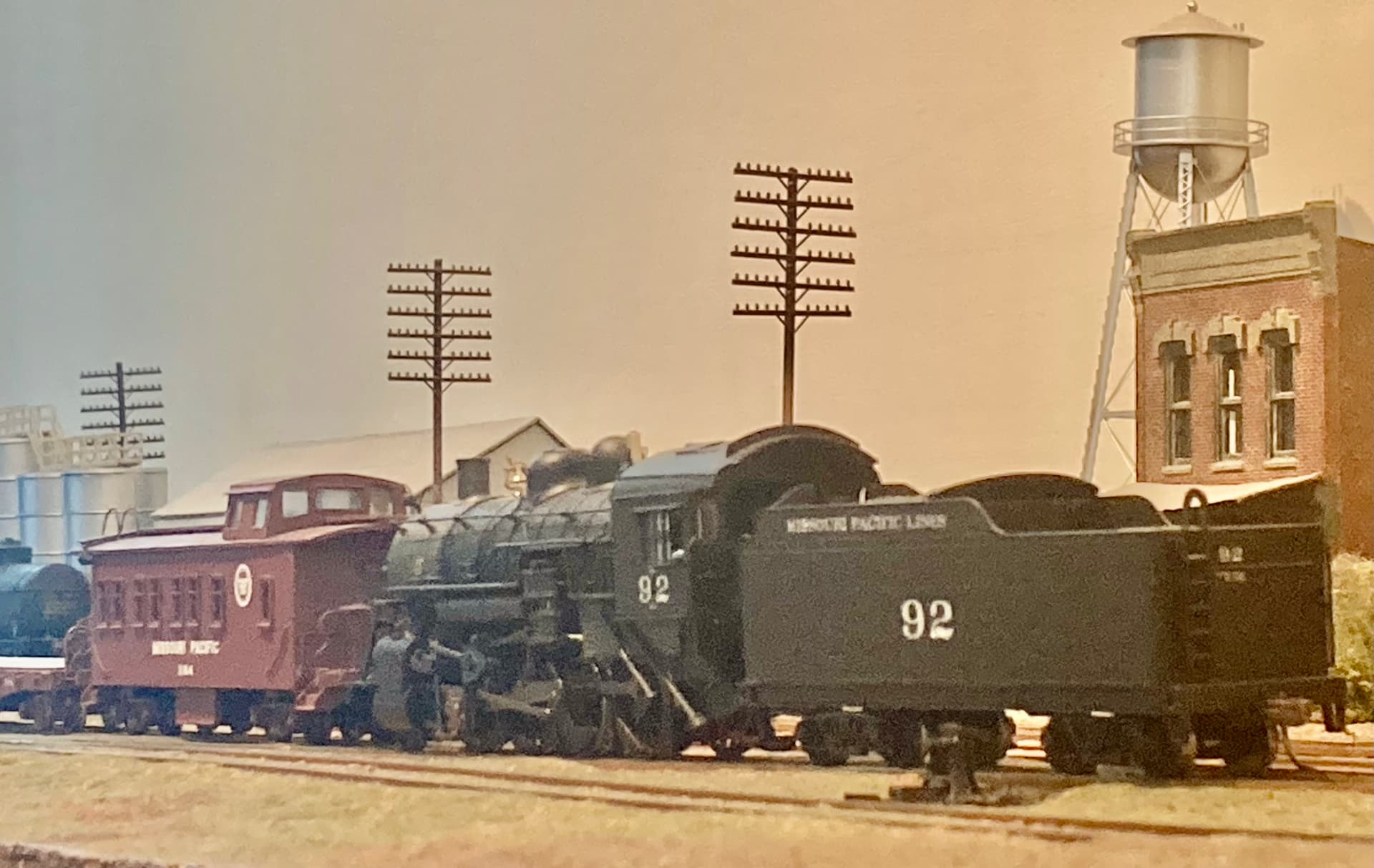
Missouri Pacific consolidation 92 switching in Thunder Grove, before I added the Hardbilt rice elevator. It’s pushing one of the Silver Streak drover’s cars I got about five years ago. The 92 was a holy Grail quest, coming with stock Missouri Pacific lettering, unheard of in the Model Railroad world where Pennsylvania and Santa Fe rule everywhere. It literally took forever to find one, they just weren’t out there. One finally came up on eBay and I snapped it up before anyone else could. It appears to be well sought after by many. You’d think Bachmann would take the cue.

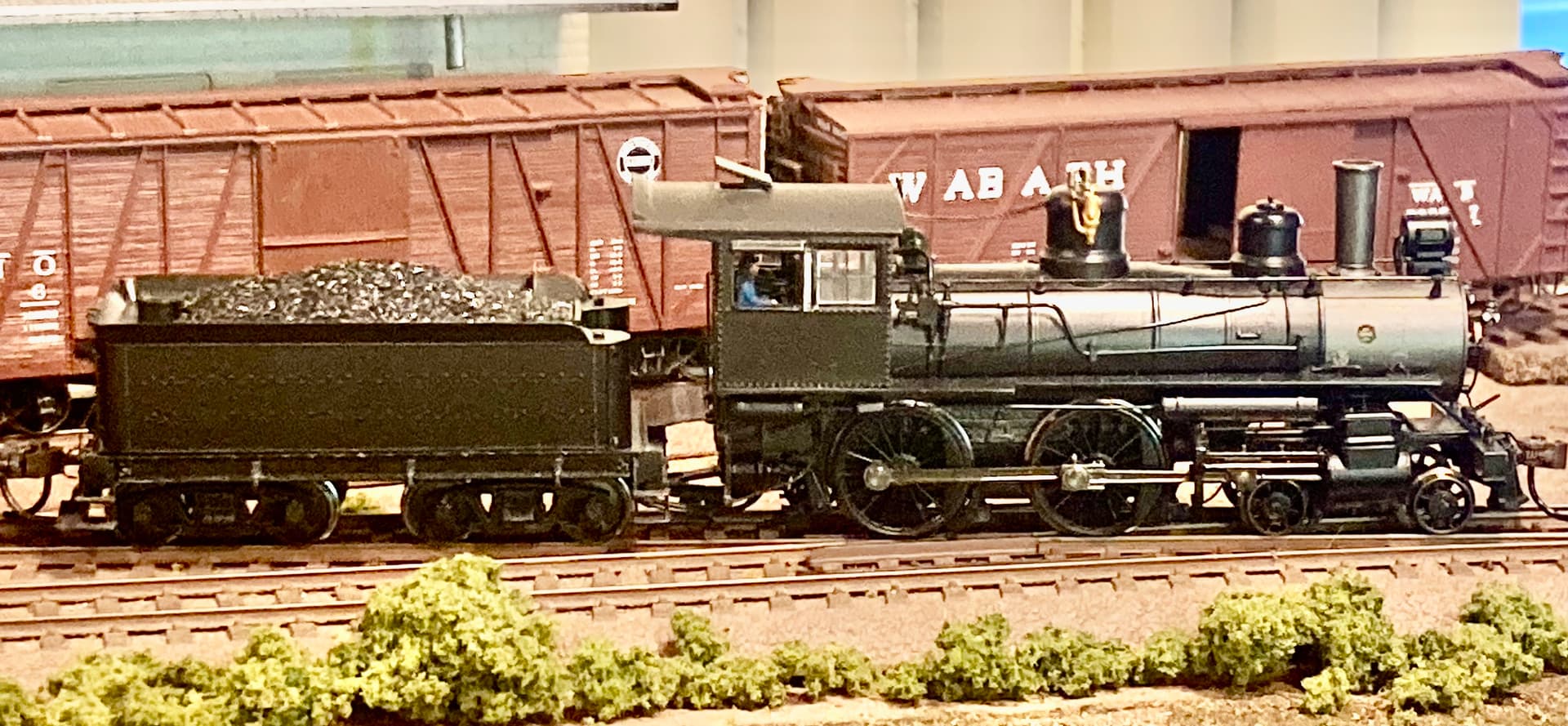
Midland Western 4-4-0 No.6 on the Gulf Coast Extension. This is my much smaller layout at the other house and when I’m able to get downstairs, I’ll take some helicopter views of it, it’s even less than the main layout in Metairie. I have yet to letter it and several other engines, but maybe one day I will. Besides, everyone in Midland knows it’s a Midland Western engine and what the engine number is, so why bother.

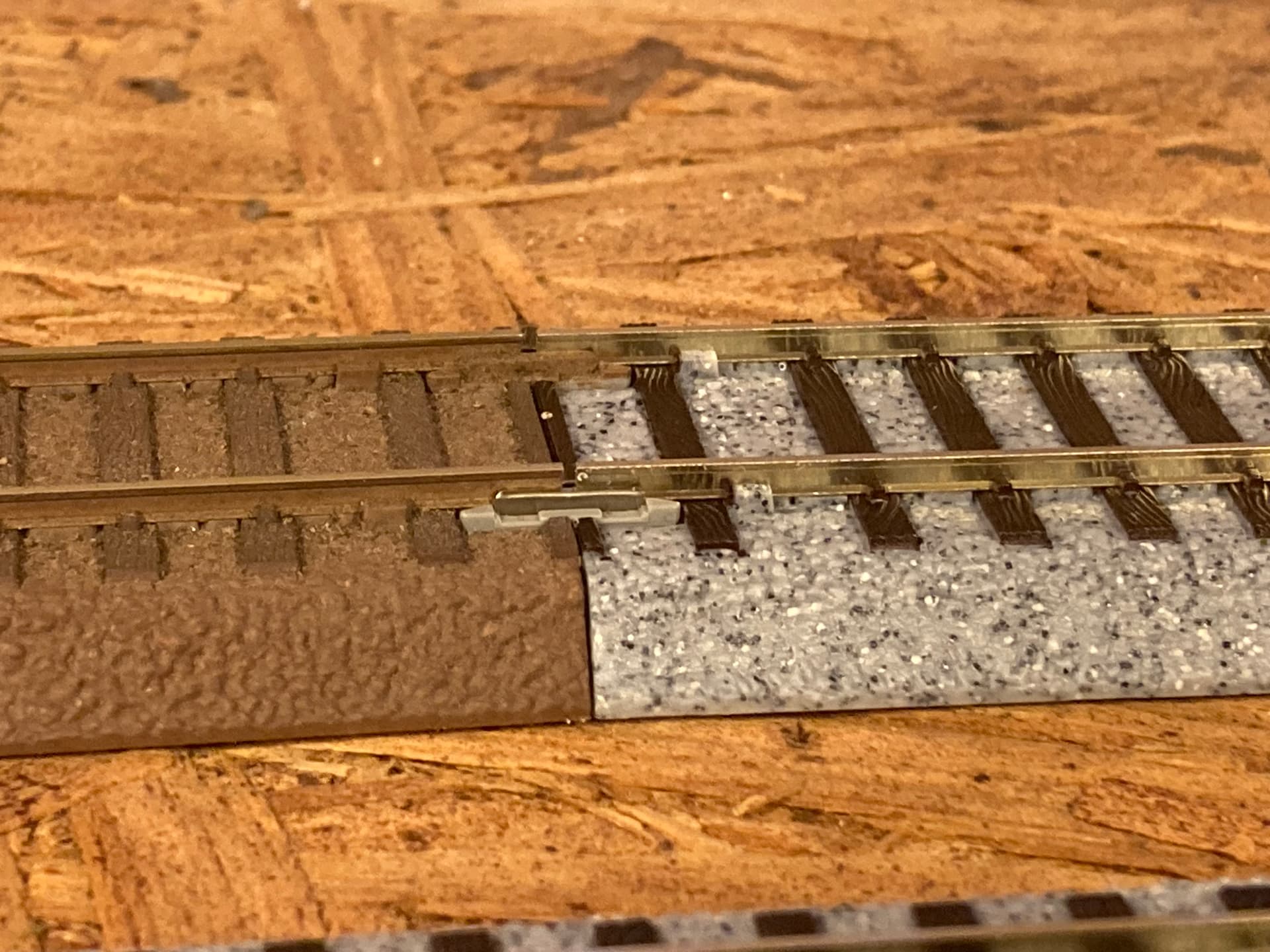
Take notice of the track. That is Kato code 83 Unitrak. The light rail looks so much better than code 100. Plus the wide tie spacing is supposedly Japanese prototype but it also looks very good on a branch line like mine. This layout is in outdoor air and I had to replace all the track on it after about four years outside. The salt air blowing in from the, I’m sorry, Gulf of Mexico, two blocks away just ate up all the switchpoint contacts. So I started over with better track. I painted it with a very light coat of some kind of brown spray paint I had and was pleasantly surprised to see that with the light application, the ties and the ballast had different colors.

Here’s the case to paint that track:

I don’t think I’m going to ballast this track. We’re going to be moving out of this house in about two years and right now I can take it all apart and bring it with me. It may not last that long, but I have zero space in the house itself for anything so this will have to do. Right now it does fine if you keep it clean. And take everything off at night since raccoons get up on it every night walking around.

6 Likes

Still even more random photos –5

The Gulf Coast Extension, being on an outdoor layout under a house bordering on swampy woods, will always have nocturnal visitors jumping up on the layout. Unfortunately, Model Railroading in this environment becomes a little bit like taking out the train set and then putting it away when you’re done. Once I forgot to put the cars away one evening and went back down in the morning, fortunately finding that no one been up there, but the very next night I had visitors on the property.

But this precludes any kind of really fine modeling as far as scenery goes. I have various plans to introduce some scenery, but it won’t be as good as what I have on the Midland Western.

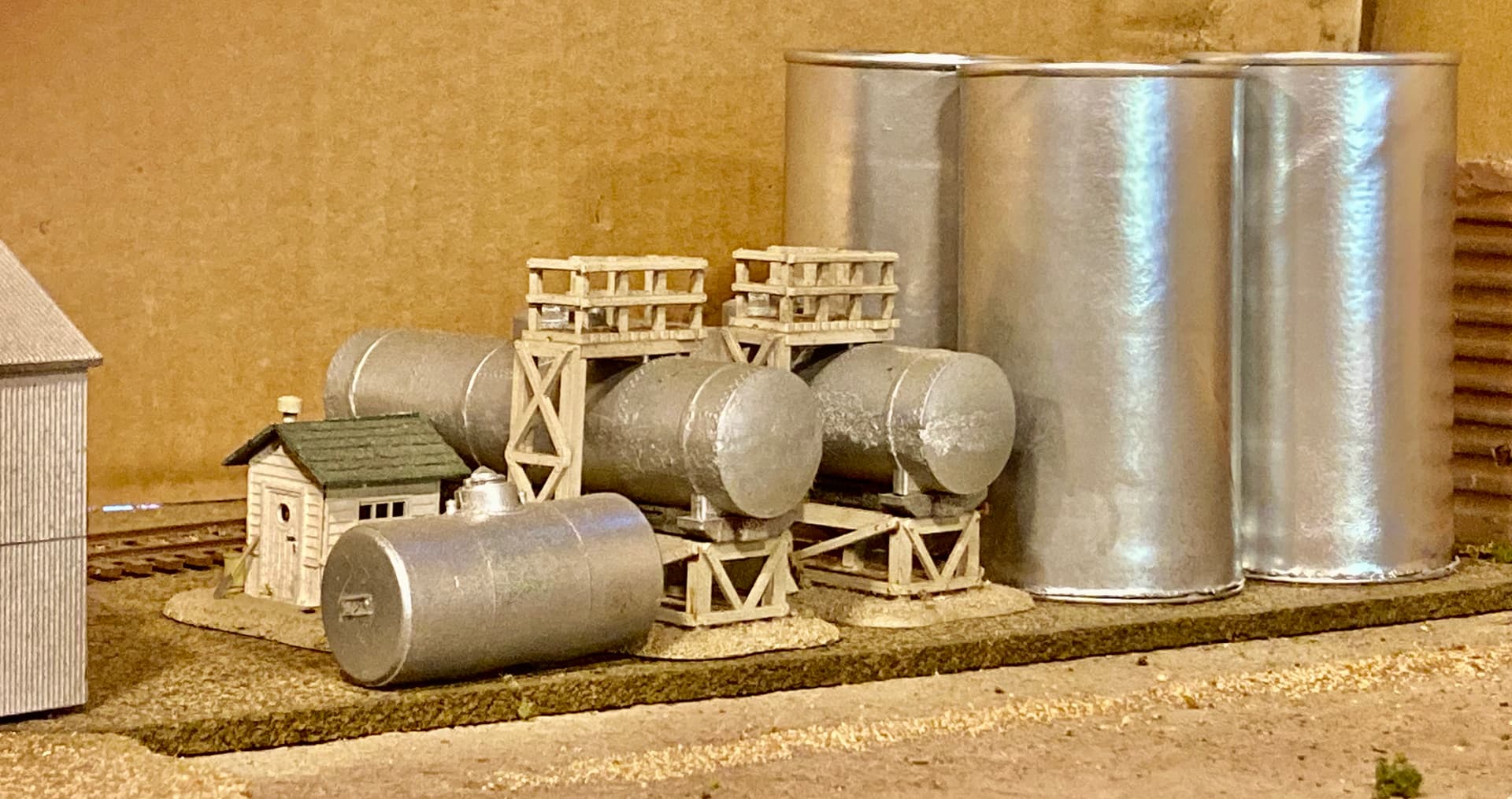
This is a typical structure deal here. It’s a cheap oil dealer kit, amplified with a couple of plastic tanks from somewhere else, and some tall cylindrical tanks that are cardboard cookie containers, cut to the right height and painted. It should come as no surprise that the name of this customer is the Cardboard Oil Company. :joy::joy:. If this thing goes to the floor courtesy of some raccoon, no big loss.

This was an earlier iteration until I realized those cookie containers are a lot better. Truly, the Cardboard Oil Company! :joy::joy:. Slogan; “Our oil is as good as the cardboard we ship it in!” :joy::joy:

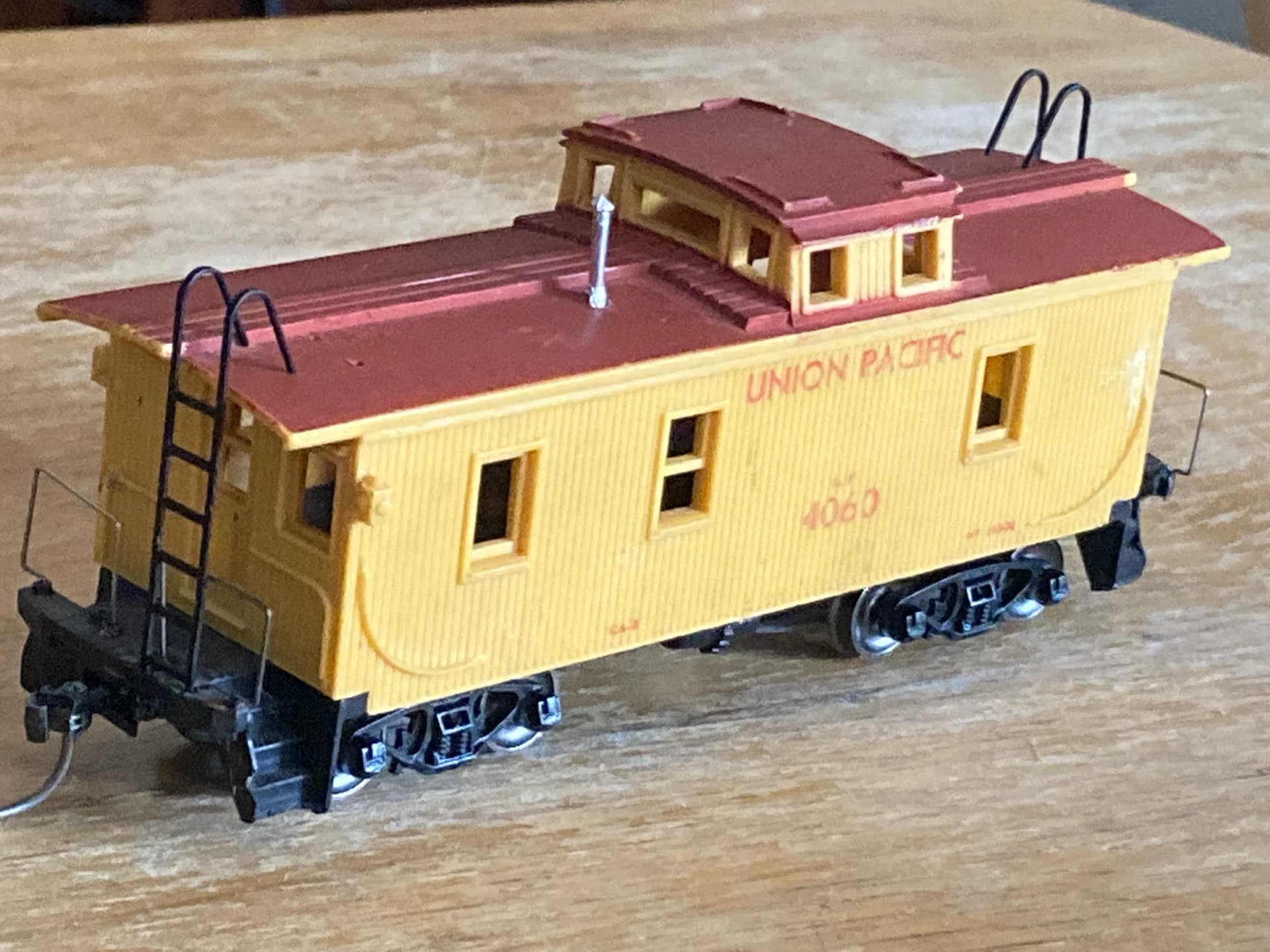
Sometimes in this hobby, you do things just for the nostalgia value of it, and this caboose is one. It’s a Revell car that dates from the late 1950s, I remember them being around when I first started modeling. In recent times, I had a faint wish to get one and when a corpse turned up on eBay for two bucks I had to get and restore it, Everything was broken off of it, I mean everything. I made the new handrails and ladders and put the smoke jack in, put body mounted couplers on it, touched up the paint chips, and such. You can still see the broken steps if you look closely at the picture. I’m not going to fix them, those are proud battle scars. You know that all these cars like this led unspeakably terrible lives in their young days being thrown around and trashed by kids. This one is lucky and in 70 years finally found a path to a beautiful retirement home. I run it every now and then on a freight.

Here’s the car as it arrived:

This is the Santa Fe version of that car, which actually is a Union Pacific prototype more or less. I had one when I was 12 years old. It died a horrible death when I tried to repaint it with some gloss model airplane enamel. This fine stand-in car actually arrived completely intact, how it survived unbroken with all its parts all those years is a miracle. All I had to do was put good trucks and couplers on it. Once in a while, it will run up and down the branch too, in a fit of nostalgia.

5 Likes

Yet even more random photos - 6

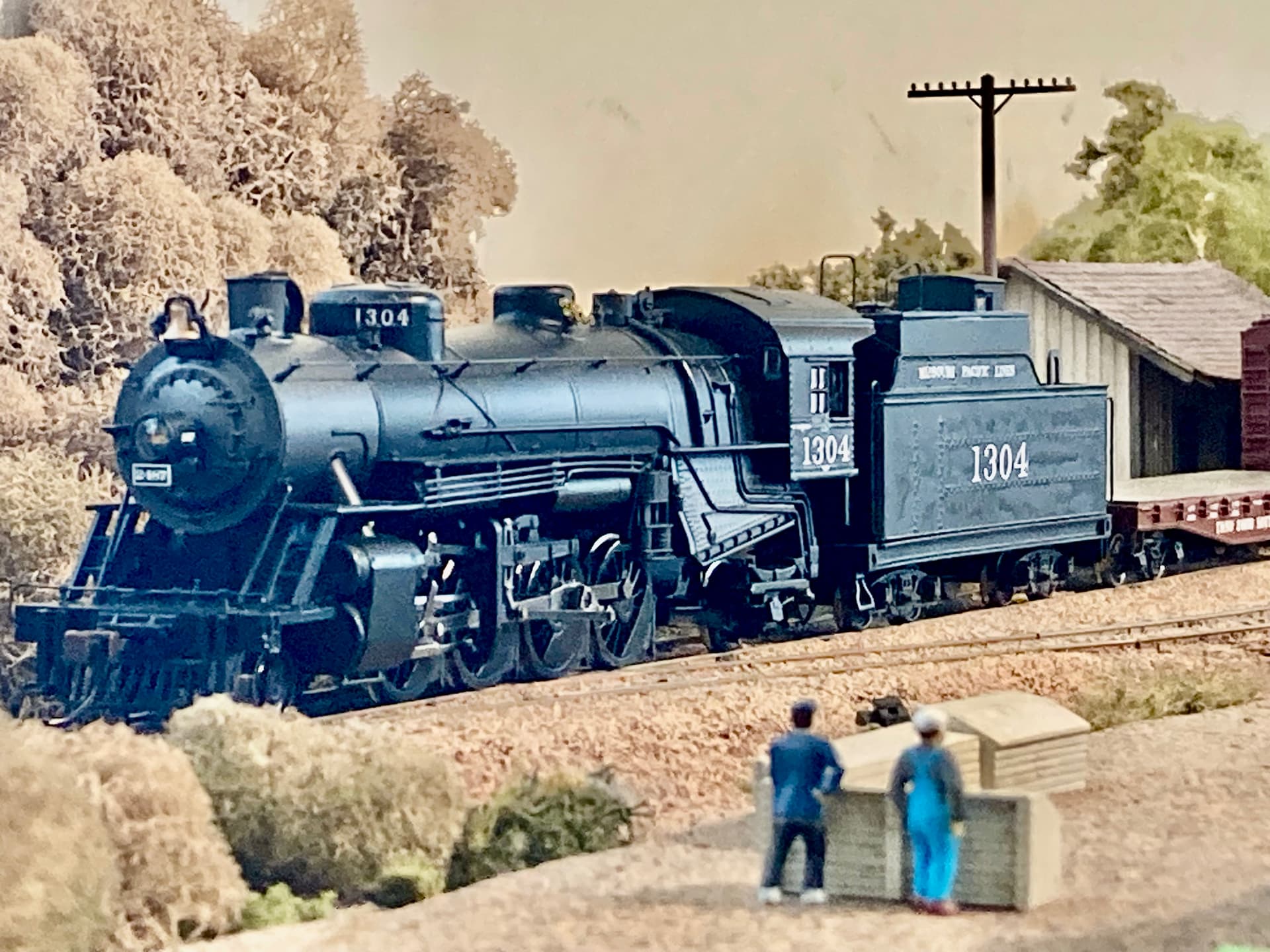
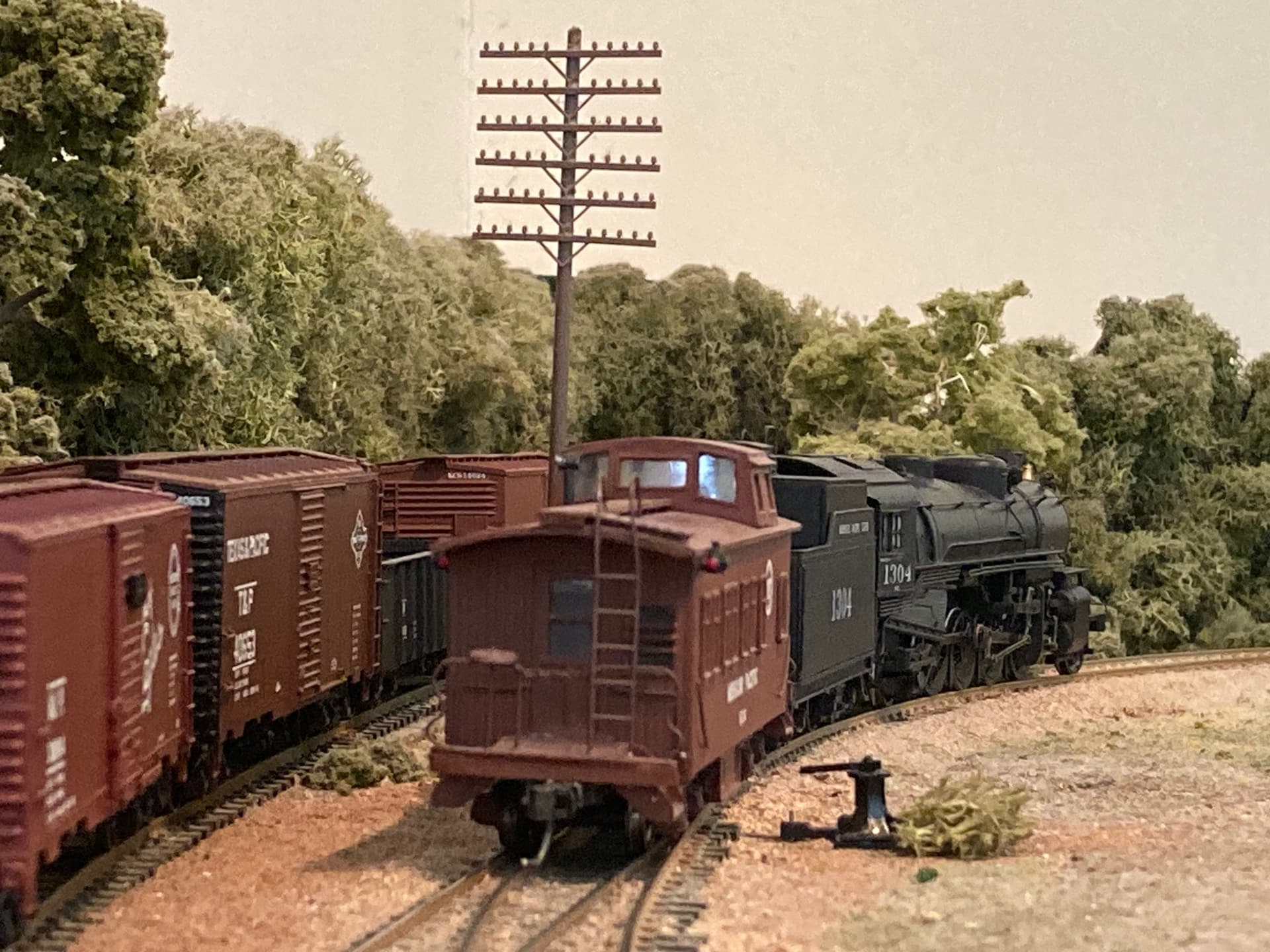
Missouri Pacific MacArthur 1304 at the throat of the Thunder Grove yard, shoving a silver streak drover caboose. Mostly steel box cars are on the Frisco interchange. At that point in time I was setting my layout in the late 1940s. The Route of the Eagles slogan first appeared on Missouri Pacific cars in 1948. More typically my layout is set in the mid-1930s with nearly all wood boxcars.

The multi arm long distance telephone pole lines seldom show on layouts. They were a major feature along the Texas and New Orleans main line in my hometown until they were destroyed in 1964 by a major hurricane. They show very commonly in railroad photography until probably a little earlier than that, being quite late removed around my hometown. These complex poles scream Railroad mainline between 1910 and 1960, and just had to be somewhere on my layout, even though I don’t have a real main line track anywhere.

A few poles still survive here and there without wires and with a few clear and green glass insulators remaining to be taken out by rock throwers or target shooters. There is a collectors market for these insulators, some of them are quite rare and bring high prices in the collection market.

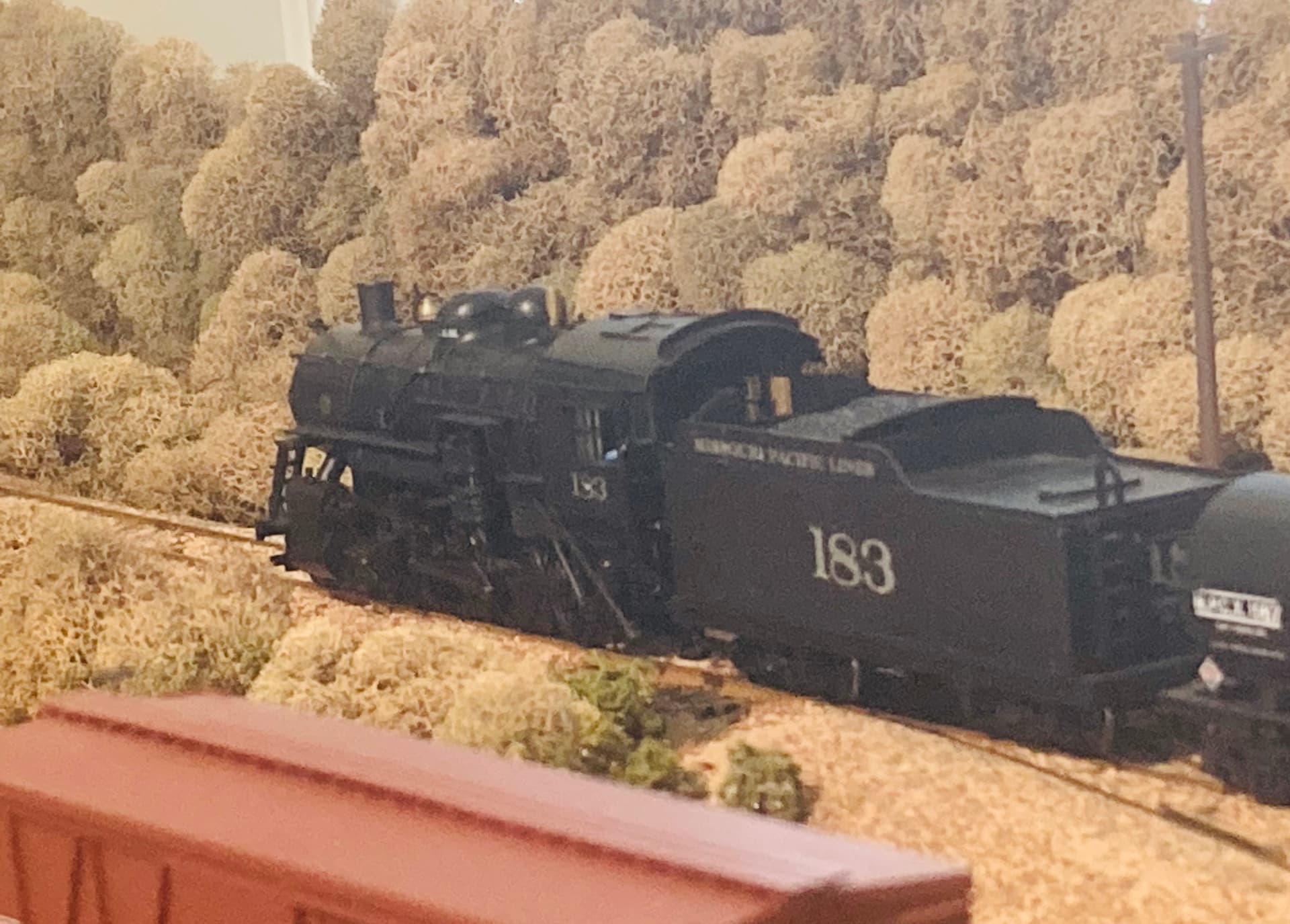
Missouri Pacific consolidation number 183 leaving Laskey westbound:

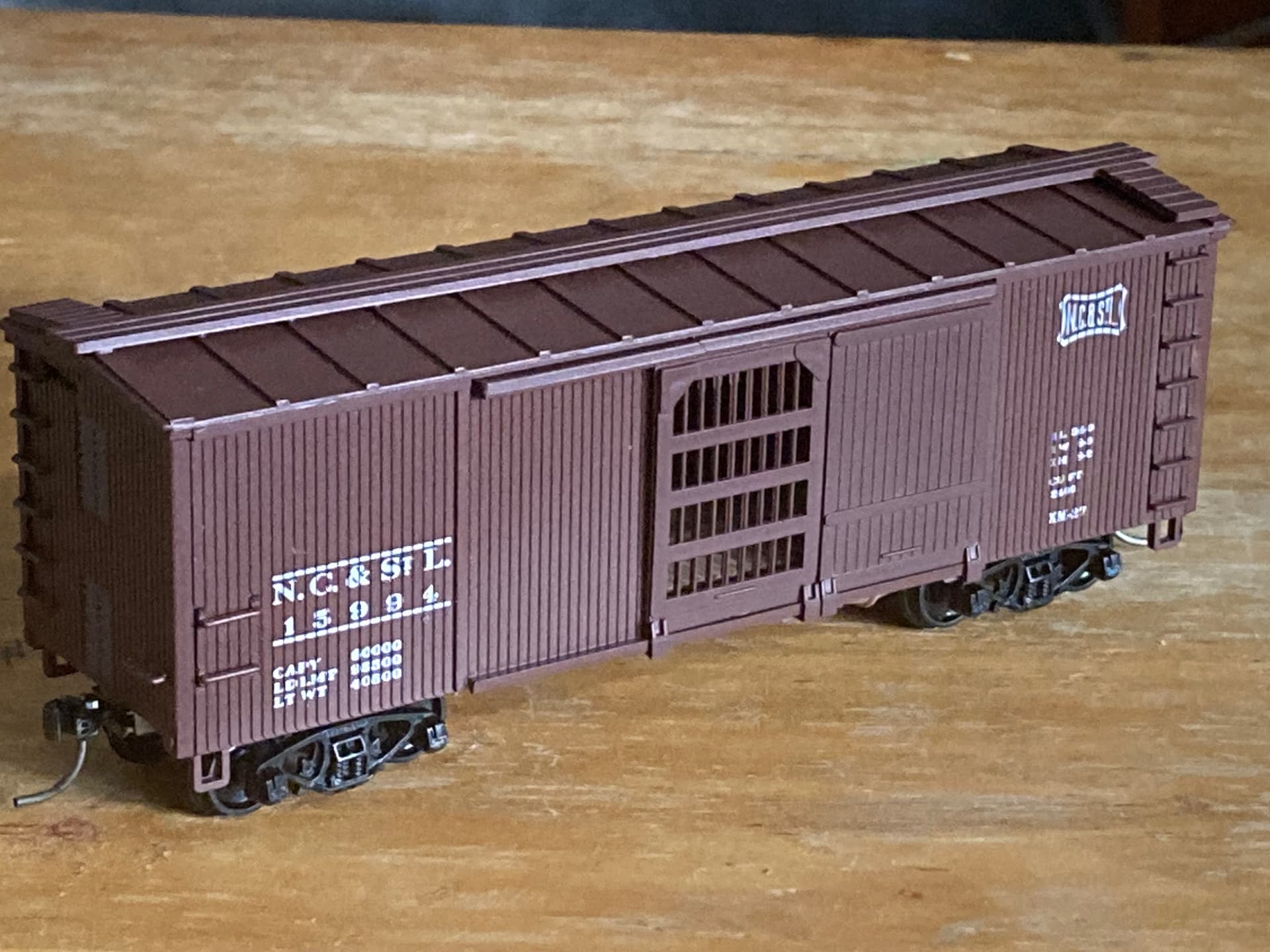
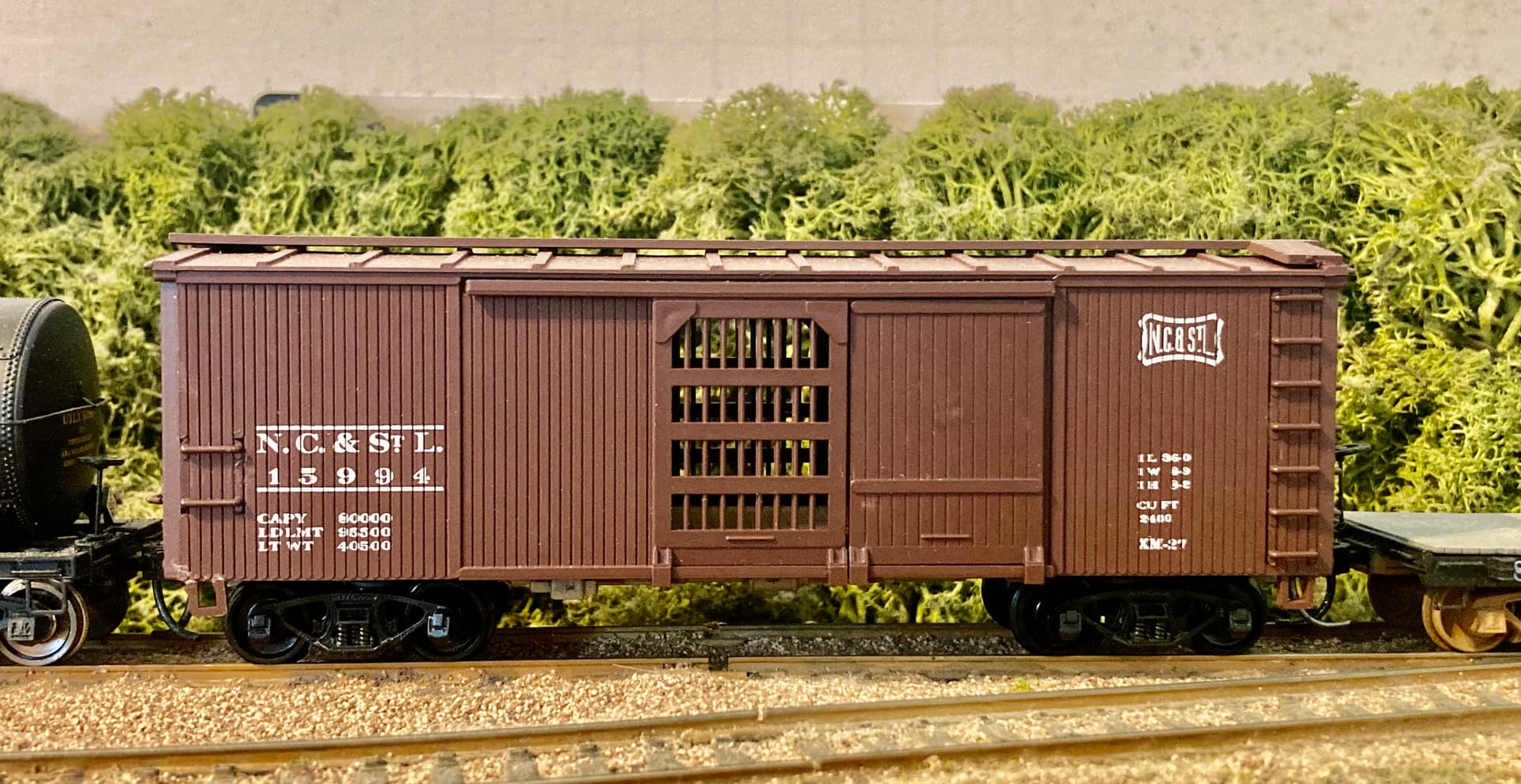
Ventilated box cars were an occasional sight in the southeast until the late 1950s. Their main purpose was seasonal watermelon traffic or other produce, but they also functioned as regular box cars in the off-season, hence the two different sliding doors used, depending on the use at the moment.

I really wanted one bad but they were a relatively difficult find a few years ago. Then three kits formerly offered by Con-Cor landed in my lap in a box of estate stuff. They required a lot of underframe work to sit properly on the trucks and for the couplers to be at the right height, but it was worth it. I also installed Bettendorf trucks on these cars to update them past their original early construction date of maybe around 1910..

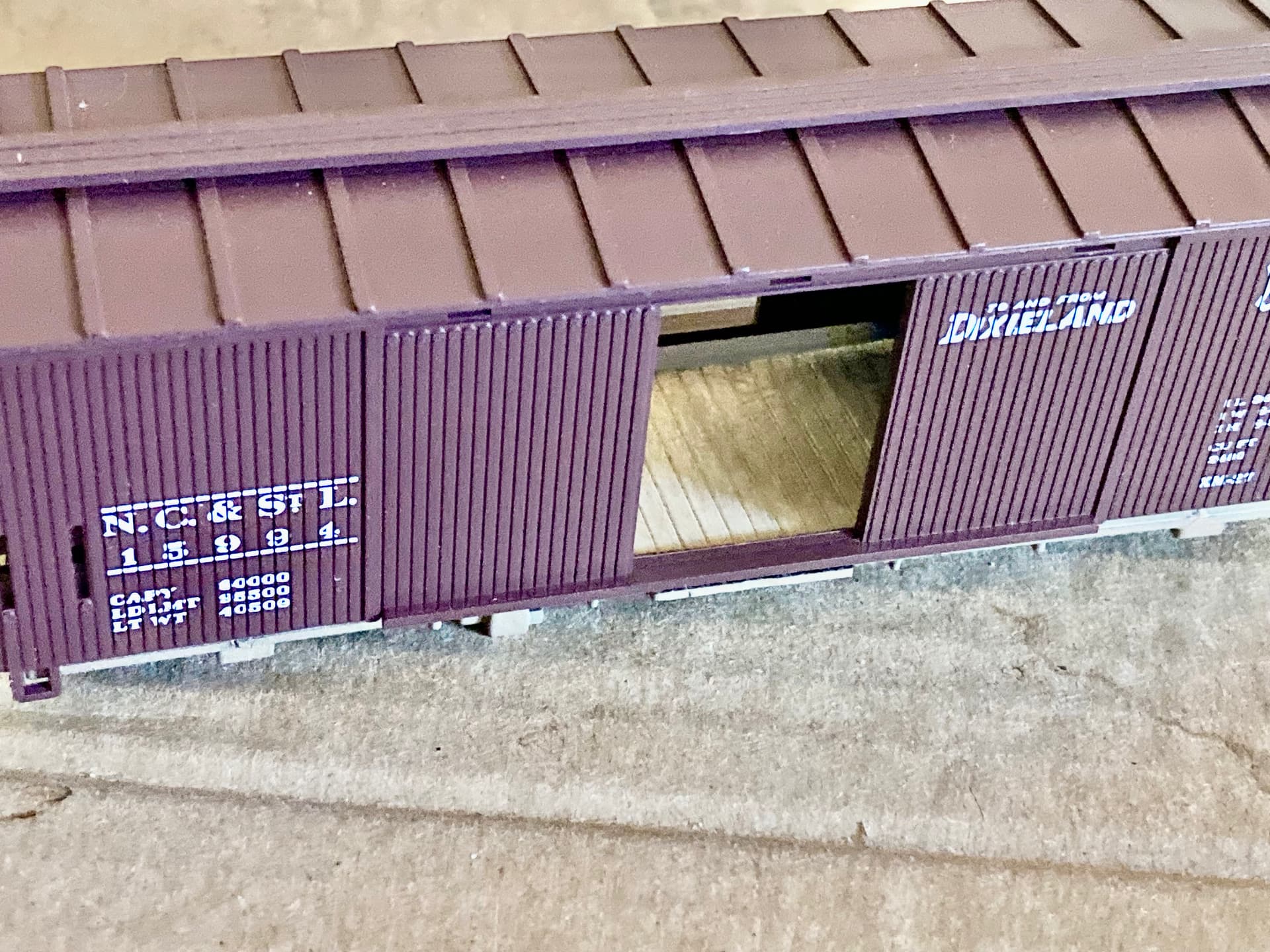
The see-through barred doors required the installation of a wood floor inside the car. It came out better than I thought it would. I very rarely roll them with the solid door closed, seeing the wood floor inside and seeing through to the other side of the car is much too cool.

8 Likes

More photos - 7

I should’ve put this in sooner, a view actually looking through the ventilated doors on the ventilated box car. This is why I’ll never run the car any other way.

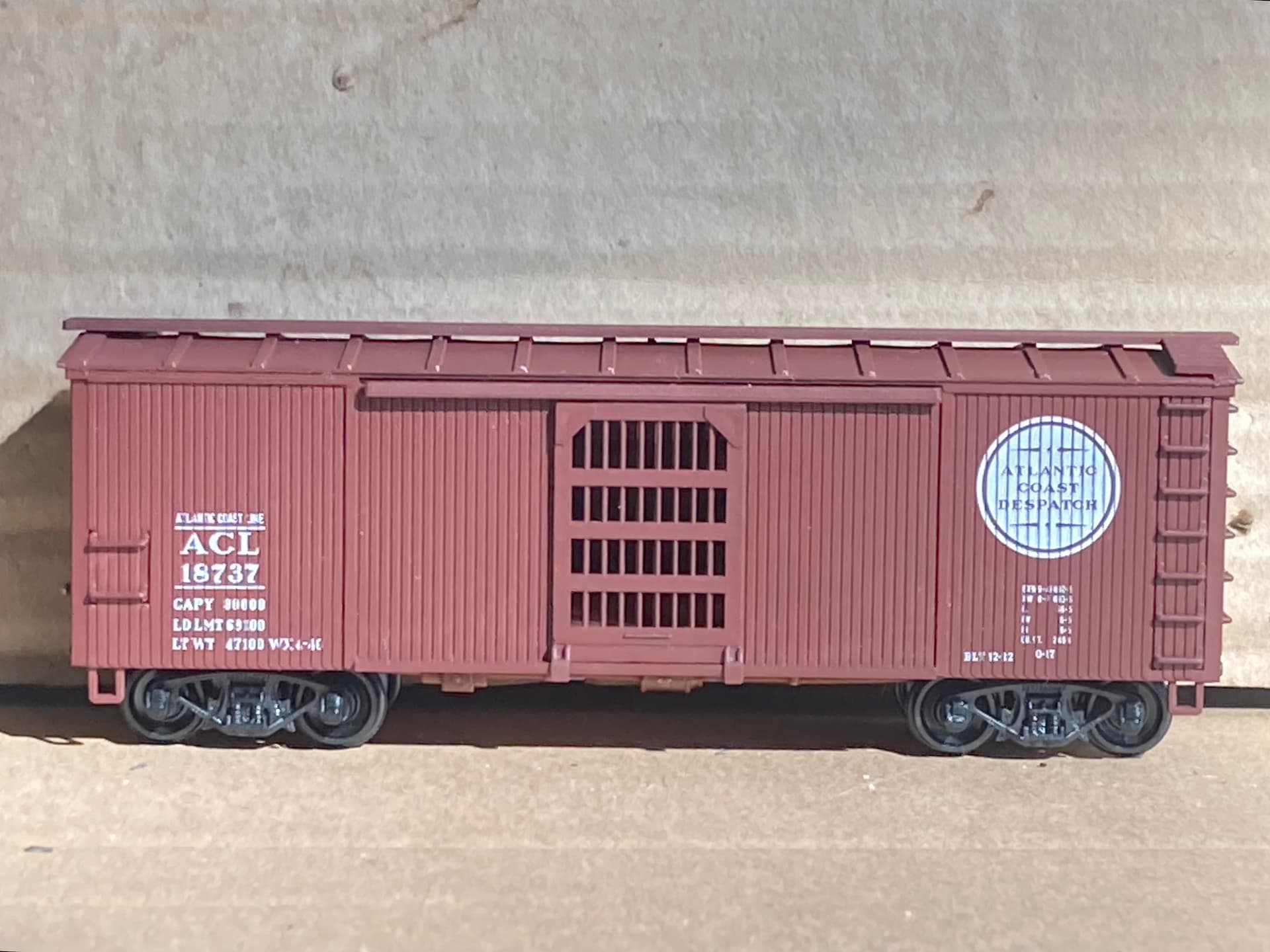
The prototype for this car was an Atlantic Coast Line car. Here is the Con-Cor kit I built.:

Back in the 60s, Ambroid offered a wood craftsman kit version for the same car. They appear on eBay from time to time. At one time I liked building kits like that, but not anymore. Why should I struggle with a box full of wood sticks when I can get a reasonable plastic car, that’s more durable in the long run? I can’t see all that extra detail anyway. Look at it this way. There’s only so many of those kits left out there in the world. I’m saving one for the guy who really wants one. :joy:

7 Likes

Random photos- 8

Here’s a photography lesson. At some point a couple years ago, I learned that you could improve the realism of your shots by using the Zoom feature. I took this photo right before I learned that and look how long the engine looks, zooming in would’ve compressed this to a more realistic appearance. Other than that, it’s a nice view. I may re-create it properly again at some point. You can also clearly see the heavily weed grown spur in the background that leads to a gravel pit off-campus. Since my layout is so small, I’ve had to do that with a couple of other places.

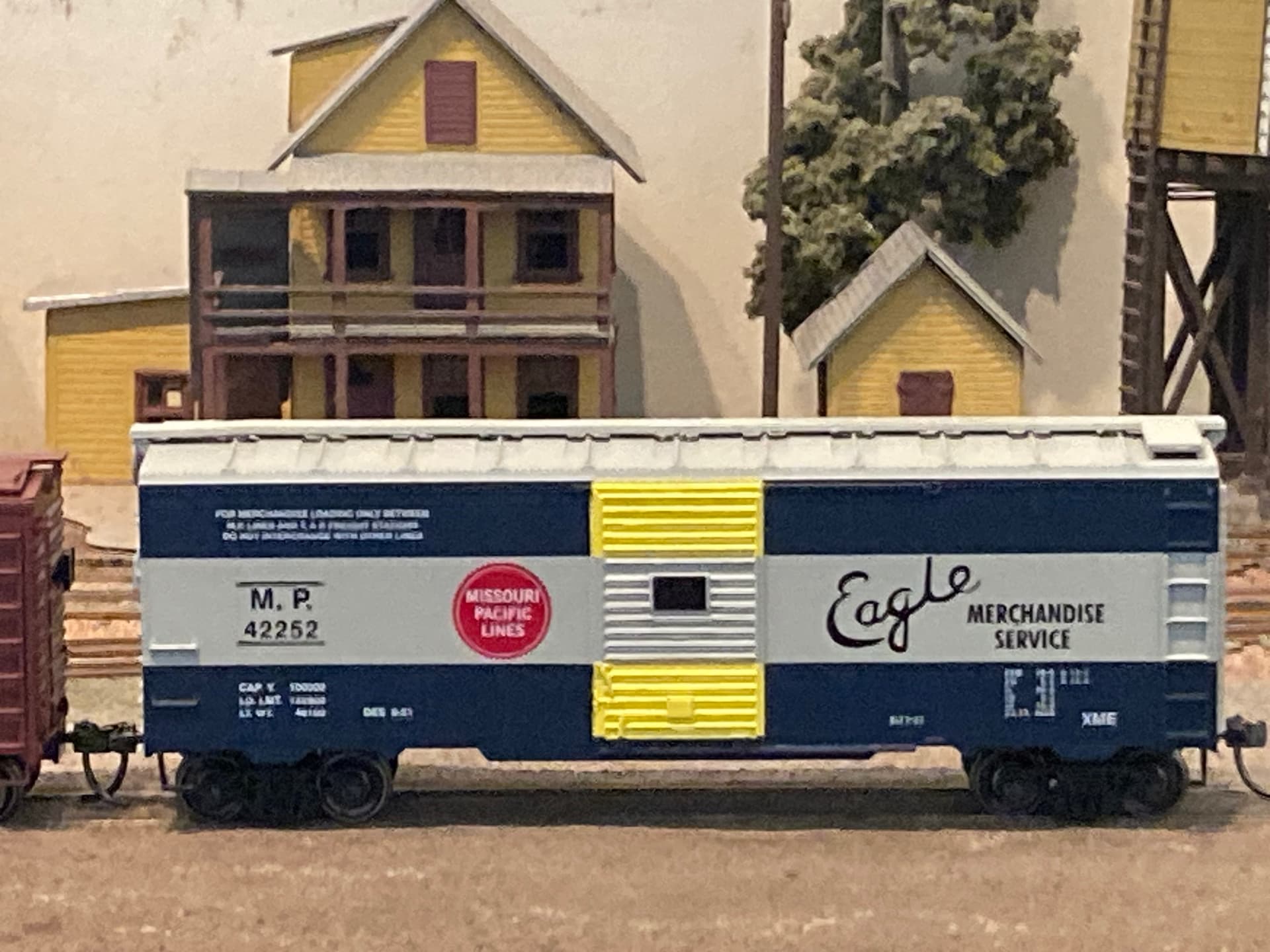
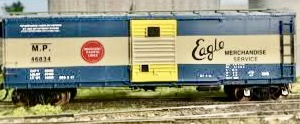
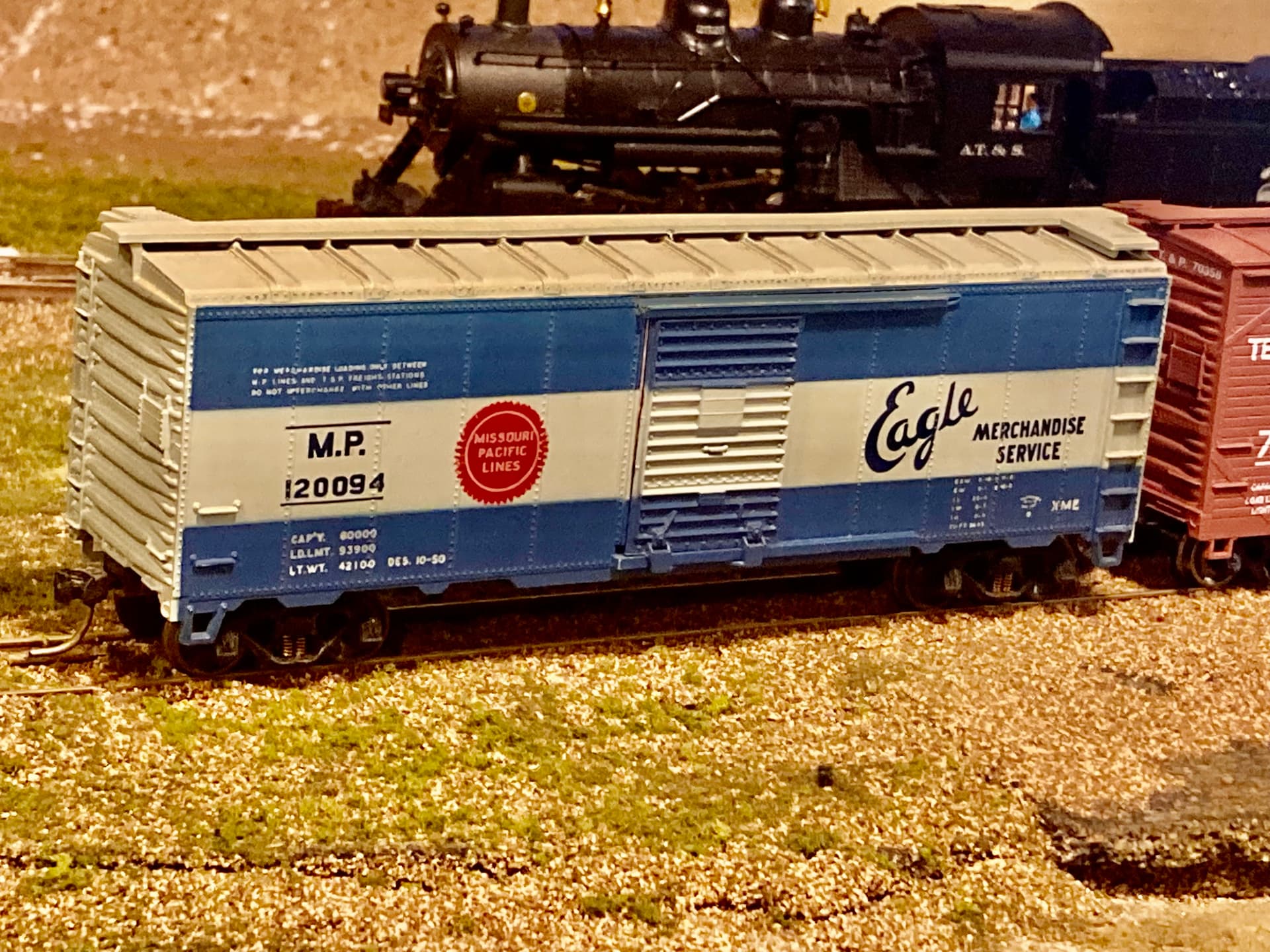
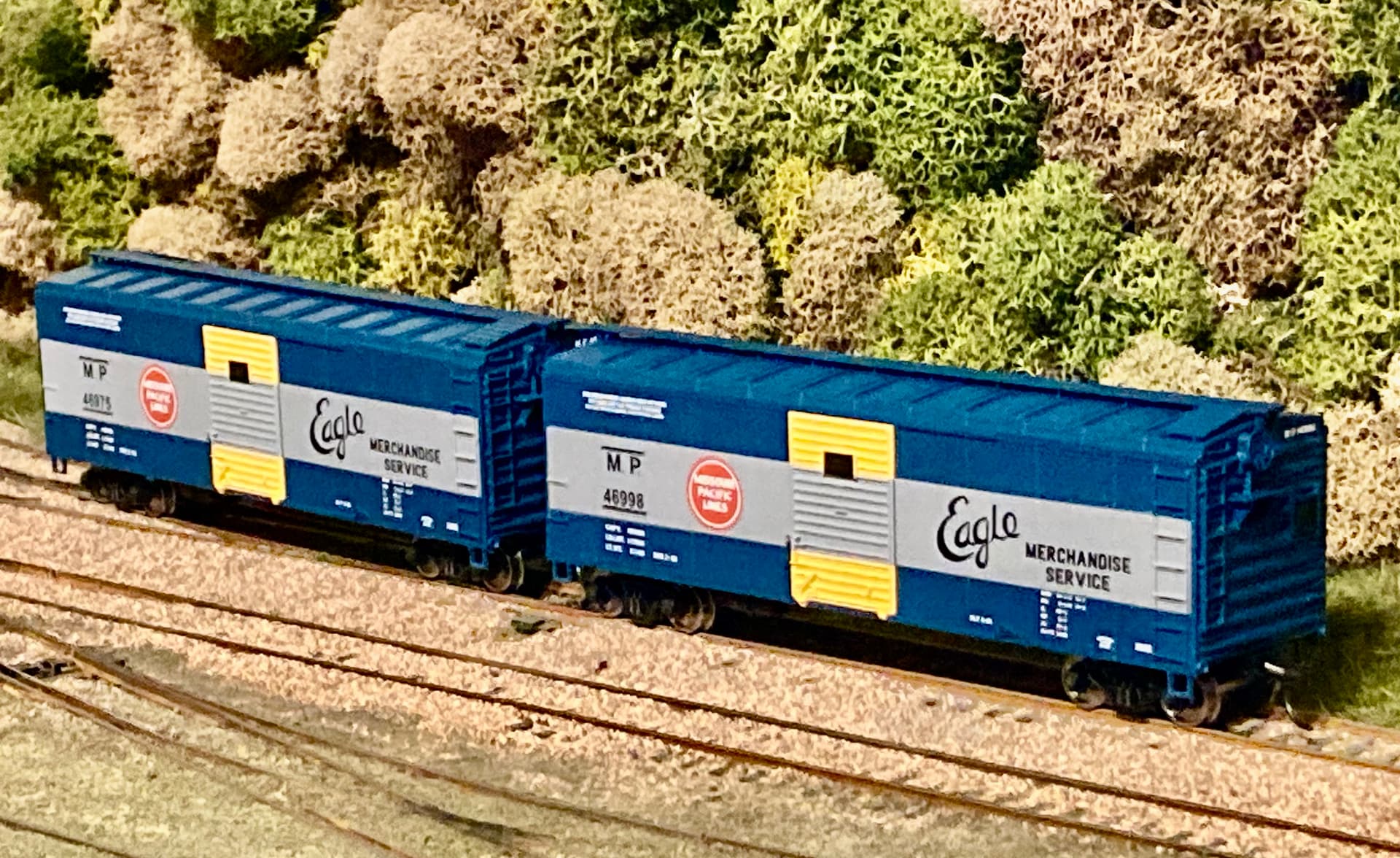
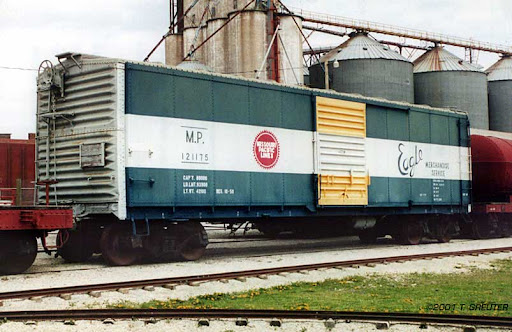
The Missouri Pacific Eagles Merchandise boxcar has always been one of my favorites ever since I saw one spotted at the MP freight house back home when I was barely 6 or so. The MP had a fleet of these created in 1949 if I remember correctly, but not nearly as many as have been reproduced in model railroad form. They were not intended for interchange on any other Railroad, which is supposedly incorrect on a layout except one that models the Missouri Pacific.

And they’ve never been done truly properly by anybody. Nearly all models have been usually improperly painted standard AAR 40’ steel boxcar like this one, when in reality the cars were much lower in profile, rebuilds of 30 year-old USRA cars. This car is a very early Athearn car from the 1960s. It’s considerably oversized, the roof and ends are properly gray, but the doors are incorrect with blue on the top and bottom. It’s a stand in for a car in high school so will not ever correct the paint, although I easily could.

These cars are very recent Bowser cars. Although not completely correct they are of a slightly lower profile and have the doors correctly painted with yellow on the top and bottom. However, the ends and roof are blue. I have seen occasional reports that some cars were like this, and then some expert says no they weren’t. But the grey roof and ends appear to be the most common scheme. What’s really wrong with this car is how dark the whole thing is, not really showing in this picture well, but it’s dark, believe me. It would’ve been so easy to get this car right, but they didn’t.

Here is a prototype photo for comparison. The car is not only very low, but an exposed sill runs along the bottom of the side, a dead giveaway to its USRA origins. I’ve always wondered why these model companies never got the paint right except on rare occasion, it would not have been that hard to do.

This relatively recent Roundhouse car, while being an oversized AAR boxcar, is the closest model I’ve seen in plastic form. It’s the one that spends most of the time on the layout when I’m running a 1950 era operation.

Here’s a correct model, a resin kit by one of the master modelers of the Missouri Pacific. I see that he’s painted the roof and ends blue so if he did it, maybe it’s not as bad as I thought. For those who are not familiar with them, I have to say, resin freight car kits are not for everyone. Including me. :joy:

6 Likes

9-

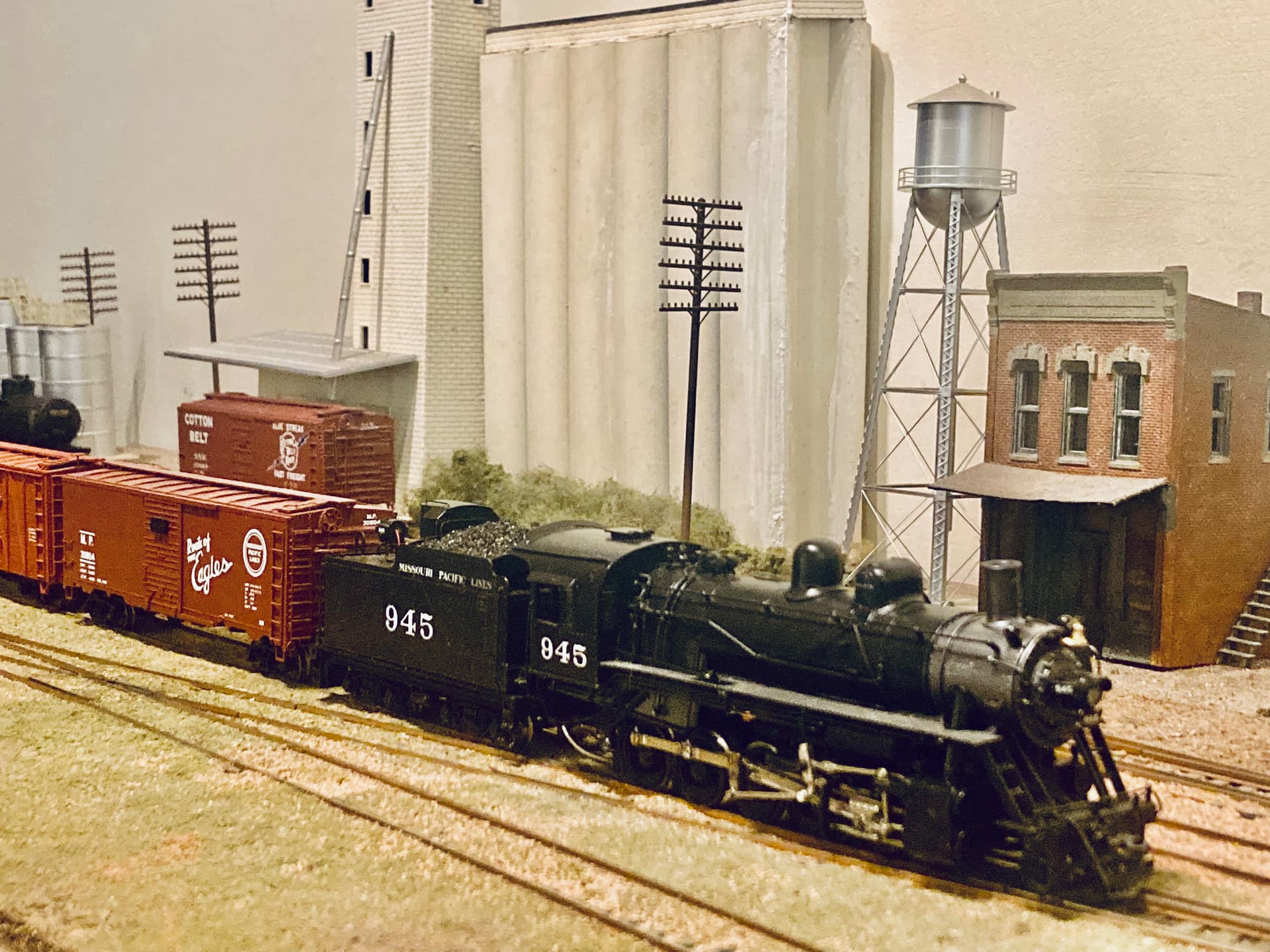
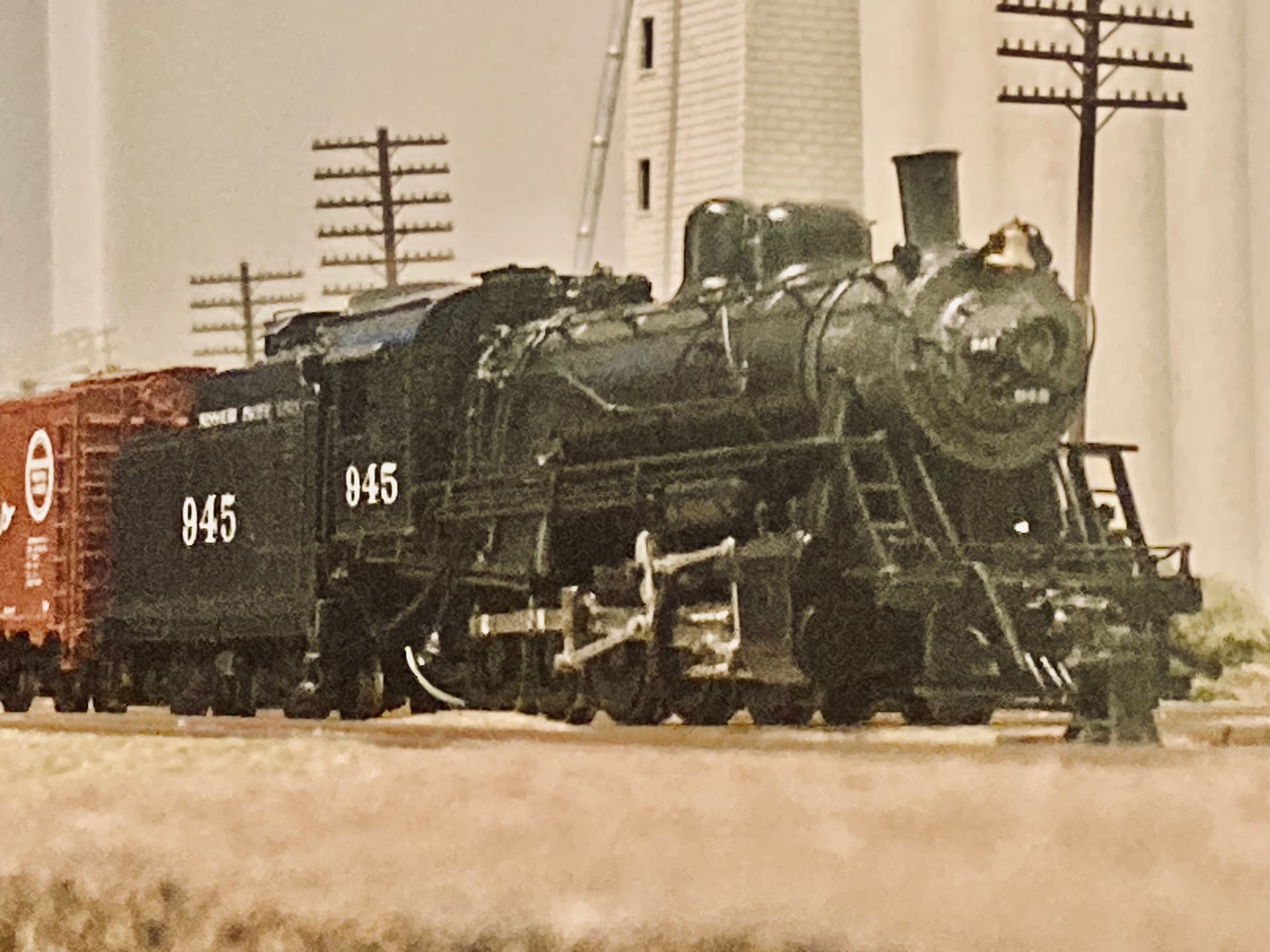
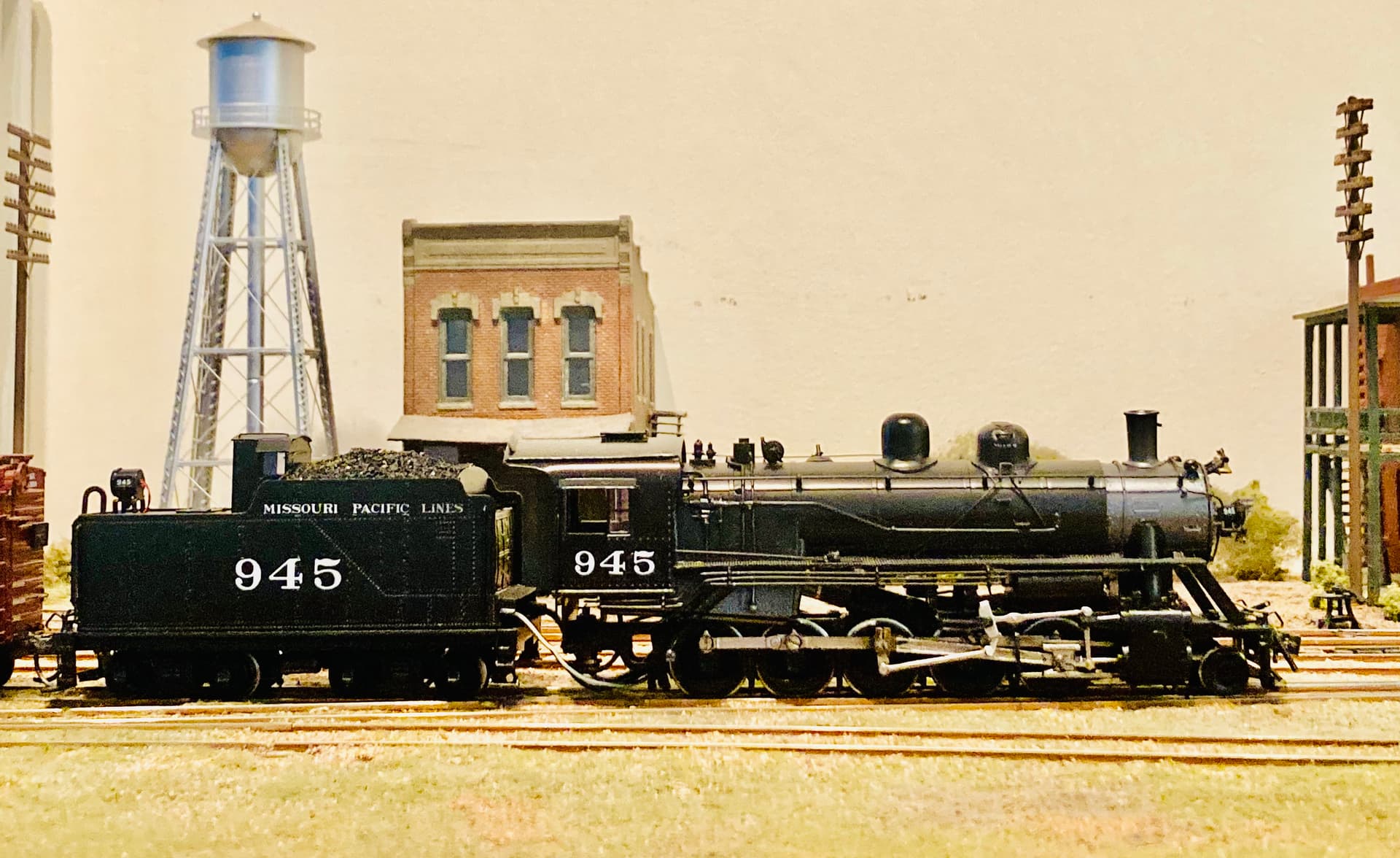
A couple of views of MP 2-10-0 945 in the Thunder Grove yard.

Bonus point quiz. There’s a quite visible error made on that decapod that I didn’t notice it first, but once I knew what it is, it bugs the living daylights out of me. But it’s a beautifully finished model so I’m not going to try to correct it. Anyone want to take a guess what it is?

The other day, my thoughts were wandering back to my first real layout way back in the Jurassic in high school, when I begin to understand that a layout could be a serious representation of something real. I saw several photographs of Missouri Pacific steam engines around and near my home and gravity pulled me hard in that direction.

A couple of the pictures were Missouri Pacific decapods. Almost at the same moment, pacific fast mail introduced a brass import of a Frisco 2-10-0, very closely resembling the MP engine. I already knew that I wanted a Varney 2-8-0 which had a fair resemblance to an MP 1010 class engine. The moment I saw that brass decapod, in a lightning flash I knew exactly what I wanted for my branch, a MP consolidation and decapod to work the interchange while moguls and 10 wheelers handled the branch along with the MP engines that occasionally went out.

And I’ve never deviated from that. That’s exactly what I have today.. the only exception being that both the consolidations and decapods are now Bachmann engines, which actually are good stand ins for MP engines.

But the 945 is the culmination of the dream 60 years later, a brass Pacific fast mail decapod, finally on my layout.

6 Likes

10 - more decapod noise.

The 945 in the yard at Thunder Grove. It’s on the head end of Train No. 4 eastbound, ready to go as soon as the crew finishes breakfast at the Ratland Cafe in the brick buildiing behind the engine. This engine is very glossy and shiny, looks like it just came out of the paint shop with a good oily rag rubdown like the roundhouse guys called wipers used to do. When I had it serviced after I bought it the guy asked me if I wanted it to be weathered and I said no, leave it be.

I don’t like weathering engines. There’s been this fad about weathering them for many years, but in reality, the only time steam engines ever really got weathered was at the very end of the steam era when they were running out their last miles and being neglected. Study photographs of steam engines in the glory days of steam and you’ll see what I mean. Those crews took pride in those engines like nobody in the world takes pride of anything today. It won’t take you long to find pictures of those proud men leaning up against their shiny engines.

I was out of Model Railroading for a very long time, but I never forgot the vision I had of the Missouri Pacific branch back home in the steam days, with my interpretation being powered by decapods and consolidations. About 20 years ago I went to a train show with my neighbor and saw that Bachmann in my absence had introduced a plastic Russian decapod. I saw that thing and did a triple backflip, I knew that I’d be going right back into Model Railroading immediately. A little thing called a hurricane happened in the meantime and ruined my house, but when I renovated it, I made a room for a layout. And bought two of those decapods immediately. It took a while to figure out how to get them running right but I did. I now have eight of them in operation, I never knew how to stop. :joy:

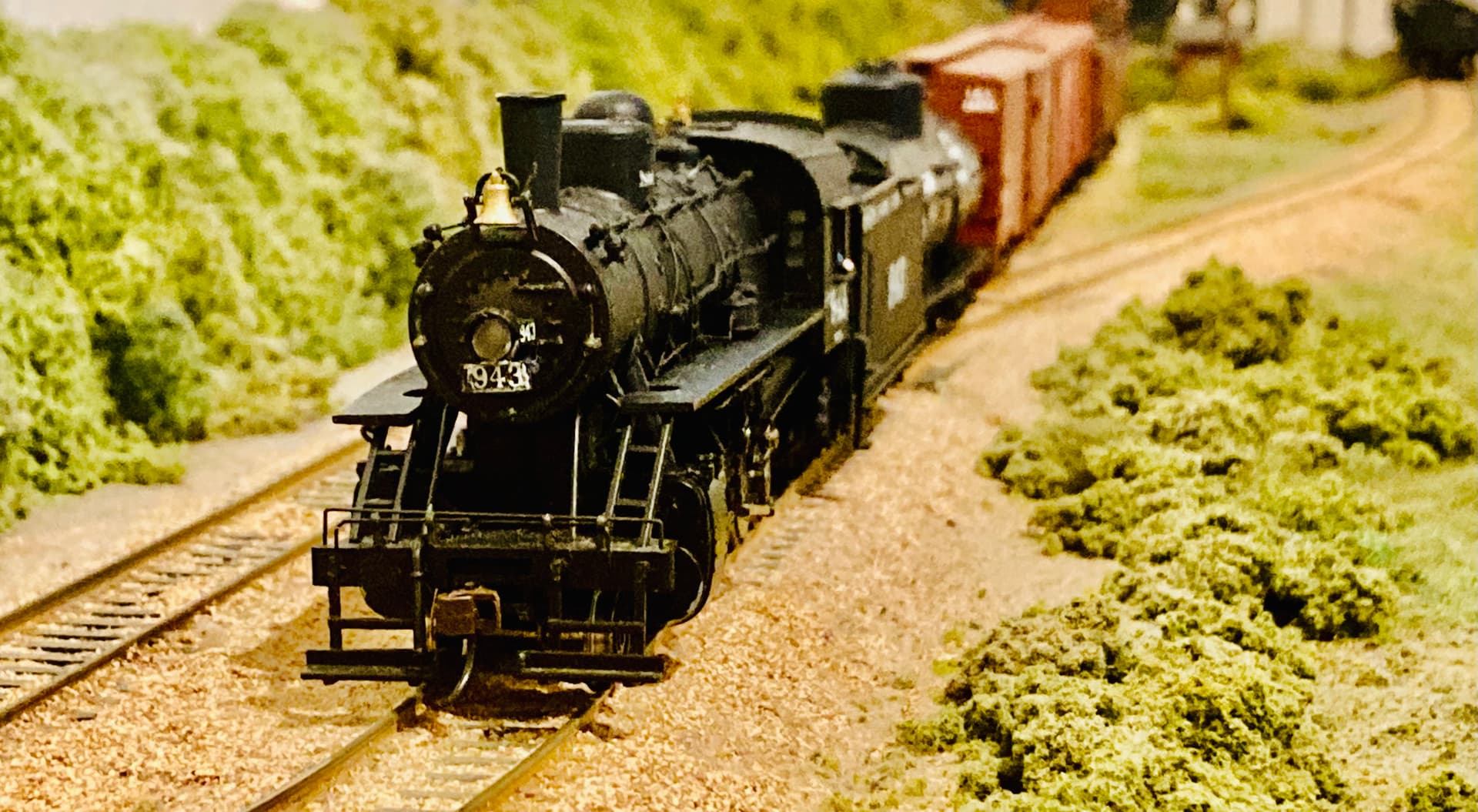
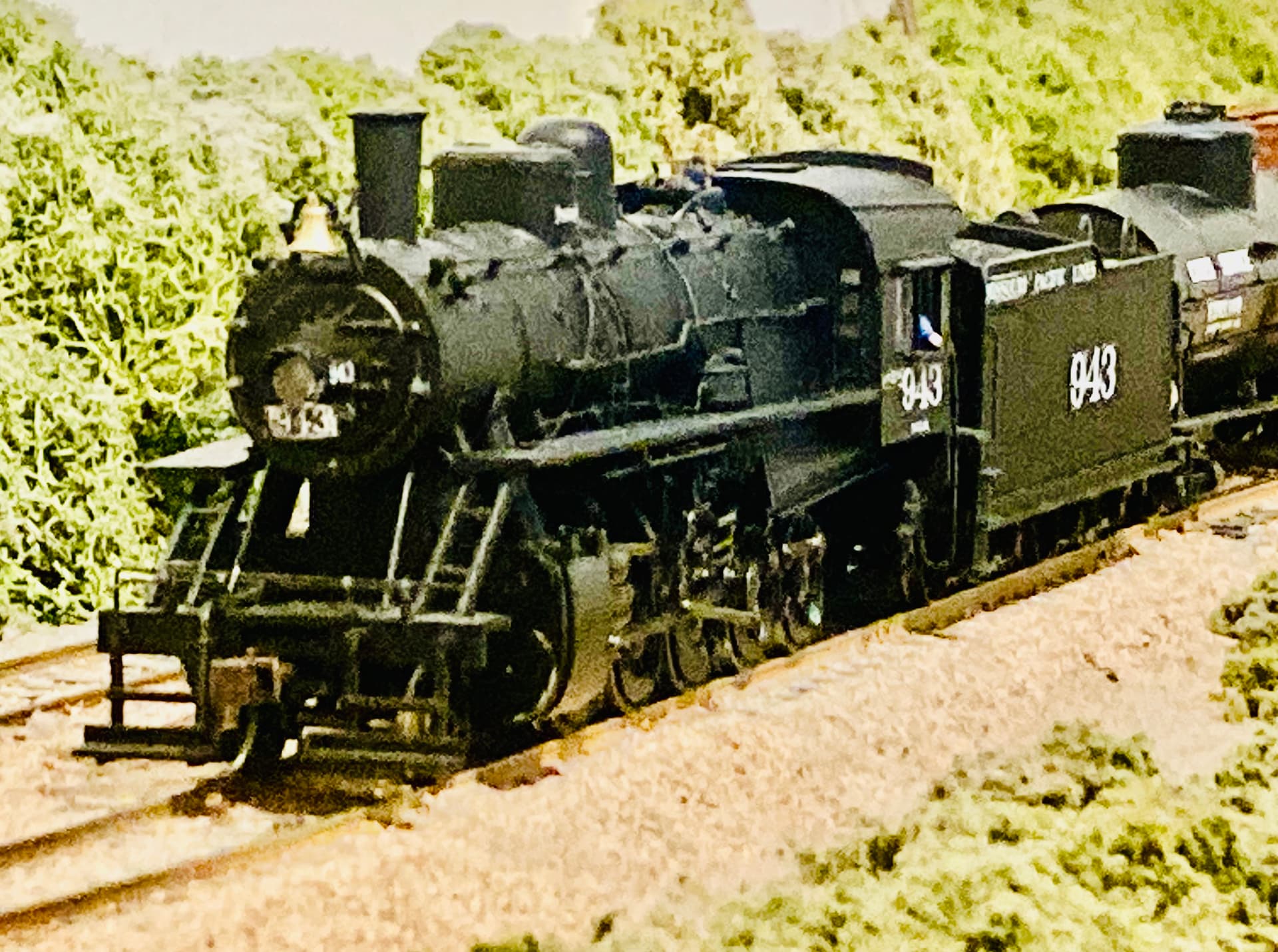
Here’s the 943 on Train 3 westbound, in the hole at Donna Pass waiting for an eastbound extra.

5 Likes

Let there be noise!

1 Like