I have weathered the freight car exactly the way I wanted it with chalks. I take it to the spray booth and squirt Dull Coat on it to “set the weathering” and presto/chango, the weathering disappears, especially the lighter shades! I hate this as it is a loss of control over the process! I redo the weathering and loose it again by spraying Dull Coat. Maybe I do the process a third time and finally get somewhat close to the original job, but it’s never as good as it was that first trip to the spray booth!
SOMEBODY OUT THERE HAS TO HAVE A BETTER PROCESS!! PLEASE HELP!!
This sure is frustrating. It does work. It gradually builds up - then the Dull-Coat protects your work -especially if the car is handled. You can try paints and ‘washes’ instead of chalk. Or when I was weathering N scale cars, I was radical enough not to add the Dull-Coat - I just tried to not handle the cars.
Although I haven’t tried any weathering yet (still researching) I was just wondering if you could go to a slightly darker color with a heavier application. If it mostly disappears after a coat of dullcoat, wouldn’t a heavier and darker coating of chalk lighten up to the desired look?
This is a super irritating thing I’ve actually had to do 4 coats rounds if you will to fianlly get a weathering job I could live with.Testors dull coat seems to me as the least of the finish spoilers but I barely spray it on I kind of mist from a distance if you will. Lately however I’ve given up on chalk weathering completly I’ll airbrush weather with paint or use the Bragdon industries system it;s real rust dirt whatever mixed with a powdered adhesive so you do not need to fix it with dull coat you can order from them online as well if your LHS doesn’t carry it. TB
As I’ve already stated in another thread I never use Dullcote after weathering with pastels. I my experience pastels stick to the surface provided the surface has been "roughened"a bit by pre-spraying with Dullcote. And I never handle my pastel weathered card without cotton gloves (the kind pharmacies sell, at least in my country) so as to avoid finger marks. Another solution I never tried though, might be using special pastel protection spray that is used by artists and sold in artist supply shops.
The special pastel protection spray Nieuweboer mentioned is called “fix”. You spray it on drawings and pastels. I never thought about it before, but it just may work! It doesn’t take a heavy spray to cover the work, and it dries fast. Stinks, though. Most of the time when you fix a picture you do it outside. I would imagine if it works for artwork and doesn’t change the colors, it might do the same for weathering. Also, you might go to a ceramic store and buy mason stain. it works well and is real cheap-a little bag of it would probably last the rest of your life. It comes in powder and a lot of colors. You’re supposed to fire it along with the ceramic, using it like glaze, but I’ll bet it would work without. Sometimes I rub it in real good with my fingers instead of a brush. There are lots of things in an art store that will work in this hobby.
I personally don’t use chalks for just that reason. Some people don’t bother with a bonding coat over chalks, but then you run the risk of smearing the chalk every time you handle the model.
Our scale armored vehicle modelling pals generally use chalks by hitting the model with dullcoat FIRST, and then quickly scraping/adding the chalks to the wet surface. It works great, but isn’t a simple technique. Fine Scale Miniatures has had a couple of articles on this technique over the past 2-3 years.
Enduringexp, Darker colors hold up better, yes. However, realistic weathering includes lighter colored dusts so heavier applications won’t help.
I’m heading to town now, so I will stop at the local craft outlet and see if they carry the pastel protection spray. If it’s not to expensive or states not for use on plastics, I will try, to see if it works!
Bragdon Enterprise weathering powders. They are like extemely powerful chalks. I love 'em. When you work them into a dullcoted surface, it really in there. It don’t want to come off. In some applications, just the powder on the model is too intense cause it hides lettering. If you dullcote over it again, it fades down some, but not nearly as much as chalk.
$25 gets you a little bag of each color of these magical powders.
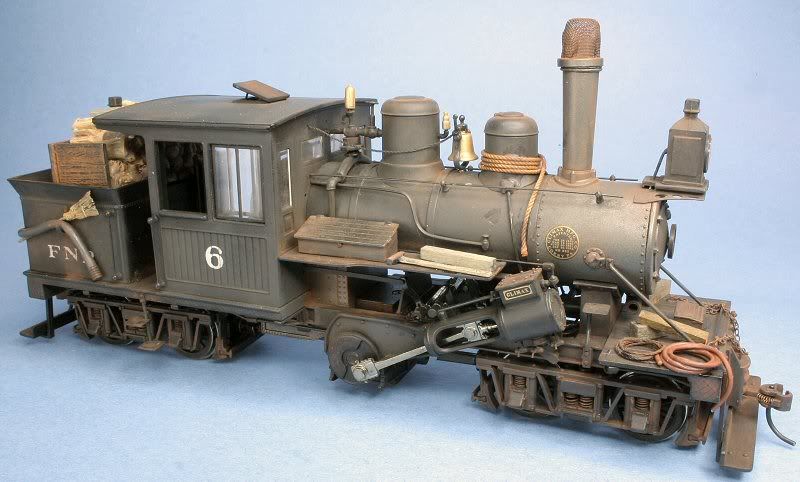
Bragdon chalks are great - they include a dry glue in their makeup, and it is claimed that rubbing them fixes the chalks to the model. I picked up two separate “kits” of their chalks, and have used one quite a bit recently on my On30 Climax. The kit included soot, and three different shades of rust - from a brownish color to an orange one. I do like the effects - take a look:
I coated most of the model with soot first, to dull down the nice satin factory black, then used two of the darker rust colors mostly to simulate road dirt rather than rust.
I haven’t coated the model with anything, nor have I handled it very much. I can pick it up by the roof edge (the body is metal), so this may not be a problem.
The Bragdon Enterprises weathering powders are excellent. They do stick very well when applied to a flat finish. I’ve also used Krylon’s “Spray Fixatif” instead of dullcoat over pastel chalks. It doesn’t make the light colors go away as much as the dullcoat does. There is still some loss, but not as much.
Have Fun,
Tom Watkins
D,
It’s good you’re trying the fix! I know you’ll let us all know how it comes out. I think you can get some that’s not flammable or toxic, but it smells like burned beans or something. But that’s what I usually use on my drawings. good luck
I’ve never used Dull Cote but get very good results with Krylon’s Matte Finish before (to provide ‘tooth’) and after powders. If I’m using Bragdon’s powders, I omit the after pass.
Take a look at MRs Practical Guide to HO Railroading page 76. Weathering with chalks. I have done this and love it, I dont dull coat as there is no need for it. It is the wet method of using pastel chalks. The chalk hangs on good enough to handel cars. I tried the dry method and is not worth the effort, or for me it isnt.
I’m like a lot of other guys on this post, I spray the Dullcote on first, to give it tooth. I just started weathering my locos (after salivating over Aggro’s 4-8-8-2) and so far I’ve done one 2-8-8-4, a Mountain and my little chunky 2-8-0. The Bragdon’s chalk sticks fine to the Dullcote underspray–I even tried lifting the tender of my 2-8-8-4 about ten minutes after weathering it, and nothing came off on my fingers. I understand your frustration over the Dullcote as an overspray, I was weathering a line of reefers about three years ago and just decided to give up! Now I think I can get it right. Try this method on one of your cars and let us know how it comes out, okay?
Tom
Thank you all for your suggestions! I have tried many other types of weathering; Floquil paints, acrylics and even the alcohol over dullcoat fading process. All have their places and I use all. However, I have always thought chalk to be the best, most contolable and it is my primary method. The thorn in chalks side has been the fixing process. I will be sending for the Bragdon weathering chalks, as what has been said here about them seems the most likely method of producing the results I am after. Great loco Bob Boudreau! Has the HO Climax arrived yet?
I haven’t had an opportunity to use the fixing agent yet, but will get back to you all on how it works.
I typically do two things to keep the chalk from disappearing once it’s hit with Dull Cote:
Put the chalk on extremely heavy. Don’t worry, you won’t lose detail. Once the Dull Cote hits it, it all works out.
I put newspapers on the floor and then put the model down on the newspapers (actually, I try to elevate them from the newspapers with an empty freight car box or something… Dull Cote + news print = not so pleasant goop). Anyway, with the model on the floor, I hold the Dull Cote can up about two or three feet and lightly mist the model. The big problem with Dull Cote in the aresole can is the size of the spray if you’re too close to the model. By holding the can up a couple of feet and lightly misting the model, I’ve found I get less of those obvious circles that appear when you paint something with an aresole can. It doesn’t take much Dull Cote to seal the chalks in. When I’m misting them, I typically go from left to right and back again and that’s it. Remember, you’re not clear-coating a car for the salt-plastered roads of the upper midwest. A couple of coates of chalk and Dull Cote is plenty. You’re not going to be handling the models a lot (I assume) so