In the Blueberry Line article in the Sept. MR, the author says, “… I began making my own ballast from sifted play sand that I tinted with a wash of isopropyl alcohol and black shoe dye.”
Interesting thought, I presume he glues the sand to the roadbed first, then applies the diluted dye, which would create variations in the color of the ballast.
Anyone else using this technique? Perhaps over regular ballast?
My guess is he dyes the sand first, maybe bakes it to dry the dye, then glues it. Once the matte medium, PVA or whatever adhesive you use seals the sand it won’t take dyes very well. I’ve used a little India ink to simulate oil patches and it really doesn’t soak in that well once glue has been applied.
Good point Ed. After I entered the post, I wondered if he layed out the sand, then sprayed on the alcohol/dye mix to settle the sand grains in, and promote glue penetration, then applied the diluted glue.
I use fines from the driveway for ballest,and applyed india ink/alcohol wash, after it dryed. While I.m sure it didn’t soak in, it did color the ballest.
To color the sand before hand, you would have to spread i out to dry, and not stick together.
When we use the ink wash on buildings and such, it dosen’t soak in,but layes inthe recess,and cracks. Would this not be the same for glued ballest ?
I am very interested in this technique as I live overseas in a country were model railroading is practically unheard of. I am trying to find a source of balast, but I don’t know of any places were you can get crushed rock or gravel to use as balast. As the local dirt is quite sandy, this could work! It sure beats having to stock up on balast when I visit the states!
Guys - I asked my friend Bob Wundrock (the author of the article in question) about the ballast question. Here is his response which he asked me to post here:
"When I had to tear it down, it was a sad day. A new layout is under construction. … I have many more feet of track to lay. I just can’t afford all the new Peco turnouts I need for the terminal yards. I buy a couple a month.
To answer the ballast question: I first lay and shape the ballast (sand in my case). Then I wet it with the tinted 70% isopropyl alcohol and then apply the 50/50 white glue. I described this process in an article in the February 2014 MR."
It sounds like the application technique is very similar to the usual ‘spread dry ballast add wetting agent then dribble dilute glue’ method used for common commercial ballast.
I’d suggest sifting the sand several times through multiple tiny sieves. The goal is to remove all the fines (especially dust and powder), leaving just the granular hard sand particles. If there are a lot of fines in the ballast spread dry on the track, when the glue mixture is applied the final result could end up with a smooth surface that looks more like concrete than gritty scale ballast.
Regarding the ink coloring . . . I would add a few drops to the 50-50 white glue solution, turning it into a 51-49 dirty gray solution.
A friend gave me a couple of large containers of ballast, one fairly coarse, the other much finer. It was part of an order of several tons of crushed stone which he had ordered for his driveway.
There was a fair amount of “fines” with the stone, and he managed to sieve enough to ballast his entire layout - a large one in its own building, featuring a four track main line - the Pennsy, or at least a good representation of part of it, in HO.
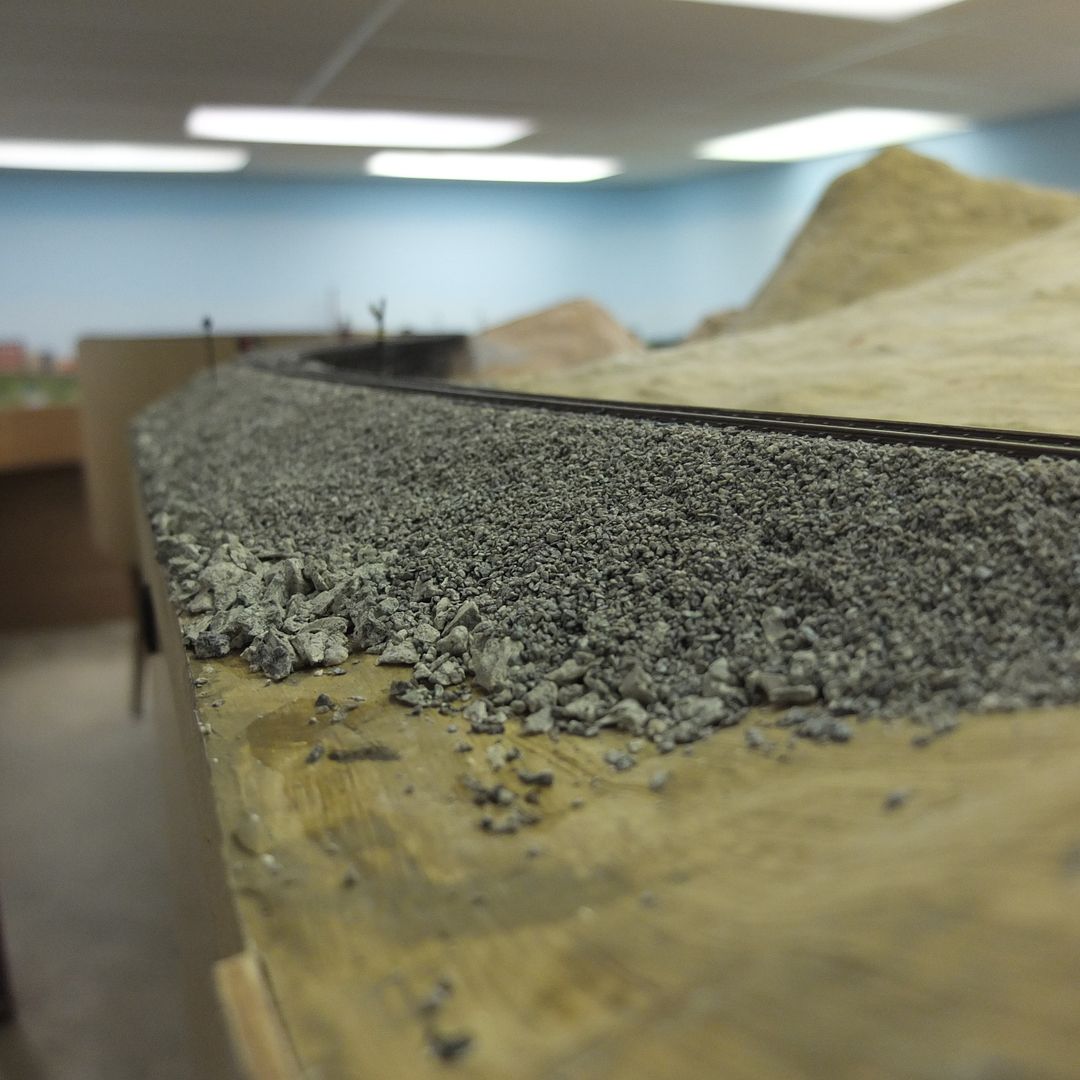
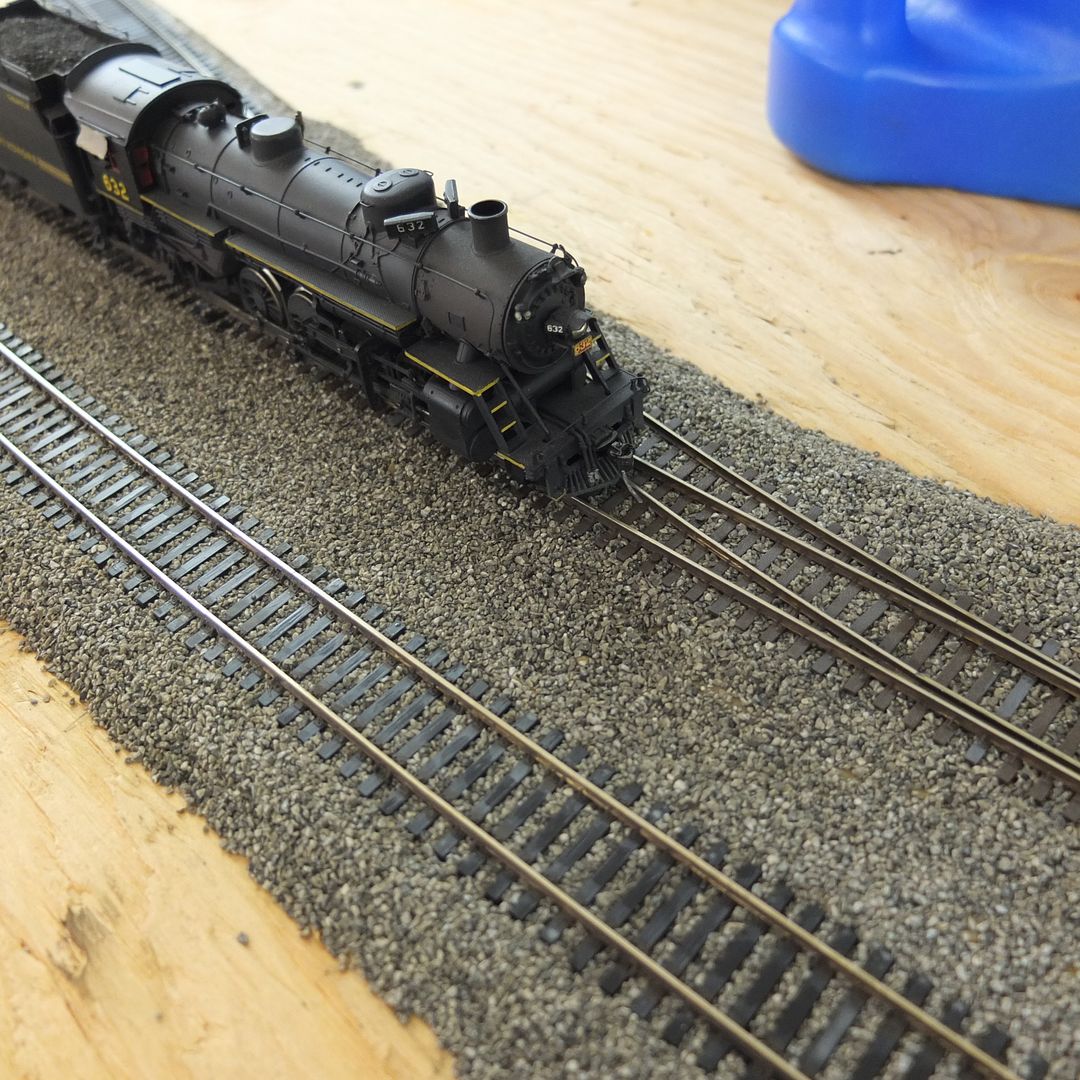
While the main part of my layout was ballasted using Woodland Scenics ballast, I decided to give the real rock stuff a try on the recently added upper level.
Here’s some views of it in place…
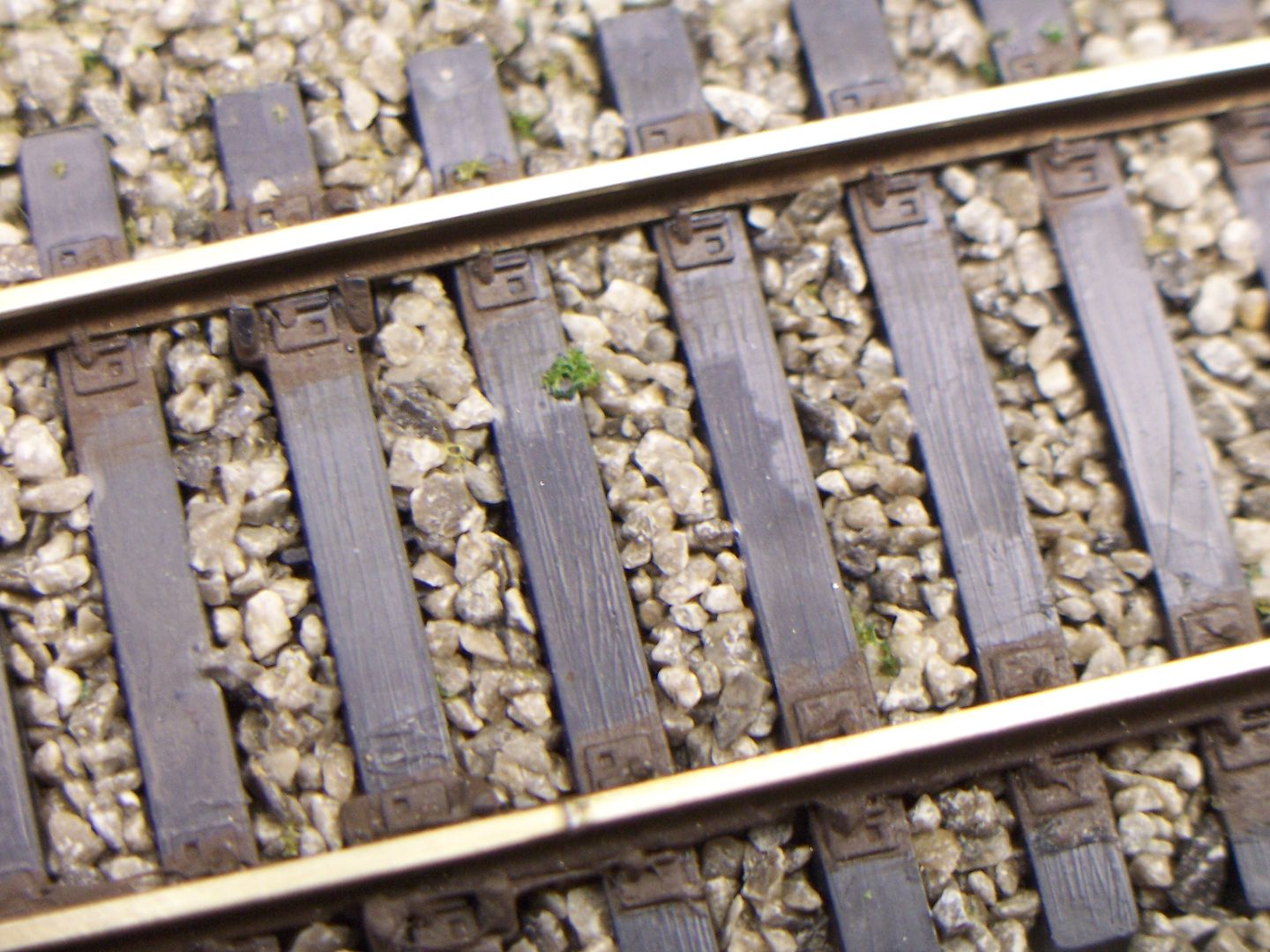
…and a close-up look…
Eventually, the free ballast was used-up, so I went to a nearby quarry where, in the past, I had bought and loaded such gravel into my own truck. Unfortunately, that practice had been discontinued, and needing only a bucket or two, it was suggested that I go to a building supply outfit which sold screenings (the finely crushed stuff) in 50lb. bags.
Such screenings are often used to set paving stones, so might also be available at a landscaping place or at big box stores such as Home Depot or Lowes.
I bought two bags and set about running the material through successively-smaller screen - fine-mesh hardware cloth initially, then through finer and finer sieves. (Do this operation outdoors, as it creates a fair amount of dust.)
Eventually, I had the size needed for the ballast I wanted, but, unfortunately, it included the fine du
I agree with everything DrWayne posted (just now and all previous posts), including the terrific photos.
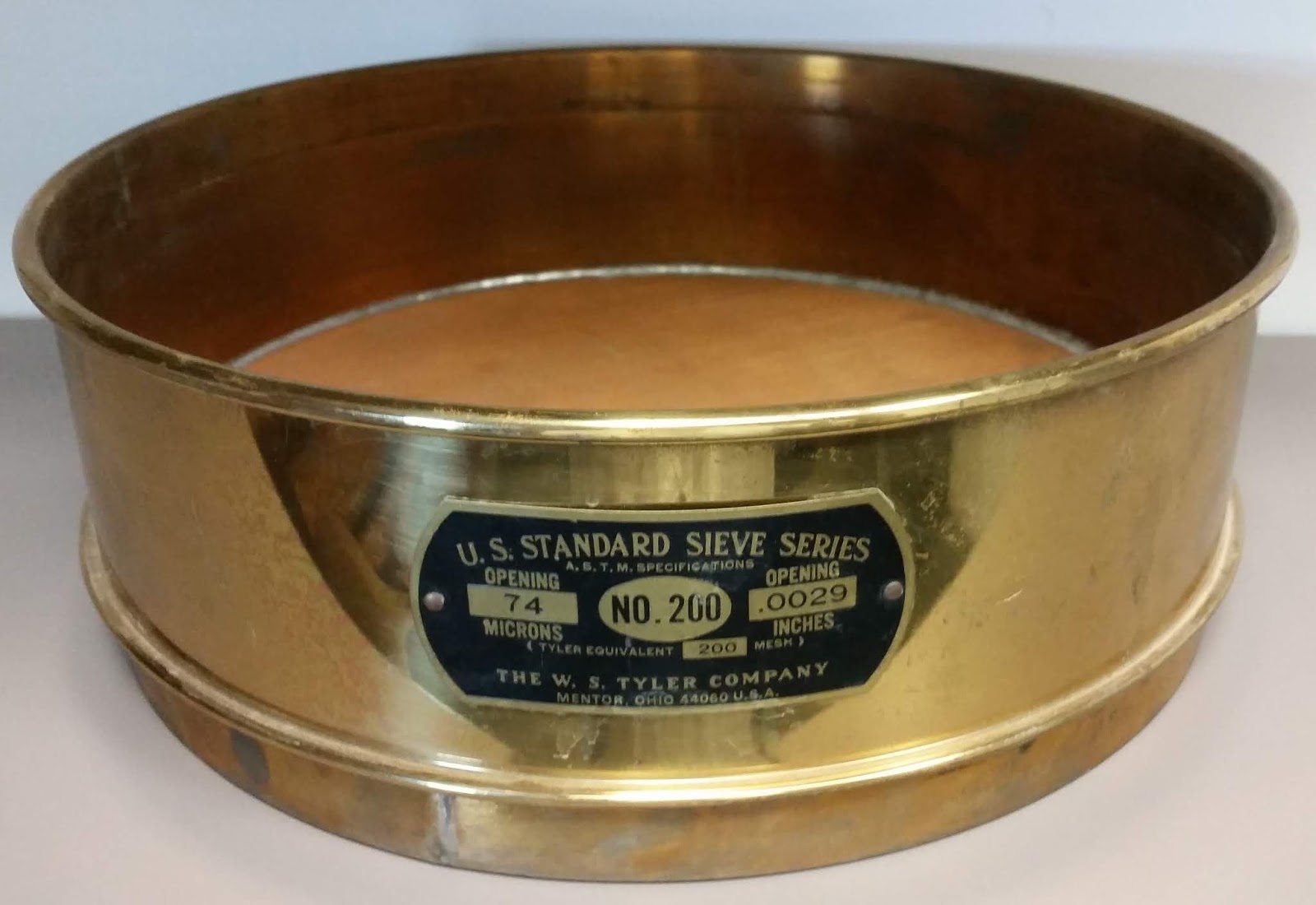
Here are a couple photos of the smallest opening sieve I have access to. It is a #200 and can separate the dust and powder particles. Can be used for dry-sieving or wet.
The screen is so fine that it feels like a silk bedsheet stretched taut. Translucent in an odd sort of way.
This particular one is brass, but also available in stainless steel. Here’s a link to one of those giant online shops (Note: providing the link in no way indicates that I support one shop or another. For info only.)
abut six years ago i used sand blasting sand from princess auto, maybe seven dollars for a fifty poung bag … the sand was rough and sharp, not smooth at all, and had quite a bit if variety of color in it …
i still have three quarter of it left over , but never added darkening to it, didn’t have [or want] to …
As an aside, I wondered how clean this sand was and stuck a strong magnet in the sand. I was amazed at how much metal was in the sand. I made that a regular process of commercial sand. Now, that I have all the track laid and ballasted, I’m not too worried about the sand I have left. We used to use the leftover sand in coffee cans to make butt cans when we smoked (never in the apartment).
My girlfriend and I are starting our 2nd month smoke-free! I always wondered what meals tasted like!
I’m one of those “find it, don’t buy it” kind of guys that prefers natural, “found” materials. Sources of ballast I have used include:
roof gutter scrapings from asphalt shingles. A limited size range, but great for ballast and “fine rock” applications
residential road gutter scrapings in the neighborhood. A wider size range, great for ballast. Especially after an ice storm, when the city spreads sand on the slick areas. I live at the crest of a hill, and the melt puts lots of sand in the street gutters, especially farther down the hill.
yard dirt. Our neighborhood is built on sandstone formations, so there is a wide variety of particle sizes to sift out. Mostly red, but some yellow, and includes some black ‘iron formation’ material.
I bought a set of plastic nesting seives from Ward Scientific years ago, and get 5 “cuts” from the materials:
#5 (in bottom cup) is almost dust, very, very fine;
#4 (on 4th screen) is good for simulating asphalt roads;
#3 (on 3rd screen) gives about a 1/32" particle, good for ballast;
#2 (on 2nd screen, about 1/8" opening) gives great “boulders & cobbles” for stream banks, talus slopes, etc., wherever a coarse material is needed;
#1 (on the top screen, +/- 1/4" opening) gives me large “rip rap” type stuff. (A 1/4" in HO = 21.7" in reality.)
I used to work at a place that received steel forgings for our products in large tubs. The tubs always had bunches of different colored loose rust in the bottom, yellowish, orangeish, reddish. I scraped up probably 10 pounds of the different colors, and sift the rust through the smaller screens when I need to give a “rusty” look to something. I’ve gotten several complements and “how’d you do that” questions on a fleet of or
I recently cut up a large water heater in our attic, that had died. It was too big to get through the access door. The inside produced about 5 pounds of exquisitly colored rust. Smashed this with a hammer an now how so great material that is real rust. But I hesitated to use it because it is still iron. Was a bit concerned about motor magnets picking it up. But guess it is not a problem, once a fixative is applied. Cheers, andy
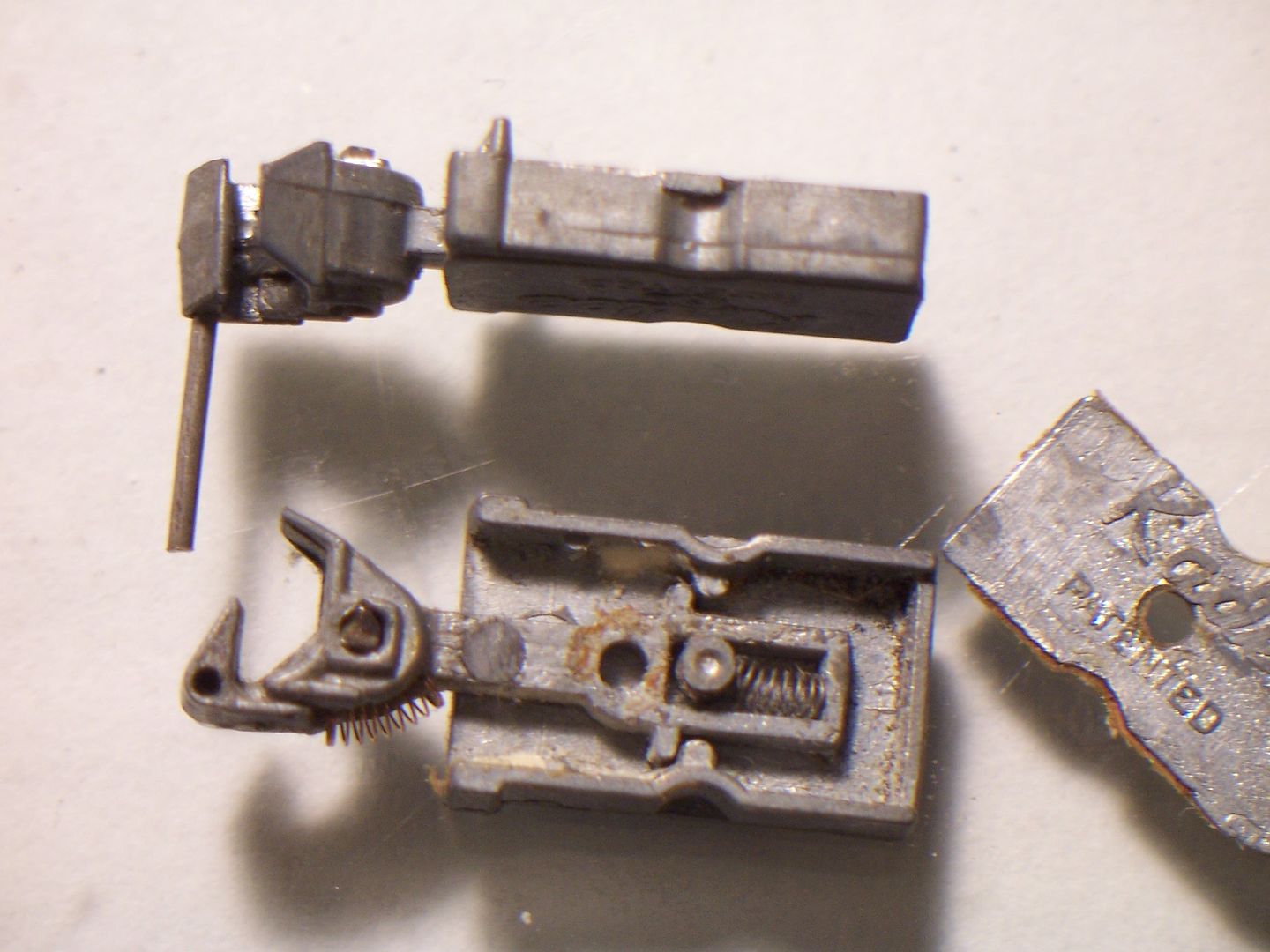
I had an ABBA set of Globe diesels, in which only one truck in one of the B-units was powered. It was a Lindsey /Lindsay power truck, a combination motor and gearbox in a Blomberg-style truck. The unit was pretty-much sealed, but because it was so close to the track, it often picked up trip pins which sometimes dropped out of the K-Type Kadees in use at that time…
However, I don’t recall ever having any other motor pick up ferrous material unless both were laying in proximity to one another on my workbench. Even those rare earth magnets that are capable of lifting small anvils don’t seem to be a problem in the open frame motors where I’ve installed them.
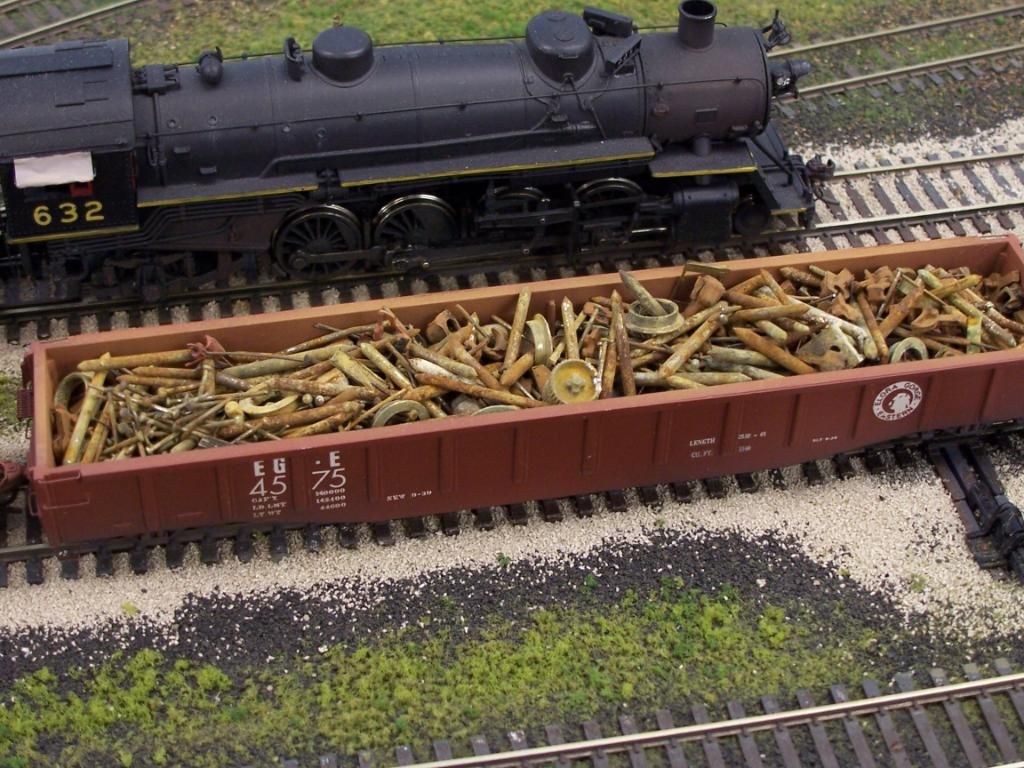
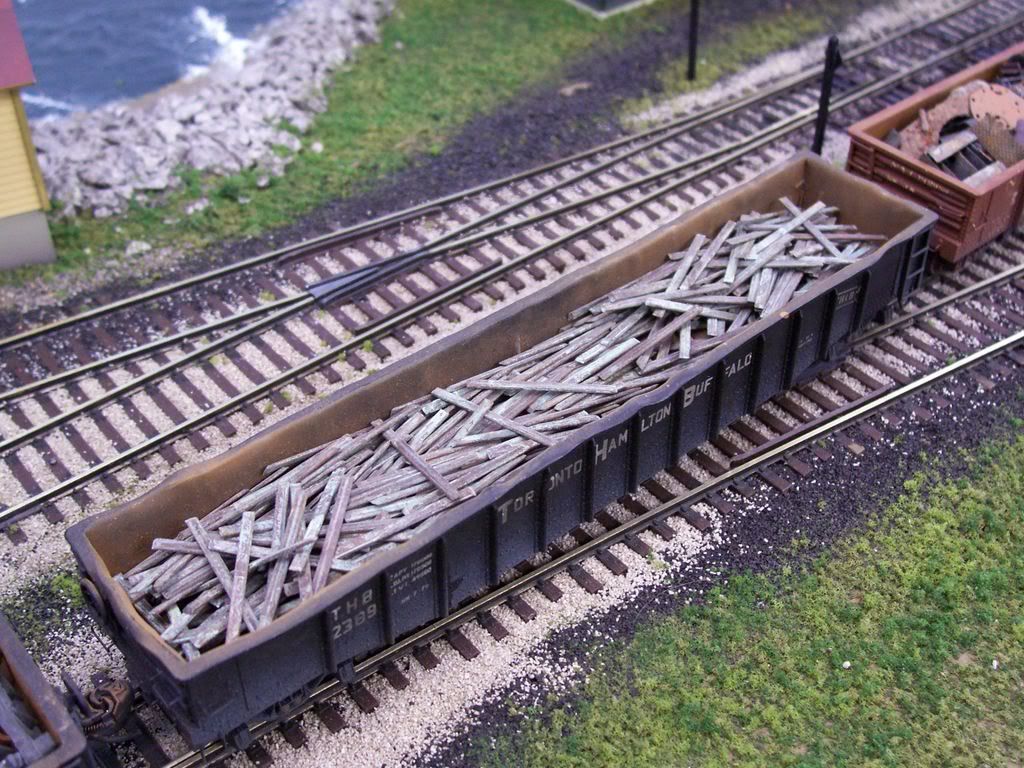
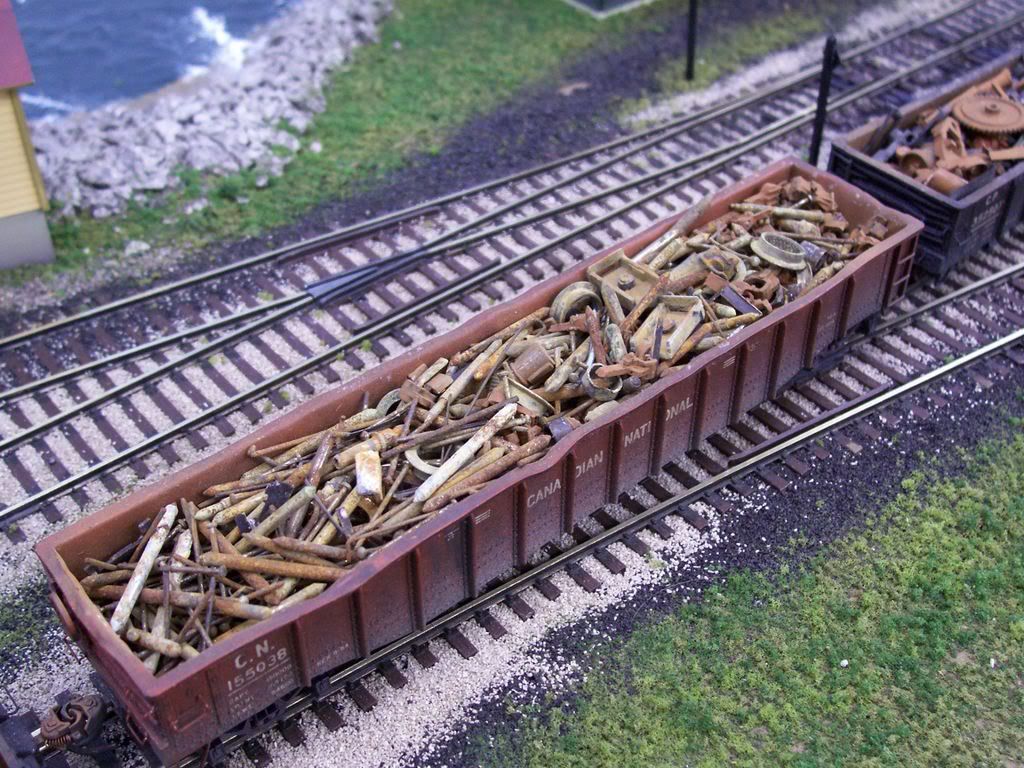
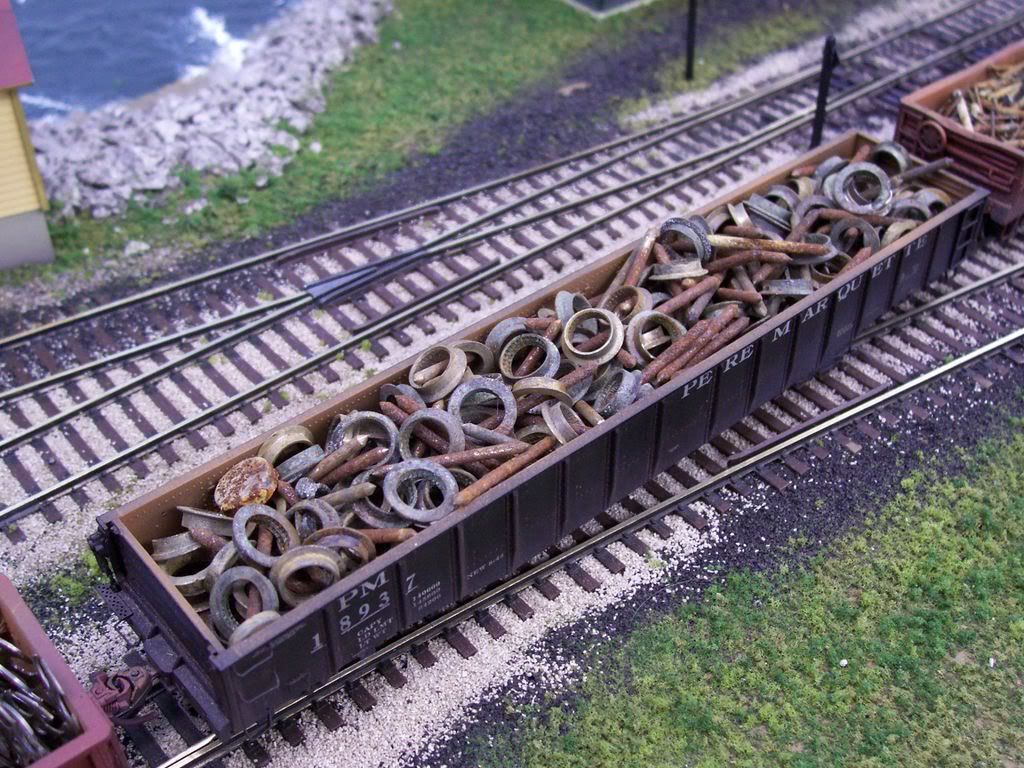
I run “live” loads in most of my open cars, and for gondolas, a lot of that is scrap made mostly from…what else?.. but metal…
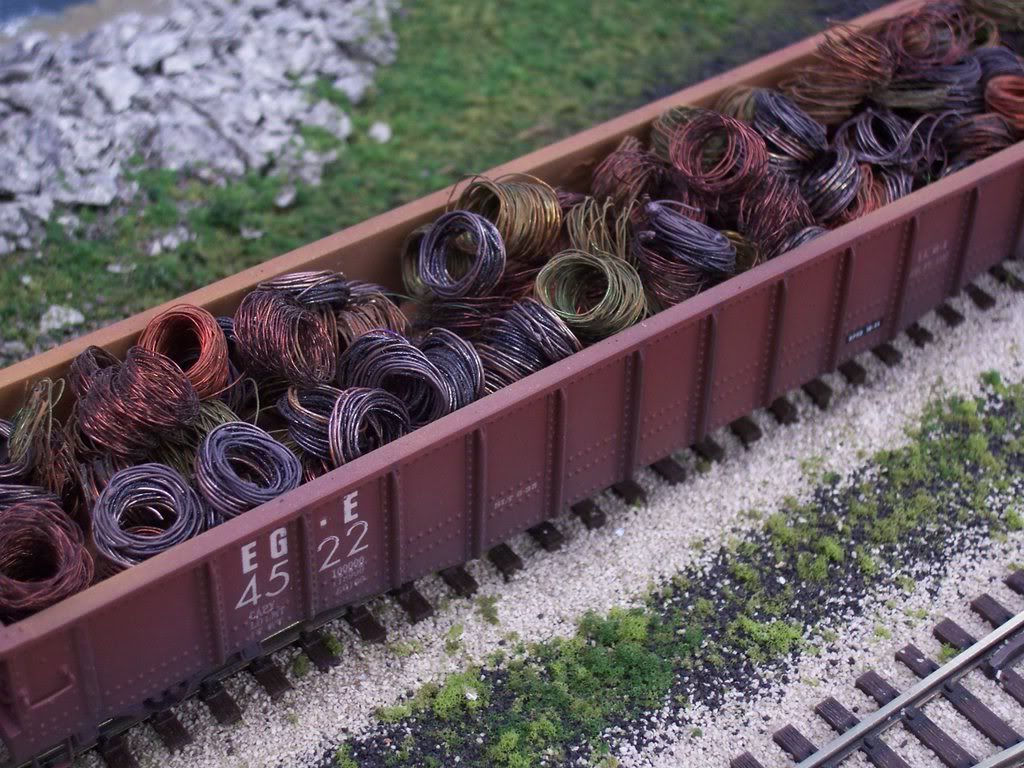
This one’s metal, too, but it’s copper wire from old open frame motors…
…a friend had a number of brass locos which I re-motored for him. The stuff in the car below is from those motors, too, and it’s
Seems like an awful lot of work when you can just buy a jar of real rock ballast from Scenic Express or one of the others and be done with it. It isn’t all that expensive and will go a long way.