I have a 90’ Walthers turntable and matching 3 stall Cornerstone roundhouse. The TT is installed and running and the roundhouse has been built but not yet installed. Now that it is time to wire the whisker tracks and glue down the house, I find I am having second thoughts about using it at all. It is flimsy, plastic, and much larger than my small RR needs.
Besides turning steamers, for what else could the TT be used? A 2 stall engine house comes to mind. I have the FSM kit just waiting to be built.
A turntable is often used at the end of the line to turn a locomotive, certain passenger cars, snowplows and other equipment that has a “front end” if there is no room to install a retrun loop or wye.
When I visited the Strausburg RR in PA a few years ago, they had purchased a turntable to install at the end of their line to turn the locomotive so it would not have to run backwards on the return trip. I do not know if they have installed it or not.
We used the turntable at East Wayne Yard to turn Locos and Freight cars. Turn the freight cars when the costomer requested that a car should be delivered a certain way. Kevin
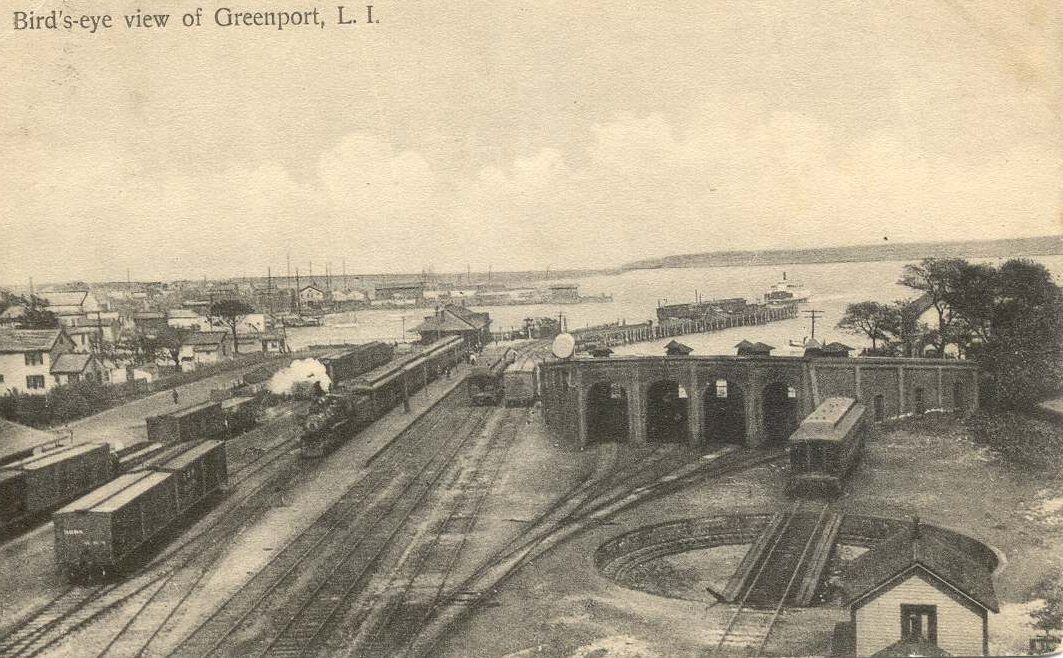
It wasn’t all that unusual for there to be a turntable without a connected roundhouse. Classic trains had a pic an issue or two back showing a turntable next to a transfer table, at a large railroad shops building.
I’ve also seen situations of a working roundhouse, but no turntable.
Well, yes that would be nice. First thing though you need to have a dinning room table, and second a dinning room to put it into. We don’t have either. Good idea though and actuality a doable project.
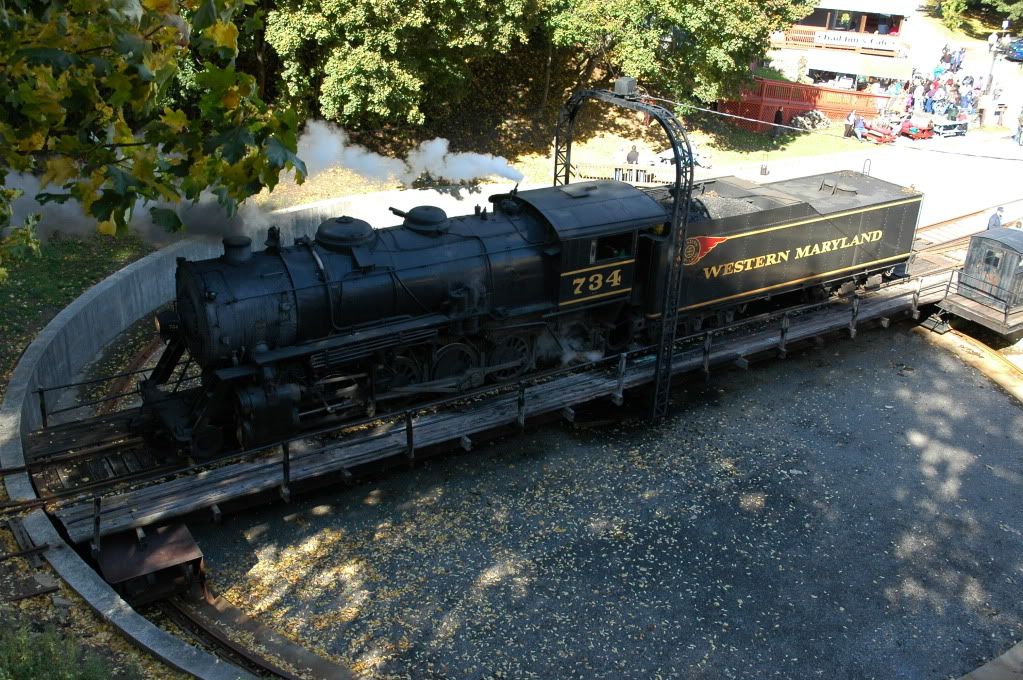
Yes, in its current state, this is an “end of the line” turntable… However, it’s a recent installation to accommodate a tourist train. The turntable itself was moved to Frostburg, Maryland from Elkins, WVa, where it served the engine house of the Western Maryland. The new location was originally the main line of the Cumberland and Pennsylvania, and the hill you mention actually has a tunnel through it, and the line continued to Westernport, Maryland. When the WM assumed control of the C&P in the 1930’s, the tunnel was abandoned due to tight clearances, and the C&P was operated as two separate branches.
Yesterday at 3AM, the main roundhouse of the XYZ railroad company burned down. Several employees were interviewed by the fire marshal and the cause was determined to be accidental. A spokesman for the railroad said they have no plans for rebuilding it since steam locomotives are being phased out. A smaller metal engine shed is being considered but it has not been determined that one will be built. For the time being, until a final decision has been made, locomotive service will be continued outside. Locomotives requiring major servicing and repairs will be sent to ABC’s railroad shops. The turntable and concrete pad remaining will still be used for turning and minor servicing of all locomotives.
Yes, as someone mentioned, sometimes freight cars need to be turned. An example in the old days was a box car load of lumber. Often it neeed to be unloaded on the same side it was loaded. This would be done on a wye or a turntable. This would be a fun situation card on a model railroad. I don’t know if this still happens as I suppose most lumber is no shipped on flatcars especially built for lumber?
Somewhere in my stock of video tapes, is some film of a C&NW locomotive being turned on an air-powered turntable at, IIRC, Highland Park, Illinois. During steam days, commuter locomotives had to be turned at various locations where there were no roundhouses or shops. A quick spin on the Highland Park turntable, and an engine was ready to make the return trip to Chicago.
On an old branch of the D&H RR, now called the Upper Hudson RR in North Creek NY. there is presently a tt with no roundhouse and is just used to turn locomotives.
The CNR had many branchlines in southwestern Ontario that ended with a turntable in a field - no roundhouse, no enginehouse, often not even a tool shed. The loco’s brake hose was connected to an air-operated motor on the turntable for operation, or, if no motor was installed, the table was turned by hand.
My scratchbuilt turntable (also hand-operated) is used with a shop building built from a Vollmer 3 stall roundhouse:
…and, like the prototype, we often receive cars that need to be turned before being delivered to the customer:
I have seen photos of a 2 stall engine house with a turntable feeding it. The tracks into the shop came off the table and curved untill parallel. It also had other tracks it could store locos on.